

Free Los Lagos Region Travel Guide & Mobile App
Explore Los Lagos Region with free travel guides. Discover regional history, expert tips, proposed trips, and audio guides on web or mobile app.


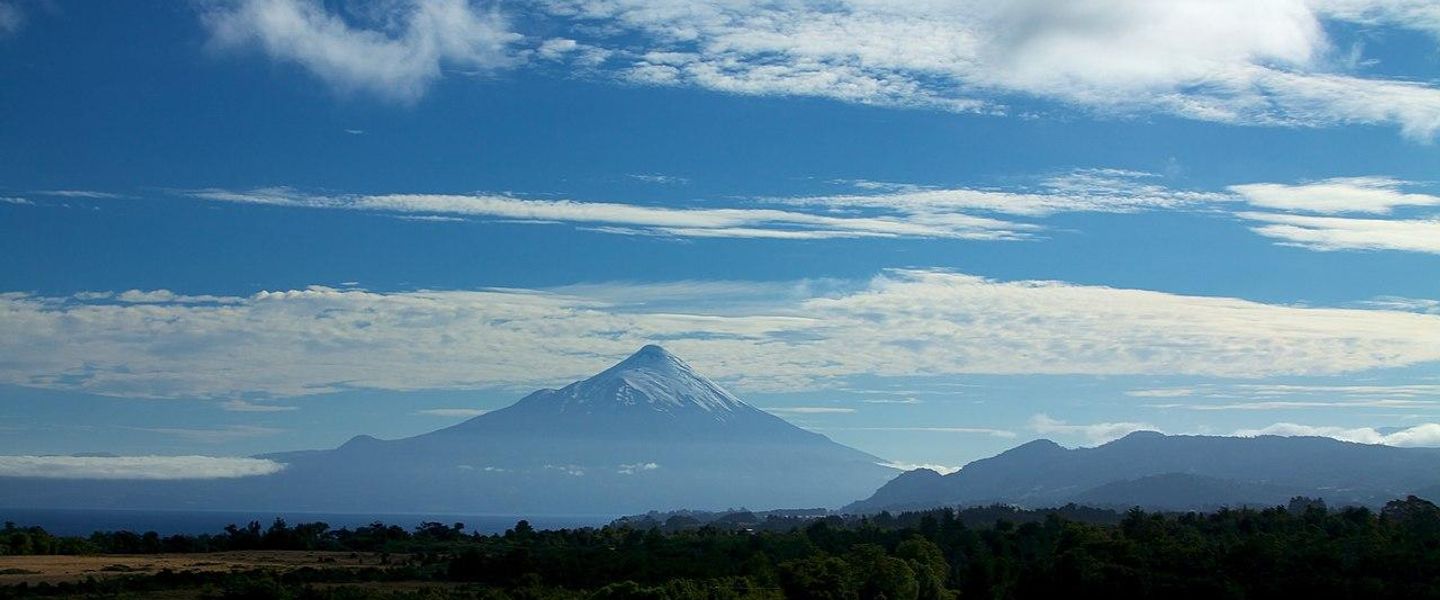


Los Lagos Region combines Chilean lake country, volcanoes, Chiloé’s wooden heritage, temperate rainforest and remote Patagonian fjords.
Read more about Los Lagos Region
When is the best time to visit Los Lagos Region?
Best: December–February · 19–20°C| Month | High (°C) | Rainfall (mm) |
|---|---|---|
| January (best) | 20 | 70 |
| February (best) | 20 | 70 |
| March | 18 | 80 |
| April | 15 | 90 |
| May | 13 | 100 |
| June | 11 | 110 |
| July | 10 | 110 |
| August | 11 | 110 |
| September | 13 | 100 |
| October | 15 | 90 |
| November | 16 | 80 |
| December (best) | 19 | 70 |
Getting to and around Los Lagos Region
How to get there
Transportation
Top city travel guides in Los Lagos Region
The cities of Los Lagos Region, and the easiest places to base yourself.
-

-


Swipe for more cities
Destinations in Los Lagos Region
Resorts, valleys and scenic spots worth a trip of their own.

Swipe for more destinations
Best attractions in Los Lagos Region
Los Lagos offers several distinct types of attraction rather than one concentrated sightseeing circuit. Around Lake Llanquihue, visitors come for volcanic scenery, lakeside towns, museums, gardens and excursions towards Vicente Pérez Rosales National Park, where the Petrohué Falls and Todos los Santos Lake are among the region’s best-known natural sites. Puyehue National Park and the forested landscapes near Osorno add hiking, hot springs and wildlife opportunities. Chiloé combines rural roads, coastal viewpoints, craft markets, historic churches, palafitos and boat trips, with Chiloé National Park protecting Pacific shore, dunes, wetlands and temperate forest. In Palena, Pumalín Douglas Tompkins National Park, Hornopirén National Park and the Futaleufú area provide more demanding outdoor experiences, from rainforest walks to river and mountain activities. Museums and cultural centres in Puerto Montt, Puerto Varas, Frutillar, Ancud and Castro help explain immigration, Indigenous heritage, maritime life and local music. Conditions and access vary considerably, so the most remote attractions should be approached as planned excursions rather than casual detours.
-
Scenic spot
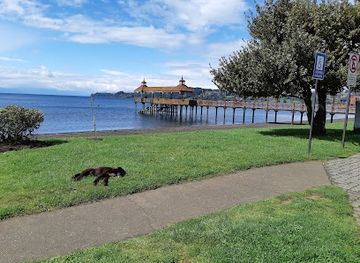
Frutillar's Dock
Experience the breathtaking views of Osorno Volcano and the serene atmosphere at Frutillar's Dock, a scenic gem on Lake Llanquihue.
-
Tourist attraction
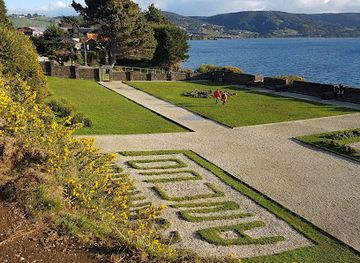
Fuerte San Antonio
Discover the historical significance and breathtaking views of Fuerte San Antonio, a must-visit tourist attraction in Ancud, Los Lagos, Chile.
-
Tourist attraction
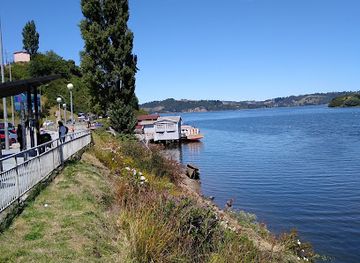
Mirador Gamboa
Experience the breathtaking views and serene beauty of Mirador Gamboa, a stunning lookout point in Castro, Los Lagos, Chile.
-
Tourist attraction
Isla de las Almas Navegantes
Explore Isla de las Almas Navegantes for breathtaking landscapes and rich cultural experiences in the heart of Chile's Los Lagos region.
Best landmarks in Los Lagos Region
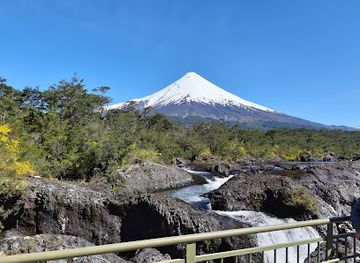
The most recognisable natural landmark in the region is Osorno Volcano, whose symmetrical cone rises above Lake Llanquihue and the approaches to Vicente Pérez Rosales National Park. Nearby, the Petrohué Falls cut through dark volcanic rock, while Todos los Santos Lake forms a deeply coloured mountain setting shaped by glaciers and eruptions. Chiloé’s historic wooden churches are the region’s most important architectural landmarks: the churches of Castro, Dalcahue, Chonchi and other communities belong to the wider tradition represented by the UNESCO-listed group of sixteen historic churches. Castro’s palafitos, houses raised above tidal water, express the practical relationship between settlement and the coast. Ancud’s forts and coastal defences recall the island’s former strategic role, while Puerto Montt’s waterfront and Angelmó reflect its continuing maritime identity. In Palena, the fjords, volcanic slopes and forested valleys around Hornopirén and Chaitén are landmarks of landscape rather than monumental architecture. Their scale and remoteness are part of their meaning, and access should be planned with weather and road conditions in mind.
-
Tourist attraction
Petrohué Waterfalls
Explore the breathtaking Petrohué Waterfalls in Vicente Pérez Rosales National Park, where nature's beauty meets adventure in Chile.
-
Tourist attraction
Escultura Sentados Frente al Mar
Capture a photo with Puerto Montt's iconic sculpture, inspired by a classic love song and overlooking the stunning Seno de Reloncaví.
-
Park
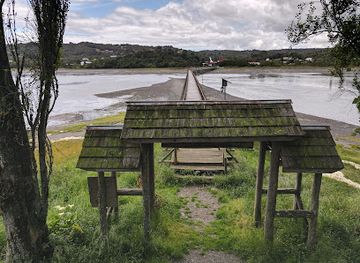
Muelle De Las Almas
Explore Muelle De Las Almas, a serene park in Chonchi, Los Lagos, where stunning landscapes and tranquility await every visitor.
-
National park
Parque Nacional Alerce Andino
Discover ancient Alerce forests, pristine lakes, and breathtaking mountain scenery in Chile's Alerce Andino National Park. A haven for nature lovers.

Explore Los Lagos Region on the map
Plan your trip on one map. See where the top cities, national parks and sights are, and book hotels and experiences in a few clicks.
Best hotels in Los Lagos Region
Best restaurants in Los Lagos Region
Dining in Los Lagos is shaped by cold waters, fertile volcanic soils, island agriculture and the region’s mixture of Indigenous, Chilean and European influences. Puerto Montt and the market area around Angelmó are associated with seafood, while salmon, mussels, clams, crab and other shellfish appear widely across coastal and lake-district menus. Chiloé is particularly known for potatoes in many varieties, hearty soups, breads and curanto, a traditional preparation of seafood, meat and vegetables whose form varies between communities. In the lake district, dairy products, fruit, preserves, breads and German-influenced baking traditions reflect nineteenth-century settlement without defining the whole cuisine. Cafés, family restaurants, rural inns and pubs provide much of the everyday dining, while larger towns offer contemporary cooking and more formal restaurants. Farmers’ markets are useful places to encounter seasonal produce, cheeses and preserves, although availability changes with weather and local supply. In remote Palena, dining options are fewer and advance planning is sensible.
-
Pizza
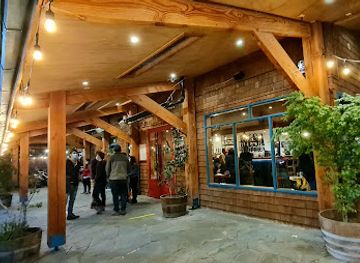
Mesa Tropera
Discover the delicious fusion of artisan pizzas and craft brews at Mesa Tropera in Puerto Varas - where local flavors come alive.
-
Brunch
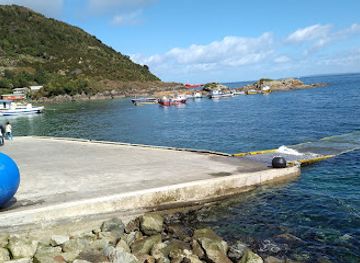
Carretera Austral - Sector Caleta La Arena
Experience breathtaking views and delightful cuisine along Carretera Austral - Sector Caleta La Arena in Chile's scenic Los Lagos region.
-
Restaurant
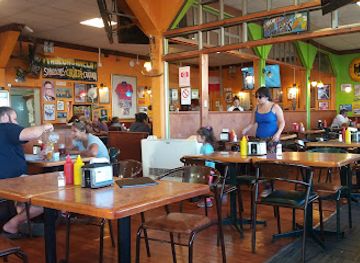
Tablón del Ancla
Experience authentic Chilean cuisine at Tablón del Ancla in Puerto Montt - where every meal tells a story.
-
Restaurant
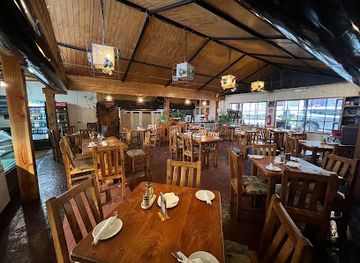
Pa' mar adentro
Discover exquisite seafood dishes at Pa' mar adentro in Puerto Montt—where culinary excellence meets breathtaking views.
Best bars in Los Lagos Region
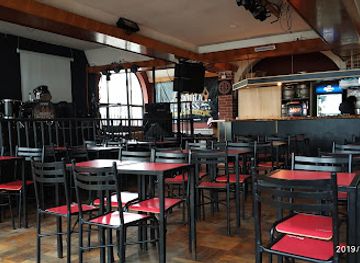
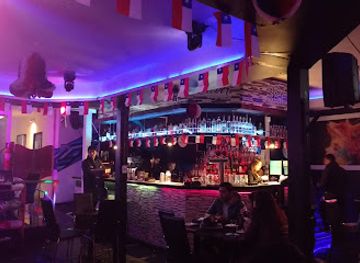
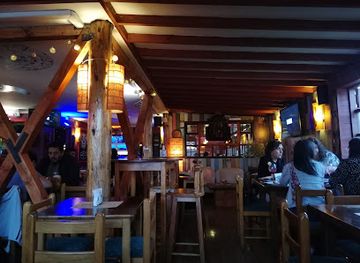
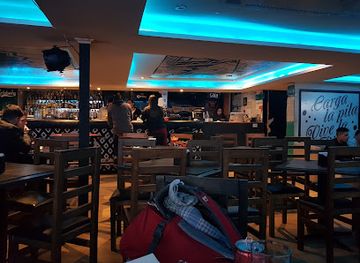
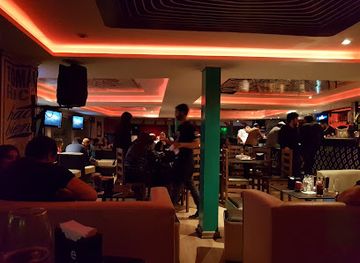
Evening life in Los Lagos is generally sociable but measured, with traditional pubs, restaurants, breweries, cafés and live-music venues more prominent than large nightclub districts. Puerto Montt has the broadest urban choice, including bars near central commercial areas and the waterfront, while Puerto Varas is known for restaurants, craft-beer venues and late-evening socialising aimed at both residents and visitors. Frutillar’s cultural life is closely connected with music and performance, particularly around its established arts venues, though events vary by season. In Castro and Ancud, nightlife often centres on bars, seafood restaurants, local music and informal gatherings rather than all-night clubs. Smaller Chiloé communities and Palena towns usually close earlier and offer a quieter evening based around inns, dining and conversation. Check local arrangements during winter and in remote areas, where opening patterns can be seasonal and transport after dark limited.
-
Grill
Barra Bass Rock And Roll Bar
Experience the vibrant culinary scene at Barra Bass Rock And Roll Bar in Puerto Montt, where grilled delights meet lively music in a rock-inspired atmosphere.
-
Grill
Clover Enjoy Bar
Discover the vibrant flavors of Clover Enjoy Bar, Puerto Montt's top grill and bar destination for food lovers and social butterflies.
-
Grill
Cactus Resto Bar
Experience the vibrant flavors of Puerto Montt at Cactus Resto Bar, where delicious grilled dishes meet a lively atmosphere.
-
Grill
Live Social Bar
Discover Puerto Montt's culinary delights at Live Social Bar, where grilling meets nightlife in a vibrant atmosphere that delights every palate.
Best nightclubs in Los Lagos Region
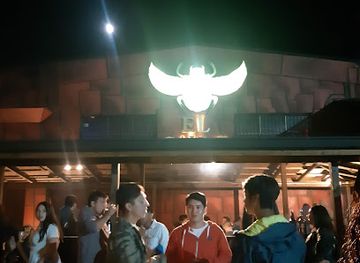
Evening life in Los Lagos is generally sociable but measured, with traditional pubs, restaurants, breweries, cafés and live-music venues more prominent than large nightclub districts. Puerto Montt has the broadest urban choice, including bars near central commercial areas and the waterfront, while Puerto Varas is known for restaurants, craft-beer venues and late-evening socialising aimed at both residents and visitors. Frutillar’s cultural life is closely connected with music and performance, particularly around its established arts venues, though events vary by season. In Castro and Ancud, nightlife often centres on bars, seafood restaurants, local music and informal gatherings rather than all-night clubs. Smaller Chiloé communities and Palena towns usually close earlier and offer a quieter evening based around inns, dining and conversation. Check local arrangements during winter and in remote areas, where opening patterns can be seasonal and transport after dark limited.
-
Grill
Club Orquidea
Experience the vibrant nightlife and delicious grill cuisine at Club Orquidea in Puerto Varas, where dance and dining come together.
-
Grill
Live Social Bar
Discover the vibrant flavors and nightlife of Puerto Montt at Live Social Bar, a must-visit grill and sushi restaurant.
-
Disco club
Cairo Bar
Experience the vibrant nightlife of Osorno at Cairo Bar, a must-visit disco club with energetic music and an unforgettable atmosphere.
-
Disco club
UP_Osorno
Explore Osorno's dynamic nightlife at UP_Osorno, where exciting beats and vibrant crowds create an unforgettable disco experience.


Best shops in Los Lagos Region
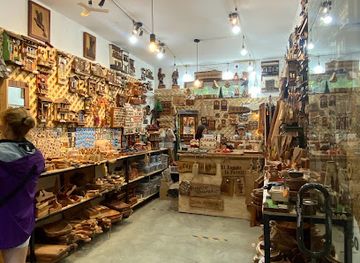
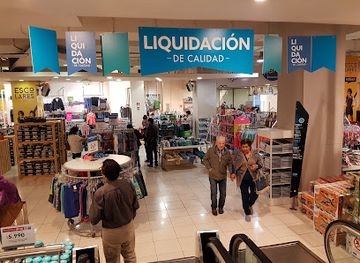
Shopping in Los Lagos is strongest in market towns and port districts rather than in luxury retail centres. Puerto Montt offers the widest urban selection, with seafood markets, craft stalls, everyday shops and the Angelmó area, where visitors may find woollens, woodwork, jewellery and regional food products alongside working fish trade. Puerto Varas and Frutillar have independent boutiques, galleries, cafés and shops selling crafts, books, textiles and locally produced foods. Chiloé is particularly associated with woollen goods, woven textiles, carved wood, baskets, pottery and distinctive food products such as potatoes, preserves and smoked or dried ingredients. Markets in Castro, Ancud and Dalcahue are useful for comparing island crafts and produce, although stock and market activity can vary by day and season. In remote Palena, shopping is primarily practical, with small stores and locally made crafts rather than extensive retail. Check that natural materials and food products can legally be taken across borders before purchasing them.
-
Tourist attraction
Petrohué Waterfalls
Explore the breathtaking Petrohué Waterfalls, a stunning natural spectacle surrounded by the lush landscapes of Vicente Pérez Rosales National Park.
-
Shopping mall
Mall Paseo Costanera
Discover the vibrant shopping experience at Mall Paseo Costanera in Puerto Montt, where fashion meets flavor and entertainment.
-
Shopping mall
Mall Portal Osorno
Explore Mall Portal Osorno: Your Ultimate Shopping Destination in Chile's Los Lagos Region
-
Shopping mall
Mall Paseo Puerto Varas
Discover the heart of Puerto Varas at Mall Paseo, a vibrant shopping destination with local flair, dining options, and entertainment for the entire family.

Get your free copy of our complete guide to Los Lagos Region, delivered straight to you.
Everything on this page, from attractions and restaurants to essentials and local phrases, in one PDF you can read offline, print or share.
Already have an account? Sign in
Your Los Lagos Region guide is ready.
We'll send it to · Not you? Sign out

Getting your guide ready…
We are putting together a fresh copy of the Los Lagos Region guide. This can take up to a minute.
This can take a few moments. If your browser asks, choose Allow so the download can start. You'll find the guide in your Downloads folder.
Nothing happened? Download it again
Sorry, the guide is taking longer than usual. Please try again in a minute, or get it by email instead.
Los Lagos Region essentials
Currency and Payment
Safety
Emergency Situations
Do's and Don'ts
Local Tips
From Eve
Local phrases worth knowing
You don't need to get them perfect. A few words go a long way, and locals appreciate the effort.
Basics
| English | Local | Say it |
|---|---|---|
| Hello | Hola | [Ola] |
| Goodbye | Adiós | [Adios] |
| Yes | Sí | [Si] |
| No | No | [No] |
| Please/You're welcome | Por favor/De nada | [Por favor/De nada] |
| Thank you | Gracias | [Grasias] |
| Excuse me/Sorry | Perdón | [Perdon] |
| How are you? | ¿Cómo estás? | [Como estas] |
| Fine. And you? | Bien. ¿Y tú? | [Bien. Y tu] |
| Do you speak English? | ¿Hablas inglés? | [Hablas ingles] |
| I don't understand | No entiendo | [No entiendo] |
Eating & Drinking
| English | Local | Say it |
|---|---|---|
| I'd like to see the menu, please | Me gustaría ver el menú, por favor | [Me gustaria ver el menu, por favor] |
| I don't eat meat | No como carne | [No como carne] |
| Cheers! | ¡Salud! | [Salud] |
| I would like to pay, please | Me gustaría pagar, por favor | [Me gustaria pagar, por favor] |
Emergencies
| English | Local | Say it |
|---|---|---|
| Help! | ¡Ayuda! | [Ayuda] |
| Go away! | ¡Vete! | [Vete] |
| Call the Police! | ¡Llama a la policía! | [Llama a la policia] |
| Call a doctor! | ¡Llama a un doctor! | [Llama a un doctor] |
| I'm lost | Estoy perdido/a | [Estoy perdido/a] |
| I'm ill | Estoy enfermo/a | [Estoy enfermo/a] |
Shopping
| English | Local | Say it |
|---|---|---|
| I'd like to buy... | Me gustaría comprar... | [Me gustaria comprar] |
| I'm just looking | Solo estoy mirando | [Solo estoy mirando] |
| How much is it? | ¿Cuánto cuesta? | [Cuanto cuesta] |
| That's too expensive | Eso es muy caro | [Eso es muy caro] |
| Can you lower the price? | ¿Puedes bajar el precio? | [Puedes bajar el precio] |
Time & Numbers
| English | Local | Say it |
|---|---|---|
| What time is it? | ¿Qué hora es? | [Que hora es] |
| It's one o'clock | Es la una | [Es la una] |
| Half past (10) | Y media (10) | [Y media (10)] |
| Morning | Mañana | [Mañana] |
| Afternoon | Tarde | [Tarde] |
| Evening | Noche | [Noche] |
| Yesterday | Ayer | [Ayer] |
| Today | Hoy | [Hoy] |
| Tomorrow | Mañana | [Mañana] |
| 1 | Uno | [Uno] |
| 2 | Dos | [Dos] |
| 3 | Tres | [Tres] |
| 4 | Cuatro | [Cuatro] |
| 5 | Cinco | [Cinco] |
| 6 | Seis | [Seis] |
| 7 | Siete | [Siete] |
| 8 | Ocho | [Ocho] |
| 9 | Nueve | [Nueve] |
| 10 | Diez | [Diez] |
Transport & Directions
| English | Local | Say it |
|---|---|---|
| Where's a/the...? | ¿Dónde está un/una...? | [Donde esta un/una] |
| What's the address? | ¿Cuál es la dirección? | [Cual es la direccion] |
| Can you show me (on the map)? | ¿Puedes mostrarme (en el mapa)? | [Puedes mostrarme (en el mapa)] |
| When's the next (bus)? | ¿Cuándo es el próximo (bus)? | [Cuando es el proximo (bus)] |
| A ticket (to ....) | Un pasaje (a ....) | [Un pasaje (a)] |
History of Los Lagos Region
Indigenous Settlement and Huilliche Heritage
Long before Spanish colonisation, the region was inhabited by Mapuche and Huilliche peoples, alongside maritime communities whose lives were closely connected to forests, lakes, rivers and the sea. Chiloé developed distinctive island traditions based on fishing, shellfish gathering, small-scale farming and boat travel. Indigenous knowledge remains important in local place names, foodways, craft traditions and relationships with the landscape. Any account of Los Lagos’s history needs to recognise that European settlement was later layered onto older cultural and environmental systems rather than replacing them completely.
Spanish Settlement and the Chiloé Frontier
Spanish colonial influence became established in Chiloé during the sixteenth century, with settlements, missions and maritime routes linking the archipelago to the wider Spanish world. Jesuit and later Franciscan missionaries worked among island communities, and churches became important centres of religious and social life. The isolation of Chiloé encouraged locally adapted building methods and a distinctive form of wooden church architecture. The archipelago remained a Spanish stronghold after mainland Chile became independent, surrendering only in 1826, several years after the decisive mainland campaigns.
German Colonisation of the Lake District
From the middle of the nineteenth century, the Chilean state promoted German immigration to the lake district, particularly around Valdivia, Osorno, Lake Llanquihue and Puerto Montt. Settlers established farms, mills, workshops and new towns, contributing to an agricultural and commercial transformation of the area. Buildings, gardens, baking traditions and dairy production still reflect this history, although they exist alongside Indigenous and older Chilean cultures. Frutillar, Puerto Octay and parts of Puerto Varas preserve especially visible architectural and cultural traces of the colonisation period.
Ports, Steamships and Regional Trade
Puerto Montt grew as a major port and gateway between central Chile, the lake district and the channels of Patagonia. Before modern roads connected the south, ships and smaller vessels were essential for moving people, mail, timber, livestock and supplies. The Reloncaví Sound and Chiloé’s waterways therefore shaped the region’s economy and settlement pattern. Maritime commerce helped connect isolated communities while also reinforcing the importance of ports such as Ancud, Castro and Puerto Montt. Today’s ferry routes and working harbours are continuations of this long logistical history.
Railways, Roads and Modern Integration
Railway expansion and later road construction linked the southern lake district more closely with the rest of Chile, supporting agriculture, forestry, trade and tourism. The railway reached Puerto Montt in the early twentieth century, reducing the region’s dependence on coastal shipping for mainland connections. Roads subsequently made lake resorts, national parks and rural settlements more accessible, although Chiloé and Palena continued to rely heavily on ferries and maritime transport. Modern infrastructure has improved access without eliminating the geographical barriers created by water, mountains and dense forest.
Churches, Craft and Living Island Culture
The wooden churches of Chiloé represent a major cultural development created through the meeting of European religious forms, local materials, Indigenous knowledge and island workmanship. Sixteen historic churches were inscribed as a UNESCO World Heritage Site in 2000. Their significance lies not only in their age but also in the way communities built, maintained and used them within dispersed island settlements. Chiloé’s palafitos, boatbuilding, textiles, markets and food traditions similarly show how maritime geography has shaped a living culture rather than merely a collection of historic monuments.
Los Lagos Region in Photos
Browse through our photo collection highlighting the charm and character of the destination.
Neighbouring regions of Los Lagos Region
The closest regions to Los Lagos Region, if you have time for more than one.
-

-

-

-

-


Swipe for more regions
Explore more

Explore more of Chile
Discover Chile: From the Atacama Desert to Patagonia's Glaciers, Experience Diverse Landscapes, Rich Culture, and World-Class Wine in This South American Gem.
Explore Chile