

Free Poon Saan Travel Guide & Mobile App
Plan your Poon Saan trip with Evendo. Get free guides to top attractions, restaurants, hotels, and bars. Web access or download the mobile app.


Poon Saan on Christmas Island offers Chinese heritage, rainforest viewpoints, red crab migrations and access to extraordinary Indian Ocean wildlife.
A Highland Settlement on Christmas Island
Poon Saan is a compact settlement on the central plateau of Christmas Island, an Australian territory in the eastern Indian Ocean. Its name is commonly translated from Hakka Chinese as “halfway up the hill”, reflecting the village’s position above the island’s coastal settlements. The streets are surrounded by dense tropical forest, while the wider plateau carries reminders of the phosphate-mining industry that shaped Christmas Island’s modern history. Poon Saan is not a conventional resort town; it is a working community and a useful base for understanding the island’s multicultural population, roads and inland landscapes.Read more about Poon Saan
Chinese and Mining Heritage
Forest, Coast and Island Wildlife
When is the best time to visit Poon Saan?
Best: June–August · 28°C| Month | High (°C) | Rainfall (mm) |
|---|---|---|
| January | 29 | 213 |
| February | 29 | 172 |
| March | 29 | 171 |
| April | 28 | 133 |
| May | 28 | 92 |
| June (best) | 28 | 75 |
| July (best) | 28 | 75 |
| August (best) | 28 | 76 |
| September | 29 | 88 |
| October | 29 | 124 |
| November | 29 | 159 |
| December | 29 | 199 |
Getting to and around Poon Saan
How to get there
Transportation
Best landmarks in Poon Saan
Poon Saan’s landmarks are closely tied to the Chinese communities and phosphate industry that shaped Christmas Island. The Poon Saan Chinese Literary Association represents the continuing importance of Chinese community organisation, while nearby temples and association buildings preserve religious and social traditions brought by workers from China and Malaya. At Flying Fish Cove, Tai Pak Kong Temple is a prominent Chinese religious landmark associated with the island’s multicultural heritage. The old phosphate infrastructure, mining roads and industrial traces form a more dispersed historical landscape rather than a single monumental precinct. Beyond the settlements, landmarks such as the island’s steep coastal cliffs, the Blowholes and the historic administrative and harbour area at Flying Fish Cove express the relationship between geology, colonial development and maritime access. Their significance lies in the way they connect community history with the island’s remote terrain.
-
National park
Christmas Island National Park
Discover the stunning landscapes and unique wildlife of Christmas Island National Park, a must-visit destination for nature lovers and adventurers.
23 min drive · 7.6 km from city centre
-
 Hotel
Swell Lodge
Experience the beauty of Christmas Island at Swell Lodge, where luxury meets nature in a serene and eco-friendly retreat.
12 min drive · 3.8 km from city centre
-
Tourist attraction
The Blowholes
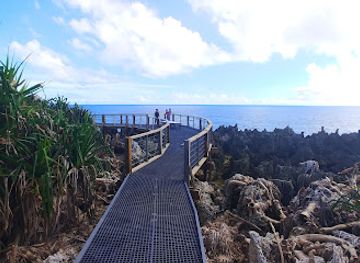
Explore the stunning Blowholes of Christmas Island, where ocean waves create breathtaking natural geysers amidst beautiful coastal scenery.
29 min drive · 9.7 km from city centre
-
Tourist attraction
The Dales
Discover the breathtaking beauty of The Dales, a natural paradise on Christmas Island showcasing unique wildlife and stunning landscapes.
14 min drive · 4.6 km from city centre

Explore Poon Saan on the map
Plan your Poon Saan trip on one map. See where the top attractions, landmarks, restaurants, bars and hotels are, find what's near where you're staying, and book hotels and experiences in a few clicks.
Best hotels in Poon Saan
Best bars in Poon Saan
Poon Saan has a quiet evening character rather than a dedicated nightlife district. Social life is concentrated in small community venues and licensed establishments across Christmas Island, including the tavern and gathering places around Flying Fish Cove, where residents and visitors may meet for a drink or a meal. Entertainment is generally informal, and availability can depend on the day, season and local events. Evening cultural life may also include community celebrations, Chinese festivals and gatherings associated with the island’s multicultural associations. Outside the settlements, darkness brings a different kind of experience: rainforest sounds, tropical skies and the possibility of observing nocturnal wildlife with suitable local guidance. Visitors should make transport arrangements before going out, as distances, limited services and the absence of regular late-night public transport make spontaneous bar-hopping impractical.
-
Tourist attraction
The Blowholes
Experience the stunning natural phenomenon of The Blowholes, where crashing waves create magnificent water jets against a backdrop of lush coastal scenery.
29 min drive · 9.7 km from city centre

Get your free copy of our complete guide to Poon Saan, delivered straight to you.
Everything on this page, from attractions and restaurants to essentials and local phrases, in one PDF you can read offline, print or share.
Already have an account? Sign in
Your Poon Saan guide is ready.
We'll send it to · Not you? Sign out

Getting your guide ready…
We are putting together a fresh copy of the Poon Saan guide. This can take up to a minute.
This can take a few moments. If your browser asks, choose Allow so the download can start. You'll find the guide in your Downloads folder.
Nothing happened? Download it again
Sorry, the guide is taking longer than usual. Please try again in a minute, or get it by email instead.
Poon Saan essentials
Currency and Payment
Safety
Emergency Situations
Do's and Don'ts
Local Tips
From Eve
Local phrases worth knowing
You don't need to get them perfect. A few words go a long way, and locals appreciate the effort.
Basics
| English | Local | Say it |
|---|---|---|
| Hello | Allo | [ah-loh] |
| Goodbye | Ba-bai | [bah-bye] |
| Yes | Ya | [yah] |
| No | Na | [nah] |
| Please/You're welcome | Jasmin | [yahs-meen] |
| Thank you | Terimah kasih | [te-ree-mah ka-see] |
| Excuse me/Sorry | Ma'af | [mah-ahf] |
| How are you? | Apa kabar? | [ah-pah kah-bar] |
| Fine. And you? | Baik. Dan kamu? | [bah-eek. dahn kah-moo] |
| Do you speak English? | Bisa bicara bahasa Inggris? | [bee-sah bee-chah-rah bah-hah-sah ing-grees] |
| I don't understand | Saya tidak mengerti | [sah-yah tee-dahk muhn-gehr-tee] |
Eating & Drinking
| English | Local | Say it |
|---|---|---|
| I'd like to see the menu, please | Saya ingin lihat menu, tolong | [sah-yah een-geen lee-haht meh-noo toh-long] |
| I don't eat meat | Saya tidak makan daging | [sah-yah tee-dahk mah-kahn dah-yihng] |
| Cheers! | Selamat minum! | [seh-lah-maht mee-noom] |
| I would like to pay, please | Saya ingin membayar, tolong | [sah-yah een-geen mehm-bah-yahr toh-long] |
Emergencies
| English | Local | Say it |
|---|---|---|
| Help! | Tolong! | [toh-long] |
| Go away! | Pergi! | [pehr-gee] |
| Call the Police! | Panggil polisi! | [pahng-geel poh-lee-see] |
| Call a doctor! | Panggil dokter! | [pahng-geel dohk-tehr] |
| I'm lost | Saya tersesat | [sah-yah tehr-suh-saht] |
| I'm ill | Saya sakit | [sah-yah sah-keet] |
Shopping
| English | Local | Say it |
|---|---|---|
| I'd like to buy... | Saya ingin membeli... | [sah-yah een-geen mehm-beh-lee] |
| I'm just looking | Saya hanya melihat-lihat | [sah-yah hahn-yah meh-lee-haht-lee-haht] |
| How much is it? | Berapa harganya? | [beh-rah-pah hahr-gahn-yah] |
| That's too expensive | Itu terlalu mahal | [ee-too tehr-lah-loo mah-hahl] |
| Can you lower the price? | Bisa kurangi harganya? | [bee-sah koo-rahn-gee hahr-gahn-yah] |
Time & Numbers
| English | Local | Say it |
|---|---|---|
| What time is it? | Jam berapa sekarang? | [jahm beh-rah-pah seh-kah-rahn] |
| It's one o'clock | Sekarang pukul satu | [seh-kah-rahn poo-kool sah-too] |
| Half past (10) | Setengah sebelas | [seh-tehn-gah se-beh-lahs] |
| Morning | Pagi | [pah-gee] |
| Afternoon | Sore | [soh-reh] |
| Evening | Malam | [mah-lahm] |
| Yesterday | Kemarin | [keh-mah-reen] |
| Today | Hari ini | [hah-ree ee-nee] |
| Tomorrow | Besok | [beh-sohk] |
| 1 | Satu | [sahtoo] |
| 2 | Dua | [doo-ah] |
| 3 | Tiga | [tee-gah] |
| 4 | Empat | [em-paht] |
| 5 | Lima | [lee-mah] |
| 6 | Enam | [eh-nahm] |
| 7 | Tujuh | [too-joo] |
| 8 | Delapan | [deh-la-pahn] |
| 9 | Sembilan | [sehm-bee-lahn] |
| 10 | Sepuluh | [suh-poo-loo] |
Transport & Directions
| English | Local | Say it |
|---|---|---|
| Where's a/the...? | Dimana... | [dee-mah-nah] |
| What's the address? | Apa alamatnya? | [ah-pah ah-lah-maht-nyah] |
| Can you show me (on the map)? | Bisa tunjukkan saya (di peta)? | [bee-sah toon-jook-kahn sah-yah dee peh-tah] |
| When's the next (bus)? | Kapan yang berikutnya (bis)? | [kah-pahn yahng beh-ree-koot-nyah beess] |
| A ticket (to ....) | Tiket (ke ....) | [tee-keht (keh)] |
History of Poon Saan
British Annexation and Early Exploration
Christmas Island was annexed by Britain in 1888 after its phosphate deposits attracted imperial and commercial interest. European exploration had identified the island earlier, but permanent settlement developed only with the establishment of mining infrastructure. Its remote position and heavily forested interior made transport, surveying and construction difficult. The island was administered in connection with the Straits Settlements, and Singapore became an important administrative and commercial link. The early colonial period created the framework for the mining settlement pattern that later included Poon Saan and other inland communities.
Phosphate Mining Creates a Community
Commercial phosphate mining began in the late nineteenth century and became the foundation of Christmas Island’s economy. Workers were recruited from southern China and Malaya, bringing Cantonese, Hakka, Malay and other traditions to the island. Poon Saan developed as a Chinese settlement on the plateau, while other communities formed around the mining fields and coast. Labour was demanding and the colonial system was unequal, yet workers established associations, religious institutions, shops and family networks. The multicultural society visible on Christmas Island today grew substantially from this mining-era migration.
War and Japanese Occupation
Christmas Island was occupied by Japanese forces from 1942 until 1945 during the Second World War. Mining and civilian life were disrupted, and the island’s strategic location made it part of the wider conflict across Southeast Asia and the Indian Ocean. Residents endured shortages, forced labour and displacement, while the phosphate works suffered damage and neglect. After the Japanese surrender, the island returned to British administration and mining resumed. Wartime memories remain part of Christmas Island’s modern historical landscape, although much of the visitor experience is now centred on ecology and community life.
From Singapore Administration to Australia
After the war, Christmas Island continued to be administered from Singapore while phosphate extraction remained central to its economy. In 1958, the island was transferred to Australian authority under the Christmas Island Act, a change that altered its political and administrative relationship with the region. Australian governance brought new public services and infrastructure, but the island retained its established Chinese, Malay and other Asian cultural connections. Poon Saan remained one of the communities associated with the plateau and the mining workforce, rather than becoming a separate metropolitan centre.
Mining Decline and Environmental Protection
Phosphate mining continued to influence employment, roads and settlement long after the transfer to Australia, but its economic dominance gradually weakened. Concern for the island’s forests, caves, coastline and endemic wildlife led to stronger conservation measures, and Christmas Island National Park was established in 1980. Modern Christmas Island balances a continuing industrial legacy with protected habitats and nature-based tourism. Poon Saan’s present character reflects that transition: its streets and community institutions belong to a mining-era settlement, while surrounding rainforest and wildlife are increasingly central to the island’s identity.
Poon Saan in Photos
Browse through our photo collection highlighting the charm and character of the destination.
Cities near Poon Saan
The closest cities to Poon Saan, if you have time for more than one stop.
-

-

-

-


Swipe for more cities
Explore more

Explore more of Christmas Island
Discover Christmas Island: A tropical paradise with stunning beaches, unique wildlife, and a rich cultural heritage. Perfect for nature lovers and adventure seekers.
Explore Christmas Island