

Free Vaupés Department Travel Guide & Mobile App
Explore Vaupés Department with free travel guides. Discover regional history, expert tips, proposed trips, and audio guides on web or mobile app.


Explore Vaupés in Colombia for Amazonian rivers, rainforest journeys, Indigenous cultures and carefully guided encounters around Mitú.
Read more about Vaupés Department
Getting to and around Vaupés Department
How to get there
Transportation
Best attractions in Vaupés Department
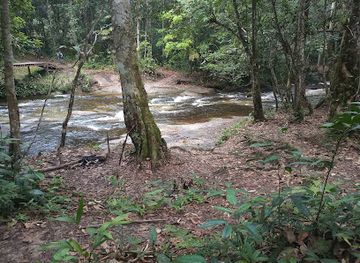
Vaupés offers attractions shaped by rainforest, rivers and Indigenous knowledge rather than by a dense concentration of built facilities. Mitú is the usual starting point for guided excursions to nearby forest paths, streams, waterfalls and granite or sandstone outcrops, where birdwatching, swimming where locally considered safe, and interpretation of plants and wildlife may form part of the experience. The Vaupés River provides the setting for boat journeys to settlements and forest areas, while tributaries and seasonal waterways reveal a landscape that changes with rainfall and water levels. Community-based visits can introduce visitors to malocas, chagras, cassava processing, basketry, stories and local environmental knowledge, provided that access has been agreed in advance. The department's Indigenous territories are not open-air attractions in the conventional sense; each community decides what may be visited and shared. For travellers interested in conservation, the wider Vaupés and Apaporis river systems offer insight into one of Colombia's most important Amazonian landscapes, although remote protected areas require specialist logistics and authorisation. The strongest experiences are therefore guided and interpretive, combining natural observation with an understanding of who manages the territory and why.
-
National park
Parque Nacional Natural Yaigojé Apaporis
Discover Colombia's Amazonian gem: Yaigojé Apaporis National Park, where biodiversity thrives and indigenous culture endures.
-
Tourist attraction
Caño Sangre
Discover the enchanting Caño Sangre near Mitú, where the reddish waters and Amazonian biodiversity create a unique and unforgettable experience.
Best landmarks in Vaupés Department
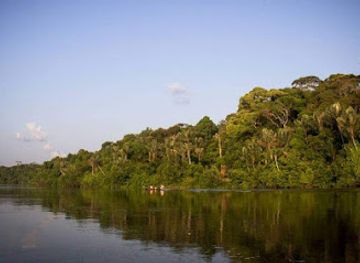
The Vaupés River is the department's defining geographical landmark, passing Mitú and linking a chain of settlements, tributaries and forest territories across the Amazonian landscape. Around Mitú, rocky hills and outcrops provide visual markers in terrain otherwise dominated by forest; sites such as Cerro Guacamayas are associated with the capital's surrounding natural scenery and are best visited with local guidance. The maloca is another important landmark type, not simply as architecture but as a communal and cultural space whose meaning varies between Indigenous peoples. Its form, orientation and use are connected to social organisation, ceremony and knowledge. Mitú's urban centre, including its civic and religious buildings, reflects the department's more recent administrative history rather than a colonial monumental tradition. Farther along the rivers, waterfalls, rapids and exposed rock formations become landmarks understood through local names and stories, and access may depend on water conditions and community permission. In Vaupés, a landmark is often inseparable from the territory around it: a river bend, forest outcrop or communal house may carry historical and cultural significance that is not apparent from a photograph alone.
-
Historical landmark
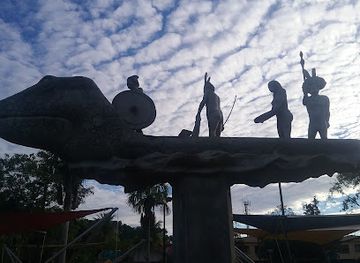
Monumento A Las Comunidades Étnicas Del Vaupés
Discover the cultural essence of Vaupés at the Monumento A Las Comunidades Étnicas, a tribute to the region's vibrant indigenous heritage.
Explore Vaupés Department on the map
Plan your trip on one map. See where the top cities, national parks and sights are, and book hotels and experiences in a few clicks.
Best hotels in Vaupés Department
Best restaurants in Vaupés Department
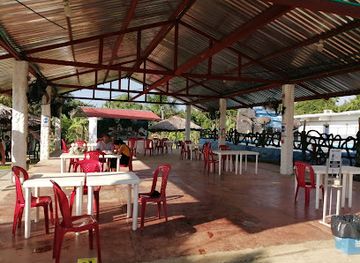
Dining in Vaupés is modest, local and closely connected to the forest and river economy. In Mitú, small eateries and household-style kitchens may serve freshwater fish, rice, plantain, cassava and seasonal fruit, while menus can change according to supply and availability. Indigenous food traditions give cassava a central role: it may be prepared as casabe, a flatbread, or mañoco, a toasted cassava product used in different ways across the region. Community visits may include fish, chagra produce and locally gathered ingredients, but meals should be arranged respectfully rather than assumed. Colombian staples are also available in the capital, although choice is narrower and deliveries can be irregular compared with larger cities. Visitors who are offered traditional foods should ask about ingredients and preparation, especially if they have allergies. Coffee, packaged drinks and basic provisions can be found in Mitú, but beyond it travellers should rely on pre-arranged meals and carry suitable snacks. The most meaningful culinary encounters often come through an explanation of how cassava is cultivated, processed and shared, rather than through restaurant presentation alone.
-
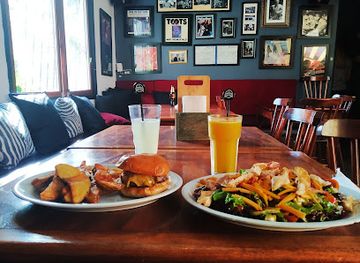
Hamburger
Holy
Discover Holy in Mitú: A delightful blend of gourmet burgers, aromatic coffee, and irresistible ice cream awaits you.
-
Grill
Centro Recreacional Estadero Los Paisas
Experience authentic grilled flavors in a vibrant setting at Centro Recreacional Estadero Los Paisas in Mitú.
-
Restaurant
Restaurante Temático Ba'Aribo
Discover authentic Colombian cuisine at Restaurante Temático Ba'Aribo in Mitú – where every dish tells a story.
-
Restaurant
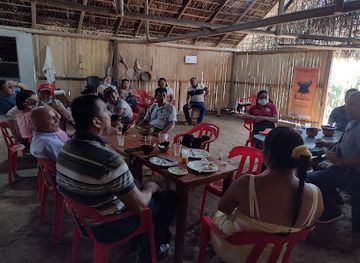
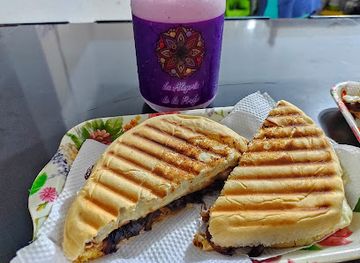
La Alegria de la Profe
Experience authentic Vaupes cuisine at La Alegria de la Profe in Mitú - where flavor meets culture in every dish.

Best bars in Vaupés Department
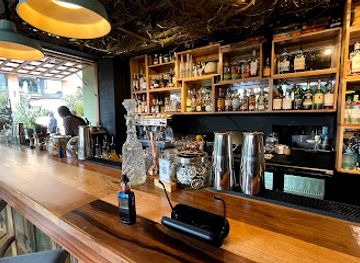
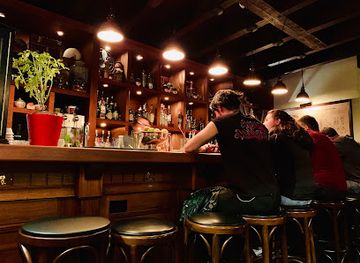
Vaupés does not have a substantial nightclub circuit, and evenings in Mitú are generally centred on modest bars, casual restaurants, social gatherings and local music rather than large entertainment venues. The town offers the greatest choice, but opening arrangements and individual businesses can change, while nightlife in river communities is shaped by community routines and local events. Visitors should not expect a late-night scene beyond the capital, and travelling by river after dark requires particular caution and should only take place through trusted local arrangements. Some evenings may include music, dancing or cultural programming, but these should not be treated as tourist spectacles without permission. A quieter evening can be more characteristic of the region: sharing a meal, listening to local explanations, observing the river or preparing for an early forest departure. Alcohol should be consumed cautiously in a remote environment, especially before boat travel, and visitors should follow the expectations of their accommodation and host community.
-
Live music bar
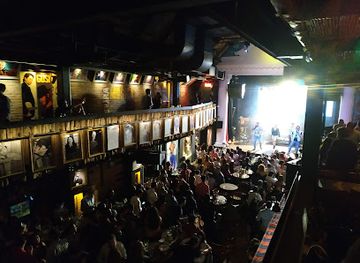
Gaira Café Cumbia House
Experience the vibrant rhythm of Bogotá at Gaira Café Cumbia House, where live music, cultural cuisine, and a lively atmosphere come together.
-
Bar
Smoking Molly -Blues & Jazz RestoBar
Discover the heart of Bogotá's blues and jazz scene at Smoking Molly, where live music meets exquisite dining in a vibrant atmosphere.
-
Bar
Huerta Coctelería Artesanal
Experience Bogotá's vibrant nightlife at Huerta Coctelería Artesanal, where artisanal cocktails and healthy cuisine meet in a stylish atmosphere.
-
Bar
Pedro Mandinga Rum Bar Bogota
Discover the lively ambiance of Pedro Mandinga Rum Bar Bogota, a top destination for unique cocktails and authentic Colombian culture in Usaquén.
Best shops in Vaupés Department
Shopping in Vaupés is concentrated in Mitú and is practical rather than centred on large retail complexes. Small shops and market stalls supply everyday provisions, while local crafts may include woven baskets, fibre work, beadwork and other objects made within Indigenous communities. Availability, materials and meanings vary, so ask about the maker, community and appropriate use before buying. Cassava products such as casabe and mañoco may be available through local contacts, but they should be purchased as food rather than removed carelessly from community settings. Visitors should favour fairly negotiated purchases and avoid wildlife products, archaeological objects, feathers, seeds or other items whose origin or legality is unclear. In the capital, shoppers may also find Colombian packaged foods, clothing and basic travel supplies, but choice is limited and replenishment is not guaranteed. Purchase essential batteries, toiletries, insect repellent and rain protection before leaving Mitú. For culturally significant crafts, a direct purchase arranged through a community or recognised local organisation offers better context and more transparent support than an anonymous transaction.
-
Shopping mall
Unicentro Bogota
Discover Unicentro Bogotá, where shopping meets culture in a vibrant atmosphere filled with dining and entertainment options.
-
Hamburger
Holy
Holy in Mitú: Savor the best hamburgers, aromatic coffee, and delicious ice cream in a cozy setting.
-
Hotel
Posada Turística Quenari Wii
Discover the enchanting Posada Turística Quenari Wii in Mitú, where nature meets comfort in the heart of Colombia's Amazon.
-
 Hotel
HotelCarayurú
Discover the serene beauty of Carayurú, a tranquil hotel in Mitú, where comfort meets the lush landscapes of the Colombian Amazon.


Get your free copy of our complete guide to Vaupés Department, delivered straight to you.
Everything on this page, from attractions and restaurants to essentials and local phrases, in one PDF you can read offline, print or share.
Already have an account? Sign in
Your Vaupés Department guide is ready.
We'll send it to · Not you? Sign out

Getting your guide ready…
We are putting together a fresh copy of the Vaupés Department guide. This can take up to a minute.
This can take a few moments. If your browser asks, choose Allow so the download can start. You'll find the guide in your Downloads folder.
Nothing happened? Download it again
Sorry, the guide is taking longer than usual. Please try again in a minute, or get it by email instead.
Vaupés Department essentials
Currency and Payment
Safety
Emergency Situations
Do's and Don'ts
Local Tips
From Eve
Local phrases worth knowing
You don't need to get them perfect. A few words go a long way, and locals appreciate the effort.
Basics
| English | Local | Say it |
|---|---|---|
| Hello | Hola | [Ola] |
| Goodbye | Adiós | [Adios] |
| Yes | Sí | [Si] |
| No | No | [No] |
| Please/You're welcome | Por favor | [Por favor] |
| Thank you | Gracias | [Grasias] |
| Excuse me/Sorry | Perdón | [Perdon] |
| How are you? | ¿Cómo estás? | [Como estas] |
| Fine. And you? | Bien. ¿Y tú? | [Bien. Y tu] |
| Do you speak English? | ¿Hablas inglés? | [Hablas ingles] |
| I don't understand | No entiendo | [No entiendo] |
Eating & Drinking
| English | Local | Say it |
|---|---|---|
| I'd like to see the menu, please | Me gustaría ver el menú, por favor | [Me gustaria ver el menu, por favor] |
| I don't eat meat | No como carne | [No como carne] |
| Cheers! | ¡Salud! | [Salud] |
| I would like to pay, please | Me gustaría pagar, por favor | [Me gustaria pagar, por favor] |
Emergencies
| English | Local | Say it |
|---|---|---|
| Help! | ¡Ayuda! | [Ayuda] |
| Go away! | ¡Vete! | [Vete] |
| Call the Police! | ¡Llama a la policía! | [Llama a la policia] |
| Call a doctor! | ¡Llama a un doctor! | [Llama a un doctor] |
| I'm lost | Estoy perdido | [Estoy perdido] |
| I'm ill | Estoy enfermo | [Estoy enfermo] |
Shopping
| English | Local | Say it |
|---|---|---|
| I'd like to buy... | Me gustaría comprar... | [Me gustaria comprar] |
| I'm just looking | Solo estoy mirando | [Solo estoy mirando] |
| How much is it? | ¿Cuánto cuesta? | [Cuanto cuesta] |
| That's too expensive | Eso es muy caro | [Eso es muy caro] |
| Can you lower the price? | ¿Puedes bajar el precio? | [Puedes bajar el precio] |
Time & Numbers
| English | Local | Say it |
|---|---|---|
| What time is it? | ¿Qué hora es? | [Que hora es] |
| It's one o'clock | Es la una | [Es la una] |
| Half past (10) | Y media (10) | [Y media] |
| Morning | Mañana | [Mañana] |
| Afternoon | Tarde | [Tarde] |
| Evening | Noche | [Noche] |
| Yesterday | Ayer | [Ayer] |
| Today | Hoy | [Hoy] |
| Tomorrow | Mañana | [Mañana] |
| 1 | Uno | [Uno] |
| 2 | Dos | [Dos] |
| 3 | Tres | [Tres] |
| 4 | Cuatro | [Cuatro] |
| 5 | Cinco | [Cinco] |
| 6 | Seis | [Seis] |
| 7 | Siete | [Siete] |
| 8 | Ocho | [Ocho] |
| 9 | Nueve | [Nueve] |
| 10 | Diez | [Diez] |
Transport & Directions
| English | Local | Say it |
|---|---|---|
| Where's a/the...? | ¿Dónde está un/una...? | [Donde esta un/una] |
| What's the address? | ¿Cuál es la dirección? | [Cual es la direccion] |
| Can you show me (on the map)? | ¿Puedes mostrarme (en el mapa)? | [Puedes mostrarme en el mapa] |
| When's the next (bus)? | ¿Cuándo es el próximo (bus)? | [Cuando es el proximo bus] |
| A ticket (to ....) | Un boleto (a....) | [Un boleto a] |
History of Vaupés Department
Ancient Riverine and Forest Cultures
Long before the creation of Colombia's modern departments, the Vaupés basin was home to Indigenous societies with sophisticated knowledge of rivers, soils, plants and seasonal cycles. Communities developed networks of exchange across the upper Amazon and maintained social relationships that could extend over considerable distances. Chagras, fishing grounds, forest paths and communal houses formed part of an integrated cultural landscape. The region's history cannot be reduced to isolated settlements: languages, oral traditions, ceremonial knowledge and relationships with the land continue to shape identity and authority today.
Colonial Missions and Limited Overseas Control
Spanish colonial influence reached the upper Amazon unevenly. Missionaries and traders moved along some rivers, but the forest, distance and Indigenous resistance limited permanent colonial control in much of present-day Vaupés. Mission activity attempted to reorganise communities and religious life, often with disruptive consequences. Indigenous societies nevertheless retained languages, territorial knowledge and social institutions. The river routes that later supported commercial extraction and administrative expansion had already long been used by local peoples.
The Rubber Boom and Its Violence
During the late nineteenth and early twentieth centuries, demand for Amazonian rubber drew commercial agents into the region. Indigenous workers were subjected to coercion, violence, debt and disease within exploitative extraction systems that affected large areas of the upper Amazon. The damage extended beyond labour: communities were displaced, populations declined and established social networks were disrupted. Although the most notorious rubber enterprises were concentrated elsewhere in the Amazon basin, Vaupés was connected to the wider economy through river routes and the movement of traders, labour and goods.
Missionaries, Traders and Administrative Expansion
In the twentieth century, religious missions, merchants and state officials became more consistently present around river settlements. Schools, churches, trading posts and administrative stations introduced new institutions while also contributing to cultural pressure and the restructuring of Indigenous life. Mitú grew as a strategic administrative centre on the Vaupés River. Contact did not produce a simple replacement of local traditions; communities adapted selectively, retaining ceremonial knowledge, languages, food systems and territorial ties while negotiating with external authorities.
The Formation of the Comisaría de Vaupés
Colombia gradually formalised its administration in the south-eastern frontier through the creation of national territories and commissariats. The Comisaría de Vaupés became an important framework for state administration in the region during the twentieth century, with Mitú developing as its main centre. Government presence remained limited outside settlements, and river transport continued to be crucial. The period also sharpened questions about land, Indigenous authority, border administration and the relationship between national institutions and highly autonomous local communities.
Indigenous Rights and Territorial Recognition
The late twentieth century brought important legal and political changes for Indigenous peoples in Colombia. The 1991 Constitution recognised the country's ethnic and cultural diversity and strengthened the basis for Indigenous territorial and administrative rights. In Vaupés, extensive recognised territories and resguardos became central to cultural continuity, environmental stewardship and decisions about access. These arrangements do not erase historical pressures, but they mean that visitors, researchers and operators must treat Indigenous authorities and community protocols as essential partners rather than as optional formalities.
Vaupés as a Department in Contemporary Colombia
Vaupés became a department under Colombia's constitutional reorganisation in 1991, replacing its earlier territorial status with greater formal political distinction. Mitú remains the capital and principal gateway, while most of the department continues to be defined by dispersed settlements, river transport and Indigenous territories. Contemporary Vaupés balances public-service challenges, cultural revitalisation, conservation concerns and carefully managed tourism. Its modern identity is therefore shaped both by Colombian national institutions and by the continuing authority and knowledge of its Indigenous peoples.
Vaupés Department in Photos
Browse through our photo collection highlighting the charm and character of the destination.
Neighbouring regions of Vaupés Department
The closest regions to Vaupés Department, if you have time for more than one.
-

-

-

-
-


Swipe for more regions
Explore more

Explore more of Colombia
Discover Colombia: A land of diverse beauty, rich heritage, and vibrant culture, offering everything from bustling cities to serene coffee plantations and stunning national parks.
Explore Colombia