

Lindholm Høje, Aalborg Travel Guide
Free Guide: Wind-swept Viking burial ground and immersive museum on a hill above the Limfjord, where nearly 700 ancient graves and rich exhibits bring Nordic prehistory to life.


A brief summary of Lindholm Høje
Wind-swept Viking burial ground and immersive museum on a hill above the Limfjord, where nearly 700 ancient graves and rich exhibits bring Nordic prehistory to life.
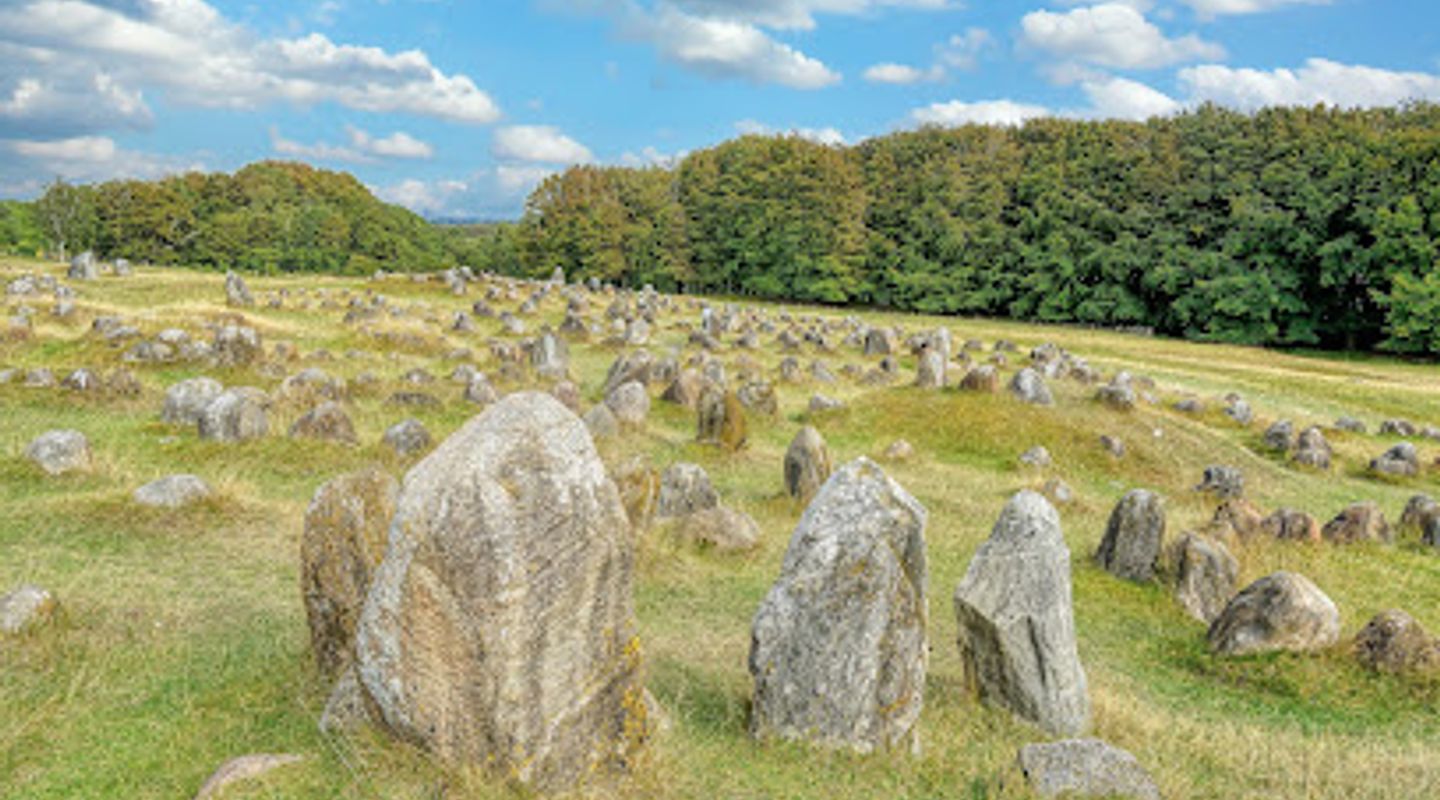
Set on a windswept hill above the Limfjord in Nørresundby, Lindholm Høje is one of Denmark’s most evocative Viking and Iron Age burial grounds, with nearly 700 cremation graves and ship-shaped stone settings dating from around 400–1000 AD. The adjacent Viking Museum uses original finds, immersive displays and hands-on elements to bring daily life, trade and beliefs of the Lindholm community to life, complemented by a café and shop. It is an atmospheric, compact site that combines archaeology, landscape and storytelling in a single visit.
On-site amenities
 Restrooms
 Drink options
 Drinking water
 Food options
 Seating areas
 Sheltered areas
 Picnic areas
 Trash bins
 Information boards
 Visitor centre
Opening hours
- Every dayOpen 24 hours
Opening hours as listed on the venue’s Google Business Profile. Hours can change for services and special events, so check with the venue before you go.
- Address
- Vikingevej 40, 9400 Nørresundby
- Website
Getting there
Local bus from central Aalborg
Taxi from Aalborg city centre or cruise pier
Bicycle from Aalborg
Regional public transport from North Jutland towns
Discover more about Lindholm Høje
A hill of stones and stories above the Limfjord
Perched on a rise overlooking Aalborg and the Limfjord, Lindholm Høje feels both exposed to the elements and curiously intimate. Under your feet lies Denmark’s largest Viking Age burial ground, used for more than six centuries from the late Iron Age until shortly before the year 1000. Spread across the sloping hill are hundreds of low stone settings that once framed individual cremation graves, many arranged in distinctive ship shapes.What looks at first like a scatter of rocks slowly resolves into an ordered landscape of remembrance. Each outline once marked where a pyre burned, the remains of the deceased carefully gathered and covered. Walking the grassy paths between them, you trace invisible lines of families and generations who farmed the nearby fields, watched the fjord’s shifting tides and chose this height as their final resting place.
Viking beliefs written in stone
The forms on the hill are far from random. Long, pointed layouts suggest ships, a powerful symbol of movement between worlds as well as trade and warfare. Smaller oval and triangular patterns may echo houses, hearths or protective symbols. Together they hint at a society where the journey after death was imagined with as much care as daily work.Sand drifting in from the west eventually blanketed much of the settlement, sealing graves and traces of longhouses beneath a protective layer. That same sand, once a hazard that drove people away, helped preserve the site so clearly today. Simple information boards dotted around the hill decode what you see without overwhelming the quiet of the landscape, leaving room to absorb the play of light, wind and stone.
Inside the Viking Museum’s immersive halls
Down the slope, the modern Viking Museum expands the story. Here, archaeological finds from the graves and nearby village—tools, jewellery, weapons, animal bones, charred grain—are arranged to reconstruct everyday life along the Limfjord. Detailed models and illustrations show how longhouses clustered together, how fields were laid out and how livestock shaped the economy.Interactive elements let you step closer to the past: you might don a virtual Viking helmet on a screen or try the rhythm of rowing a digital longship. Another major exhibition broadens the view to the wider prehistory of the Limfjord region, exploring rituals, trade networks and changing landscapes through carefully lit objects and large teaching panels.
Landscape views, café comforts and quiet corners
Beyond the main displays, Lindholm Høje invites you to slow down. Wide windows and viewpoints frame Aalborg’s skyline and the curve of the fjord, linking the reconstructed past with the living city below. In the on-site café, regional dishes, cakes and coffee offer a warm pause between museum and burial ground, while good weather tempts many back outside for a second look.A well-stocked museum shop specialises in replicas of jewellery and artefacts found at Lindholm Høje, along with books, woollens and mead. It is one of the few places where you can take home items directly inspired by the hill under your feet. Paths around the museum are generally accessible, though the uneven burial ground itself remains truer to its original contours.
Planning your time among the stones
Most visitors allow around two to three hours to combine the outdoor cemetery with the indoor museum. In brighter months, the low northern light adds definition to the stone outlines, and lingering outside is especially rewarding. Cooler or windier days shift the balance indoors, where the layered story of six centuries of burials and everyday life unfolds at a comfortable pace.Whether you are deeply interested in archaeology or simply curious about Viking history, Lindholm Høje offers a clear, compact narrative: a community living on a fjord-side hill, honouring its dead with stone and fire, then gradually yielding to drifting sand and time. Standing here today, with city sounds muted in the distance, it is easy to imagine the smoke of a pyre rising where the stones now quietly mark the past.
Evendo Review Centre
 Google
Guest reviews
Best time to go
Quietest: Jan, Feb & Mar · before 8am or at 8pm
Busy times are Evendo estimates for a typical year, to help you plan. Actual crowds vary with events, school holidays and the weather.
Explore Lindholm Høje on the map
A handpicked selection of must-see spots near Lindholm Høje, mapped for you.
Get your free copy of our complete guide to Lindholm Høje, delivered straight to you.
Everything on this page, from opening hours and how to get there to Eve’s tips and the best time to go, in one PDF you can read offline, print or share.
Already have an account? Sign in
Your Lindholm Høje guide is ready.
We'll send it to · Not you? Sign out

Getting your guide ready…
We are putting together a fresh copy of the Lindholm Høje guide. This can take up to a minute.
This can take a few moments. If your browser asks, choose Allow so the download can start. You'll find the guide in your Downloads folder.
Nothing happened? Download it again
Sorry, the guide is taking longer than usual. Please try again in a minute, or get it by email instead.
Other nearby places you may find interesting
The closest places of the same kind, if this one is not quite what you had in mind.
-
-
-
-
-


Swipe for more places
More to explore near Lindholm Høje

 Best experiences near Lindholm Høje
 Best hotels near Lindholm Høje
 Best landmarks near Lindholm Høje
 Best attractions near Lindholm Høje
 Best shops near Lindholm Høje
 Best restaurants near Lindholm Høje
 Best bars near Lindholm Høje
Do you manage this location?
Take control to get all the benefits, like improved information, better appearance, and stronger visibility across AI-powered discovery.
Explore more
Explore more of Aalborg
Discover Aalborg, Denmark's northern gem, where medieval charm meets modern vibrancy. Enjoy rich history, cultural landmarks, and a lively culinary scene.
Explore Aalborg
Explore more of Denmark
Discover Denmark: A perfect blend of history, modern design, and the cozy concept of hygge. Explore vibrant cities, serene landscapes, and world-class cuisine.
Explore Denmark
