Aalborg Kloster, Aalborg Travel Guide
A living medieval monastery in central Aalborg, where whitewashed cloisters, a modest church and quiet courtyards still embody six centuries of care and community.
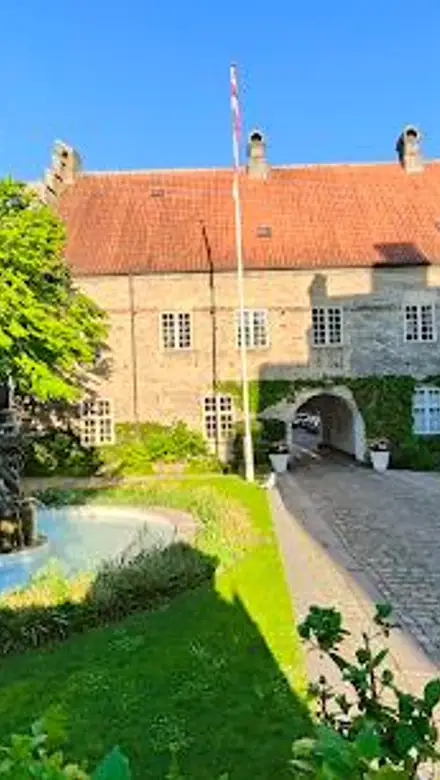
Tucked into the heart of Aalborg’s old town, Aalborg Kloster is a 15th‑century former Holy Ghost monastery and Denmark’s oldest social institution. Founded in 1431 as a hospice for the poor and sick, it later served as hospital and Latin school, and today houses sheltered apartments around tranquil courtyards. With whitewashed wings, red-tiled roofs and a modest church steeped in local history, including the WWII Churchill Club resistance group, the complex offers a rare, lived-in glimpse of monastic life woven into the modern city.
A brief summary to Aalborg Kloster
- Klosterjordet 1, Aalborg, Aalborg Centrum, 9000, DK
- Click to display
- Click to display
- Duration: 0.5 to 1.5 hours
- Free
-
 Mixed
Mixed
- Mobile reception: 5 out of 5
- Monday 7 am-9 pm
- Tuesday 7 am-9 pm
- Wednesday 7 am-9 pm
- Thursday 7 am-9 pm
- Friday 7 am-9 pm
- Saturday 7 am-9 pm
- Sunday 7 am-9 pm

Know before you go
Hi, I'm Eve. Here are a few practical things to know before exploring Aalborg Kloster.
- Plan ahead if you want to see inside: access to the church and interior spaces is generally only possible on organised guided tours, often in the summer season.
- Move quietly and respectfully in the courtyards and passages, as the monastery functions as a residential home for elderly locals.
- Combine a visit with a stroll through Aalborg’s old town streets and nearby attractions to appreciate how the monastery once related to the medieval city.
- Look out for small architectural details such as carved stones, old doorways and timber framing that reveal successive building phases.
- If you are interested in WWII history, read about the Churchill Club beforehand to enrich your understanding of the site’s resistance story.
Do you manage this location?
Take control to get all the benefits, like improved information, better appearance, and stronger visibility across AI-powered discovery. Learn more about listing your business on Evendo
Activate your presenceOther nearby places you may find interesting
The closest places of the same kind, if this one is not quite what you had in mind.

Explore Aalborg Kloster on the Map
A handpicked selection of must-see spots near Aalborg Kloster, mapped for you.
Getting There
-
On foot from central Aalborg
From Aalborg’s compact city centre, reaching Klosterjordet typically takes 5–15 minutes on foot, depending on your starting point. The route passes through level, paved streets and pedestrian areas, making it accessible for most visitors, including those with strollers or wheelchairs. Because the monastery sits inside the historic core, walking is usually the most convenient option and avoids the challenge of navigating and paying for central parking.
-
City bus within Aalborg
Several city bus lines run through central Aalborg with stops a short walk from the monastery area, and journeys within the city typically take 10–20 minutes depending on traffic. A single adult ticket on local buses usually costs about 20–30 DKK and can be bought from ticket machines or via local transport apps. Buses are generally low-floor and suitable for wheelchairs, but service frequency is lower in the evenings and on weekends, so it is worth checking the timetable in advance.
-
By car from the wider Aalborg area
If you arrive by car from suburbs or nearby towns, driving into central Aalborg usually takes 10–30 minutes depending on distance and traffic. Expect to use public car parks or parking garages in the city centre, often within a 5–10 minute walk of the monastery. Hourly parking fees are common and typically range from around 10–25 DKK per hour, with time limits and higher rates during weekday business hours, so always check local signs and payment machines.
For the on-the-go comforts that matter to you
-
 Restrooms
-
 Seating Areas
-
 Trash Bins
-
 Information Boards
Discover more about Aalborg Kloster
Medieval foundations in the heart of Aalborg
Founded in 1431 as a Holy Ghost House, Aalborg Kloster grew from a charitable idea into a fully fledged monastic complex at the edge of a thriving merchant town. The land and support of Denmark’s Christian I helped anchor the institution, which quickly became known for caring for the poor, the sick and travellers passing through Jutland. Within a few decades, the complex was recognized as a Holy Ghost monastery, placing it firmly within a wider European network of religious care institutions.Although the surrounding city has changed dramatically, much of the monastery’s spatial logic is still legible. You step into a self-contained world organised around cloister walks, small gardens and modest communal spaces, all tailored to a life structured by prayer, work and charity. Stone, timber and brick tell the story of slow additions and repairs over centuries, reflecting periods of prosperity, reform and war.Architecture shaped by service and simplicity
Aalborg Kloster is not an exercise in grandiose Gothic display; its character lies in whitewashed walls, steep red roofs and a human scale that reflects its original social mission. Low wings frame cobbled courtyards, with arcades and passages guiding you between living quarters, former hospital spaces and the monastery church. The architecture prioritises practicality and shelter over spectacle, yet fine details appear in carved portals, small niches and the rhythm of mullioned windows.Inside the church, the atmosphere turns more contemplative. Here, centuries of worship have left subtle traces: plain vaults, softened by light and occasional ornament, and an overall feeling of restraint consistent with Holy Ghost houses’ focus on care rather than lavish display. Even where interiors have been restored, the design language remains understated, allowing the history of use to speak more loudly than decoration.From Reformation upheaval to modern social role
The Reformation in the 16th century brought enormous changes to monastic life across Denmark, but Aalborg Kloster retained a social role rather than falling into ruin. Over time, its functions shifted between hospital, poorhouse and educational institution, including periods as a Latin school that prepared young men for university and clerical life. Buildings were adapted, divided and rebuilt to suit these evolving needs, layering new purposes onto medieval fabric.Today the monastery is still a residential place, now organised as a cluster of apartments for elderly citizens of Aalborg. This continuity of care gives the complex a distinctive atmosphere: it is simultaneously historic site and living home. Instead of being frozen as a purely museum-like monument, it remains part of the city’s welfare landscape, echoing its founding vision of shelter for those in need.Stories from resistance and everyday life
Beyond its long charitable history, Aalborg Kloster holds a special chapter from the Second World War. Within these walls, the Churchill Club, considered Denmark’s first organised resistance group of schoolboys, found a base for meetings during the early occupation years. Their acts of sabotage became a symbol of youthful defiance and are now firmly woven into the national memory of resistance. Knowing this, the quiet cloisters gain an added layer of meaning: they have witnessed both contemplative devotion and clandestine planning.Yet much of the monastery’s story is quieter. Everyday rhythms of bells, meals, washing, teaching and nursing once filled the courtyards. The modest gardens, protected from North Jutland winds, would have supplied herbs and foodstuffs, while the surrounding town brought in noise, trade and news. The site’s appeal lies in imagining these overlapping lives—monks, patients, students, residents—sharing the same spaces across six centuries.Visiting a living cloistered community
For visitors today, Aalborg Kloster offers a rare chance to move through an authentic monastic layout still embedded in the city grid. The exterior courtyards and facades can usually be appreciated freely, revealing vistas of gables, timber details and sheltered green pockets. Pre-arranged guided tours grant access to interiors and the restored church, where you can hear in-depth explanations of the building phases, artworks and social role of the monastery.Because this is an active residence, the experience is naturally more intimate and respectful than at many larger historic sites. Voices are hushed, doors are discreet, and the sense of being a guest in someone’s home is ever-present. That balance—between heritage and everyday life—is at the heart of Aalborg Kloster’s character, making it one of Aalborg’s most atmospheric and thought-provoking historic enclaves.












Your all‑in‑one travel companion app
Explore expert travel guides, compare and book tours, experiences, hotels, and more—all from the palm of your hand. Download now for seamless trip planning wherever your wanderlust takes you.


Explore More of Aalborg
Looking beyond Aalborg Kloster? Discover Aalborg for broader travel guides, local hot-spots, and regional highlights.
Explore Aalborg
Aalborg’s wide, bustling shopping artery, lined with fashion, outdoor gear and gadgets, linking central squares and side streets full of food and nightlife.
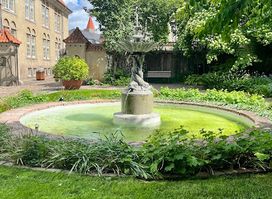
A quiet cloister garden tucked inside Aalborg’s medieval monastery, where simple greenery and ancient walls create a rare pocket of calm in the city centre.