

Badehuse ved Vestre Strandvej Travel Guide
Free Guide: A ribbon of tiny, colourful wooden bath huts on Ærøskøbing’s Vesterstrand, blending living island tradition with one of Ærø’s most scenic, swimmable beaches.


A brief summary of Badehuse ved Vestre Strandvej
A ribbon of tiny, colourful wooden bath huts on Ærøskøbing’s Vesterstrand, blending living island tradition with one of Ærø’s most scenic, swimmable beaches.
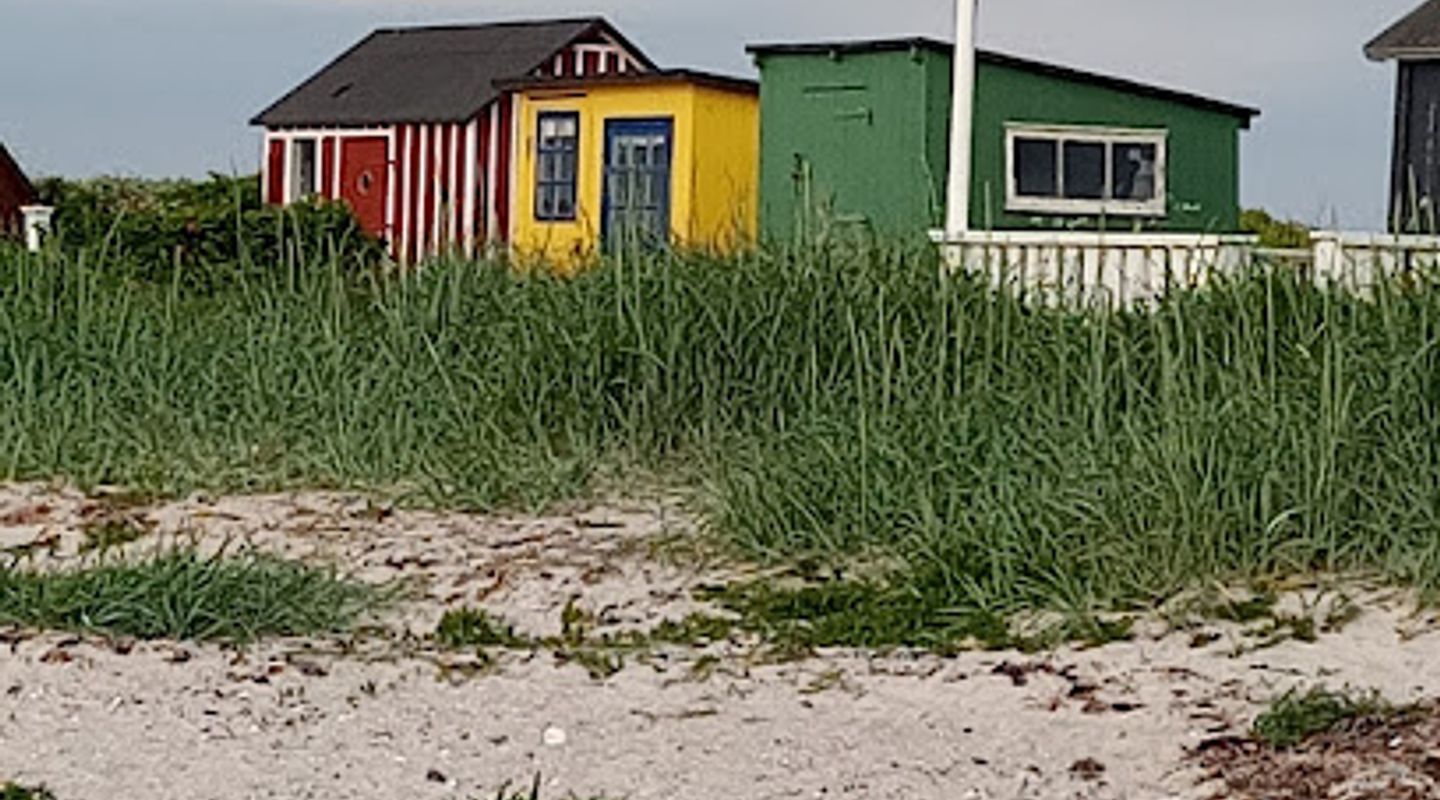
Strung out along Ærøskøbing’s Vesterstrand, the Badehuse ved Vestre Strandvej are over 70 small, brightly painted wooden beach huts that have become one of Ærø’s most distinctive sights. Dating back to the late 19th and early 20th centuries, these privately owned, minimalist cabins sit directly on the sand, framing views across the South Funen Archipelago and creating a colourful backdrop to one of the island’s most beloved swimming beaches.
On-site amenities
 Restrooms
 Drink options
 Drinking water
 Food options
 Seating areas
 Trash bins
 Information boards
- Address
- Vestre Strandvej 1, 2, 5970, 5970 Ærøskøbing
Getting there
Ferry and walk from Ærøskøbing harbour
Local bus within Ærø
Car or bicycle on Ærø
Discover more about Badehuse ved Vestre Strandvej
Colourful cabins on Ærøskøbing’s golden strand
The Badehuse ved Vestre Strandvej line the shallow, sandy curve of Vesterstrand, just west of Ærøskøbing’s old town. Each hut is a tiny timber box, perched on low stilts or foundations in the sand, painted in distinctive colours that range from butter yellow and sky blue to deep red and forest green. Together they form a cheerful ribbon that immediately signals you have arrived somewhere uniquely Ærø.The setting is intimate and human in scale. Low dunes, calm water and broad skies give the huts a generous backdrop without ever overwhelming them. From the shore you can watch ferries gliding to and from Ærøskøbing harbour while swimmers, paddleboarders and sailors share the bay in front of the huts.
A heritage of simple seaside pleasures
The first bathing huts appeared here in the late 1800s, when sea bathing grew fashionable and islanders wanted modest places to change and relax close to the water. Over time more were added, gradually filling the strand with small, privately owned houses that became tightly woven into local families’ summer traditions.Today there are more than 70 huts along Vesterstrand, and they are recognised as part of Ærø’s cultural heritage. Regulations preserve their modest size and simple construction, which is why they remain without permanent electricity or plumbing. Their very limitations keep the focus on fresh air, daylight and the sea rather than modern comforts.
Life between beach, dunes and sea
On a warm day the area around the huts feels like a relaxed open-air living room. Towels hang over handrails, coffee steams from thermos flasks, and children drift constantly between water’s edge and hut steps. The beach itself is shallow and usually calm, which makes it especially welcoming for less confident swimmers.As the sun moves across the horizon, the light transforms the scene. Early mornings are quiet and contemplative, with long reflections on the water. Late afternoons cast the huts in a soft, honeyed glow, and on clear evenings the sunset over the South Funen Archipelago can be spectacular, with silhouettes of masts and low islands on the horizon.
Architecture in miniature
Although each hut follows a broadly similar format – a small rectangular room, simple door and a tiny deck or steps – the details differ. Rooflines, window shapes and colour choices give every cabin its own character. Some lean towards almost nautical simplicity, others sport playful trims or bolder hues, but all are resolutely minimalist in size.Seen together, the huts read like a line of architectural sketches: experiments in how little a seaside retreat really needs. Their presence has become as emblematic for Ærøskøbing as the town’s cobbled streets and half-timbered houses, extending the historic character of the town right out onto the sand.
Respecting a living local tradition
Although many visitors photograph the huts and use the beach freely, the cabins themselves remain private. Doors are kept closed when owners are away, and interiors are simple spaces reserved for families and friends. Enjoying the area is about appreciating the atmosphere rather than entering the buildings.The surrounding strand is open to all, and you are free to swim, stroll the waterline and pause on the sand between the huts, always taking care not to block steps or doors. In this way, the Badehuse ved Vestre Strandvej offer a rare chance to experience an authentic, ongoing seaside tradition while still feeling warmly welcomed at the heart of everyday island life.
Evendo Review Centre
 Google
Guest reviews
Best time to go
Quietest: Jan, Feb & Nov · before 7am or from 10pm
Busy times are Evendo estimates for a typical year, to help you plan. Actual crowds vary with events, school holidays and the weather.
Explore Badehuse ved Vestre Strandvej on the map
A handpicked selection of must-see spots near Badehuse ved Vestre Strandvej, mapped for you.
Get your free copy of our complete guide to Badehuse ved Vestre Strandvej, delivered straight to you.
Everything on this page, from opening hours and how to get there to Eve’s tips and the best time to go, in one PDF you can read offline, print or share.
Already have an account? Sign in
Your Badehuse ved Vestre Strandvej guide is ready.
We'll send it to · Not you? Sign out

Getting your guide ready…
We are putting together a fresh copy of the Badehuse ved Vestre Strandvej guide. This can take up to a minute.
This can take a few moments. If your browser asks, choose Allow so the download can start. You'll find the guide in your Downloads folder.
Nothing happened? Download it again
Sorry, the guide is taking longer than usual. Please try again in a minute, or get it by email instead.
Other nearby places you may find interesting
The closest places of the same kind, if this one is not quite what you had in mind.
-
-
-
-
-


Swipe for more places
More to explore near Badehuse ved Vestre Strandvej
-
 Best experiences near Badehuse ved Vestre Strandvej
-
 Best hotels near Badehuse ved Vestre Strandvej
-
 Best landmarks near Badehuse ved Vestre Strandvej
-
 Best attractions near Badehuse ved Vestre Strandvej
-
 Best shops near Badehuse ved Vestre Strandvej
-
 Best restaurants near Badehuse ved Vestre Strandvej
-
 Best bars near Badehuse ved Vestre Strandvej


Do you manage this location?
Take control to get all the benefits, like improved information, better appearance, and stronger visibility across AI-powered discovery.
Explore more

Explore more of Ærø
Discover the enchanting island of Ærø in Denmark, where fairy-tale towns, scenic landscapes, and rich maritime history await to captivate your senses.
Explore Ærø
Explore more of Denmark
Discover Denmark: A perfect blend of history, modern design, and the cozy concept of hygge. Explore vibrant cities, serene landscapes, and world-class cuisine.
Explore Denmark
