

Det Gamle Værft Travel Guide
Free Guide: A working harbor shipyard turned hands-on maritime hub, where traditional crafts, nautical style, and Ærø’s seafaring heritage come together by the quayside.


A brief summary of Det Gamle Værft
A working harbor shipyard turned hands-on maritime hub, where traditional crafts, nautical style, and Ærø’s seafaring heritage come together by the quayside.
Det Gamle Værft, set on Ærøskøbing’s historic harbor front, is a living maritime workshop, museum, and shop where traditional Danish shipbuilding and craftsmanship are kept vibrantly alive. In this socio-economic experience venue you can watch or join hands-on activities like forging, ropework, and woodcraft, then browse nautical clothing, locally made goods, and maritime souvenirs. It is an engaging stop for families, craft enthusiasts, and anyone curious about Ærø’s seafaring soul.
On-site amenities
 Drink options
 Food options
 Seating areas
 Trash bins
 Information boards
Opening hours
- Every day10 am–6 pm
Opening hours as listed on the venue’s Google Business Profile. Hours can change for services and special events, so check with the venue before you go.
- Address
- Ærøskøbing Havn 4B, 5970 Ærøskøbing
- Phone
- Website
Getting there
Ferry and short walk from Søby or Marstal
On foot within Ærøskøbing
Bicycle from around the island
Discover more about Det Gamle Værft
Harbor-front workshop in the heart of Ærø’s seafaring story
Det Gamle Værft sits directly on the old harbor of Ærøskøbing, surrounded by bobbing masts, weathered timbers, and the soft clink of rigging against metal. The setting alone tells you this is not a static museum but a place where maritime heritage is still very much alive. In the low, workshop-style buildings, the smell of salt air mingles with wood shavings and warm metal from the forge, evoking centuries of island shipbuilding.The venue is conceived as a socio-economic experience space, where local craftspeople, volunteers, and partners use traditional skills to create modern opportunities. This gives the shipyard a subtly different atmosphere from a conventional attraction: it feels both authentic and quietly industrious, rooted in everyday harbor life rather than staged spectacle.
Living craftsmanship: from forge and woodshop to rope and rigging
Inside the workshops, traditional techniques take center stage. You may see the blacksmith’s fire glowing as iron is heated, hammered, and shaped into functional hardware like hooks, hinges, and knives, echoing the tools once vital to sailing ships. Nearby, woodworkers plane planks and fashion smaller items, drawing on long-honed boatbuilding skills that helped define Ærø’s working waterfront.Ropework and knot craft are another specialty here. Displays and demonstrations highlight intricate knots, macramé pieces, and maritime rigging methods, some inspired by masters of the trade. The focus is on learning by doing: the environment encourages curiosity about how things are made, and the clatter of tools and low hum of conversation reinforces the sense of a real, working yard.
The Old Shipyard shop: maritime style and island-made treasures
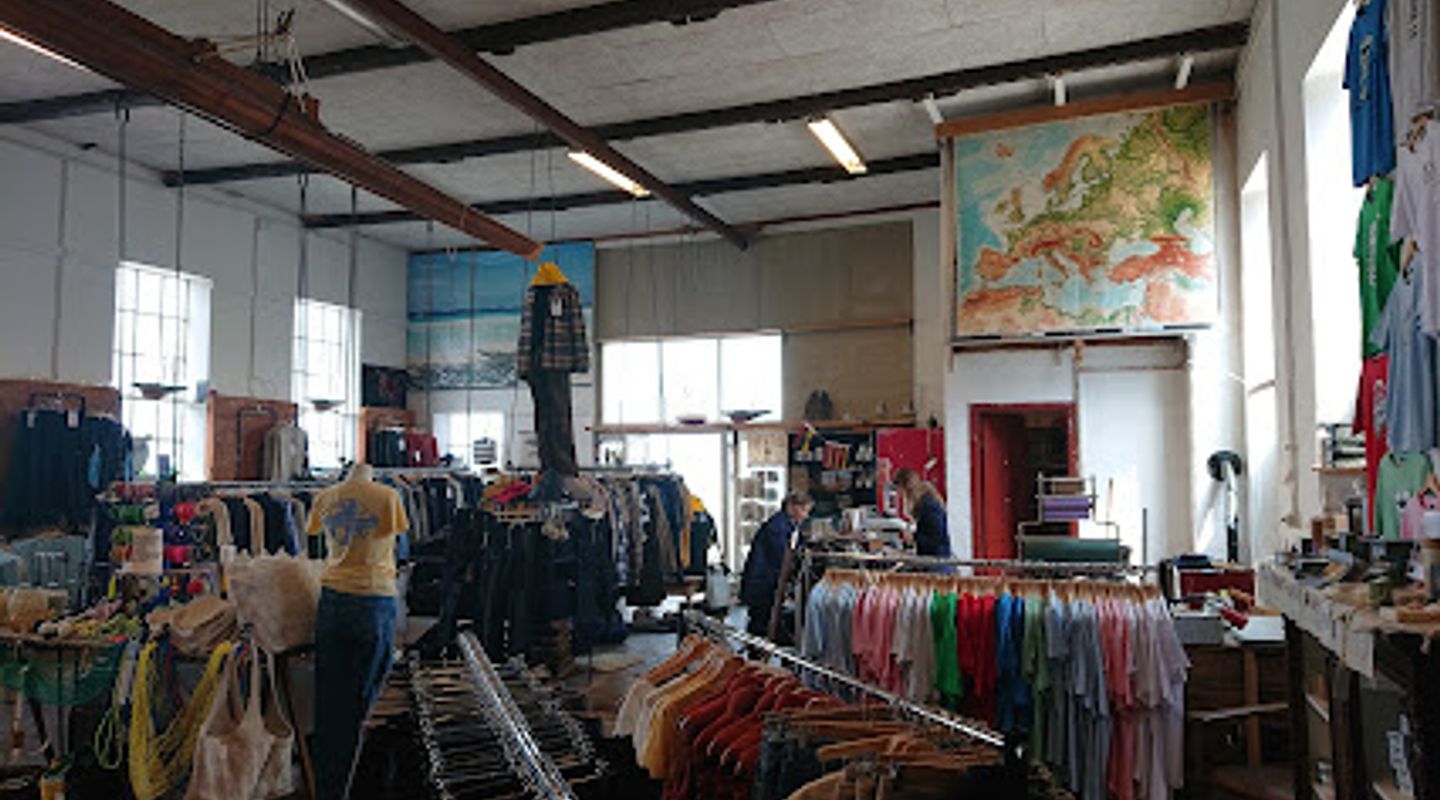
Attached to the workshop spaces is a distinctive shop that extends the maritime story into clothing and design. Racks of robust workwear and sailor-inspired garments recall the practical outfits worn by travelling craftsmen and seafarers in the 19th century, adapted today for life on deck or relaxed holidays by the sea. The fabrics tend to be sturdy and understated, designed for weather that can quickly shift along the Baltic coast.The shelves are lined with souvenirs that are often produced on-site or sourced from local makers. Visitors can find forged knives and metal fittings from the workshop, hand-tied macramé, nautical accessories, postcards, knitwear, sweets, and artworks with motifs drawn from the South Funen archipelago. Rather than generic trinkets, the selection reflects the skills and materials that define this particular harbor community.
Hands-on learning for all ages by the water’s edge
Det Gamle Værft is especially suited to travelers who enjoy tactile, educational experiences. The layout and programming are designed so children and adults can engage with tools, materials, and stories at their own pace. Interpretive displays give accessible background on shipbuilding, seafaring, and coastal crafts, helping you connect individual objects – from a hand-forged hinge to a knotted rope – with broader maritime traditions.Because everything unfolds right on the quay, the boundary between museum and harbor is porous. Through open doors you can catch glimpses of boats moored outside, or step briefly from the buzzing workshop into the open air for views of Ærøskøbing’s colorful waterfront houses. It is easy to combine time at the shipyard with a wander through cobbled streets or a quiet moment watching the light play on the water.
A small-scale cultural anchor in Ærøskøbing’s historic harbor
Though modest in size, Det Gamle Værft plays an outsized role in telling the story of Ærø’s relationship with the sea. It sits within a broader network of maritime museums and heritage sites in the South Funen archipelago, yet keeps its focus intimate and hands-on rather than encyclopedic. The emphasis on working skills, reuse of traditional methods, and cooperation with local producers gives the venue a contemporary relevance that goes beyond nostalgia.For visitors, this translates into a compact but rich stop: an hour or two here can add texture and depth to any visit to Ærøskøbing, grounding picturesque harbor views in the practical realities of boats, tools, and the people who have shaped them across generations.
Evendo Review Centre
 Google
Guest reviews
Best time to go
Quietest: Jan, Feb & Nov · before 9am
Busy times are Evendo estimates for a typical year, to help you plan. Actual crowds vary with events, school holidays and the weather.
Explore Det Gamle Værft on the map
A handpicked selection of must-see spots near Det Gamle Værft, mapped for you.
Get your free copy of our complete guide to Det Gamle Værft, delivered straight to you.
Everything on this page, from opening hours and how to get there to Eve’s tips and the best time to go, in one PDF you can read offline, print or share.
Already have an account? Sign in
Your Det Gamle Værft guide is ready.
We'll send it to · Not you? Sign out

Getting your guide ready…
We are putting together a fresh copy of the Det Gamle Værft guide. This can take up to a minute.
This can take a few moments. If your browser asks, choose Allow so the download can start. You'll find the guide in your Downloads folder.
Nothing happened? Download it again
Sorry, the guide is taking longer than usual. Please try again in a minute, or get it by email instead.
Other nearby places you may find interesting
The closest places of the same kind, if this one is not quite what you had in mind.
-
Ærøskøbing Bymuseum • Ærø Museum Island history, seafaring tales and borderland politics unfold inside Ærøskøbing’s 18th‑century sheriff’s house and its tranquil historic garden.
-
Hammerich House • Aero Museum A crooked red cottage of antiques and art where sculptor Gunnar Hammerich’s lovingly preserved rooms bring Ærøskøbing’s early 20th-century home life vividly to life.
-
Badehuse ved Vestre Strandvej Iconic, colour-washed beach huts lining Ærøskøbing’s Vesterstrand, where a century of island bath culture meets shallow emerald water and unforgettable sunsets.
-
Ærø Museum Step into Ærøskøbing’s 1775 bailiff’s house, where maritime tales, island traditions and a tranquil 1920s market garden bring Ærø’s history vividly to life.
-
Marstal Søfartsmuseum A harbour-side maze of ship models, full-scale interiors and sea stories tracing Marstal’s rise from island port to major Danish maritime town.
Swipe for more places
More to explore near Det Gamle Værft

 Best experiences near Det Gamle Værft
 Best hotels near Det Gamle Værft
 Best landmarks near Det Gamle Værft
 Best attractions near Det Gamle Værft
 Best shops near Det Gamle Værft
 Best restaurants near Det Gamle Værft
 Best bars near Det Gamle Værft
Do you manage this location?
Take control to get all the benefits, like improved information, better appearance, and stronger visibility across AI-powered discovery.
Explore more
Explore more of Aero
Discover the tranquil beauty of Ærø, Denmark's charming island paradise with historic towns, scenic landscapes, and rich maritime heritage.
Explore Aero
Explore more of Denmark
Discover Denmark: A perfect blend of history, modern design, and the cozy concept of hygge. Explore vibrant cities, serene landscapes, and world-class cuisine.
Explore Denmark
