

Clausholm Castle Travel Guide
Free Guide: A moated Baroque manor near Hadsten, where painted ceilings, royal love stories and terraced gardens bring Denmark’s aristocratic past vividly to life.


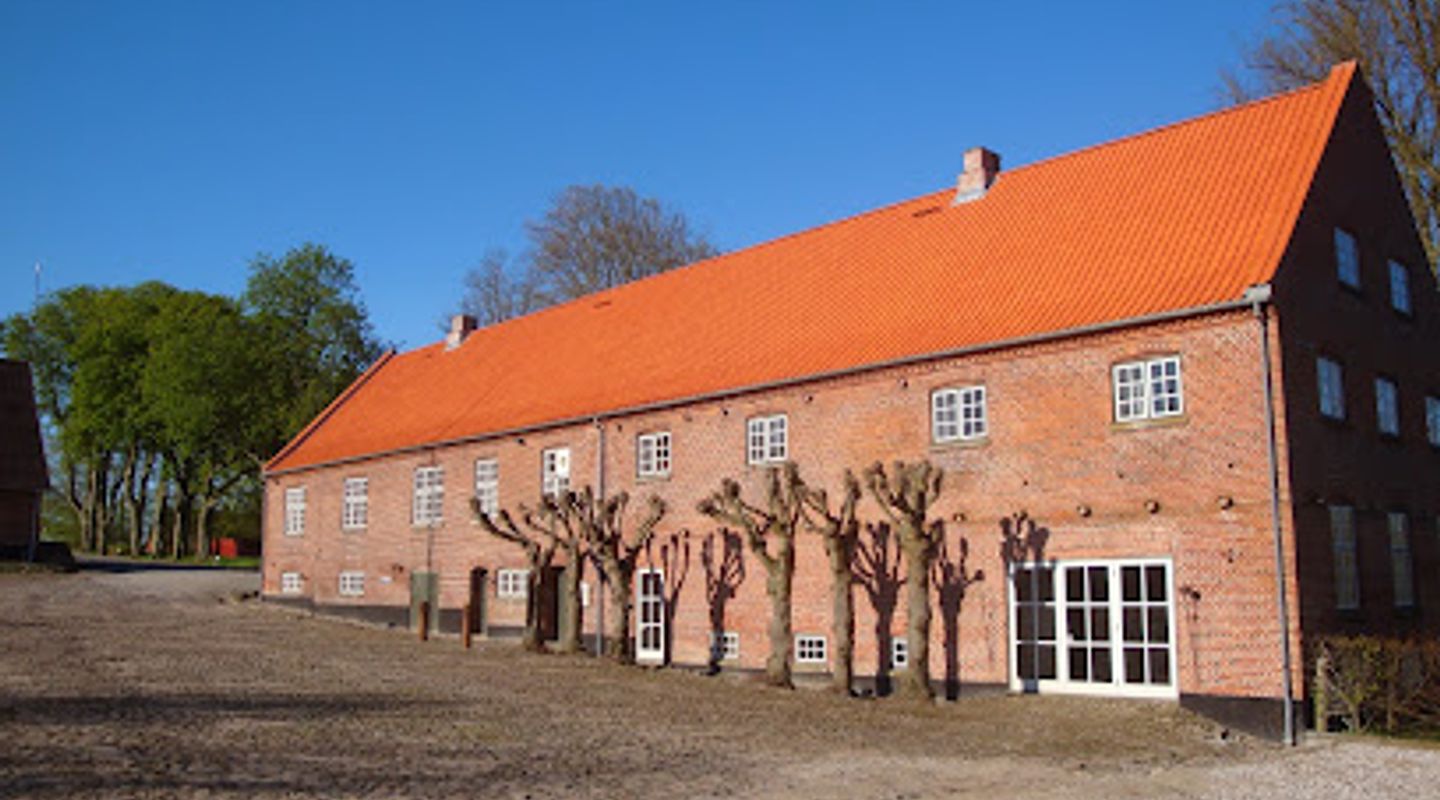
A brief summary of Clausholm Castle
A moated Baroque manor near Hadsten, where painted ceilings, royal love stories and terraced gardens bring Denmark’s aristocratic past vividly to life.
Set amid gentle East Jutland countryside near Hadsten, Clausholm Castle is one of Denmark’s finest Baroque ensembles. The late‑17th‑century, three‑winged manor rises above a moat and formal avenues, with 14 painted stucco ceilings, richly panelled salons and a chapel containing one of the country’s oldest organs. In summer the castle and its terraced Baroque gardens open for guided tours, walks along canals and fountains, and seasonal events that bring royal love stories and aristocratic life vividly to life.
On-site amenities
 Restrooms
 Seating areas
 Picnic areas
 Trash bins
 Information boards
- Address
- Clausholmvej 316, 8370 Hadsten
- Phone
- Website
Getting there
Regional train and bus from Aarhus
Car from Aarhus or Randers
Taxi from Hadsten
Discover more about Clausholm Castle
Baroque grandeur in the Jutland countryside
Clausholm Castle sits in rolling farmland outside Hadsten, but its silhouette and setting are pure royal theatre. Approached along long, arrow‑straight avenues lined with trees, the cream‑coloured manor rises from a broad moat, framed by terraces, canals and clipped greenery. Built in the 1690s for powerful chancellor Conrad Reventlow, it is among Denmark’s earliest Baroque residences, conceived to impress from the very first glimpse across the water.The main building follows a strict, ceremonial symmetry typical of the period. Three wings form an open U around a cobbled courtyard, their tall windows and hipped roofs emphasising height and rhythm. Above the entrance, Reventlow’s marble bust still gazes down at arriving guests, a reminder that this was once both a working political hub and a family home anchored in privilege and power.
Interiors rich with stucco, panels and stories
Inside, Clausholm is renowned for its wealth of decorative detail. The castle preserves around 14 painted stucco ceilings, their swirling plasterwork and allegorical scenes celebrating virtues, mythology and dynastic ambition. In a country where many manor houses favour restraint, these rooms stand out for their colour and exuberance, a visual manifesto of Baroque taste.Walls are lined with carved and painted wooden panels, forming what is considered the largest concentration of such decorations in Denmark. Moving from room to room, you pass from formal reception halls to more intimate chambers, each with its own palette of gilding, textiles and creaking floorboards. The upper floor was designed for royal guests, while the chancellor’s own apartments occupied the level below, a social hierarchy written into the very plan of the house.
Royal romance and dramatic intrigue
Clausholm is inseparable from one of Denmark’s most talked‑about royal love stories. In the early 18th century, King Frederik IV became infatuated with Anna Sophie Reventlow, Conrad’s daughter. The tale that endures is dramatic: the king seizing Anna Sophie from Clausholm and later marrying her, elevating her from noblewoman to queen. Their relationship left its mark not only on the castle’s ownership but also on its atmosphere of whispered intrigues and shifting loyalties.As you explore, it is easy to imagine the tension of those years: negotiations in candlelit salons, hurried letters drafted in side rooms, and private moments behind heavy doors. The combination of intimate living quarters and grand ceremonial spaces gives the story a physical backdrop that makes courtly life feel remarkably close at hand.
A chapel, an organ and the soundscape of faith
One of Clausholm’s most distinctive spaces is its chapel, a compact but lavishly decorated room that blends spiritual purpose with aristocratic display. Here, one of Denmark’s oldest preserved organs still occupies pride of place, its pipes and casing framed by painted ornamentation and careful carpentry. Built around 1700, it once underscored baptisms, weddings and everyday services with music tailored to the family’s status.The chapel’s benches, altar and gallery work together to create a vertical drama of light and shadow. Sunlight filtering through tall windows picks out gilded details and worn wood, underlining how faith, art and politics intersected within the castle walls. Even when silent, the instrument adds an aural dimension to the visit, inviting you to imagine Baroque hymns echoing off stucco and stone.
Terraced gardens, canals and formal perspectives
Step outside and the Baroque vision continues in the landscape. Clausholm’s gardens are laid out on several levels, with terraces descending towards waterways and open lawns. Straight avenues carve through the grounds, carefully aligned to the castle’s main axis and to distant focal points, creating long, theatrical sightlines. Fountains, canals and reflecting pools add movement and mirror the sky, softening the strict geometry.In summer, when the park is open, the contrasts are particularly striking: clipped hedges and geometric beds set against the looser textures of surrounding woodland. The garden design reflects both French influence and Danish adaptation, serving historically as a stage for promenades, hunts and celebrations. Today it offers quiet corners for contemplation as well as broad vistas ideal for photography and unhurried walks.
Living heritage with a modern rhythm
Although steeped in history, Clausholm remains a lived‑in estate. The manor is still privately owned, with the family overseeing ongoing conservation of both building and park. Since the mid‑20th century, extensive restoration has modernised the infrastructure while safeguarding original materials, earning recognition for the quality of the work.The estate opens to the public mainly from May to September, when guided tours reveal layers of architecture, politics and daily life behind the façades. Seasonal events, from cultural gatherings to festive markets, occasionally animate the courtyards and lawns, weaving contemporary activity into a centuries‑old framework. For travellers in East Jutland, Clausholm offers not just a beautiful castle and garden, but a vivid window into how power, art and landscape once intertwined at the highest levels of Danish society.
Evendo Review Centre
 Google
Guest reviews
Best time to go
Quietest: Jan, Feb & Mar · before 8am or from 8pm
Busy times are Evendo estimates for a typical year, to help you plan. Actual crowds vary with events, school holidays and the weather.
Explore Clausholm Castle on the map
A handpicked selection of must-see spots near Clausholm Castle, mapped for you.
Get your free copy of our complete guide to Clausholm Castle, delivered straight to you.
Everything on this page, from opening hours and how to get there to Eve’s tips and the best time to go, in one PDF you can read offline, print or share.
Already have an account? Sign in
Your Clausholm Castle guide is ready.
We'll send it to · Not you? Sign out

Getting your guide ready…
We are putting together a fresh copy of the Clausholm Castle guide. This can take up to a minute.
This can take a few moments. If your browser asks, choose Allow so the download can start. You'll find the guide in your Downloads folder.
Nothing happened? Download it again
Sorry, the guide is taking longer than usual. Please try again in a minute, or get it by email instead.
Other nearby places you may find interesting
The closest places of the same kind, if this one is not quite what you had in mind.
-
-
-
-
-


Swipe for more places
More to explore near Clausholm Castle

 Best experiences near Clausholm Castle
 Best hotels near Clausholm Castle
 Best landmarks near Clausholm Castle
 Best attractions near Clausholm Castle
 Best shops near Clausholm Castle
 Best restaurants near Clausholm Castle
 Best bars near Clausholm Castle
Do you manage this location?
Take control to get all the benefits, like improved information, better appearance, and stronger visibility across AI-powered discovery.
Explore more

Explore more of Central Jutland
Explore Central Jutland in Denmark: A perfect blend of natural beauty, cultural heritage, and family-friendly attractions.
Explore Central Jutland
Explore more of Denmark
Discover Denmark: A perfect blend of history, modern design, and the cozy concept of hygge. Explore vibrant cities, serene landscapes, and world-class cuisine.
Explore Denmark
