Flodbyen Randers, Randers Travel Guide
Free Guide: A transforming waterfront where Randers turns to face its river and fjord, blending climate protection, green spaces and future city life along the water’s edge.


A brief summary of Flodbyen Randers
A transforming waterfront where Randers turns to face its river and fjord, blending climate protection, green spaces and future city life along the water’s edge.
Flodbyen Randers is an ambitious new waterfront district unfolding along the Gudenå and Randers Fjord, reshaping the link between historic Randers and its blue edge. Centered around climate protection works known as the “Klimabåndet”, the project blends flood defenses, green spaces, promenades and future housing into one continuous riverfront. Even in its evolving state, you can explore paths, views over the water and a front‑row glimpse of one of Denmark’s most visionary urban transformations.
On-site amenities
 Restrooms
 Drink options
 Drinking water
 Food options
 Seating areas
 Sheltered areas
 Trash bins
 Information boards
 Visitor centre
- Address
- Østervold, 8900 Randers
Getting there
Walk from central Randers
City bus within Randers
Bicycle access
Regional arrival to Randers then local transfer
Discover more about Flodbyen Randers
Where River, Fjord and City Meet
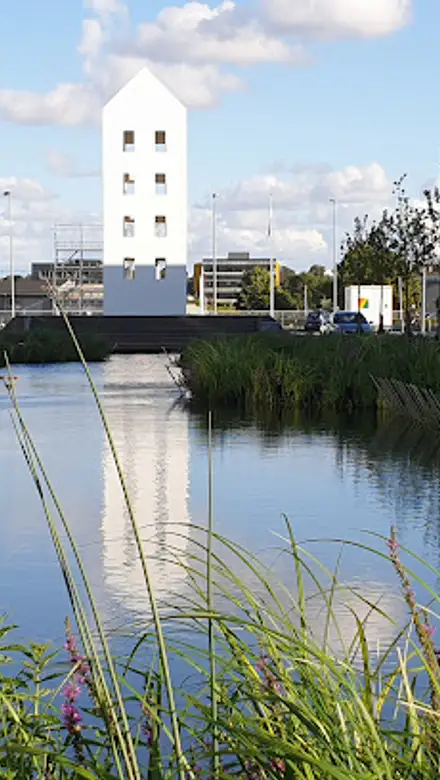
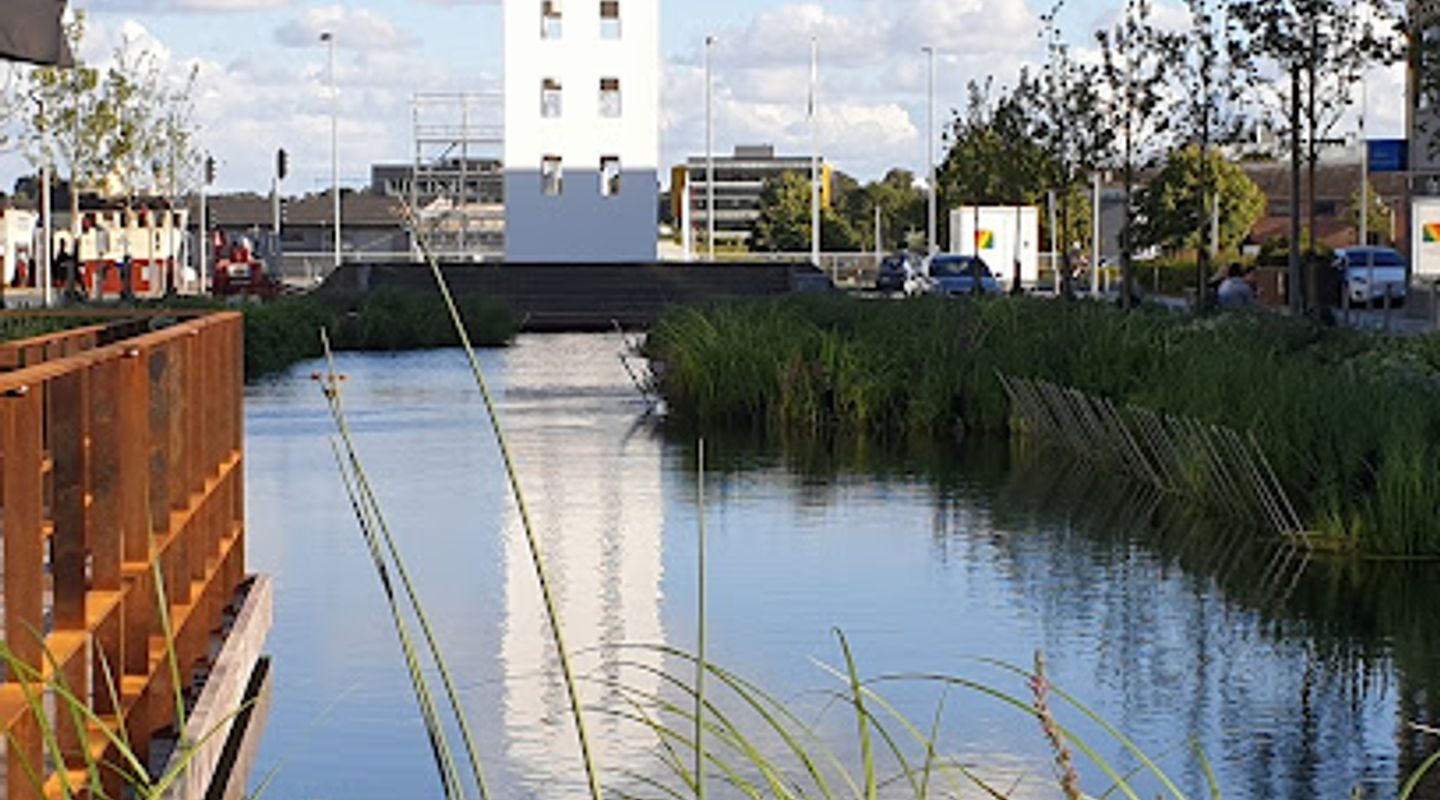
Flodbyen Randers stretches along the meeting point of the Gudenå River and Randers Fjord, turning what was once mainly working waterfront into a new face of the city. Here, Denmark’s only real river harbour city reorients itself towards the water, opening views back to the historic centre and out towards the broad, tidal fjord.Walking the area today, you encounter a patchwork of finished public spaces, interim paths, grassy embankments and working quays. This is very much a place in transition, where cranes and construction fences share space with benches, wild grasses and the slow movement of the river below.
A Climate Belt with a Social Heart
At the core of Flodbyen lies the Klimabåndet – an elevated band of landscape and engineering designed to shield Randers from storm surges, cloudbursts and rising groundwater. Instead of hiding the defenses behind walls, the project turns them into accessible terraces, embankments and routes.You may walk along gently sloping paths that double as flood protection, pause on viewpoints angled towards the fjord, or sit on steps that lead down to floating pontoons when water levels allow. The technical role of the structures fades into the background; what you feel most is the sense of a long, continuous waterfront park wrapping around the city.
Naturing the Former Harbour Edge
Flodbyen is also about returning a more natural character to parts of the harbour. Design proposals reintroduce a soft delta-like edge in selected zones, with reeds, shallow inlets and low planting that invite birds, insects and occasional fishers closer to the city.Even in early phases, you notice how grasses and young trees have been woven into former hardstand areas. Information panels and pop-up exhibition containers occasionally explain how new wetlands and nature-based solutions are tied to larger regional efforts to restore water landscapes along the Gudenå and Randers Fjord.
Everyday Life by the Water
The ambition is that Flodbyen becomes a lived-in neighbourhood as much as a recreational zone. Future housing, offices and cultural spaces are planned to step down towards the water, with everyday routes leading residents across the Klimabåndet to the riverfront.For now, you may see joggers using the new paths as a continuous loop, cyclists passing between town and fjord, and families stopping at lawns or simple play elements. The scale feels intimate compared with large seafront promenades; distances are walkable, and the old city streets remain just a short stroll away.
Architecture of Transitions
Architecturally, Flodbyen is defined less by singular landmark buildings and more by the way terraces, ramps and landscape planes tilt and fold. Materials are robust – concrete, steel, timber and stone – chosen to withstand brackish water and winter storms, then softened by planting and the constantly shifting light over the fjord.Long, low profiles keep views open to church towers and the traditional skyline of Randers. The design language is contemporary and clean, yet attentive to the industrial traces of the old harbour: rails in the pavement, mooring bollards, and preserved edges that tell of a working waterfront history.
Seeing a City’s Future Take Shape
Visiting Flodbyen now offers a rare chance to witness a major urban project while it is unfolding. Temporary exhibitions, model displays and viewing points help explain how future streets, canals and green corridors will stitch into the existing city.It is a place that rewards slow exploration: follow a ramp to a higher terrace for a wide panorama of river bends, then drop back down to feel the breeze at the water’s edge. As phases are completed, Flodbyen will gradually read less like a construction site and more like a continuous urban landscape where climate resilience, nature and city life are inseparable.
Evendo Review Centre
 Google
Guest reviews
Best time to go
Quietest: Jan, Feb & Mar · before 6am or from 9pm
Busy times are Evendo estimates for a typical year, to help you plan. Actual crowds vary with events, school holidays and the weather.
Explore Flodbyen Randers on the map
A handpicked selection of must-see spots near Flodbyen Randers, mapped for you.
Get your free copy of our complete guide to Flodbyen Randers, delivered straight to you.
Everything on this page, from opening hours and how to get there to Eve’s tips and the best time to go, in one PDF you can read offline, print or share.
Already have an account? Sign in
Your Flodbyen Randers guide is ready.
We'll send it to · Not you? Sign out

Getting your guide ready…
We are putting together a fresh copy of the Flodbyen Randers guide. This can take up to a minute.
This can take a few moments. If your browser asks, choose Allow so the download can start. You'll find the guide in your Downloads folder.
Nothing happened? Download it again
Sorry, the guide is taking longer than usual. Please try again in a minute, or get it by email instead.
Other nearby places you may find interesting
The closest places of the same kind, if this one is not quite what you had in mind.
-
-
-
-
-


Swipe for more places
More to explore near Flodbyen Randers

 Best experiences near Flodbyen Randers
 Best hotels near Flodbyen Randers
 Best landmarks near Flodbyen Randers
 Best attractions near Flodbyen Randers
 Best shops near Flodbyen Randers
 Best restaurants near Flodbyen Randers
 Best bars near Flodbyen Randers
Do you manage this location?
Take control to get all the benefits, like improved information, better appearance, and stronger visibility across AI-powered discovery.
Explore more

Explore more of Randers
Discover Randers, Denmark's riverside jewel, where history meets nature in a city full of cultural charm and scenic beauty.
Explore Randers
Explore more of Denmark
Discover Denmark: A perfect blend of history, modern design, and the cozy concept of hygge. Explore vibrant cities, serene landscapes, and world-class cuisine.
Explore Denmark