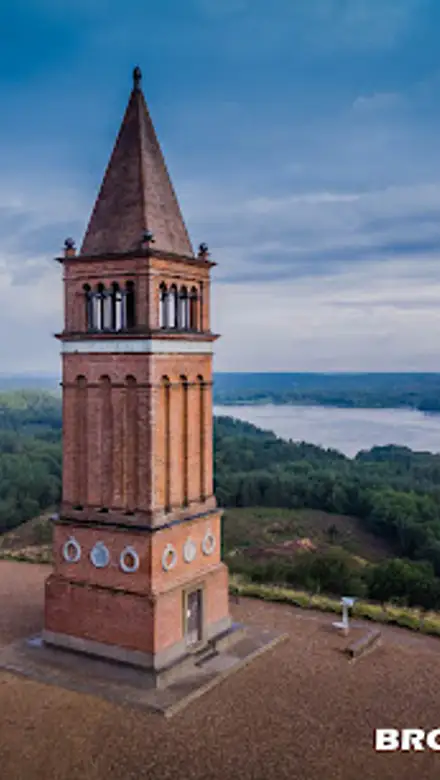
Himmelbjerget Travel Guide
Free Guide: Iconic Danish hilltop above Julsø, where sweeping lake views, a red-brick democracy tower and forest trails turn a former “highest point” into a classic countryside escape.


A brief summary of Himmelbjerget
Iconic Danish hilltop above Julsø, where sweeping lake views, a red-brick democracy tower and forest trails turn a former “highest point” into a classic countryside escape.
Himmelbjerget, the “Sky Mountain” of Denmark, rises 147 metres above sea level between Ry and Silkeborg in the lake-dotted Søhøjlandet region. Once thought to be the country’s highest point, this forested hill now draws visitors for its sweeping panoramas over Julsø, its red-brick memorial tower to King Frederik VII and Danish democracy, and a network of walking trails, picnic spots and viewpoints that have hosted gatherings and folk meetings for nearly two centuries.
On-site amenities
 Restrooms
 Seating areas
 Sheltered areas
 Picnic areas
 Trash bins
 Information boards
 Visitor centre
 Drink options
 Food options
 Drinking water
Opening hours
- Every dayOpen 24 hours
Opening hours as listed on the venue’s Google Business Profile. Hours can change for services and special events, so check with the venue before you go.
- Address
- Himmelbjergvej, 8680 Ry
- Website
Getting there
Train and local bus from Aarhus
Car from Silkeborg
Seasonal lake boat from Ry or Silkeborg
Regional bus from Skanderborg
Discover more about Himmelbjerget
Denmark’s Sky Mountain Above the Lakes
Himmelbjerget, literally “The Sky Mountain”, rises steeply from the shores of Julsø in the heart of Søhøjlandet, Denmark’s Lake District. At 147 metres above sea level it is no longer the nation’s highest point, yet the dramatic 121‑metre drop from summit to lake gives it an almost alpine presence by Danish standards. As you climb through mixed woodland, glimpses of blue water and rolling hillsides reveal why this ridge has captured the national imagination for generations.From the open plateau at the top, the view takes in a patchwork of forests, heaths and interlinked lakes stretching towards Silkeborg and Ry. On clear days the layered horizon makes it easy to understand how earlier visitors believed they were standing on the roof of the country. The setting feels both intimate and expansive: birdsong close by, distant boats tracing pale wakes far below.
The Tower That Celebrates a Constitution
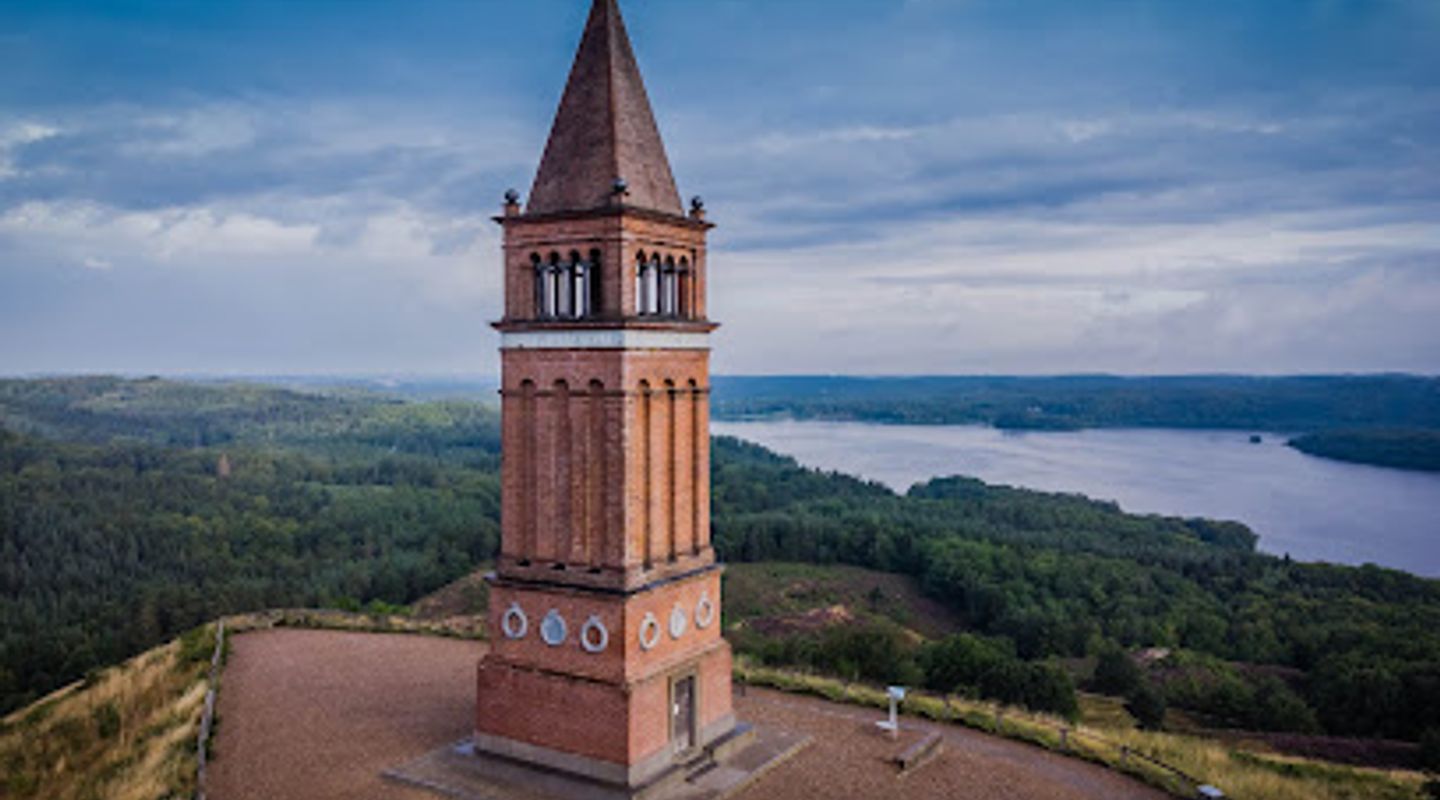
Crowning the summit is the red‑brick Himmelbjerg Tower, a 25‑metre memorial raised in 1875 to honour King Frederik VII and his role in granting Denmark its first democratic constitution in 1849. Its stepped silhouette and arched openings give it the character of a national monument as much as a viewpoint. Reliefs and inscriptions around the base commemorate the shift from absolute monarchy to constitutional rule, linking this landscape directly to the story of modern Denmark.Scattered nearby are smaller stone monuments and plaques, some dedicated to writers and public figures who shaped Danish cultural life, and one celebrating the introduction of women’s suffrage in 1915. Together they turn the hilltop into an open‑air gallery of political and cultural milestones, where forest paths weave between markers of changing rights and ideas.
Gatherings, Steamers and National Romanticism
Himmelbjerget’s status as a symbolic place grew in the 19th century, when the poet‑priest Steen Steensen Blicher chose it as the setting for large folk meetings from 1839 onwards. These open‑air assemblies combined debate, speeches and song against the backdrop of the lakes and hills. Their spirit of national awakening fed into the broader current of Danish romanticism, which celebrated landscapes as carriers of identity and memory.The arrival of steamships and railways made reaching the hill easier, and excursion culture flourished. Historic boats still ply the Silkeborg lakes, including venerable paddle steamers that dock below the slopes in season. The combination of boat trip, forest walk and summit view has helped fix Himmelbjerget as a classic countryside outing, where leisure and nation‑building history quietly intersect.
Walking Trails and Forest Hideaways
Beyond the busy summit area, an extensive network of marked trails radiates through the surrounding state forests. Short family‑friendly circuits loop past viewpoints and picnic clearings, while longer routes such as the Himmelbjergrute encircle the lakes over many kilometres. Underfoot you will find mostly wide forest paths and some steeper, rooty sections that hint at the area’s glacial origins.Sheltered hollows and heath‑fringed ridges offer quieter corners away from the main viewpoints, ideal for unhurried lunches or quiet contemplation. Look out for smaller curiosities too, such as hidden huts and lesser‑known memorial stones tucked among the trees. In autumn, the beech and oak canopy shifts to copper and gold, while spring brings fresh green leaves and woodland flowers.
From Ice Age Landscape to Everyday Escape
Geologically, Himmelbjerget is a so‑called “false hill”, carved by powerful meltwater streams at the end of the last Ice Age rather than pushed up as a single rounded mound. The deep trench that now holds Julsø is a reminder of that erosive force, and the steep slopes above the lake are unusually dramatic for central Jutland. This shaped terrain lends today’s walks a sense of depth and elevation rare in the otherwise gentle Danish countryside.Despite its historical gravitas, the hill functions as a relaxed, everyday escape. Families spread blankets on the grass, walkers connect forest sections into longer hikes, and visitors pause with ice creams beside the viewpoints. Himmelbjerget manages to be both a national symbol and an accessible green playground, where sweeping vistas, democratic history and simple outdoor pleasures come together on one compact ridge.
Evendo Review Centre
 Google
Guest reviews
Best time to go
Quietest: Jan, Feb & Mar · before 7am or from 9pm
Busy times are Evendo estimates for a typical year, to help you plan. Actual crowds vary with events, school holidays and the weather.
Explore Himmelbjerget on the map
A handpicked selection of must-see spots near Himmelbjerget, mapped for you.
Get your free copy of our complete guide to Himmelbjerget, delivered straight to you.
Everything on this page, from opening hours and how to get there to Eve’s tips and the best time to go, in one PDF you can read offline, print or share.
Already have an account? Sign in
Your Himmelbjerget guide is ready.
We'll send it to · Not you? Sign out

Getting your guide ready…
We are putting together a fresh copy of the Himmelbjerget guide. This can take up to a minute.
This can take a few moments. If your browser asks, choose Allow so the download can start. You'll find the guide in your Downloads folder.
Nothing happened? Download it again
Sorry, the guide is taking longer than usual. Please try again in a minute, or get it by email instead.
Other nearby places you may find interesting
The closest places of the same kind, if this one is not quite what you had in mind.
-
Abbey Mill Historic Abbey Mill on Mossø’s shore, where Denmark’s longest wooden building meets bird-rich wetlands, gentle trails and a tranquil corner of the Gudenå River.
-
Clausholm Castle A moated Baroque manor near Hadsten, where painted ceilings, royal love stories and terraced gardens bring Denmark’s aristocratic past vividly to life.
-
Slotsholmen Tranquil green islet at Silkeborg’s origins, where a vanished riverside castle meets calm water views, quiet lawns and a gentle sense of early local history.
-
The Manor House of Hald An 18th-century manor fronting centuries-old ruins, deep forest and Hald Lake, where writers find seclusion and visitors wander through Danish history in nature.
-
Marselisborg Castle Royal retreat above Aarhus Bay, where sculpture-filled gardens, a rose-scented park and quiet ceremony surround Denmark’s Jutland summer palace.
Swipe for more places
More to explore near Himmelbjerget

 Best experiences near Himmelbjerget
 Best hotels near Himmelbjerget
 Best landmarks near Himmelbjerget
 Best attractions near Himmelbjerget
 Best shops near Himmelbjerget
 Best restaurants near Himmelbjerget
 Best bars near Himmelbjerget
Do you manage this location?
Take control to get all the benefits, like improved information, better appearance, and stronger visibility across AI-powered discovery.
Explore more

Explore more of Central Jutland
Explore Central Jutland in Denmark: A perfect blend of natural beauty, cultural heritage, and family-friendly attractions.
Explore Central Jutland
Explore more of Denmark
Discover Denmark: A perfect blend of history, modern design, and the cozy concept of hygge. Explore vibrant cities, serene landscapes, and world-class cuisine.
Explore Denmark