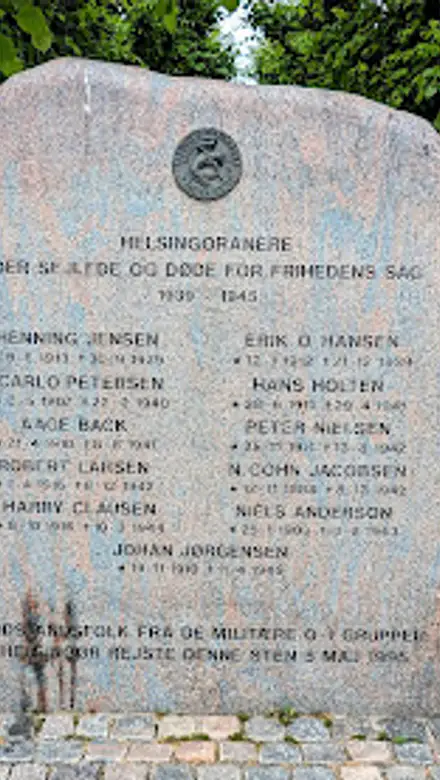
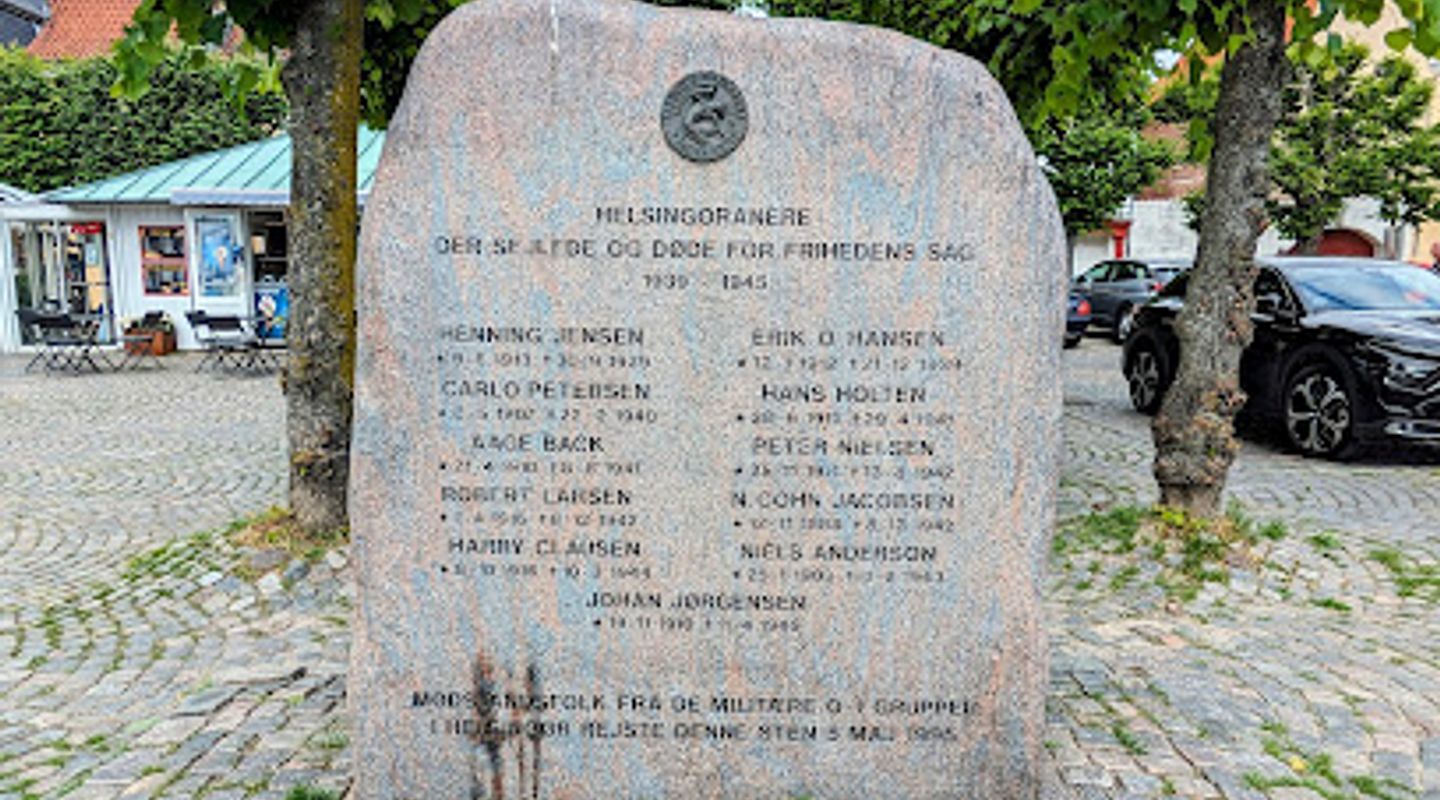
Memorial stone for fallen Helsingorans, Helsingor Travel Guide
Free Guide: A modest harbor-side monument in Helsingør honoring local lives lost in World War II, quietly linking the busy waterfront to the town’s stories of resistance and sacrifice.


A brief summary of Memorial stone for fallen Helsingorans
A modest harbor-side monument in Helsingør honoring local lives lost in World War II, quietly linking the busy waterfront to the town’s stories of resistance and sacrifice.
Set on Havnepladsen by Helsingør’s busy harbor, the Memorial Stone for Fallen Helsingorans is a sober granite monument honoring local residents killed in World War II. Surrounded by ferries, sea breeze and views toward Sweden, this compact memorial offers a quiet pause amid the waterfront bustle, connecting the city’s maritime life with its wartime sacrifices and resistance history.
On-site amenities
 Restrooms
 Drink options
 Drinking water
 Food options
 Seating areas
 Trash bins
 Information boards
 Visitor centre
- Address
- Havnepladsen (Jernbanevej, 3000 Helsingør
Getting there
Train and short walk from Copenhagen
Local and regional bus to Helsingør harbor area
Ferry from Helsingborg and walk from the terminal
Discover more about Memorial stone for fallen Helsingorans
A harbor-side tribute to Helsingør’s war dead
The Memorial Stone for Fallen Helsingorans stands on Havnepladsen, a small open square beside the harbor where trains, ferries and city life converge. At first glance it is modest: a solid stone monument framed by paving, flagpoles and the constant movement of the waterfront. Step closer and you find engraved names and dates, a roll call of locals who lost their lives during the Second World War.This simple composition is deliberate. The eye is drawn not to elaborate sculpture, but to the carved letters themselves, inviting you to read and reflect. Here, the abstract enormity of war is reduced to individual lives from a single Danish town, each name linked to the streets, houses and families that still surround the harbor today.
Stories of occupation, resistance and loss
Helsingør’s position at the narrow strait of Øresund made it strategically important during the German occupation of Denmark. The town became a place of clandestine crossings and quiet acts of defiance, as local seafarers and citizens helped people escape across the water to neutral Sweden. Other residents joined resistance groups, risking arrest, imprisonment or execution.The memorial stone distills this turbulent chapter into a physical focus point. Though it does not narrate each biography, the list of the fallen hints at a spectrum of fates: sailors lost at sea, resistance members killed in action or reprisals, civilians caught in bombings or accidents. Standing here, with the ferries still plying the same routes, it is easy to imagine the tension of those years when every crossing could mean survival.
A quiet pause in a lively waterfront
Havnepladsen today is anything but somber in tone. The square opens toward the water with views of Kronborg Castle, the shipyard buildings of Kulturhavn Kronborg and the polished steel figure of Han on the pier. Cafés, cyclists and commuters bring a constant flow of movement and sound. Within this setting, the memorial stone feels intentionally understated, a place for a brief, personal moment rather than a grand ceremony.Benches nearby allow you to sit within sight of the stone while watching life unfold around it. The contrast between everyday bustle and the stillness of the monument underscores its message: the freedoms embodied by a busy, open harbor were hard won. Even a short stop here can lend a different perspective to the rest of your visit.
Details, symbolism and surroundings
The stone itself follows the restrained Scandinavian memorial tradition. Typically carved in light or grey granite, it bears an inscription dedicating the monument to Helsingør residents who fell in the war, accompanied by their names arranged in neat lines. Dates and possibly small symbolic motifs—such as a cross or national emblem—complete the composition without overwhelming it.Around the monument, low plantings or simple paving keep views clear toward the ferries and the water. Flags may fly on nearby masts on commemorative days, visually tying the stone to national remembrance. This openness makes the memorial accessible at all hours, equally part of the urban landscape and set slightly apart from it.
Commemoration in a city shaped by the sea
Helsingør’s identity has always been bound to the sea, from medieval toll collections to modern ferry links and cultural projects along the docks. During the war, those same waters became both barrier and escape route. The Memorial Stone for Fallen Helsingorans anchors that history in a single spot, ensuring that the town’s development from fortified harbor to cultural waterfront does not erase the memory of those who died.Seen together with other nearby monuments related to wartime rescue and resistance, the stone forms part of a wider narrative about courage, solidarity and loss along the Øresund. For many visitors, it is a brief but poignant stop between major sights; for locals, it remains a permanent reminder that behind Helsingør’s beautiful setting lie stories of profound sacrifice.
Evendo Review Centre
 Google
Guest reviews
Best time to go
Quietest: Jan, Feb & Mar · before 6am or at 10pm
Busy times are Evendo estimates for a typical year, to help you plan. Actual crowds vary with events, school holidays and the weather.
Explore Memorial stone for fallen Helsingorans on the map
A handpicked selection of must-see spots near Memorial stone for fallen Helsingorans, mapped for you.
Get your free copy of our complete guide to Memorial stone for fallen Helsingorans, delivered straight to you.
Everything on this page, from opening hours and how to get there to Eve’s tips and the best time to go, in one PDF you can read offline, print or share.
Already have an account? Sign in
Your Memorial stone for fallen Helsingorans guide is ready.
We'll send it to · Not you? Sign out

Getting your guide ready…
We are putting together a fresh copy of the Memorial stone for fallen Helsingorans guide. This can take up to a minute.
This can take a few moments. If your browser asks, choose Allow so the download can start. You'll find the guide in your Downloads folder.
Nothing happened? Download it again
Sorry, the guide is taking longer than usual. Please try again in a minute, or get it by email instead.
Other nearby places you may find interesting
The closest places of the same kind, if this one is not quite what you had in mind.
-
-
-
-
-


Swipe for more places
More to explore near Memorial stone for fallen Helsingorans
-
 Best experiences near Memorial stone for fallen Helsingorans
-
 Best hotels near Memorial stone for fallen Helsingorans
-
 Best landmarks near Memorial stone for fallen Helsingorans
-
 Best attractions near Memorial stone for fallen Helsingorans
-
 Best shops near Memorial stone for fallen Helsingorans
-
 Best restaurants near Memorial stone for fallen Helsingorans
-
 Best bars near Memorial stone for fallen Helsingorans


Do you manage this location?
Take control to get all the benefits, like improved information, better appearance, and stronger visibility across AI-powered discovery.
Explore more

Explore more of Helsingor
Discover Helsingør, Denmark's historic coastal city, home to Kronborg Castle and a vibrant cultural scene, offering a blend of history, scenic beauty, and local charm.
Explore Helsingor
Explore more of Denmark
Discover Denmark: A perfect blend of history, modern design, and the cozy concept of hygge. Explore vibrant cities, serene landscapes, and world-class cuisine.
Explore Denmark