

Heracles and the Hydra, Helsingor Travel Guide
Free Guide: Mythological bronze warrior frozen in eternal combat on Helsingør's historic waterfront.


A brief summary of Heracles and the Hydra
Mythological bronze warrior frozen in eternal combat on Helsingør's historic waterfront.
A striking bronze sculpture by Danish artist Rudolph Tegner depicting the mythological hero Heracles battling the multi-headed Hydra, positioned on the waterfront near Kronborg Castle in Helsingør. Originally created in plaster in 1919 and recast in bronze in 1932, the sculpture was relocated to its current harborside location in 1994. This dramatic public artwork blends Greek mythology with Helsingør's maritime heritage, offering a compelling visual narrative and popular photography spot with views toward Sweden across the Øresund Strait.
On-site amenities
 Seating areas
 Information boards
 Drink options
 Food options
Opening hours
- Every dayOpen 24 hours
Opening hours as listed on the venue’s Google Business Profile. Hours can change for services and special events, so check with the venue before you go.
- Address
- Kronborgvej 5, 3000 Helsingør
Getting there
Walking from Helsingør Station
Regional Train from Copenhagen
Ferry from Helsingborg, Sweden
Driving and Parking
Discover more about Heracles and the Hydra
A Mythological Monument in Bronze
Heracles and the Hydra stands as a powerful representation of the ancient Greek legend, frozen in bronze on Helsingør's waterfront. The sculpture captures the climactic moment of Heracles' struggle against the multi-headed serpent, a narrative that has captivated audiences for millennia. Created by accomplished Danish sculptor Rudolph Tegner, the work demonstrates masterful technical skill in rendering human musculature and the writhing forms of the mythological beast. The dynamic composition conveys movement and tension, with Heracles wielding his club and shield against the creature's coiled body.
From Studio to Harborside: A Sculpture's Journey
Tegner first conceived this work in plaster in 1919, exploring the dramatic potential of the classical narrative. Over a decade later, recognizing the sculpture's power, he proposed recasting it in bronze—a more durable material suited to permanent public display. The bronze version was unveiled in 1932 near Helsingør's train station, where it stood as a testament to the town's cultural ambitions. In 1994, as part of harbor improvement works, the sculpture was relocated to its present position at the water's edge, where it now commands attention from visitors approaching Kronborg Castle and those strolling the harborfront promenade.
Setting and Surroundings
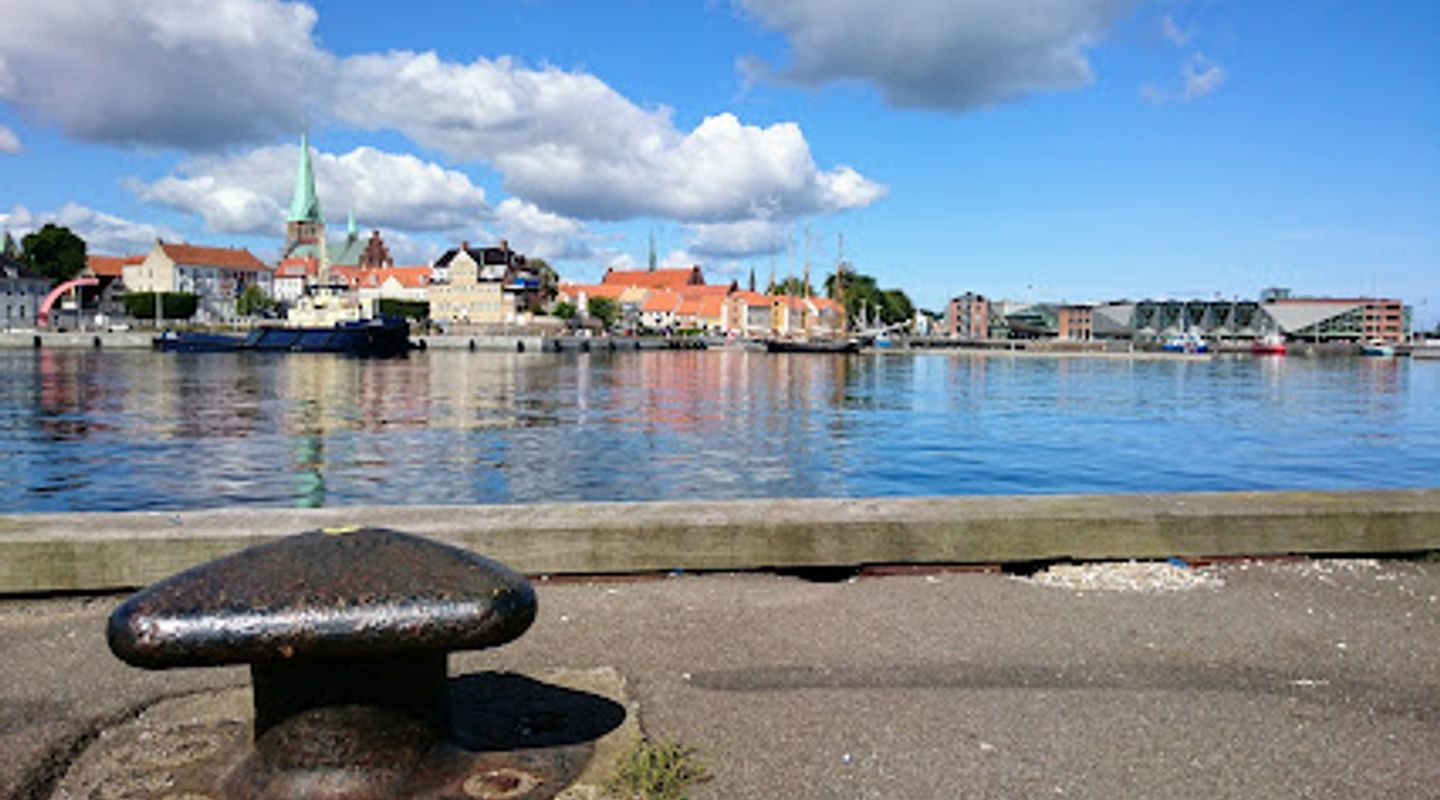
Positioned at Kronborgvej 5, the sculpture occupies a prominent location within Helsingør's historic waterfront district. The Øresund Strait stretches beyond, with views across the narrow channel toward Sweden. Nearby stands Kronborg Castle, the Renaissance fortress immortalized as Elsinore in Shakespeare's Hamlet, creating a layered historical context. The sculpture benefits from its open-air setting, where natural light plays across the bronze surface throughout the day, and the harbor backdrop provides a dramatic frame. The location is easily accessible on foot from the town center and train station, making it a natural waypoint for visitors exploring Helsingør's cultural attractions.
Artistic Significance and Interpretation
Tegner's interpretation of the Heracles myth transcends mere illustration of classical narrative. The sculpture invites multiple readings: the hero's triumph over adversity, humanity's struggle against overwhelming odds, and the eternal conflict between order and chaos. Some viewers perceive in the work a meditation on personal resilience, while others see broader allegorical meaning. The artist's choice to depict the moment of active combat—rather than victory or defeat—creates a timeless quality, as if the struggle itself constitutes the true subject. The sculpture's presence on Denmark's waterfront also connects the classical world to Nordic maritime heritage, bridging cultural traditions.
Photography and Visual Appeal
The sculpture has become a favored subject for photographers and visitors seeking memorable images. The bronze patina catches light differently throughout the day, offering varied photographic opportunities. Early morning and sunset hours provide particularly compelling lighting conditions, with the Øresund Strait and distant Swedish coastline enhancing compositional possibilities. The sculpture's scale—substantial enough to command attention yet intimate enough for close examination—rewards both distant viewing and detailed study of Tegner's craftsmanship in rendering anatomical detail and mythological symbolism.
Evendo Review Centre
 Google
Guest reviews
Best time to go
Quietest: Jan, Feb & Dec · before 6am or from 11pm
Busy times are Evendo estimates for a typical year, to help you plan. Actual crowds vary with events, school holidays and the weather.
Explore Heracles and the Hydra on the map
A handpicked selection of must-see spots near Heracles and the Hydra, mapped for you.
Get your free copy of our complete guide to Heracles and the Hydra, delivered straight to you.
Everything on this page, from opening hours and how to get there to Eve’s tips and the best time to go, in one PDF you can read offline, print or share.
Already have an account? Sign in
Your Heracles and the Hydra guide is ready.
We'll send it to · Not you? Sign out

Getting your guide ready…
We are putting together a fresh copy of the Heracles and the Hydra guide. This can take up to a minute.
This can take a few moments. If your browser asks, choose Allow so the download can start. You'll find the guide in your Downloads folder.
Nothing happened? Download it again
Sorry, the guide is taking longer than usual. Please try again in a minute, or get it by email instead.
Other nearby places you may find interesting
The closest places of the same kind, if this one is not quite what you had in mind.
-
-
-
-
-


Swipe for more places
More to explore near Heracles and the Hydra

 Best experiences near Heracles and the Hydra
 Best hotels near Heracles and the Hydra
 Best landmarks near Heracles and the Hydra
 Best attractions near Heracles and the Hydra
 Best shops near Heracles and the Hydra
 Best restaurants near Heracles and the Hydra
 Best bars near Heracles and the Hydra
Do you manage this location?
Take control to get all the benefits, like improved information, better appearance, and stronger visibility across AI-powered discovery.
Explore more

Explore more of Helsingor
Discover Helsingør, Denmark's historic coastal city, home to Kronborg Castle and a vibrant cultural scene, offering a blend of history, scenic beauty, and local charm.
Explore Helsingor
Explore more of Denmark
Discover Denmark: A perfect blend of history, modern design, and the cozy concept of hygge. Explore vibrant cities, serene landscapes, and world-class cuisine.
Explore Denmark
