Helsingborg City Hall, Helsingor Travel Guide
Free Guide: A monumental red-brick city hall and coastal gateway, where neo-Gothic towers, National Romantic detail and civic stories overlook the Øresund in central Helsingborg.


A brief summary of Helsingborg City Hall
A monumental red-brick city hall and coastal gateway, where neo-Gothic towers, National Romantic detail and civic stories overlook the Øresund in central Helsingborg.
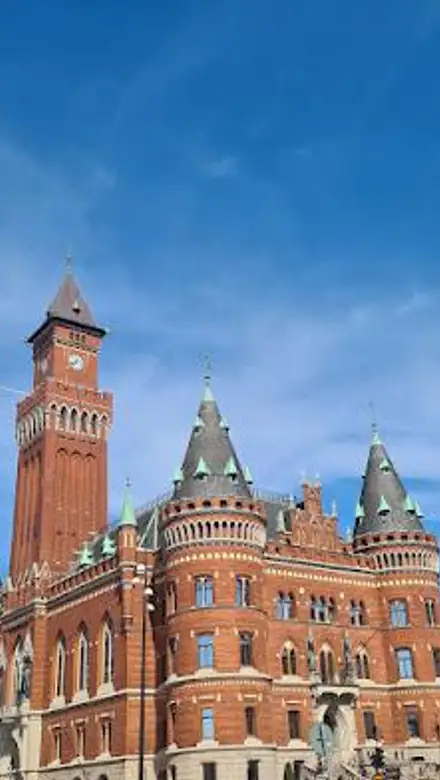
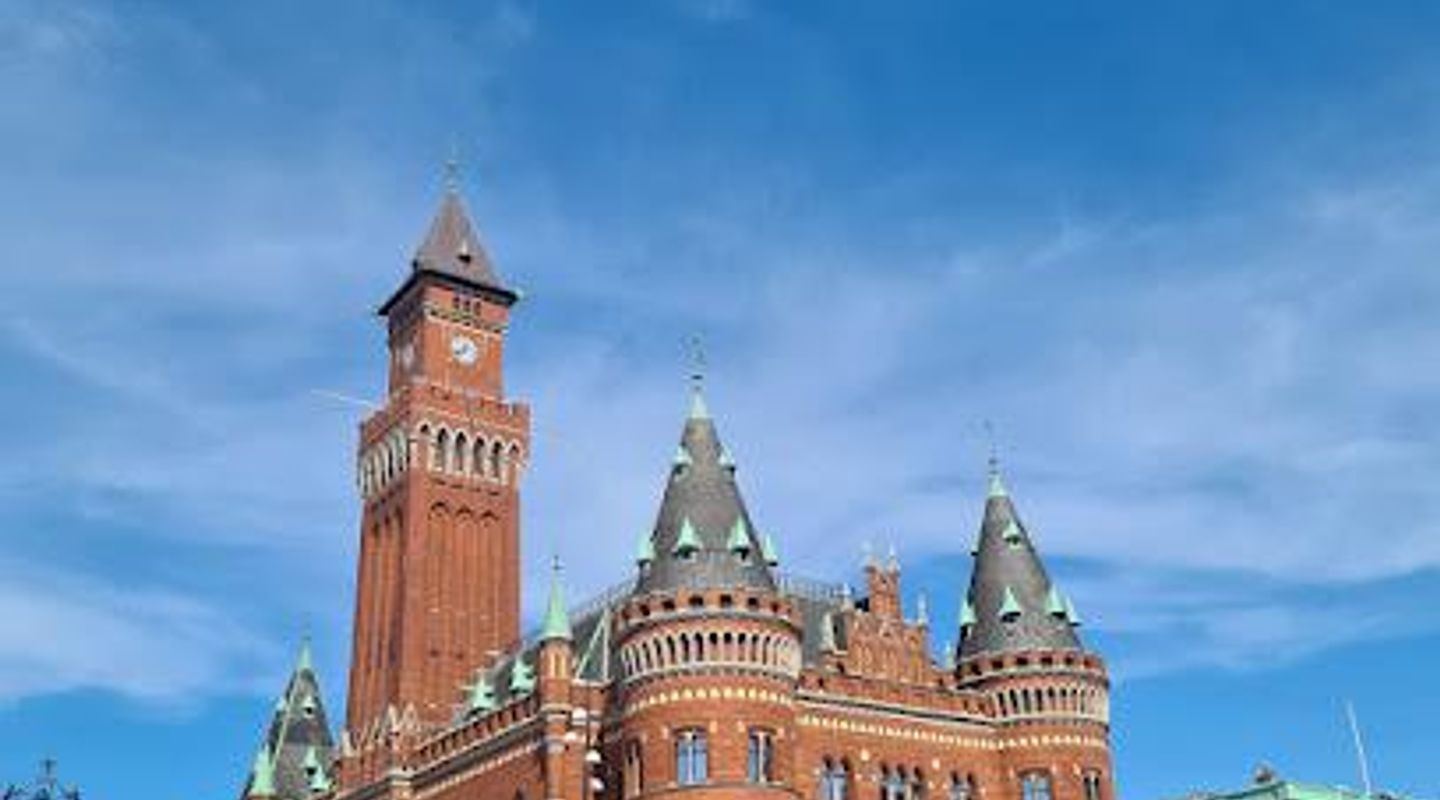
Helsingborg City Hall rises over the waterfront as a richly ornamented neo-Gothic landmark, its red brick façade and soaring clocktower announcing the city’s civic heart. Completed around 1900 to designs by architect Alfred Hellerström, it embodies Sweden’s National Romantic style, with pointed arches, decorative stonework and maritime details that nod to Helsingborg’s role as a historic gateway between Sweden and Denmark. Inside, ceremonial halls, stained glass and carved woodwork reveal a confident turn‑of‑the‑century city asserting its pride and prosperity.
On-site amenities
 Restrooms
 Seating areas
 Trash bins
 Information boards
 Visitor centre
 Drink options
 Drinking water
 Food options
- Address
- Drottninggatan 2, 252 21 Helsingborg
- Website
Getting there
Train and short walk from Helsingborg Central Station
Local bus within Helsingborg
Car or taxi to central Helsingborg
Discover more about Helsingborg City Hall
A red-brick landmark on the Øresund shore
Helsingborg City Hall commands one of the most prominent positions in the city, standing just above the harbour where ferries cross the narrow Øresund to Denmark. The building’s striking red brick mass and tall clocktower immediately catch the eye as you arrive in central Helsingborg, acting as a visual anchor between the seafront and the old town climbing the hill behind.From the cobbled square outside, you can read the town hall’s role as a ceremonial gateway. Pointed gables, pinnacled turrets and a rhythmic sequence of arched windows create a silhouette that feels both picturesque and authoritative. It was designed to impress those approaching from the water, underlining Helsingborg’s importance as a coastal city and traditional crossing point to Helsingør.
National Romantic vision and neo-Gothic detail
The current city hall was completed at the turn of the 20th century after an architectural competition, with local architect Alfred Hellerström chosen to create a suitably monumental seat of government. He blended neo-Gothic forms with the National Romantic style that was then shaping civic buildings across Sweden, using robust materials and historical references to evoke continuity and identity.Up close, the façade reveals elaborate craftsmanship: patterned brickwork, carved stone tracery and ornate window surrounds that soften the building’s mass. Decorative details reference Nordic history and maritime trade, subtle reminders that Helsingborg’s prosperity grew from its strategic position on the strait. Despite the historic inspirations, the composition is carefully ordered, reflecting the confidence of a modernising city.
Interior halls and whispered stories
Step inside on an open day or guided tour and the atmosphere shifts from busy waterfront to hushed ceremony. Grand staircases rise beneath stained-glass windows that filter soft coloured light over tiled floors and carved balustrades. Council chambers and meeting rooms are framed by panelled walls, painted inscriptions and portraits of local dignitaries, turning corridors into a gallery of civic memory.The upper levels, including a renovated attic known as Hellerström’s floor, add another layer of intrigue. Staff and craftspeople have long traded tales of unexplained music, moved objects and cold shivers in certain rooms, giving the building a faintly mysterious reputation. Whether or not you believe in ghosts, these anecdotes add depth to a place already thick with ceremony and tradition.
City hall at the heart of civic life
Beyond its striking architecture, the town hall remains an active centre of administration and political decision-making for Helsingborg. Public events, exhibitions and occasional open-house days invite residents and visitors to explore spaces that are usually the preserve of officials, reinforcing the building’s role as a shared civic symbol rather than a closed fortress.Outside, the steps and surrounding pavements work as an informal meeting ground. From here you can look towards the ferries and the Øresund, or back towards the medieval tower Kärnan and the church of Saint Mary, tracing centuries of urban development in a single sweep of the eye. The city hall sits literally and figuratively between past and present.
Framing the waterfront and old town
The area around the building rewards a slow circuit. To one side runs Drottninggatan, a broad 19th-century boulevard that helped define Helsingborg’s expansion, lined with substantial townhouses and later functionalist additions. In the other direction, the waterfront promenade leads towards cultural venues and harbour views, with the town hall’s tower always in sight.As daylight shifts, the character of the building changes. In the morning, low sun picks out the textures of brick and stone; by evening, warm interior lights glow in the tall windows while the clocktower stands dark against the sky. Whether you linger briefly on the square or explore its interior on a tour, Helsingborg City Hall offers a vivid snapshot of Swedish civic ambition at the dawn of the 20th century.
Evendo Review Centre
 Google
Guest reviews
Best time to go
Quietest: Jan, Feb & Mar · before 7am or from 9pm
Busy times are Evendo estimates for a typical year, to help you plan. Actual crowds vary with events, school holidays and the weather.
Explore Helsingborg City Hall on the map
A handpicked selection of must-see spots near Helsingborg City Hall, mapped for you.
Get your free copy of our complete guide to Helsingborg City Hall, delivered straight to you.
Everything on this page, from opening hours and how to get there to Eve’s tips and the best time to go, in one PDF you can read offline, print or share.
Already have an account? Sign in
Your Helsingborg City Hall guide is ready.
We'll send it to · Not you? Sign out

Getting your guide ready…
We are putting together a fresh copy of the Helsingborg City Hall guide. This can take up to a minute.
This can take a few moments. If your browser asks, choose Allow so the download can start. You'll find the guide in your Downloads folder.
Nothing happened? Download it again
Sorry, the guide is taking longer than usual. Please try again in a minute, or get it by email instead.
Unlock the best of Helsingborg City Hall
Skip-the-line tickets, guided tours with entry, and walking tours of the area, booked in a few clicks.


Other nearby places you may find interesting
The closest places of the same kind, if this one is not quite what you had in mind.
-
-
-
-
-


Swipe for more places
More to explore near Helsingborg City Hall

 Best experiences near Helsingborg City Hall
 Best hotels near Helsingborg City Hall
 Best landmarks near Helsingborg City Hall
 Best attractions near Helsingborg City Hall
 Best shops near Helsingborg City Hall
 Best restaurants near Helsingborg City Hall
 Best bars near Helsingborg City Hall
Do you manage this location?
Take control to get all the benefits, like improved information, better appearance, and stronger visibility across AI-powered discovery.
Explore more

Explore more of Helsingor
Discover Helsingør, Denmark's historic coastal city, home to Kronborg Castle and a vibrant cultural scene, offering a blend of history, scenic beauty, and local charm.
Explore Helsingor
Explore more of Denmark
Discover Denmark: A perfect blend of history, modern design, and the cozy concept of hygge. Explore vibrant cities, serene landscapes, and world-class cuisine.
Explore Denmark