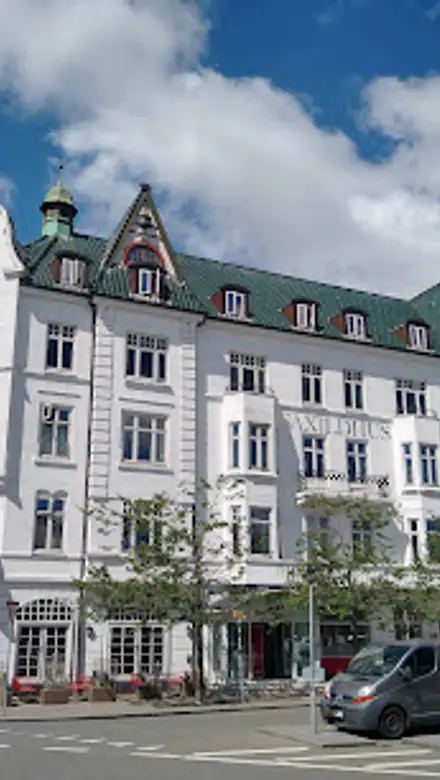
Kolding St., Kolding Travel Guide
Free Guide: The compact rail and bus hub that delivers you straight into Kolding’s mix of castle-topped history, cobbled streets and fjord-side modern design.


A brief summary of Kolding St.
The compact rail and bus hub that delivers you straight into Kolding’s mix of castle-topped history, cobbled streets and fjord-side modern design.
Kolding Station is the main rail and bus hub for this historic fjord-side city in Southern Jutland, Denmark. Sitting a short walk from Kolding’s cobbled center and the hilltop fortress of Koldinghus, the station links InterCity and regional trains with local and regional buses. For travelers, it is both a practical gateway and an easy springboard into Kolding’s mix of medieval streets, modern design culture, and waterfront walks.
On-site amenities
 Restrooms
 Drink options
 Drinking water
 Food options
 Seating areas
 Sheltered areas
 Trash bins
 Information boards
- Address
- 6000 Kolding
Getting there
InterCity / regional train within Denmark
Cross-border train from Germany
Bus from nearby Jutland towns
Taxi from within Kolding municipality
Discover more about Kolding St.
A gateway to Kolding and Southern Jutland
Kolding Station (Kolding St.) is the city’s principal transport hub and one of the key rail junctions in Southern Jutland. Positioned close to the head of Kolding Fjord, it links this historic seaport city with major Danish destinations and cross-border routes into Germany. Trains roll in from Copenhagen, Aarhus, Esbjerg and Hamburg, while regional services connect the smaller towns of Jutland. For many visitors, the first impression of Kolding is the low, functional station building, the hiss of doors opening, and the sight of buses lining up outside.As a combined train and bus node, Kolding St. concentrates much of the city’s movement into a compact space. Multiple platforms handle long-distance InterCity services and regional trains, while adjacent bus bays serve city routes and interurban lines fanning out through the Triangle Region. Clear signage, electronic departure boards and platform canopies make orientation straightforward, even in the brisk Danish weather.
Between fortress hill and fjord
Step outside the station and Kolding quickly reveals its character. Within walking distance rise the brick walls of Koldinghus, the former royal castle that once guarded the frontier between the Danish kingdom and the duchies to the south. Beyond, the old town unfolds in cobbled streets, half-timbered houses and intimate squares anchored by Sankt Nicolai Church. The station’s central position means you can drop your bag, stretch your legs and almost immediately feel the city’s medieval contours and gentle hills beneath your feet.To the east, the landscape sinks towards the waters of Kolding Fjord, while to the west light industry and residential districts hint at the city’s modern economic life. Kolding’s role as a design city is felt even in everyday details: contemporary street furniture, clean-lined public spaces and the orderly rhythm of bike lanes threading past the station forecourt.
Daily rhythms on the concourse
At busy times, Kolding St. reflects the tempo of a regional hub. Commuters stream towards platforms, students heading to and from design school cluster around ticket machines, and travelers with luggage pause under departure screens to check connections. The mix of InterCity, regional and local services creates a steady, pulsing timetable rather than sporadic bursts of activity.Facilities tend toward the practical: indoor waiting areas, basic food and drink options, ticket services and information points. Outside, taxis queue near the main entrance, and bike racks underline how many journeys here start or finish on two wheels. The overall atmosphere is efficient and low-key rather than grand, but for onward travel around Denmark it is exceptionally useful.
History in motion around the tracks
Kolding has long been defined by movement: ships along its fjord, armies and traders crossing Jutland, and now rail lines stitching Denmark to northern Germany. The station is a modern chapter in a story that includes royal castles, border conflicts and the rise of industry. Where royal couriers once rode through the valley, sleek trains now pass under electrical wires, yet the basic logic of Kolding as a crossroads remains.Travelers arriving at Kolding St. stand at a junction of old and new. A short stroll takes you from the platforms to museums of modern art and design, or up to a reconstructed castle hall where kings once held court. The station may not be a destination in its own right, but it is an essential starting point for understanding how this compact Danish city connects its historic core with the wider world by rail, road and fjord.
Evendo Review Centre
 Google
Guest reviews
Best time to go
Quietest: Jan, Feb & Nov · before 5am
Busy times are Evendo estimates for a typical year, to help you plan. Actual crowds vary with events, school holidays and the weather.
Explore Kolding St. on the map
A handpicked selection of must-see spots near Kolding St., mapped for you.
Get your free copy of our complete guide to Kolding St., delivered straight to you.
Everything on this page, from opening hours and how to get there to Eve’s tips and the best time to go, in one PDF you can read offline, print or share.
Already have an account? Sign in
Your Kolding St. guide is ready.
We'll send it to · Not you? Sign out

Getting your guide ready…
We are putting together a fresh copy of the Kolding St. guide. This can take up to a minute.
This can take a few moments. If your browser asks, choose Allow so the download can start. You'll find the guide in your Downloads folder.
Nothing happened? Download it again
Sorry, the guide is taking longer than usual. Please try again in a minute, or get it by email instead.
Other nearby places you may find interesting
The closest places of the same kind, if this one is not quite what you had in mind.
-
-
-
-
-


Swipe for more places
More to explore near Kolding St.

 Best experiences near Kolding St.
 Best hotels near Kolding St.
 Best landmarks near Kolding St.
 Best attractions near Kolding St.
 Best shops near Kolding St.
 Best restaurants near Kolding St.
 Best bars near Kolding St.
Do you manage this location?
Take control to get all the benefits, like improved information, better appearance, and stronger visibility across AI-powered discovery.
Explore more

Explore more of Kolding
Discover Kolding, Denmark's blend of historical charm, natural beauty, and vibrant art scene, making it a must-visit destination for travelers seeking a unique experience.
Explore Kolding
Explore more of Denmark
Discover Denmark: A perfect blend of history, modern design, and the cozy concept of hygge. Explore vibrant cities, serene landscapes, and world-class cuisine.
Explore Denmark