

Fur Museum Travel Guide
Free Guide: Dive into deep time and island life at Fur Museum, where world‑class fossils and intimate local history meet in a charming Limfjord village setting.


A brief summary of Fur Museum
Dive into deep time and island life at Fur Museum, where world‑class fossils and intimate local history meet in a charming Limfjord village setting.
Set on the small Limfjord island of Fur, Fur Museum weaves together natural and cultural history in one atmospheric complex of farm buildings and modern galleries. Here you can study world‑class fossils from the island’s famous moler clay, trace millions of years of geological drama, and step into recreated interiors that evoke everyday island life. Outdoor displays and nearby landscapes complete a visit that connects deep time with local stories.
On-site amenities
 Restrooms
 Drink options
 Food options
 Seating areas
 Trash bins
 Information boards
 Visitor centre
Opening hours
- Every day10 am–5 pm
Opening hours as listed on the venue’s Google Business Profile. Hours can change for services and special events, so check with the venue before you go.
- Address
- Nederby 28, 7884 Fur
- Phone
- Website
Getting there
Car from mainland Jutland via Fur ferry
Public transport plus ferry
Cycling around Fur
Discover more about Fur Museum
Island museum at the heart of Fur’s story
Fur Museum sits in the village of Nederby, framed by traditional farm buildings, tall trees and the gentle contours of the Limfjord landscape. It serves as both a natural history museum and a local heritage centre, making it the main gateway to understanding how this tiny Danish island became world‑known among geologists and fossil hunters.From the courtyard you can see how the site blends older barns and stables with contemporary exhibition spaces. The setting feels intimate and rural rather than grand, which fits the museum’s focus on the everyday lives of Fur’s residents, from Stone Age settlers to moler quarry workers and fishermen.
Fossils from an ancient seabed
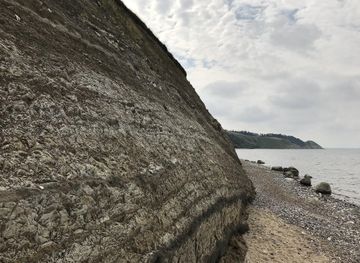
Inside, the natural history galleries showcase fossils recovered from Fur’s soft moler clay, formed on the floor of a subtropical sea some 55 million years ago. Delicate fish, insects, plants and even birds are preserved with extraordinary detail, a result of fine volcanic ash layers that settled over the seabed.Displays explain how shifting tectonic plates, volcanic eruptions and slow sedimentation created the dramatic cliffs visitors see today at Knudeklint and other coastal sites. Carefully lit cabinets highlight the finest specimens, while diagrams and models make sense of the island’s complex geological timeline, even if you arrive with little background knowledge.
Life on Fur through the centuries
A second thread runs through the museum: the human story of Fur. In farmhouse rooms and themed exhibits you encounter the tools, textiles and household objects that defined daily life here before modern conveniences reached the island. Fishing equipment, agricultural implements and moler extraction gear illustrate how people adapted to the surrounding land and water.Photographs and well‑chosen artefacts sketch out everything from Lutheran church life to schooldays and local crafts. The modest scale of the rooms helps you imagine how families once shared these spaces, making the historical narrative feel concrete and close rather than abstract.
From moler pits to fjord views
Beyond the indoor galleries, the museum connects directly to Fur’s landscape. Information panels and models introduce the nearby quarries where moler has been cut for use in industry, leaving behind sculptural pits and slopes. Other exhibits point you toward the cliffs, beaches and viewpoints that reveal the layered structure of clay and ash around the island.The museum’s grounds offer small corners to sit and absorb the rural calm, often with glimpses of fields or distant water. For many visitors, this combination of exhibits and immediate access to the outdoors turns the museum into a starting point for walks and fossil hunting excursions elsewhere on Fur.
Practical experience for curious minds
The museum is compact enough to explore in a couple of hours, yet layered with detail for those who like to linger over display cases and diagrams. Families tend to gravitate to the fossil rooms, where children can match the creatures in the cabinets to shapes they might later spot in stones along the beach.Most on‑site explanations are in Danish, but the subject matter is visual and tactile: fossils, tools and reconstructed interiors communicate much by themselves. Combined with the calm rural setting and the possibility of pairing your visit with a tour of the island’s cliffs and quarries, Fur Museum offers a rounded introduction to one of Denmark’s most intriguing small islands.
Evendo Review Centre
 Google
Guest reviews
Best time to go
Quietest: Jan, Feb & Nov · before 8am or from 6pm
Busy times are Evendo estimates for a typical year, to help you plan. Actual crowds vary with events, school holidays and the weather.
Explore Fur Museum on the map
A handpicked selection of must-see spots near Fur Museum, mapped for you.
Get your free copy of our complete guide to Fur Museum, delivered straight to you.
Everything on this page, from opening hours and how to get there to Eve’s tips and the best time to go, in one PDF you can read offline, print or share.
Already have an account? Sign in
Your Fur Museum guide is ready.
We'll send it to · Not you? Sign out

Getting your guide ready…
We are putting together a fresh copy of the Fur Museum guide. This can take up to a minute.
This can take a few moments. If your browser asks, choose Allow so the download can start. You'll find the guide in your Downloads folder.
Nothing happened? Download it again
Sorry, the guide is taking longer than usual. Please try again in a minute, or get it by email instead.
Other nearby places you may find interesting
The closest places of the same kind, if this one is not quite what you had in mind.
-
-
-
-
-


Swipe for more places
More to explore near Fur Museum

 Best experiences near Fur Museum
 Best hotels near Fur Museum
 Best landmarks near Fur Museum
 Best attractions near Fur Museum
 Best shops near Fur Museum
 Best restaurants near Fur Museum
 Best bars near Fur Museum
Do you manage this location?
Take control to get all the benefits, like improved information, better appearance, and stronger visibility across AI-powered discovery.
Explore more
Explore more of Limfjord
Discover Limfjord in Denmark: A serene waterway offering a blend of nature, culture, and history with charming villages, Viking sites, and vibrant arts scenes.
Explore Limfjord
Explore more of Denmark
Discover Denmark: A perfect blend of history, modern design, and the cozy concept of hygge. Explore vibrant cities, serene landscapes, and world-class cuisine.
Explore Denmark
