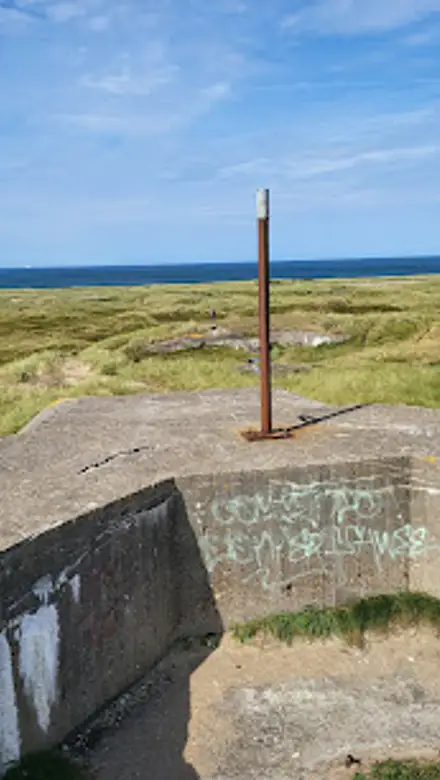
Battery Hanstholm 1 Travel Guide
Free Guide: Wind-beaten dunes, concrete giants and sweeping sea views meet at Battery Hanstholm 1, an open-air World War II strongpoint on Denmark’s remote northwest coast.


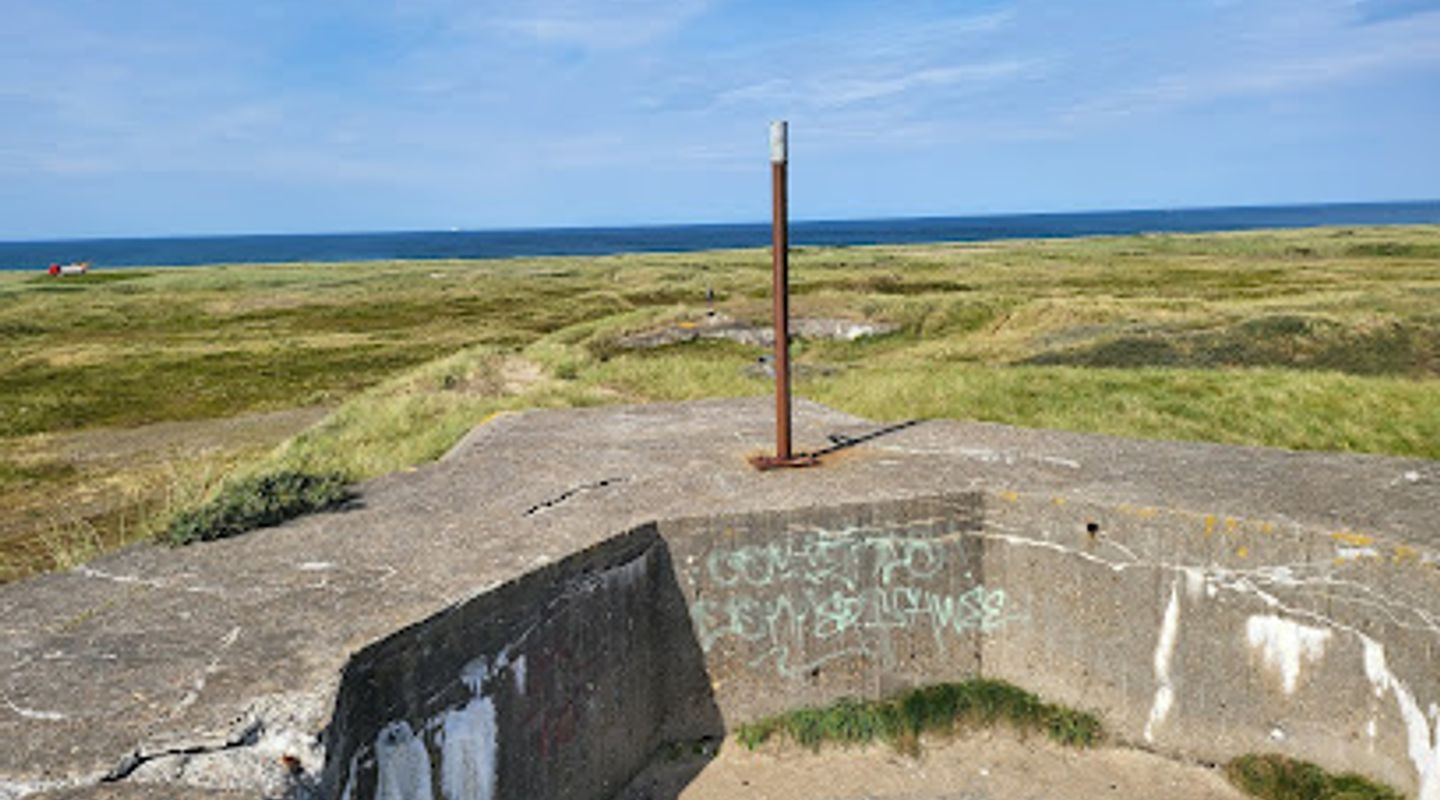
A brief summary of Battery Hanstholm 1
Wind-beaten dunes, concrete giants and sweeping sea views meet at Battery Hanstholm 1, an open-air World War II strongpoint on Denmark’s remote northwest coast.
Battery Hanstholm 1 lies in the dunes south of Hanstholm Lighthouse, where low, wind‑shaped heath meets a maze of World War II bunkers. Built in 1940 with four 17 cm naval guns as part of Germany’s coastal defence, this open-air site preserves 19 substantial concrete structures scattered across a wild landscape. Today you can freely wander through gun emplacements, ruined shelters and sand-filled passageways, feeling both the exposed North Sea environment and the weight of Atlantic Wall history.
On-site amenities
 Trash bins
 Information boards
Opening hours
- Every dayOpen 24 hours
Opening hours as listed on the venue’s Google Business Profile. Hours can change for services and special events, so check with the venue before you go.
- Address
- Hanstholm,7730, 7730
- Phone
- Website
Getting there
Car from Thisted
Regional bus to Hanstholm and walk
Cycling within Thy area
Taxi from Hanstholm town
Discover more about Battery Hanstholm 1
Coastal stronghold in the windswept dunes
Battery Hanstholm 1 occupies a remote stretch of dune heath just south of Hanstholm Lighthouse on Denmark’s northwest coast. Here the land rises gently above the North Sea, covered in coarse grasses, heather and low shrubs that bend in the constant wind. Between the tufts of vegetation, massive blocks of grey concrete emerge from the sand, hinting at the scale of the military complex once hidden in this landscape.Part of Thy’s protected nature, the battery feels strikingly open and elemental. On clear days you can sense the curvature of the Skagerrak horizon, with seabirds riding the air currents and the distant sound of waves breaking on the shore below. It is this strategic combination of elevation, visibility and relative remoteness that made Hanstholm such a crucial point in wartime planning.
From German gun line to the Atlantic Wall
Construction of Hanstholm 1 began in 1940, when German forces established a coastal battery armed with four 17 cm naval guns to control the mine-free approach through the Skagerrak strait. Positioned to cover a ten‑nautical‑mile‑wide opening in the minefields, the guns were tasked with protecting German shipping and deterring Allied vessels attempting to reach the Baltic.Initially the guns stood in open positions on concrete platforms, but as fears of invasion grew the site was gradually reinforced with bombproof structures. Hanstholm became one of the key nodes in the wider Atlantic Wall, the huge chain of coastal fortifications stretching from Norway to the French coast. Together with a sister fortress in southern Norway, the batteries here played a central role in closing the maritime gateway between the North Sea and the Baltic region.
Bunkers, ruins and traces of daily life
Today around nineteen major bunkers remain scattered across the dunes, forming a kind of informal open-air museum. Some are partly collapsed and half-swallowed by sand, while others still show sharply defined entrances, ventilation shafts and observation slits. You may find narrow corridors leading into pitch-dark rooms, open gun pits with sweeping views, and low shelters that once protected soldiers during bombardments.Inside, details of daily life linger in small ways: bracket mountings on the walls, remnants of wiring and rusted fittings, or the outlines of former sleeping quarters and ammunition stores. Many of the structures are unlit and uneven underfoot, so a good torch is essential if you wish to explore beyond the entrances. The raw, unrestored state of the concrete gives a strong sense of authenticity and invites you to imagine the noise, tension and routine that once filled these spaces.
Landscape, nature and quiet reflection
Away from the gun platforms, sandy paths wind through heath and low dunes, offering moments of quiet between stark reminders of war. Lichens spread across old concrete, birds nest in cracks, and grasses colonise roof slabs that were once carefully camouflaged. The site now forms part of a wider nature reserve, so you move constantly between cultural history and resilient coastal ecology.This blend of military architecture and open landscape makes Battery Hanstholm 1 a powerful place for reflection. The wide skies, strong winds and long views out to sea highlight both the strategic logic of the location and the vulnerability of those who served here. Without fences or formal route markers, you are free to choose your own path and pace, lingering at viewpoints or quietly contemplating the heavy structures slowly returning to the sand.
Planning your visit on the edge of Thy
Battery Hanstholm 1 is unfenced and generally accessible at all times, making it easy to combine with other coastal experiences in Thy, such as lighthouse visits or walks along the nearby beaches and dune trails. Many visitors pair time here with the more structured exhibitions at the Hanstholm Bunker Museum, which explains the larger fortress system and its role within the Atlantic Wall.On site, there are usually only minimal information panels, so it is worth arriving with some background knowledge or a downloaded brochure to help interpret what you see. Weather changes quickly along this coast, and the exposed position means strong winds, bright sun or sudden showers are all possible in a short visit. Sturdy footwear, layered clothing and a reliable light source make the difference between a brief look and a rewarding exploration of this historically and geographically remarkable corner of Denmark.
Evendo Review Centre
 Google
Guest reviews
Best time to go
Quietest: Jan, Feb & Dec · before 8am or at 9pm
Busy times are Evendo estimates for a typical year, to help you plan. Actual crowds vary with events, school holidays and the weather.
Explore Battery Hanstholm 1 on the map
A handpicked selection of must-see spots near Battery Hanstholm 1, mapped for you.
Get your free copy of our complete guide to Battery Hanstholm 1, delivered straight to you.
Everything on this page, from opening hours and how to get there to Eve’s tips and the best time to go, in one PDF you can read offline, print or share.
Already have an account? Sign in
Your Battery Hanstholm 1 guide is ready.
We'll send it to · Not you? Sign out

Getting your guide ready…
We are putting together a fresh copy of the Battery Hanstholm 1 guide. This can take up to a minute.
This can take a few moments. If your browser asks, choose Allow so the download can start. You'll find the guide in your Downloads folder.
Nothing happened? Download it again
Sorry, the guide is taking longer than usual. Please try again in a minute, or get it by email instead.
Other nearby places you may find interesting
The closest places of the same kind, if this one is not quite what you had in mind.
-
-
-
-
-


Swipe for more places
More to explore near Battery Hanstholm 1

 Best experiences near Battery Hanstholm 1
 Best hotels near Battery Hanstholm 1
 Best landmarks near Battery Hanstholm 1
 Best attractions near Battery Hanstholm 1
 Best shops near Battery Hanstholm 1
 Best restaurants near Battery Hanstholm 1
 Best bars near Battery Hanstholm 1
Do you manage this location?
Take control to get all the benefits, like improved information, better appearance, and stronger visibility across AI-powered discovery.
Explore more
Explore more of Limfjord
Discover Limfjord in Denmark: A serene waterway offering a blend of nature, culture, and history with charming villages, Viking sites, and vibrant arts scenes.
Explore Limfjord
Explore more of Denmark
Discover Denmark: A perfect blend of history, modern design, and the cozy concept of hygge. Explore vibrant cities, serene landscapes, and world-class cuisine.
Explore Denmark