

Mols Travel Guide
Free Guide: Rolling Ice Age hills, Bronze Age mounds and quiet coves on Jutland’s east coast, where national park wilderness meets cosy villages and coastal summer houses.


A brief summary of Mols
Rolling Ice Age hills, Bronze Age mounds and quiet coves on Jutland’s east coast, where national park wilderness meets cosy villages and coastal summer houses.
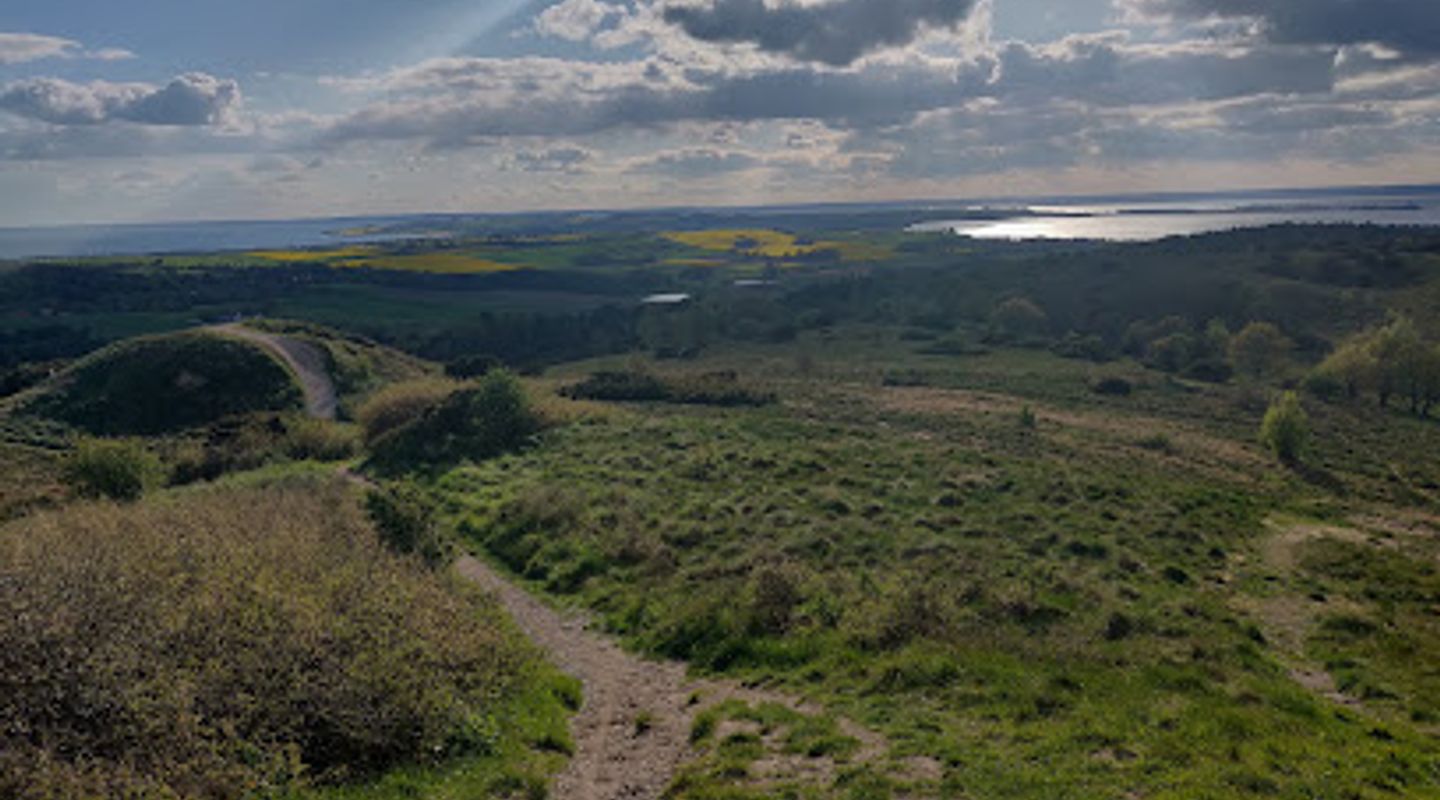
The Mols Peninsula around Knebel is home to Mols Bjerge National Park, a rolling Ice Age landscape of heather-clad hills, deep glacial hollows and sheltered coves on the east coast of Jutland. Here, Bronze Age burial mounds top windy ridges, Kalø Castle’s medieval ruins sit on a causeway-linked islet, and trails weave through juniper scrub and old farmsteads. It is one of Denmark’s most scenic areas for hiking, cycling and quiet coastal escapes.
On-site amenities
 Restrooms
 Seating areas
 Picnic areas
 Trash bins
 Information boards
 Visitor centre
 Drinking water
- Address
- 8420 Knebel
Getting there
Car from Aarhus
Regional bus
Cycling from Rønde area
Discover more about Mols
Hills, coves and an Ice Age story
The Mols Peninsula, centred on the hills known as Mols Bjerge, forms one of Denmark’s most distinctive landscapes. Here the land folds into rounded ridges and deep hollows, sculpted by retreating glaciers that once covered Jutland. From the higher points the views sweep out over the Kattegat, Begtrup Vig and the patchwork of fields, forests and heathland that define Djursland’s “nose” on the map of Denmark.Mols Bjerge National Park covers a large swathe of the peninsula, including open dry grasslands, moor, lakes, woodland and coast. Within a relatively compact area you move between windswept hilltops, calm beech forest and sheltered beaches, making it easy to string together varied days outdoors without long transfers.
National park of paths, plants and wildlife
Despite its modest altitudes, the terrain feels surprisingly wild. Cattle, sheep and horses graze broad slopes, keeping vegetation low and opening up long views. The dry, nutrient-poor soils have created a refuge for an exceptional variety of plants; a significant proportion of Denmark’s wild species are found here, along with insects, reptiles and a rich birdlife that changes with the seasons.Waymarked routes criss-cross the hills, including stages of the long Mols Bjerge Trail that link key viewpoints, ancient monuments and small villages. Simple amenities such as benches, picnic tables and basic toilets appear at intervals along popular paths, and a few primitive shelter sites allow for back-to-basics overnight stays under big skies.
History etched into ridgelines and shore
Human traces are written into almost every horizon line. Bronze Age burial mounds crown several ridges, most famously the trio of Trehøje, which offer 360-degree panoramas over the bay, farmland and forest. Elsewhere, old field boundaries, farm clusters and millponds hint at centuries of agricultural use in what was once a patchwork of smallholdings and watermills.On the south-western edge of the park, the ruins of Kalø Castle stand guard on a small island, reached by a long medieval causeway of rounded stones. Built in the early 14th century to control the region and its restless farmers, its broken walls now serve more as a romantic vantage point over Aarhus Bay than as a fortress.
Villages, Ebeltoft and coastal retreat
Between the hills and the sea are small settlements like Knebel and Femmøller, with traditional houses and quiet lanes leading towards the water. The town of Ebeltoft, technically inside the national park boundary, adds a more urban note with cobbled streets, half-timbered facades and a busy harbour focused on the historic wooden frigate moored there.Along the coastline, gentle beaches such as those near Femmøller and Begtrup Vig provide sheltered spots to swim, paddle or simply watch the light shift over the bay. Shallow waters and soft sand make many coastal stretches family-friendly, while low, heathery headlands invite short, breezy walks.
Experiencing Mols at an unhurried pace
Life on Mols moves at a relaxed tempo. Many visitors divide their time between hill walks to viewpoints like Agri Bavnehøj or Trehøje, leisurely picnics near old farms or visitor centres, and evenings in holiday cottages tucked among trees or looking out to sea. The landscape rewards slow exploration, returning to the same paths in different light or seasons to notice subtle changes.Whether you come for a single hike or stay a week in a summer house, the appeal lies in the combination of gentle adventure and everyday Danish countryside life: a place where you can step from your front door almost straight into a national park, yet still be within easy reach of cafés, small museums and harbourfront ice creams.
Evendo Review Centre
 Google
Guest reviews
Best time to go
Quietest: Jan, Feb & Dec · before 6am or from 9pm
Busy times are Evendo estimates for a typical year, to help you plan. Actual crowds vary with events, school holidays and the weather.
Explore Mols on the map
A handpicked selection of must-see spots near Mols, mapped for you.
Get your free copy of our complete guide to Mols, delivered straight to you.
Everything on this page, from opening hours and how to get there to Eve’s tips and the best time to go, in one PDF you can read offline, print or share.
Already have an account? Sign in
Your Mols guide is ready.
We'll send it to · Not you? Sign out

Getting your guide ready…
We are putting together a fresh copy of the Mols guide. This can take up to a minute.
This can take a few moments. If your browser asks, choose Allow so the download can start. You'll find the guide in your Downloads folder.
Nothing happened? Download it again
Sorry, the guide is taking longer than usual. Please try again in a minute, or get it by email instead.
Other nearby places you may find interesting
The closest places of the same kind, if this one is not quite what you had in mind.
-
Mols Bjerge Rolling Ice Age hills, wide sea views and ancient burial mounds combine in one of Denmark’s most varied national parks on the Djursland peninsula.
-
Mols bjerge besøgscenter Free, informative visitor hub in the heart of Mols Bjerge National Park, blending clear exhibits, basic comforts, and immediate access to classic hill and heathland trails.
-
Dragsmur A slender, wind‑shaped isthmus between two bays, Dragsmur ties Helgenæs to Mols with Ice Age hills, stony shores and quietly protected coastal nature.
-
Djurs Sommerland Scandinavia's largest amusement park with 60+ rides, world-class coasters, and family fun across 9 themed lands.
-
Sletterhage Fyr. Active lighthouse at the tip of Helgenæs, where ships pass close to shore, glacial cliffs meet the Kattegat, and wide coastal views invite slow walks and quiet watching.
Swipe for more places
More to explore near Mols

 Best experiences near Mols
 Best hotels near Mols
 Best landmarks near Mols
 Best attractions near Mols
 Best shops near Mols
 Best restaurants near Mols
 Best bars near Mols
Do you manage this location?
Take control to get all the benefits, like improved information, better appearance, and stronger visibility across AI-powered discovery.
Explore more

Explore more of Mols Bjerge National Park
Discover the natural beauty and historical charm of Mols Bjerge National Park, where rolling hills, ancient woodlands, and serene lakes create a perfect outdoor escape.
Explore Mols Bjerge National Park
Explore more of Denmark
Discover Denmark: A perfect blend of history, modern design, and the cozy concept of hygge. Explore vibrant cities, serene landscapes, and world-class cuisine.
Explore Denmark
