

Mols bjerge besøgscenter Travel Guide
Free Guide: Free, informative gateway to Mols Bjerge National Park, where ice‑age hills, grazing herds, and hands‑on exhibits meet just outside coastal Ebeltoft.


A brief summary of Mols bjerge besøgscenter
Free, informative gateway to Mols Bjerge National Park, where ice‑age hills, grazing herds, and hands‑on exhibits meet just outside coastal Ebeltoft.
Mols Bjerge Visitor Center at Øvre Strandkær is the main gateway into Denmark’s Mols Bjerge National Park, set among rolling ice-age hills just outside Ebeltoft. Housed in former farm buildings, the center offers free entry to engaging exhibitions on geology, wildlife, and cultural history, plus indoor picnic space, toilets, and maps. Step outside and you are immediately on waymarked trails through heather-clad slopes, grazed grassland, and classic Danish “mountain” scenery.
On-site amenities
 Restrooms
 Seating areas
 Sheltered areas
 Picnic areas
 Trash bins
 Information boards
 Visitor centre
 Drinking water
Opening hours
- Every day9 am–9 pm
Opening hours as listed on the venue’s Google Business Profile. Hours can change for services and special events, so check with the venue before you go.
- Address
- Strandkærvej 7, 8400 Ebeltoft
Getting there
Public bus from Ebeltoft
Taxi from Ebeltoft
Car from the wider Djursland area
Cycling from Ebeltoft
Discover more about Mols bjerge besøgscenter
Gateway to the Hills of Mols
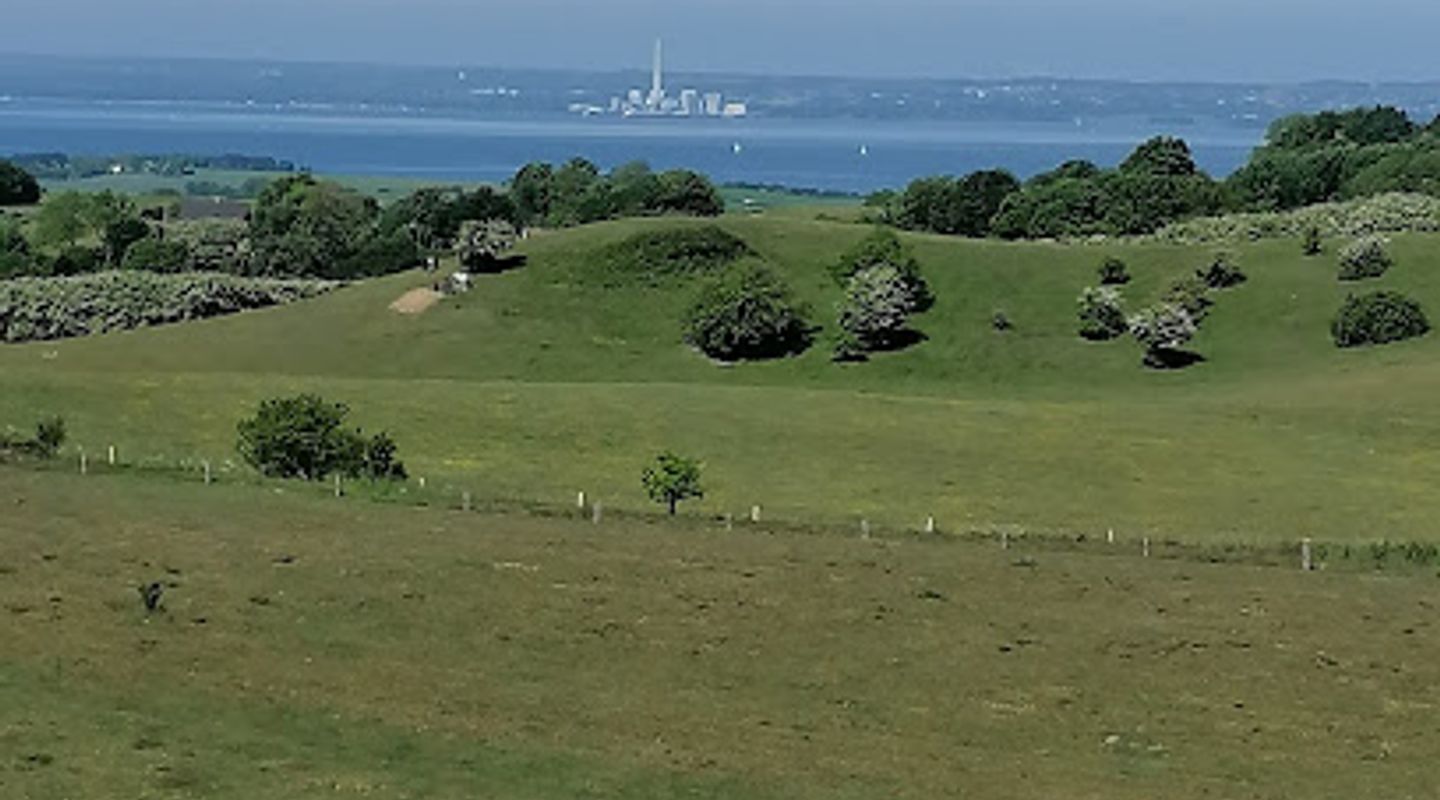
Set amid gently rolling slopes shaped during the last Ice Age, Mols Bjerge Visitor Center at Øvre Strandkær functions as the natural hub of Mols Bjerge National Park. From the courtyard you look straight out onto open grasslands and low, rounded hills that rise far higher than typical Danish countryside, earning the area its nickname as Denmark’s “mountains.” This is where many visitors first orient themselves before walking, cycling, or simply sitting and taking in the expansive views.Inside the repurposed farm buildings you find a calm, light-filled introduction to the park. Displays explain how glaciers carved the landscape into moraines, kettle holes, and dead-ice hollows, and why these variations in soil and slope create such rich biodiversity. Large-scale maps and models make it easy to understand how the hills, bays, and forests fit together in a compact yet surprisingly varied national park.
Stories Written in Stone and Soil
One section of the exhibition focuses on geology, telling the story of how ice sheets advanced and retreated here thousands of years ago. Texts and models highlight distinctive features such as steep-sided hollows, dry ridges, and sandy outwash plains that now host heather, juniper, and tough grasses. You can trace how the same processes that shaped these hills also created the sheltered bays and inlets visible from the high points of the park.Alongside this, panels and objects explore human history in the landscape, from Bronze Age burial mounds on nearby hilltops to centuries of farming and grazing. Old photos and farm tools show how people learned to live with the thin soils and windy slopes, while still leaving space for wildlife. The center places the surrounding trails in this deeper context, so a simple walk becomes a journey through both natural and cultural time.
Wildlife, Grazing Herds and Open Grassland
Another key theme is the park’s flora and fauna. Exhibits introduce characteristic species of the dry hillsides, damp meadows, and small woodlands, including hardy grasses, orchids in select spots, and an impressive variety of insects and birds. Information boards explain how a mix of grazing animals and careful management keeps the grasslands open, preventing the hills from turning into dense forest.Just outside the visitor center you often see cattle or horses grazing in fenced areas. These animals are part of a deliberate effort to maintain sunny, flower-rich slopes that support butterflies, reptiles, and ground-nesting birds. The connection between indoor exhibition and outdoor reality is immediate: you can learn about a habitat in a display room and then step through the door to see, hear, and smell it for yourself.
Practical Hub for Walks and Picnics
The visitor center is designed as a practical base for a few hours or a full day in the hills. Entrance is free, and the building is typically open long hours from morning into the evening, allowing plenty of time to drop in before or after a walk. There are toilet facilities and an indoor picnic area, ideal on cooler or windy days when the weather on the ridges feels exposed.Staffed information points and self-service materials provide printed maps, suggested routes, and details about longer hikes such as the multi-stage Mols Bjerge Trail. Outside, waymarked paths of varying length lead directly from the site into heather areas, viewpoints, and glacial valleys. Benches and simple seating spots invite you to pause and look over the surrounding mosaic of hills, fields, and forest patches.
Experiencing the National Park from One Starting Point
From Øvre Strandkær you are well placed to discover some of the park’s best-known features, including nearby Bronze Age mounds on distant ridges and the highest points of the Mols Hills. The terrain around the center is undulating but not extreme, making it suitable for most reasonably fit walkers, while short loop trails provide gentler options for families or those with limited time.Interpretive material encourages a slow, observant approach. Rather than rushing between landmarks, you are invited to notice changing plant communities, track the shifting coastline in the distance, and watch for birds of prey circling on thermals above the slopes. In this way the visitor center serves not only as an information point but as a quiet place to tune into the character of Mols Bjerge.
Calm Atmosphere in a Working Landscape
Despite its role as a national park hub, the atmosphere at Strandkærvej remains distinctly rural. Former farm buildings, gravel surfaces, and simple fencing remind you that this is still a working cultural landscape shaped by agriculture as much as conservation. The combination of open skies, grazing animals, and modest facilities creates a relaxed, unhurried feel.Whether you stay briefly to gather information or linger over a picnic between walks, the visitor center offers a clear sense of place. It bridges indoor interpretation and outdoor experience, connecting modern visitors with an ancient landscape of hills, mounds, fields, and bays that has been evolving since long before Denmark existed as a nation.
Evendo Review Centre
 Google
Guest reviews
Best time to go
Quietest: Jan, Feb & Nov · before 8am or from 9pm
Busy times are Evendo estimates for a typical year, to help you plan. Actual crowds vary with events, school holidays and the weather.
Explore Mols bjerge besøgscenter on the map
A handpicked selection of must-see spots near Mols bjerge besøgscenter, mapped for you.
Get your free copy of our complete guide to Mols bjerge besøgscenter, delivered straight to you.
Everything on this page, from opening hours and how to get there to Eve’s tips and the best time to go, in one PDF you can read offline, print or share.
Already have an account? Sign in
Your Mols bjerge besøgscenter guide is ready.
We'll send it to · Not you? Sign out

Getting your guide ready…
We are putting together a fresh copy of the Mols bjerge besøgscenter guide. This can take up to a minute.
This can take a few moments. If your browser asks, choose Allow so the download can start. You'll find the guide in your Downloads folder.
Nothing happened? Download it again
Sorry, the guide is taking longer than usual. Please try again in a minute, or get it by email instead.
Other nearby places you may find interesting
The closest places of the same kind, if this one is not quite what you had in mind.
-
-
-
-
-


Swipe for more places
More to explore near Mols bjerge besøgscenter
-
 Best experiences near Mols bjerge besøgscenter
-
 Best hotels near Mols bjerge besøgscenter
-
 Best landmarks near Mols bjerge besøgscenter
-
 Best attractions near Mols bjerge besøgscenter
-
 Best shops near Mols bjerge besøgscenter
-
 Best restaurants near Mols bjerge besøgscenter
-
 Best bars near Mols bjerge besøgscenter


Do you manage this location?
Take control to get all the benefits, like improved information, better appearance, and stronger visibility across AI-powered discovery.
Explore more

Explore more of Mols Bjerge
Discover the natural beauty and historical charm of Mols Bjerge, Denmark's captivating national park in the heart of Djursland, perfect for nature lovers and adventurers.
Explore Mols Bjerge
Explore more of Denmark
Discover Denmark: A perfect blend of history, modern design, and the cozy concept of hygge. Explore vibrant cities, serene landscapes, and world-class cuisine.
Explore Denmark
