Trehøje Plantage Travel Guide
Free Guide: A small, sheltering forest near Knebel, Trehøje Plantage offers quiet paths, soft light and a calm woodland pause between Mols Bjerge’s open hills and Bronze Age mounds.


A brief summary of Trehøje Plantage
A small, sheltering forest near Knebel, Trehøje Plantage offers quiet paths, soft light and a calm woodland pause between Mols Bjerge’s open hills and Bronze Age mounds.
Trehøje Plantage is a quiet forested enclave near Knebel on the Mols peninsula, on the edge of Mols Bjerge National Park. This small plantation of conifers and mixed woodland offers soft forest tracks, shelter from the coastal wind, and a welcome contrast to the open Bronze Age hilltops of nearby Trehøje. Walkers and cyclists use the plantation as a peaceful link between viewpoints, burial mounds and farms, making it an ideal pause on a wider exploration of Djursland’s rolling ice‑age landscape.
- Address
- 8420 Knebel
Getting there
Car
Public bus + walk
Bicycle
Discover more about Trehøje Plantage
Woodland Pocket in the Mols Hills
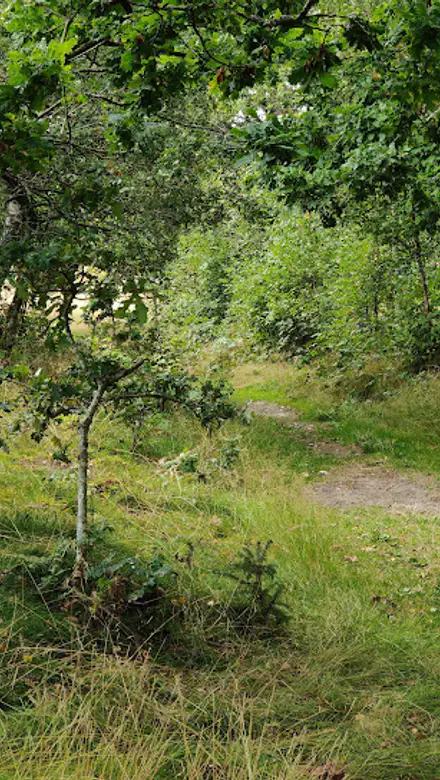
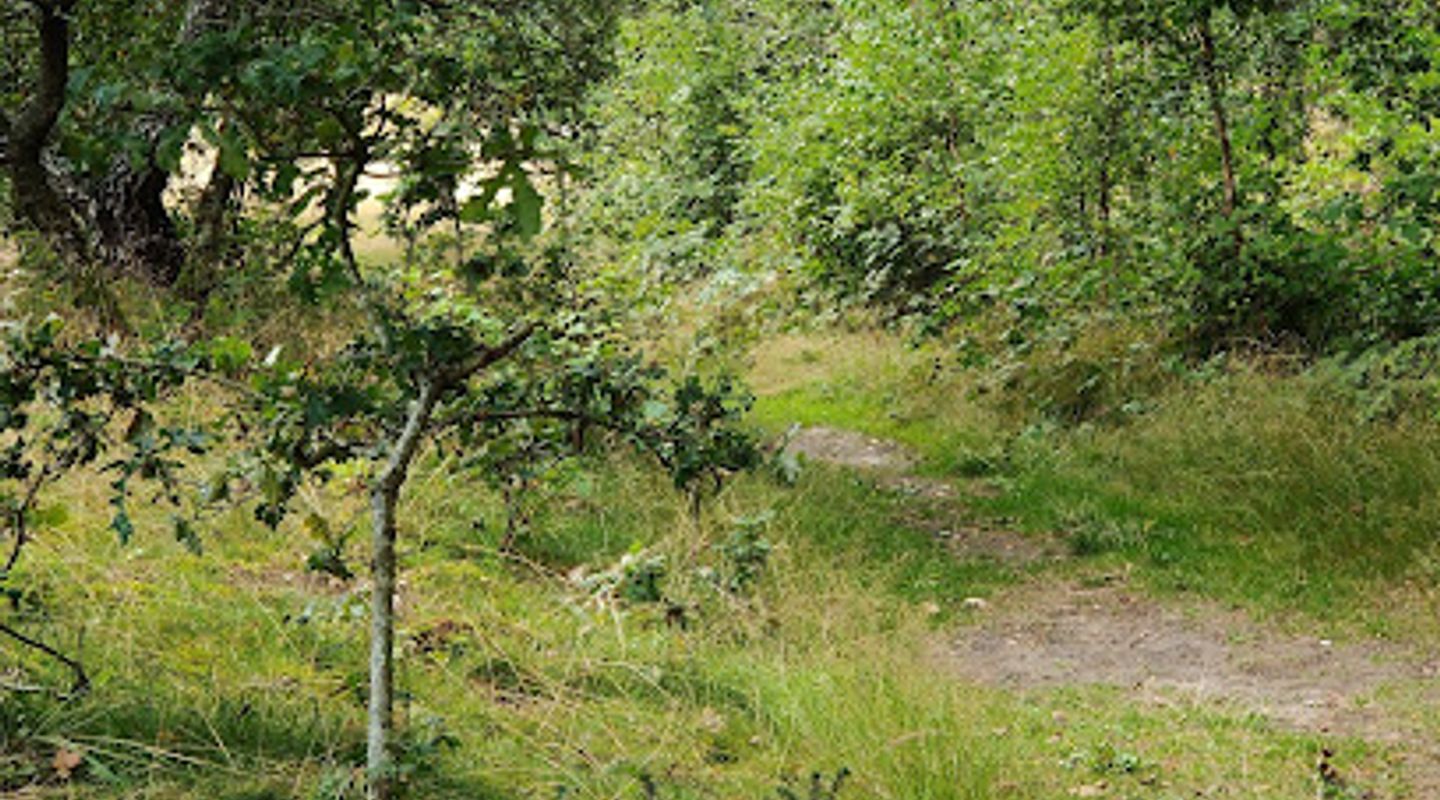
Trehøje Plantage is a compact plantation tucked into the undulating countryside around Knebel, on the Mols peninsula in eastern Jutland. Here the landscape of Mols Bjerge shifts from open heaths and ancient grasslands into a denser patch of conifer and mixed forest. The plantation was established on the area’s poor, sandy soils, once hard to farm, and today it reads as a deliberate contrast to the windswept ridges and Bronze Age mounds that rise nearby.Stepping under the trees, you move from big skies into a more intimate world of filtered light and resin-scented air. The canopy muffles the breeze from the surrounding bays, the ground softens under a layer of needles and leaves, and the rolling terrain becomes a network of gentle slopes, hollows and sheltered corners.
Traces of Ice and Agriculture
Although Trehøje Plantage itself is a relatively modern forest, it sits in a landscape shaped over thousands of years. The surrounding hills were pushed into place during the last Ice Age, leaving a dramatic dead-ice topography of knobs and kettles that continues beneath the trees. Just beyond the plantation, ridge-and-furrow fields and scattered burial mounds tell of centuries of cultivation and ceremony on these nutrient-poor slopes.In the late 19th and early 20th centuries, planting conifers was a common way to stabilise thin soils and create new sources of timber. Trehøje Plantage is part of that story: rows of spruce and pine are interspersed with lighter patches of birch and other deciduous trees, slowly diversifying as the forest matures. The result is a layered woodland where straight trunks and ordered planting lines still hint at its managed origins.
Forest Paths and Quiet Detours
For visitors, Trehøje Plantage is less about headline viewpoints and more about the experience of being in the woods. Narrow, often unmarked forest tracks branch from broader paths used by local walkers, trail runners and cyclists connecting Knebel, the coast and the hilltops of Trehøje. Underfoot, the going is generally easy, with soft soil and modest gradients, making it suitable for unhurried strolls.Because the plantation is smaller than many of Denmark’s coastal forests, it is easy to wander without feeling lost. Clearings open unexpectedly, offering glimpses of the surrounding hills or a distant farm. In autumn, the understorey can be dotted with fungi and changing leaves; in spring, birdsong carries through the trees, echoing off the trunks. It is an appealing place to pause with a thermos or simply sit and listen.
Linking Viewpoints and Bronze Age Mounds
One of the roles of Trehøje Plantage is as a green corridor within the wider Mols Bjerge area. Routes that connect Knebel, the coastal inlets and the elevated vista point at Trehøje often pass through or along the edge of the plantation, using the forest as a sheltered interlude between more exposed stretches. Walkers can step into the trees after visiting the Bronze Age mounds, trading sweeping panoramas for a sense of enclosure.This transition between open and enclosed landscapes helps reveal the variety that characterises Djursland. A single outing can move from sea views to prehistoric earthworks and then into this quiet wood, all within a short distance. For many, the plantation becomes the calm middle chapter of a longer day out in the national park surroundings.
Atmosphere, Wildlife and Simple Pleasures
The atmosphere in Trehøje Plantage is understated: there are few facilities, little signage and minimal development. That simplicity is part of its appeal. You are likely to notice small details instead of major landmarks: the texture of lichen on bark, the sudden drumming of a woodpecker, or shafts of sunlight cutting through the branches after a passing shower.Wildlife here tends to be modest but rewarding for those who linger. Songbirds flit along the edges where conifers meet open land, while deer may browse in the quieter corners at dawn and dusk. Because the plantation is not large, animal encounters feel close and personal rather than distant. It is an easy place to slow down, breathe deeply and enjoy a quiet slice of Danish forest life within reach of well-known sights nearby.
Evendo Review Centre
 Google
Guest reviews
Best time to go
Quietest: Jan, Feb & Dec · before 6am or from 9pm
Busy times are Evendo estimates for a typical year, to help you plan. Actual crowds vary with events, school holidays and the weather.
Explore Trehøje Plantage on the map
A handpicked selection of must-see spots near Trehøje Plantage, mapped for you.
Get your free copy of our complete guide to Trehøje Plantage, delivered straight to you.
Everything on this page, from opening hours and how to get there to Eve’s tips and the best time to go, in one PDF you can read offline, print or share.
Already have an account? Sign in
Your Trehøje Plantage guide is ready.
We'll send it to · Not you? Sign out

Getting your guide ready…
We are putting together a fresh copy of the Trehøje Plantage guide. This can take up to a minute.
This can take a few moments. If your browser asks, choose Allow so the download can start. You'll find the guide in your Downloads folder.
Nothing happened? Download it again
Sorry, the guide is taking longer than usual. Please try again in a minute, or get it by email instead.
Other nearby places you may find interesting
The closest places of the same kind, if this one is not quite what you had in mind.
-
-
-
-
-


Swipe for more places
More to explore near Trehøje Plantage

 Best experiences near Trehøje Plantage
 Best hotels near Trehøje Plantage
 Best landmarks near Trehøje Plantage
 Best attractions near Trehøje Plantage
 Best shops near Trehøje Plantage
 Best restaurants near Trehøje Plantage
 Best bars near Trehøje Plantage
Do you manage this location?
Take control to get all the benefits, like improved information, better appearance, and stronger visibility across AI-powered discovery.
Explore more

Explore more of Mols Bjerge
Discover the natural beauty and historical charm of Mols Bjerge, Denmark's captivating national park in the heart of Djursland, perfect for nature lovers and adventurers.
Explore Mols Bjerge
Explore more of Denmark
Discover Denmark: A perfect blend of history, modern design, and the cozy concept of hygge. Explore vibrant cities, serene landscapes, and world-class cuisine.
Explore Denmark