
Skæringstenen, Mols Bjerge National Park Travel Guide
A three‑metre Ice Age boulder turned urban landmark and mini bouldering spot in the middle of everyday life in Skæring, Egå, just north of Aarhus.
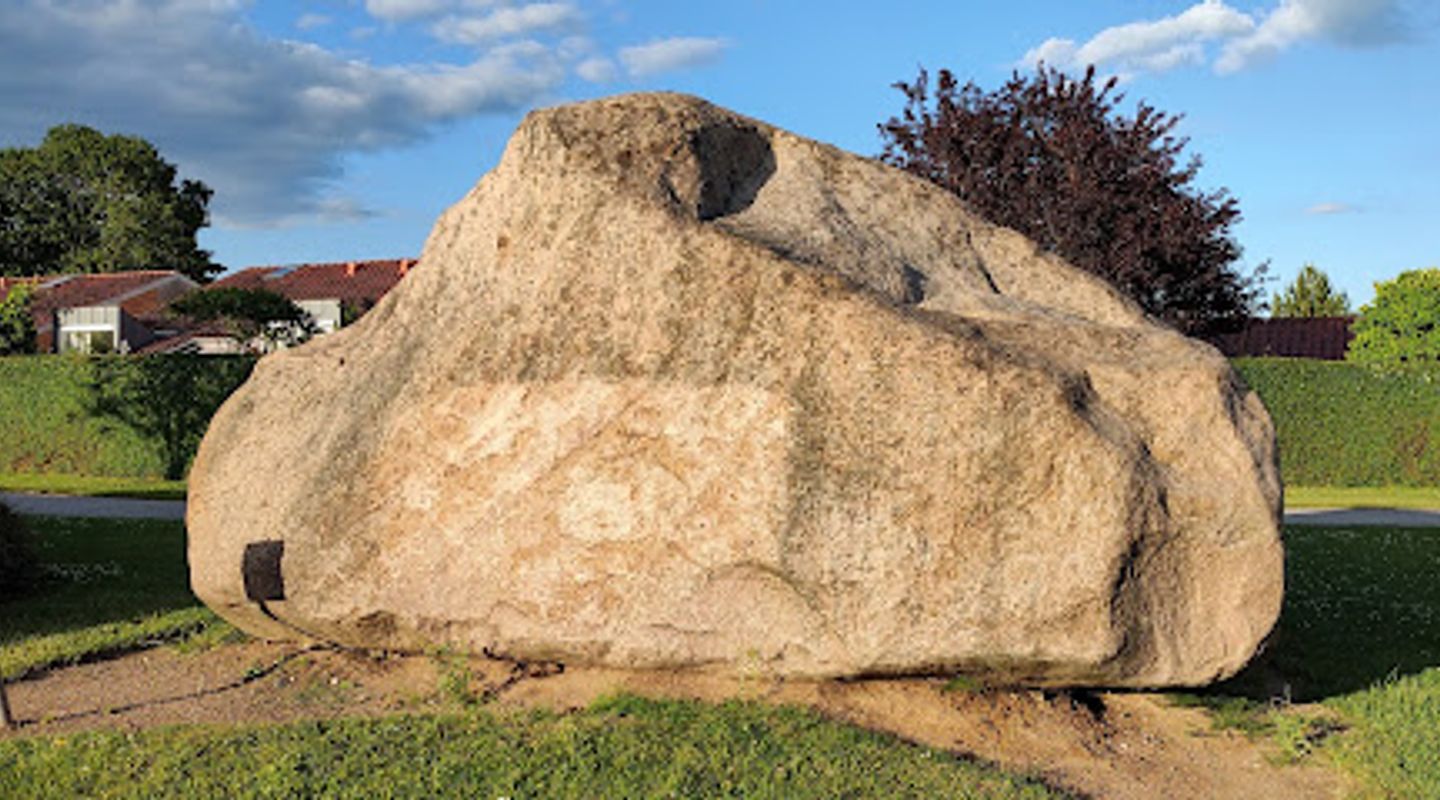
Skæringstenen is a huge glacial boulder and local landmark in the suburb of Skæring in Egå, just north of Aarhus. Discovered during construction work in the 1990s and weighing around 86 tons, the roughly 3 m high rock now sits in a small open area opposite the local Føtex supermarket. Today it doubles as an unusual urban nature feature and informal bouldering spot, with a handful of climbing routes on its rough Scandinavian granite surface.
A brief summary to Skæringstenen
- Egå Skæring, Egå, DK
- Click to display
- Duration: 0.5 to 1.5 hours
- Free
-
 Outdoor
- Mobile reception: 5 out of 5

Know before you go
Hi, I'm Eve. Here are a few practical things to know before exploring Skæringstenen.
- Wear shoes with good grip if you plan to scramble on the lower parts of the stone; the granite can feel surprisingly slick when damp.
- Climbers should bring a crash pad and a spotter, as landings are hard and uneven despite the stone’s modest height.
- Combine a quick stop at Skæringstenen with grocery shopping or a coffee from nearby outlets to make the most of the urban setting.
Do you manage this location?
Take control to get all the benefits, like improved information, better appearance, and stronger visibility across AI-powered discovery. Learn more about listing your business on Evendo
Activate your presenceOther nearby places you may find interesting
The closest places of the same kind, if this one is not quite what you had in mind.
Explore Skæringstenen on the Map
A handpicked selection of must-see spots near Skæringstenen, mapped for you.
Getting There
-
City bus from central Aarhus
From central Aarhus, use one of the city bus routes running toward Skæring and Egå; typical journey times range from 20 to 35 minutes depending on traffic and the specific line. Adult single tickets within the Aarhus urban zone usually cost around 20–30 DKK when bought via app or ticket machine. Buses run frequently during the day, with reduced services in the evening. From the nearest stop, expect only a short, level walk along paved pavements to reach the stone, making this option convenient in most weather conditions.
-
Bicycle from Aarhus city centre
Cycling from Aarhus city centre to Skæringstenen is a realistic option for reasonably confident cyclists, with a distance of roughly 10–12 km and travel times around 35–50 minutes depending on pace and wind. The route makes use of established urban roads and cycle paths common in the Aarhus area, generally on gentle terrain with some minor inclines. There is no dedicated bike parking at the stone itself, but nearby commercial areas offer railings and stands where you can lock a bicycle. This option is best in daylight and fair weather.
-
Car or taxi within the Aarhus region
Arriving by car or taxi from within the Aarhus region typically takes 15–25 minutes from the city centre, depending on traffic. Public parking is available in the commercial area close to the stone, though spaces can be busier at peak shopping hours. Taxi fares for this distance generally fall in the range of 180–260 DKK one way, varying with time of day and traffic conditions. The short walk from parking to the stone is on level, paved surfaces, suitable for most mobility levels and all seasons except during severe winter weather.
For the on-the-go comforts that matter to you
-
 Restrooms
-
 Drink Options
-
 Food Options
-
 Seating Areas
-
 Trash Bins
Discover more about Skæringstenen
A giant from the Ice Age in suburban Skæring
Skæringstenen is a massive glacial erratic – a boulder transported here by moving ice during the last Ice Age – embedded in the everyday fabric of the Skæring suburb in Egå. When foundations were being dug for a new housing development in the mid‑1990s, builders struck something far older than any human structure: a block of hard Scandinavian granite that proved far too large to remove in pieces. Rather than blasting it apart, the stone was carefully excavated and relocated, turning a geological obstacle into a distinctive local feature.Today the stone sits in a modest green space across from the neighborhood Føtex, rising about three metres at its highest point. Its coarse, speckled surface and rounded profile tell a quiet story of long‑distance travel by ice and slow weathering in the Danish climate, a reminder that the landscape beneath the suburb is shaped by forces measured in tens of thousands of years.Everyday setting with a twist of geology
Part of Skæringstenen’s charm lies in its very ordinary surroundings. Instead of being tucked away in a remote forest or formal park, this Ice Age relic anchors a small open area beside roads, pavements and parking bays. Shoppers pass by with bags, buses stop nearby, and children cycle around it on their way to and from school.The stone itself, though, feels surprisingly wild at close range. Lichens patch its flanks, hairline cracks zigzag across the grey surface, and small ledges cast sharp shadows on bright days. From one side, the boulder looms almost like a low cliff; from another, it flattens into gentler slopes that invite hands to reach out and trace the cool, grainy rock.Bouldering on a neighborhood monolith
Skæringstenen has quietly developed a second life as a tiny urban climbing venue. Local climbers have traced a handful of short bouldering routes up its faces, using natural edges and bulges to create problems that, while only a few metres high, demand balance and good footwork. Crash pads and spotters are common sights on dry days when enthusiasts come to practice technique.For non‑climbers, watching people work out the moves provides its own entertainment and adds an unexpected sense of activity to the stone’s presence. The modest height keeps things approachable, yet the sloping landings and hard ground still call for care and suitable equipment, reinforcing that this is real rock, not a playground structure.A small pause point in daily routines
Beyond climbing, Skæringstenen serves as a convenient little pause point in the neighborhood. Dog walkers sidestep over for a quick look, parents sit on the nearby curb or low walls while children scramble up the lower sections under supervision, and office workers sometimes drift across during breaks to stand in the sun with their backs against the rock.Because there is no formal fencing or ticketing, the stone feels accessible at any hour, blending into the rhythms of local life. Its presence subtly shifts the mood of the space from purely commercial to something a little more reflective, encouraging visitors to notice textures, shadows and the weight of deep time in an otherwise modern setting.Reading the landscape and planning your visit
Visiting Skæringstenen does not require special preparation, but a curious eye rewards you with details you might otherwise miss. Looking closely, you can distinguish larger quartz and feldspar crystals in the granite, appreciate how past ice movement rounded the contours, and see how frost and rain continue to shape its edges.The immediate surroundings are fully urban, with shops and services close by, making the spot easy to combine with errands or a short wander through the neighborhood. A brief stop is usually enough to experience the stone, though climbing enthusiasts may happily spend longer working on routes, stretching, or using the boulder as a warm‑up before indoor training elsewhere in Aarhus.












Your all‑in‑one travel companion app
Explore expert travel guides, compare and book tours, experiences, hotels, and more—all from the palm of your hand. Download now for seamless trip planning wherever your wanderlust takes you.


Explore More of Mols Bjerge National Park
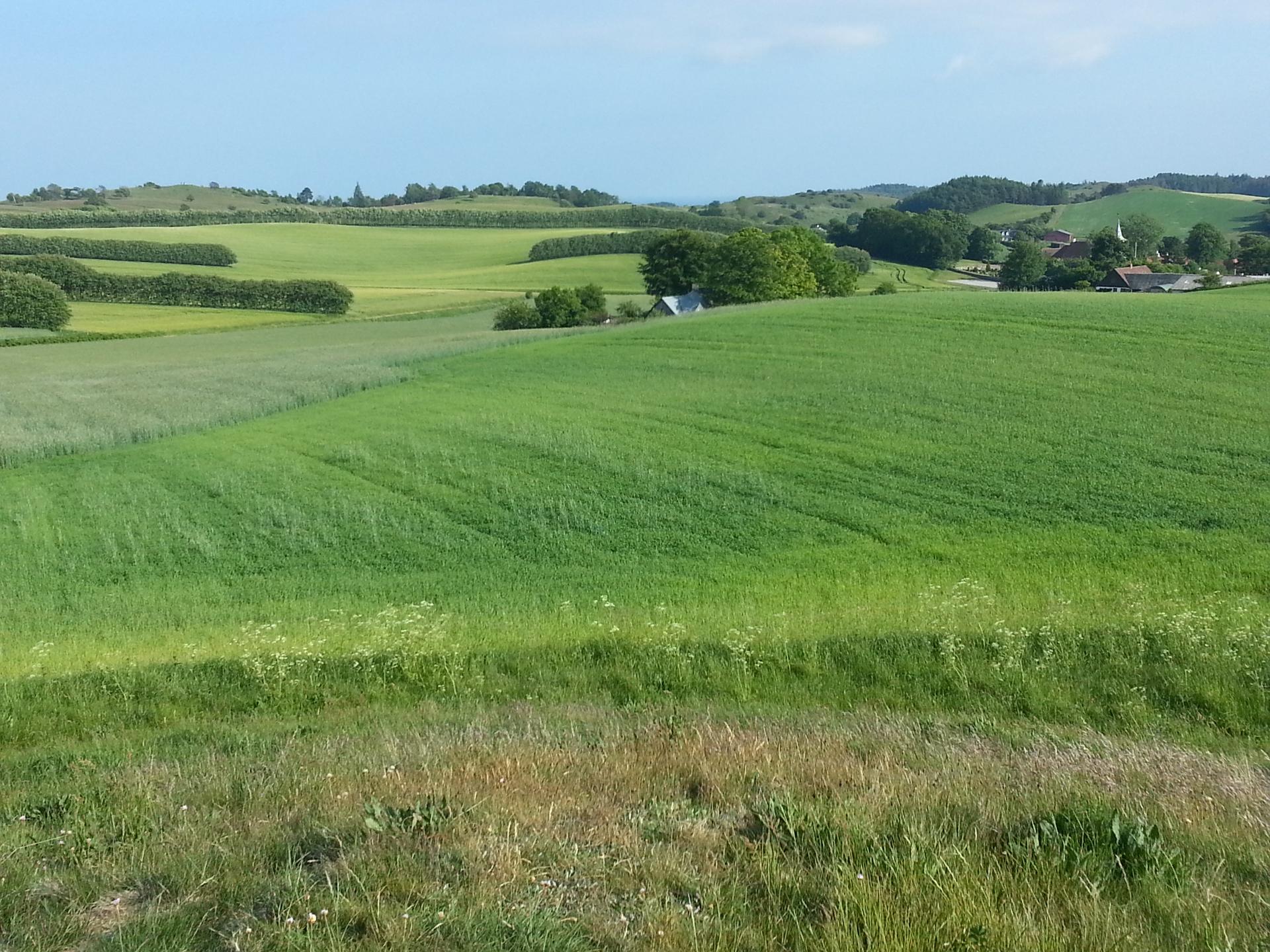
Looking beyond Skæringstenen? Discover Mols Bjerge National Park for broader travel guides, local hot-spots, and regional highlights.
Explore Mols Bjerge National Park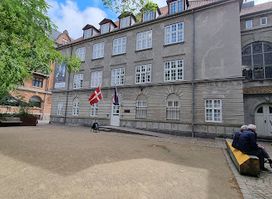
Aarhus’ former Gestapo headquarters turned museum, where original cells, local stories and moral dilemmas bring Denmark’s wartime occupation chillingly close.

A colossal Ice Age granite boulder quietly dominating a suburban green in Egå Skæring, offering a close-up encounter with East Jutland’s deep geological story.
