Dragsmur, Mols Bjerge National Park Travel Guide
Medieval stone wall and glacial isthmus where history, geology, and coastal ecology converge.
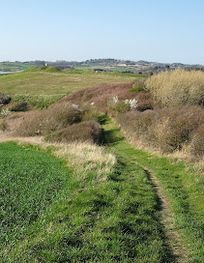
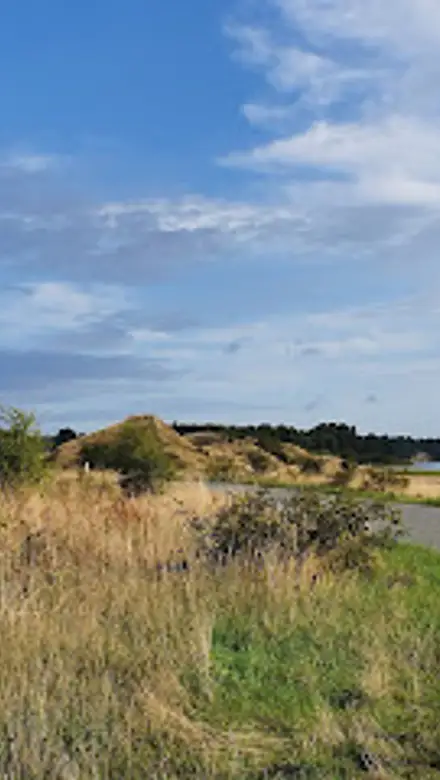
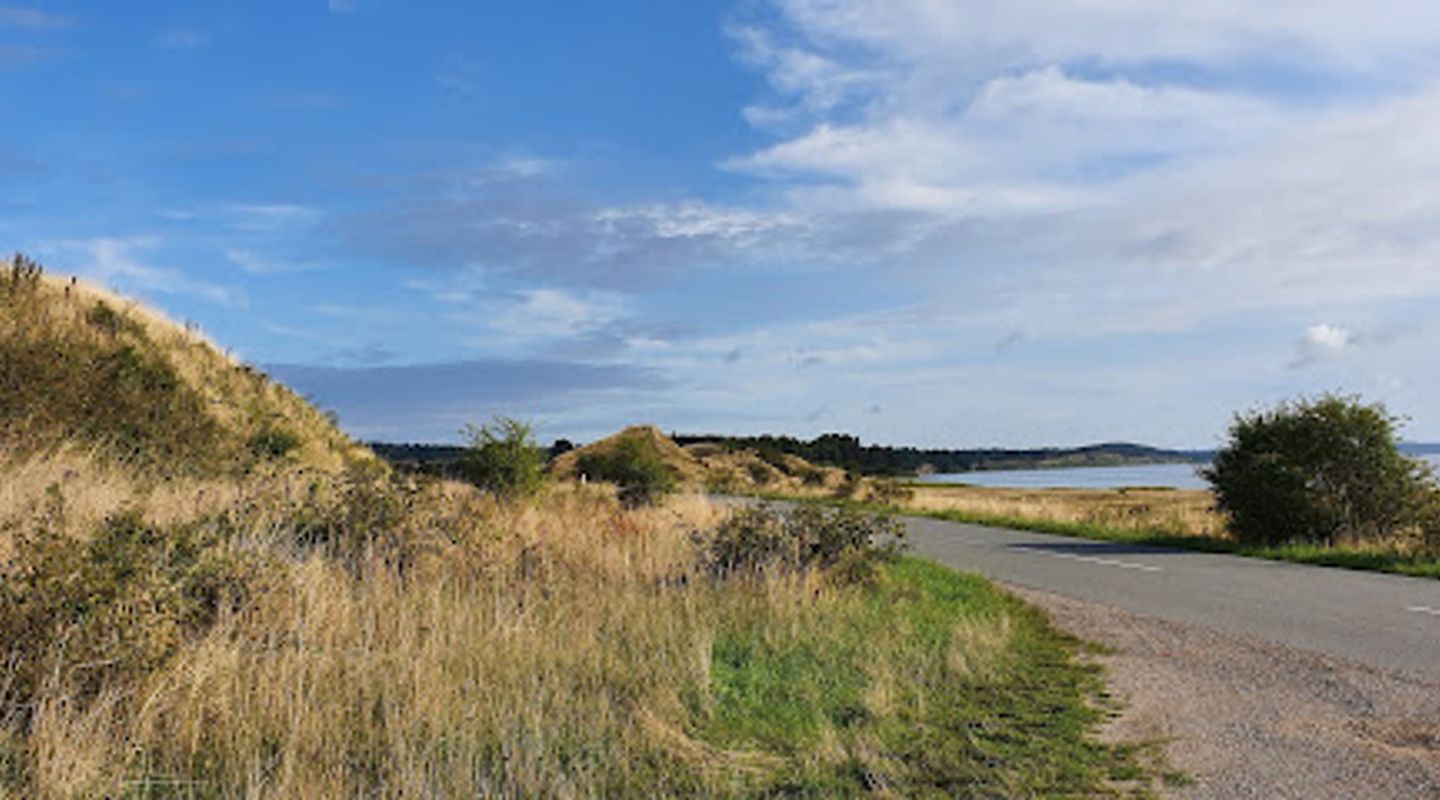
Dragsmur is a narrow, low stone embankment stretching 300 meters across the Draget isthmus, connecting the former island of Helgenæs to mainland Jutland. This historically significant landform emerged gradually through post-glacial land uplift over thousands of years and served as a natural military defense line. Today, it offers visitors a unique landscape where geology, medieval history, and coastal ecology converge, with opportunities for kayaking, hiking, and nature camping.
A brief summary to Dragsmur
- Olaf Ryes Vej 4, Knebel, 8420, DK
- Click to display
- Duration: 1.5 to 4 hours
- Free
-
 Outdoor
- Mobile reception: 4 out of 5

Know before you go
Hi, I'm Eve. Here are a few practical things to know before exploring Dragsmur.
- Arrive early in the morning to observe the landscape in calm light and avoid peak afternoon crowds during summer months. The low-angle sun beautifully illuminates the ancient ridge-and-furrow agricultural patterns visible in the coastal cliffs.
- If kayaking, launch from Ebeltoft Vig on the eastern side for protected waters and excellent views back toward the Dragsmur wall and Ryes Skanser fortifications.
- Book nature camping well in advance through Naturstyrelsen's online application system, as primitive sites fill quickly during summer season.
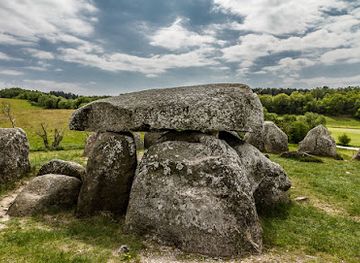
- Combine your visit with nearby attractions including Ryes Skanser fortress, Agri Bavnehøj burial mound, and Kalø Castle ruins for a comprehensive exploration of the region's medieval and prehistoric heritage.
- Bring binoculars for bird watching along the coastal margins, particularly during migration seasons in spring and autumn when diverse species pass through the area.
Do you manage this location?
Take control to get all the benefits, like improved information, better appearance, and stronger visibility across AI-powered discovery. Learn more about listing your business on Evendo
Activate your presenceOther nearby places you may find interesting
The closest places of the same kind, if this one is not quite what you had in mind.
Explore Dragsmur on the Map
A handpicked selection of must-see spots near Dragsmur, mapped for you.
Getting There
-
Car from Aarhus
Drive northeast from Aarhus toward Knebel, approximately 40 kilometers, taking approximately 45 minutes to 1 hour. Follow signs toward Mols Bjerge National Park and Dragsmur. Parking is available at Fuglsø Strandvej, 8420 Knebel, near the Dragsmur area. No entrance fee required.
-
Bicycle from Knebel
Cycle from Knebel village toward Dragsmur via local roads, approximately 5 kilometers, taking 15–20 minutes. The route follows relatively flat terrain with good cycling infrastructure. Dragsmur is car-free but fully accessible by bicycle. Bike parking is available at the site.
-
Kayak from Ebeltoft Vig
Launch a kayak from Ebeltoft Vig boat ramp (east side of Dragsmur) for direct water access. Paddling time to Dragsmur is minimal (5–10 minutes depending on conditions). The protected bay offers calm water suitable for recreational paddlers. Small boat launching facilities are available at Ebeltoft Vig.
-
Walking from Knebel
Walk from Knebel village to Dragsmur via coastal paths and national park trails, approximately 6–8 kilometers, taking 1.5–2 hours. The terrain is mostly flat with some gentle elevation changes. Well-marked trails connect the village to the isthmus. No fees required.
For the on-the-go comforts that matter to you
-
 Restrooms
-
 Drinking Water
-
 Seating Areas
-
 Sheltered Areas
-
 Picnic Areas
-
 Trash Bins
-
 Information Boards
Discover more about Dragsmur
A Landscape Shaped by Ice and Rising Seas
Dragsmur sits on the Draget isthmus, a flat and narrow landform (maximum 2 meters elevation, 300 meters wide) that emerged gradually through post-glacial land uplift beginning around 6,000 to 7,000 years ago. The landscape tells the story of dramatic geological transformation. During the last ice age, approximately 20,000 years ago, glaciers reshaped the terrain, creating the terminal moraines that form the distinctive Mols Bjerge hills. As the climate warmed and ice melted, sea levels rose, and the Draget area became submerged beneath what is known as the Stone Age Sea—approximately 4.5 meters higher than today's water level. Over millennia, the land gradually rose relative to the sea, eventually creating the narrow passage that now connects Helgenæs to the mainland. The isthmus's flat sections are literally raised seabed, while the small volcanic-like hills and steep eastern slopes near Ryes Skanser bear witness to ancient wave action and coastal erosion from that prehistoric ocean.Medieval Defense and the Mystery of Dragsmur Wall
Mid-way across the isthmus runs Dragsmur itself—a low earthen embankment with a core of stone that stretches the entire width of the Draget. Its true origins remain enigmatic. A written account from 1623 suggests it was constructed in the late 1200s by Marsk Stig, a powerful local landowner who controlled Helgenæs at that time. Alternative theories propose it may have served as an ancient boundary for the king's hunting grounds on Helgenæs. Regardless of its original purpose, the wall's strategic location made it a natural military fortification. When Danish general Olaf Rye constructed the impressive Ryes Skanser fortress in 1848 to defend against Swedish forces during the Three Years' War, Dragsmur was reinforced with additional earth on its northern side, creating an advanced defensive line in front of the higher fortifications. The skanser itself features distinctive zigzag trenches with steep forward faces and drainage ditches designed for crossfire and maximum defensive capability. Today, Dragsmur marks the boundary between two parishes (Vistoft and Helgenæs) and serves as the southern boundary of Mols Bjerge National Park.Coastal Ecology and Medieval Agriculture
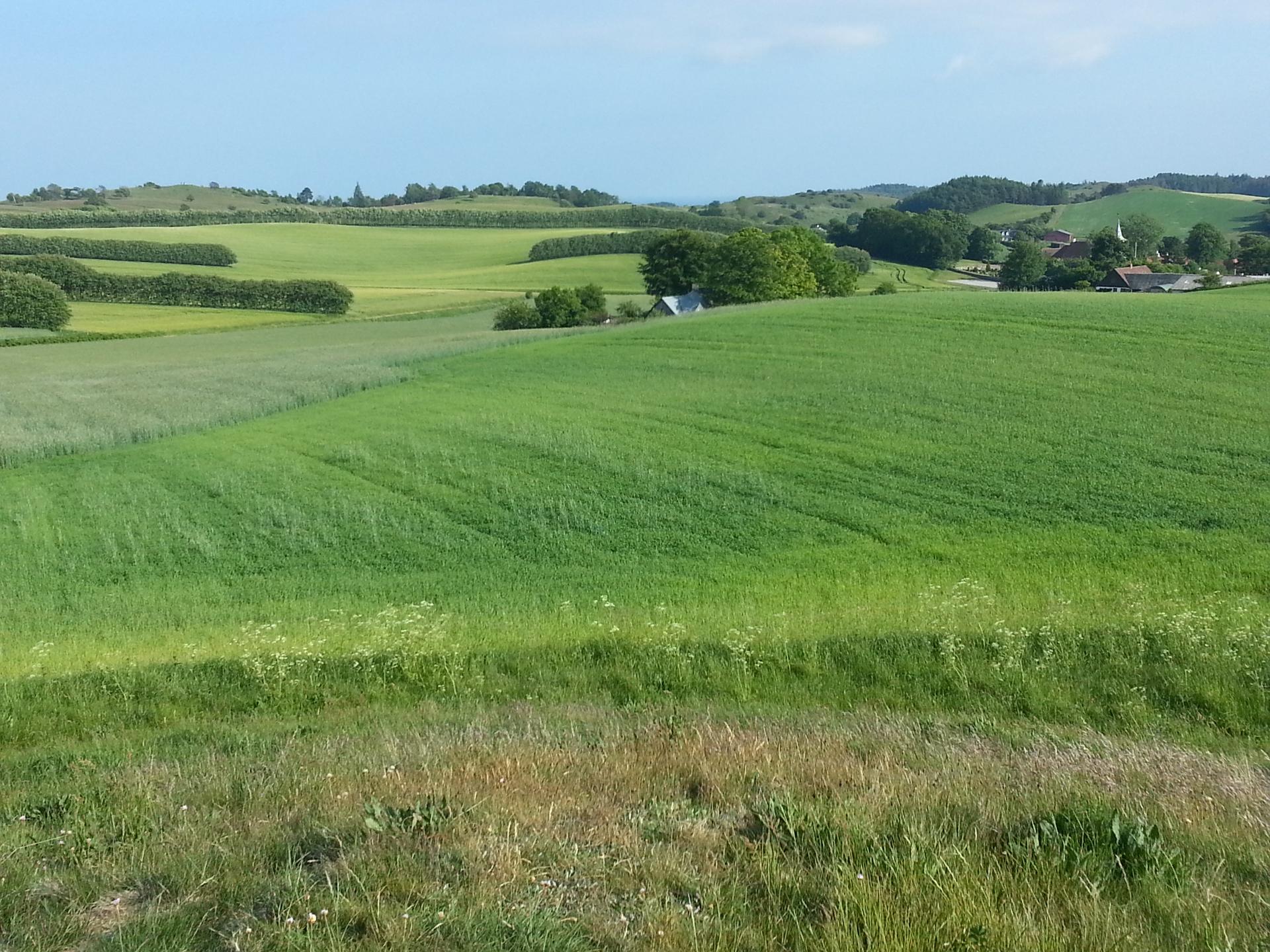
The Draget landscape preserves remarkable evidence of human settlement and land use spanning millennia. Following the shoreline southward, visitors can observe remnants of medieval ridge-and-furrow agriculture preserved in the low coastal cliffs—evidence of intensive farming practices from centuries past. The surrounding waters offer distinct ecological character: Ebeltoft Vig lies to the east and Begtrup Vig to the west, both providing opportunities for swimming and fishing. Ebeltoft Vig is particularly notable as a launching point for small boats and dinghies. The narrow isthmus itself creates a natural corridor where maritime and terrestrial ecosystems meet, supporting diverse coastal vegetation and bird life. The landscape's gentle waves and broad undulations visible across the Draget reflect ancient storm-deposited beach ridges that accumulated gradually as the sea level dropped and the land rose—a natural archive of coastal dynamics.Gateway to Water-Based Adventure
Dragsmur has emerged as a premier departure point for kayaking expeditions along the Djursland coast. The calm waters of both Ebeltoft Vig and Begtrup Vig provide ideal conditions for paddlers of varying experience levels. The narrow isthmus offers a unique vantage point where paddlers can observe the meeting of two distinct water bodies and experience the subtle shifts in coastal topography. The area's accessibility by water and its position within Mols Bjerge National Park make it an important hub for water-based nature exploration.Nature Camping and Low-Impact Recreation
Dragsmur accommodates primitive nature camping through Naturstyrelsen's managed sites, designed for visitors seeking minimal-impact outdoor experiences. These car-free camping areas are equipped with basic facilities including running water and toilets at some locations, with shelters available at select sites. Visitors are limited to two consecutive nights per location. Small cooking fires are permitted on the beach and near tents, though no designated fire pits exist. The sites are not suitable for wheelchair users or those with mobility limitations. Access is restricted to walkers and cyclists, with no vehicles, caravans, or motorhomes permitted. Camping requires advance application through Naturstyrelsen's online system.Seasonal Rhythms and Visitor Patterns
The Dragsmur area experiences distinct seasonal variations in visitor activity. Summer months (June through August) see peak visitation, particularly among kayakers and day-trippers exploring the national park. Spring and autumn offer quieter experiences with pleasant weather for hiking and nature observation. Winter visits are possible but less common, with colder temperatures and shorter daylight hours limiting recreational activities. The area remains accessible year-round, with no seasonal closures, though weather conditions significantly influence the experience and suitability for different activities.












Your all‑in‑one travel companion app
Explore expert travel guides, compare and book tours, experiences, hotels, and more—all from the palm of your hand. Download now for seamless trip planning wherever your wanderlust takes you.


Explore More of Mols Bjerge National Park
Looking beyond Dragsmur? Discover Mols Bjerge National Park for broader travel guides, local hot-spots, and regional highlights.
Explore Mols Bjerge National Park