Ellemandsbjerget top Travel Guide
Free Guide: Low in altitude but rich in horizons, Ellemandsbjerget crowns Helgenæs with sweeping sea views, quiet forest paths and hints of Denmark’s coastal history.


A brief summary of Ellemandsbjerget top
Low in altitude but rich in horizons, Ellemandsbjerget crowns Helgenæs with sweeping sea views, quiet forest paths and hints of Denmark’s coastal history.
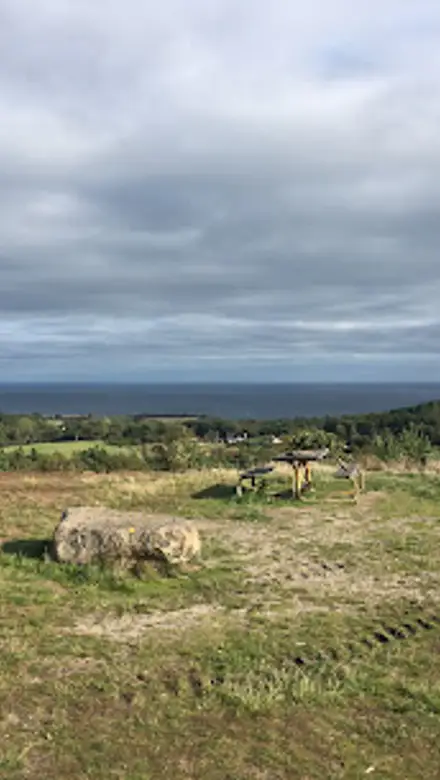
Ellemandsbjerget is a 99 m high hill on the Helgenæs peninsula near Knebel, offering one of Denmark’s broadest coastal panoramas. From the top you can gaze across Aarhus Bay and, on clear days, pick out islands in the southern Kattegat along with parts of Funen and Zealand. Waymarked forest and heathland paths lead to the summit, passing quiet plantations, WWII relics and open viewpoints that feel surprisingly wild for such a lowland country.
On-site amenities
 Trash bins
 Information boards
- Address
- Ellemandsvej, 8420 Knebel
Getting there
Car from Aarhus
Bus and local walk from Aarhus region
Cycling from Knebel
Discover more about Ellemandsbjerget top
A Hilltop That Feels Like the Middle of Denmark
Ellemandsbjerget rises to just 99 m, yet its position at the tip of the Helgenæs peninsula gives the summit an almost central feel in the Danish landscape. From the top you stand above a mosaic of bays, peninsulas and islands, with the sea forming a broad blue ring around you. In clear weather the view stretches across Aarhus Bay to Tunø and Samsø, and further towards Sejerø, Zealand’s Oddde and the open Kattegat beyond.Despite the modest height, the climb has a satisfying sense of ascent. As you follow the marked trail from the surrounding plateau, trees fall away, the wind grows stronger, and the horizon opens in every direction. The contrast between the sheltered lower forest and the exposed crown of the hill makes the summit feel higher than the numbers suggest.
Shaped by Ice, Wind and the Surrounding Sea
Geologically, Ellemandsbjerget is a legacy of the last Ice Age, when glaciers pushed and folded the landscape that now forms Mols Bjerge and Helgenæs. Here at the southern tip, the terrain is more compact, but the glacial ridges still give the land a rolling, undulating character. The hill’s slopes shift between heather, grass, scattered juniper and small plantations of conifer and deciduous trees.The surrounding sea is never far from view. Light reflects off the water, changing the character of the hill through the day and across the seasons. On calm summer days the bay looks like polished glass, while in autumn the wind can race across the summit, driving waves into the coastline far below. This interplay of land and sea is part of what makes the viewpoint memorable.
Traces of Defence and Quiet Stories in the Landscape
Ellemandsbjerget’s strategic position has not only appealed to hikers. The area around the hilltop carries traces of 20th-century coastal defence, including old military installations and remnants linked to past gun positions. These concrete and earth structures blend into the heather and scrub, but once you notice them they add an extra layer to the experience of the place.Away from the summit, forest paths loop through a plantation that softens the hill’s outline. The mix of open glades and denser stands of trees creates good conditions for birds and small mammals, and it is not unusual to catch sight of deer moving quietly between the trunks. The combination of natural drama and low-key cultural history gives the hill an atmosphere that is calm but never bland.
Walking Routes, Dog-Friendly Woods and Seasonal Moods
From the parking area between Esby and Ørby, an obvious marked trail leads towards the top, making the walk accessible without being monotonous. The path climbs progressively, with short steeper sections that may feel demanding but remain manageable for most reasonably fit walkers. Surrounding tracks allow you to extend the outing into a longer loop through forest and open ground.Ellemandsbjerget is also known as a dog-friendly area, with designated walking zones where four-legged companions can explore on-leash trails beneath the trees. The setting changes character throughout the year: spring brings fresh greens and bright light through budding canopies; summer offers long evenings and soft colours over the bay; autumn often means powerful skies; and in winter, a dusting of snow can turn the summit into a quietly dramatic lookout.
A Compact Outing with Big-Sky Rewards
One of the hill’s appeals is how much it offers within a relatively small area. You can reach the top on a short outing, yet still feel that you have stepped into a more rugged, exposed landscape. The open views lend themselves to unhurried pauses: watching the movement of ferries in the distance, tracing the shape of the coastline, or simply standing in the wind and listening to the subdued sounds from the woods below.For many visitors, Ellemandsbjerget becomes a natural focal point within a wider exploration of Helgenæs and the surrounding national park landscapes. It works equally well as a brief viewpoint stop or as the highlight of a half-day walk linking nearby villages, shorelines and other headlands around the peninsula.
Evendo Review Centre
 Google
Guest reviews
Best time to go
Quietest: Jan, Feb & Dec · before 6am or from 9pm
Busy times are Evendo estimates for a typical year, to help you plan. Actual crowds vary with events, school holidays and the weather.
Explore Ellemandsbjerget top on the map
A handpicked selection of must-see spots near Ellemandsbjerget top, mapped for you.
Get your free copy of our complete guide to Ellemandsbjerget top, delivered straight to you.
Everything on this page, from opening hours and how to get there to Eve’s tips and the best time to go, in one PDF you can read offline, print or share.
Already have an account? Sign in
Your Ellemandsbjerget top guide is ready.
We'll send it to · Not you? Sign out

Getting your guide ready…
We are putting together a fresh copy of the Ellemandsbjerget top guide. This can take up to a minute.
This can take a few moments. If your browser asks, choose Allow so the download can start. You'll find the guide in your Downloads folder.
Nothing happened? Download it again
Sorry, the guide is taking longer than usual. Please try again in a minute, or get it by email instead.
Other nearby places you may find interesting
The closest places of the same kind, if this one is not quite what you had in mind.
-
-
-
-
-


Swipe for more places
More to explore near Ellemandsbjerget top

 Best experiences near Ellemandsbjerget top
 Best hotels near Ellemandsbjerget top
 Best landmarks near Ellemandsbjerget top
 Best attractions near Ellemandsbjerget top
 Best shops near Ellemandsbjerget top
 Best restaurants near Ellemandsbjerget top
 Best bars near Ellemandsbjerget top
Do you manage this location?
Take control to get all the benefits, like improved information, better appearance, and stronger visibility across AI-powered discovery.
Explore more

Explore more of Mols Bjerge National Park
Discover the natural beauty and historical charm of Mols Bjerge National Park, where rolling hills, ancient woodlands, and serene lakes create a perfect outdoor escape.
Explore Mols Bjerge National Park
Explore more of Denmark
Discover Denmark: A perfect blend of history, modern design, and the cozy concept of hygge. Explore vibrant cities, serene landscapes, and world-class cuisine.
Explore Denmark