Stranden Møns Klint Travel Guide
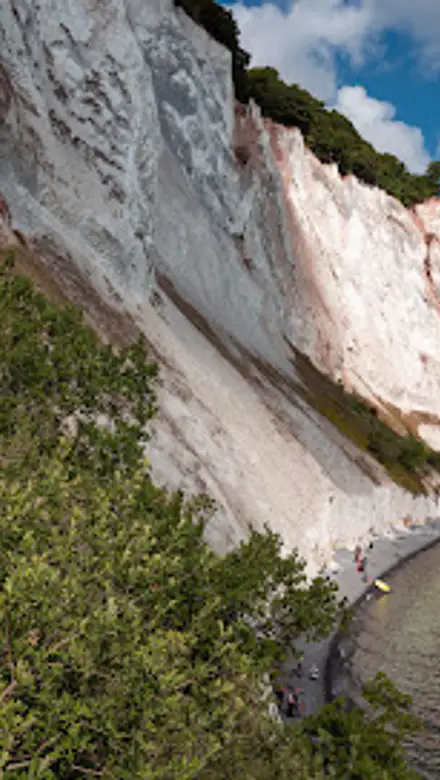
Free Guide: A raw shingle shore pressed between turquoise Baltic waves and 100‑metre chalk cliffs, Stranden Møns Klint is Denmark’s most dramatic meeting of land and sea.


A brief summary of Stranden Møns Klint
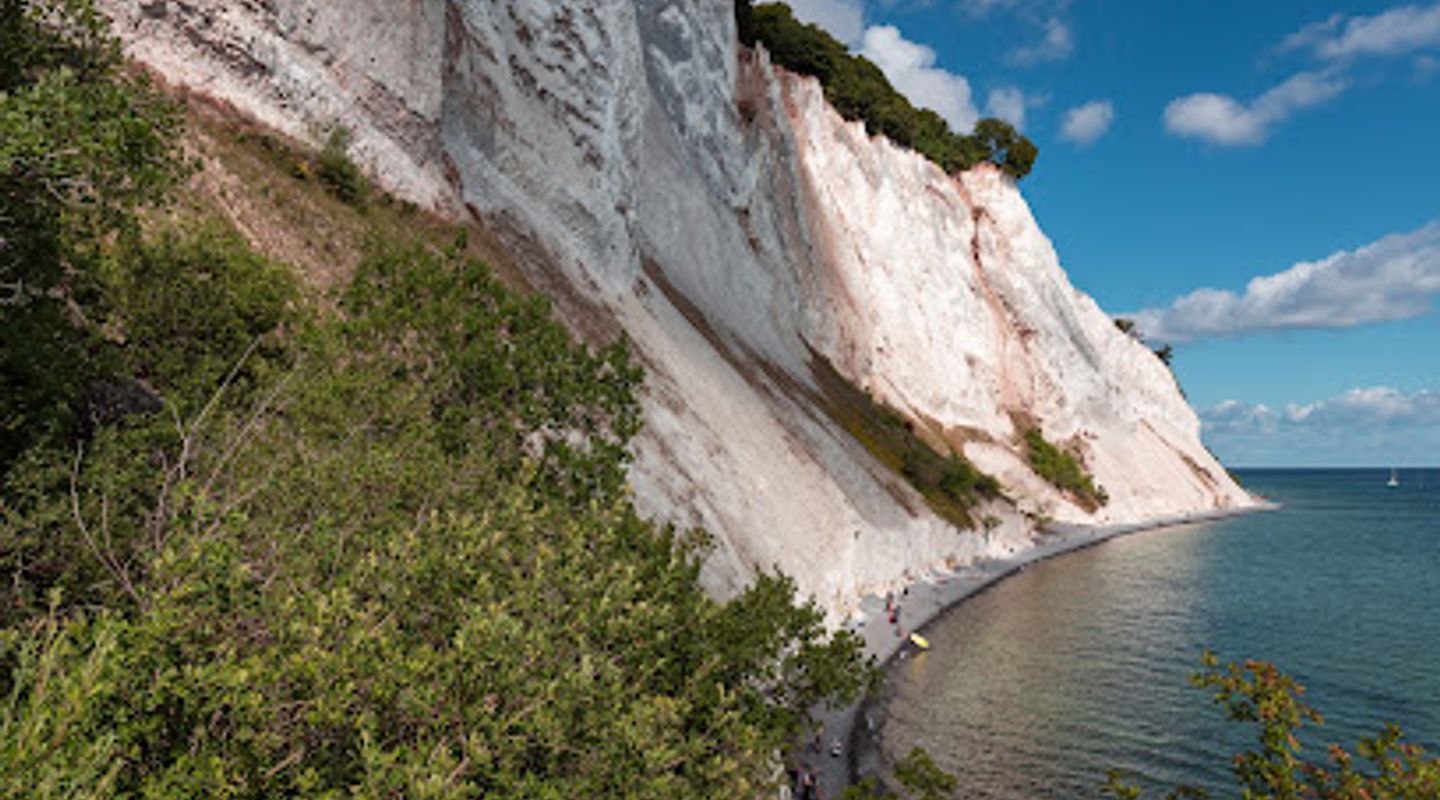
A raw shingle shore pressed between turquoise Baltic waves and 100‑metre chalk cliffs, Stranden Møns Klint is Denmark’s most dramatic meeting of land and sea.
Stranden Møns Klint is the wild shingle beach at the foot of Denmark’s most dramatic white chalk cliffs on the island of Møn. Reached by long stairways through beech forest, it feels remote and elemental: turquoise Baltic water laps at flint pebbles, while the 100‑plus‑metre limestone walls tower overhead. Fossil hunting, photography and quiet contemplation take centre stage here, in a landscape shaped by ice ages and constant erosion.
On-site amenities
 Restrooms
 Drink options
 Drinking water
 Food options
 Seating areas
 Sheltered areas
 Picnic areas
 Trash bins
 Information boards
 Visitor centre
- Address
- 4791 Borre
Getting there
Car from Stege (island of Møn)
Public transport from Copenhagen via Vordingborg
Cycling on Møn
Discover more about Stranden Møns Klint
Where sea meets Denmark’s tallest cliffs
Stranden Møns Klint is the narrow strip of shingle and chalk at the base of Møns Klint, a six to seven kilometre wall of white limestone rising up to around 120–128 metres above the Baltic Sea. Here, the sense of scale is striking: stand on the beach and the cliffs curve away in both directions, sheer and gleaming, while the water below takes on a milky turquoise hue from suspended chalk. The beach itself is a mix of rounded flint pebbles, larger boulders and bands of compacted chalk washed down from the heights.Unlike Denmark’s softer sandy strands, this is a raw, almost alpine coastline. The constant crumble of the cliffs means the shoreline is always changing. Fallen trees lie half-buried in white scree, and fresh scars on the cliff face show where winter storms have bitten away another slice of land. It is beautiful, but also clearly a landscape in motion.
Ancient chalk and fossils under your feet
The beach is effectively a geological classroom. The bright white chalk is made from the compressed remains of countless microscopic marine organisms that settled on an ancient seabed more than 70 million years ago. Over time these layers were pushed up by glacial forces, then exposed as ice retreated after the last ice age. Today, waves gnaw relentlessly at this soft rock, releasing fossils and feeding the powdery sediment that tints the sea.Walking along the shore, you can spot flint nodules embedded in the chalk blocks and, with patience, find small fossilised shellfish and other traces of prehistoric life among the pebbles. The same mineral-rich environment that created the cliffs also supports an unusual flora and fauna above, including rare orchids and butterflies, though from the beach you mainly sense their presence in the birdsong drifting down from the forested rim.
Arriving by stairway through the forest
Reaching Stranden Møns Klint is an experience in itself. From the cliff-top plateau, long staircases descend through steep beech woods, zigzagging between roots and trunks before emerging onto the open shore. The main staircase near GeoCenter Møns Klint has close to 500 steps, and you feel every one on the way back up, but there are resting platforms with wide views across the Baltic.At the bottom, the atmosphere shifts from leafy enclosure to wide horizon. The beach feels surprisingly secluded, as the stairways limit numbers and discourage casual passersby. There are no buildings, kiosks or formal facilities on the strand itself – just the sound of surf on stone, the occasional call of a gull and, on calm days, the gentle lapping of very clear, chalk-filtered water.
Experiencing the beach through the day and seasons
The character of Stranden Møns Klint changes with light and weather. On bright days, the cliffs glow almost blindingly white and the sea turns a vivid blue‑green. In softer conditions, they become layered shades of grey and cream, lending the place a more introspective feel. Sunrise can paint the chalk in warm tones, while evenings bring long shadows and a quieter mood along the shore.Swimming is possible in suitable conditions, though the seabed is stony and water shoes are very useful. More often, visitors wander along the waterline, stack pebbles, search for fossils or simply sit and gaze at the towering walls. Erosion and landslides are an ever-present reality, especially in wetter months, so it is wise not to linger directly below overhangs or freshly fallen sections.
Part of a wider protected nature landscape
Although the beach feels self-contained, it is part of a larger protected nature reserve that includes cliff-top forests, rolling hills and ponds. The whole area is recognised for its unique biosphere and, more recently, for its dark skies, making it one of Denmark’s standout natural regions. From the shore, night can bring exceptionally clear star views when conditions allow, with the white cliffs faintly visible in starlight.Up above, information centres and marked trails explain the geology, history and wildlife, while the beach below offers the most immediate, sensory contact with these forces. Together, they form a rare coastal ensemble: ancient rock, living forest and ever-changing sea, with Stranden Møns Klint as the elemental meeting line between them.
Evendo Review Centre
 Google
Guest reviews
Best time to go
Quietest: Jan, Feb & Dec · before 6am or from 9pm
Busy times are Evendo estimates for a typical year, to help you plan. Actual crowds vary with events, school holidays and the weather.
Explore Stranden Møns Klint on the map
A handpicked selection of must-see spots near Stranden Møns Klint, mapped for you.
Get your free copy of our complete guide to Stranden Møns Klint, delivered straight to you.
Everything on this page, from opening hours and how to get there to Eve’s tips and the best time to go, in one PDF you can read offline, print or share.
Already have an account? Sign in
Your Stranden Møns Klint guide is ready.
We'll send it to · Not you? Sign out

Getting your guide ready…
We are putting together a fresh copy of the Stranden Møns Klint guide. This can take up to a minute.
This can take a few moments. If your browser asks, choose Allow so the download can start. You'll find the guide in your Downloads folder.
Nothing happened? Download it again
Sorry, the guide is taking longer than usual. Please try again in a minute, or get it by email instead.
Other nearby places you may find interesting
The closest places of the same kind, if this one is not quite what you had in mind.
-
-
-
-
-


Swipe for more places
More to explore near Stranden Møns Klint

 Best experiences near Stranden Møns Klint
 Best hotels near Stranden Møns Klint
 Best landmarks near Stranden Møns Klint
 Best attractions near Stranden Møns Klint
 Best shops near Stranden Møns Klint
 Best restaurants near Stranden Møns Klint
 Best bars near Stranden Møns Klint
Do you manage this location?
Take control to get all the benefits, like improved information, better appearance, and stronger visibility across AI-powered discovery.
Explore more
Explore more of Møn
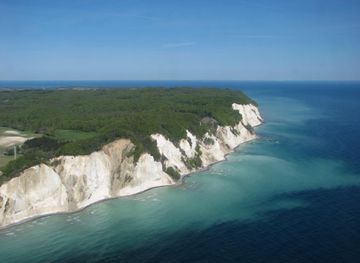
Discover the breathtaking cliffs, rich history, and serene beauty of Møn, Denmark's hidden gem in the Baltic Sea, perfect for nature lovers and history enthusiasts alike.
Explore Møn
Explore more of Denmark
Discover Denmark: A perfect blend of history, modern design, and the cozy concept of hygge. Explore vibrant cities, serene landscapes, and world-class cuisine.
Explore Denmark