Liselund Travel Guide
Free Guide: An 18th-century romantic garden palace where enlightened philosophy meets timeless beauty on the Danish island of Møn.


A brief summary of Liselund
An 18th-century romantic garden palace where enlightened philosophy meets timeless beauty on the Danish island of Møn.
Liselund is an exquisitely preserved 18th-century romantic garden estate on the Danish island of Møn, featuring a neoclassical palace built in 1792, exotic pavilions, serene lakes, and monuments scattered throughout landscaped grounds. Created as a love gift from French nobleman Antoine de la Calmette to his wife Elisabeth (Lisa) in the 1790s, this masterpiece of English-inspired romantic gardening represents one of Scandinavia's finest examples of the genre. The estate, now administered by the National Museum of Denmark, welcomes visitors year-round to explore its enchanting grounds and well-preserved interiors.
On-site amenities
 Restrooms
 Drink options
 Drinking water
 Food options
 Seating areas
 Picnic areas
 Trash bins
 Information boards
 Visitor centre
Opening hours
- Every dayOpen 24 hours
Opening hours as listed on the venue’s Google Business Profile. Hours can change for services and special events, so check with the venue before you go.
- Address
- Langebjergvej 4, 4791 Borre
- Phone
- Website
Getting there
Car from Møn Town Centre
Bus from Stege (Møn's Main Town)
Cycling from Møn Town Centre
Walking from Møns Klint Visitor Area
Discover more about Liselund
A Romantic Vision Born from Enlightenment Philosophy
Liselund emerged in the 1790s as an extraordinary expression of late 18th-century ideals. French nobleman Antoine de la Calmette and his wife Elisabeth, known as Lisa, created this garden estate as a personal retreat inspired by Jean-Jacques Rousseau's philosophy of naturalism and the Romantic movement's celebration of nature. The couple, who had travelled extensively and absorbed the intellectual currents of the Age of Enlightenment, envisioned Liselund as a sanctuary where they could escape the demands of their primary residence at Marienborg on the opposite side of Møn. The name itself—Liselund, meaning "Lise's grove"—reflects Antoine's devotion to his wife, transforming philosophical ideals into a tangible landscape of beauty and intimacy.
The Neoclassical Palace and Its Refined Interior
At the heart of the estate stands the neoclassical palace, erected in 1792 by renowned Danish architect Andreas Kirkerup. This elegant white structure, distinguished by its thatched roof and understated classical proportions, serves as the visual anchor of the entire composition. The palace's interior, meticulously preserved to this day, is believed to have been decorated and furnished by Joseph Chr. Lillie, the leading court decorator of the era. Every element—from architectural details to furnishings and decorative objects—reflects the refined aesthetic sensibilities of Danish 18th-century aristocracy. The palace functions as a summer residence, modest in scale yet extraordinary in its artistic coherence, embodying the tension between nature and culture that fascinated enlightened thinkers of the period.
The Enchanted Garden: Ordered Wildness and Romantic Composition
The garden surrounding the palace represents one of Denmark's best-preserved examples of romantic landscape design. Rather than imposing rigid geometric order, the garden embraces what the Romantic era termed "ordered wildness"—a carefully orchestrated naturalism that appears spontaneous yet reveals sophisticated artistic intention. Gentle slopes and idyllic lakes create a sense of pastoral tranquility, while dramatic gorges and dense forest provide visual drama and mystery. Exotic pavilions and garden monuments, inspired by distant lands and cultures, are strategically positioned throughout the grounds to surprise and delight visitors as they wander the winding paths. Peacocks, ducks, and water lilies inhabit this dreamlike landscape, adding living elements to the composition. The garden's design philosophy celebrates the beauty of nature while acknowledging human creativity, perfectly capturing the philosophical preoccupations of its creators.
Stewardship Through Centuries and Wartime Heroism
Following Antoine's death in 1803 and Lisa's in 1805, Liselund passed through several generations of aristocratic ownership, including the Rosenkrantz family, who maintained the estate with dedication. During World War II, Baron Niels Rosenkranz, who resided at Liselund, led the West Møn Danish resistance group—possibly Denmark's first organized resistance cell, established just days after the German occupation in April 1940. By late 1942, the group began rescuing Danish Jews, and by October 1943, the operation intensified dramatically. Under cover of darkness, small groups of Jewish refugees were guided down treacherous paths from Liselund Park to the beach below, where boats transported them to neutral Sweden. Despite Gestapo suspicions and a raid on the night of October 10, 1943, no evidence of the escape route was discovered, as the resistance had been forewarned. In 1973, recognizing the mounting costs of maintaining the estate, the Danish State assumed ownership, and the National Museum of Denmark now administers Liselund as a cultural treasure.
A Living Museum of Romantic Ideals
Today, Liselund stands as a rare and complete preservation of an entire aesthetic world. From the largest landscape features to the smallest piece of furniture, every element contributes to a unified vision of beauty, philosophy, and human aspiration. The estate remains open year-round, with the garden accessible to all visitors and the palace available for guided tours during the warmer months. Visitors can picnic among the romantic grounds, explore the exotic follies and monuments, and step inside the palace to experience the refined interior world that Antoine and Lisa inhabited. The proximity to Møns Klint, Denmark's dramatic white chalk cliffs, adds to the site's natural splendor and makes Liselund an essential destination for understanding Danish cultural heritage and the broader European Romantic movement.
Evendo Review Centre
 Google
Guest reviews
Best time to go
Quietest: Jan, Feb & Nov · before 7am or at 9pm
Busy times are Evendo estimates for a typical year, to help you plan. Actual crowds vary with events, school holidays and the weather.
Explore Liselund on the map
A handpicked selection of must-see spots near Liselund, mapped for you.
Get your free copy of our complete guide to Liselund, delivered straight to you.
Everything on this page, from opening hours and how to get there to Eve’s tips and the best time to go, in one PDF you can read offline, print or share.
Already have an account? Sign in
Your Liselund guide is ready.
We'll send it to · Not you? Sign out

Getting your guide ready…
We are putting together a fresh copy of the Liselund guide. This can take up to a minute.
This can take a few moments. If your browser asks, choose Allow so the download can start. You'll find the guide in your Downloads folder.
Nothing happened? Download it again
Sorry, the guide is taking longer than usual. Please try again in a minute, or get it by email instead.
Other nearby places you may find interesting
The closest places of the same kind, if this one is not quite what you had in mind.
-
GeoCenter Møns Klint Immersive cliff-top museum and nature hub revealing 70 million years of geology beside Denmark’s highest white chalk cliffs at Møns Klint.
-
Moen lighthouse A quiet 19th‑century beacon perched above Denmark’s most dramatic chalk cliffs, where sea, sky and starlight meet on the far edge of the island of Møn.
-
Trappe Møns Klint A steep wooden stairway plunging from beech forest to turquoise Baltic shore, Trappe Møns Klint is the most direct way into Denmark’s iconic white chalk cliffs.
-
Stranden Møns Klint A raw shingle shore pressed between turquoise Baltic waves and 100‑metre chalk cliffs, Stranden Møns Klint is Denmark’s most dramatic meeting of land and sea.
-
Thorsvang, Danmarks Samlermuseum Et stemningsfuldt samlermuseum på Møn, indrettet som en hel lille by fra de gode gamle dage – fyldt med butikker, værksteder, kolonihaver og hverdagsminder.
Swipe for more places
More to explore near Liselund

 Best experiences near Liselund
 Best hotels near Liselund
 Best landmarks near Liselund
 Best attractions near Liselund
 Best shops near Liselund
 Best restaurants near Liselund
 Best bars near Liselund
Do you manage this location?
Take control to get all the benefits, like improved information, better appearance, and stronger visibility across AI-powered discovery.
Explore more
Explore more of Møn
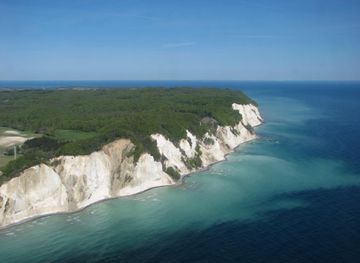
Discover the breathtaking cliffs, rich history, and serene beauty of Møn, Denmark's hidden gem in the Baltic Sea, perfect for nature lovers and history enthusiasts alike.
Explore Møn
Explore more of Denmark
Discover Denmark: A perfect blend of history, modern design, and the cozy concept of hygge. Explore vibrant cities, serene landscapes, and world-class cuisine.
Explore Denmark