Trappe Møns Klint Travel Guide
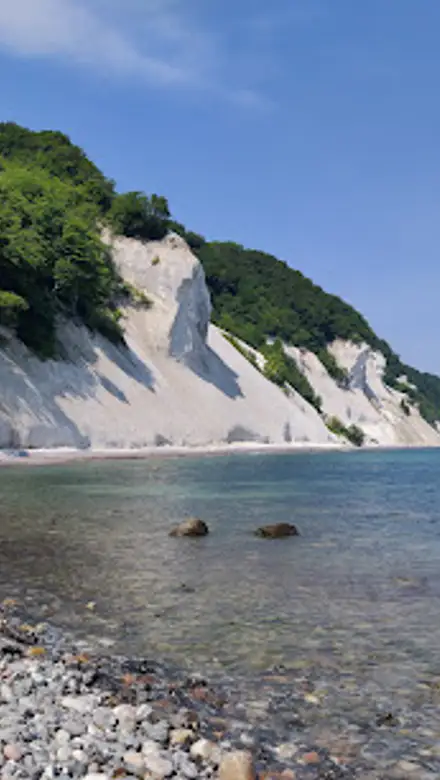
Free Guide: A steep wooden stairway plunging from beech forest to turquoise Baltic shore, Trappe Møns Klint is the most direct way into Denmark’s iconic white chalk cliffs.


A brief summary of Trappe Møns Klint
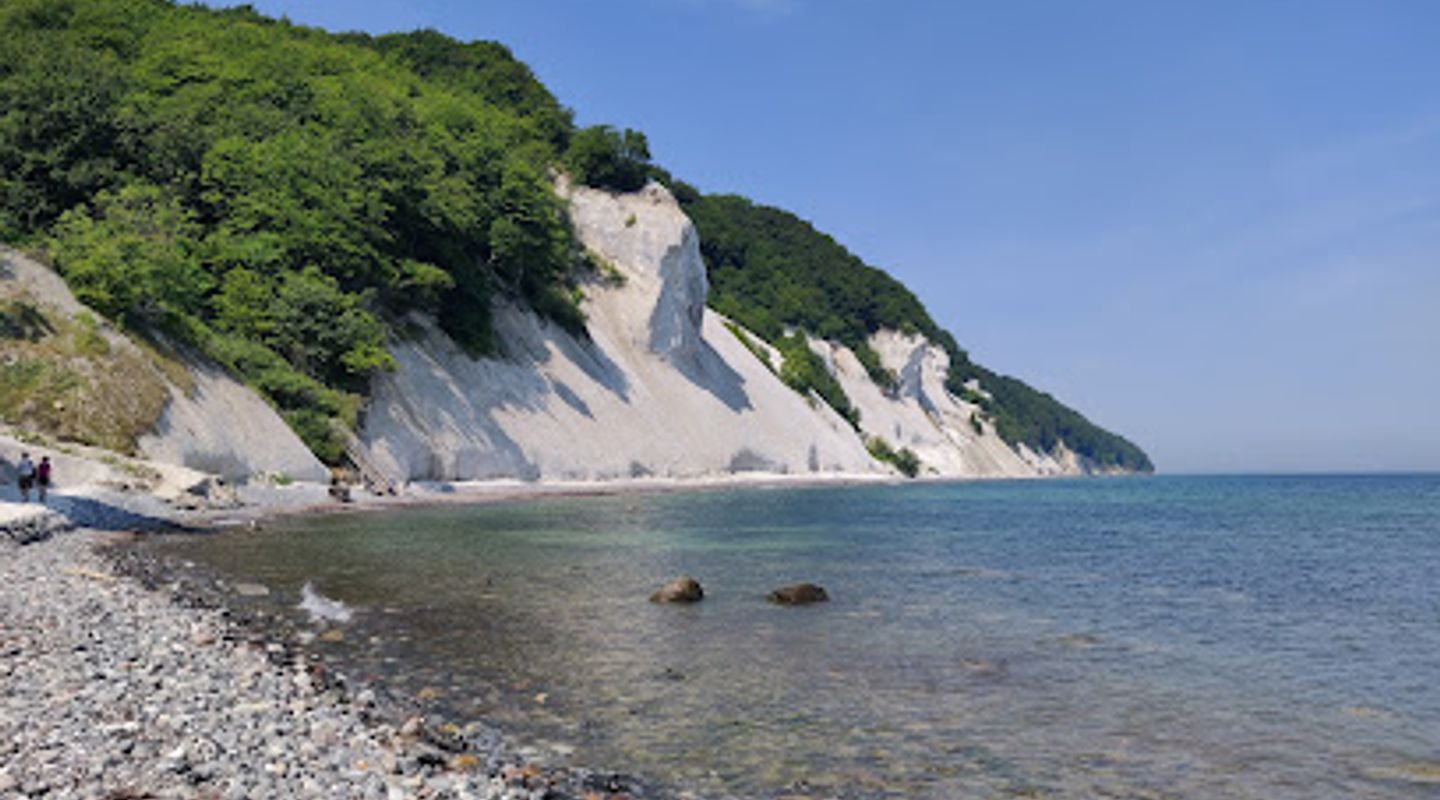
A steep wooden stairway plunging from beech forest to turquoise Baltic shore, Trappe Møns Klint is the most direct way into Denmark’s iconic white chalk cliffs.
Trappe Møns Klint is the dramatic stairway that links the beech-forested clifftops of Møns Klint with the shingle beach far below on the Baltic Sea. Here, hundreds of wooden steps drop through the trees to the foot of Denmark’s famous white chalk cliffs, revealing close-up views of 70-million-year-old geology, turquoise water, and fallen chalk blocks scattered along the shoreline. It is both a demanding workout and one of the most memorable vantage points on the island of Møn.
On-site amenities
 Restrooms
 Seating areas
 Picnic areas
 Trash bins
 Information boards
 Visitor centre
Opening hours
- Every dayOpen 24 hours
Opening hours as listed on the venue’s Google Business Profile. Hours can change for services and special events, so check with the venue before you go.
- Address
- XGQP+HF, 4791 Borre
Getting there
Car from Stege (island of Møn)
Regional public transport via Vordingborg and Stege
Guided day tour from Copenhagen
Cycling from Stege or Klintholm Havn
Discover more about Trappe Møns Klint
A Wooden Staircase into Denmark’s White Cliffs
Trappe Møns Klint is one of the main stairways cut into the steep face of Møns Klint, the six‑kilometre stretch of chalk and limestone cliffs that defines the eastern edge of the island of Møn. As you step onto the first treads, you are effectively entering a vertical world: dense beech forest above, sheer white walls to your side, and the Baltic Sea glinting below. The staircase clings to the cliff in long flights with occasional landings where you can pause and feel how abruptly Denmark’s usually flat landscape breaks away here.The chalk around you was formed from countless microscopic marine organisms that settled on an ancient seabed some 70 million years ago. Over time, glacial movements lifted and folded these soft layers into the cliffs you see today. Each step downward is a small journey through that deep time, with the bright, almost luminous chalk contrasting against the dark greens of the forest.
Life at the Foot of the Cliffs
At the bottom of the stairs, the setting changes from shaded woodland to an open shore of pebbles, chalk rubble, and driftwood. Here you can look straight up at walls of rock that rise well over a hundred metres, streaked with flint bands and pitted where the sea and weather have carved hollows. The constant slow erosion of the cliff face means the shoreline is never quite the same from year to year, and occasional rockfalls leave fresh white scars and new boulders at your feet.The Baltic Sea here often appears milky turquoise, coloured by tiny chalk particles washed from the cliffs. On calm days the water laps gently against the stones, while seabirds trace the line of the coast above. Fossil enthusiasts scan the chalk blocks for imprints of ancient sea creatures, reminders that this dramatic landscape began as a quiet ocean floor.
Forest Ridges and Cliff-Top Trails
Once you have climbed back up, the atmosphere shifts again into Klinteskoven, the beech forest that crowns the cliff edge. Well-marked trails weave through the trees, sometimes brushing dangerously close to the brink where gaps reveal sweeping sea views. This combination of dense woodland and sudden vistas gives the area a layered character: sheltered and enclosed one moment, wide open and wind-touched the next.The surrounding landscape rolls in a series of ridges and hollows shaped by the last Ice Age. Nearby high points rank among the tallest natural elevations in Denmark, which adds to the sense that this is an outlier in an otherwise soft, low country. The stairway itself becomes a connector between these two worlds, letting you move quickly from high forest ridgeline to exposed shoreline.
Effort, Reward, and Safety on the Steps
A visit to Trappe Møns Klint is as much a physical experience as a scenic one. The long descent feels easy at first, but the return climb is demanding, especially if you stop frequently by the water. Sturdy footwear is important; the steps can be damp or slippery after rain, and the beach itself is uneven with loose stones and chalk. Handrails run most of the way, providing support for tired legs on the ascent.The changing nature of the cliffs means it is wise to avoid standing directly under overhangs or freshly fallen sections. Weather also shapes the experience: in bright sunshine, the white rock can dazzle the eyes, while in overcast light the cliffs glow softly against the darker sea. Even on windier days, the forested approach offers some shelter before you step out onto the more exposed lower flights.
Part of a Larger Coastal Story
Although the staircase is a focal point, it is only one feature in a much wider protected coastal landscape. Trails link the steps with viewpoints along the edge, and with the broader network of paths across Møn, making Trappe Møns Klint a natural anchor for longer hikes. To the west, a geological visitor centre interprets the formation of the cliffs, while elsewhere on the island dark night skies reveal bright stars over the Baltic.The stairway’s simple timber construction feels deliberately understated, allowing the raw drama of chalk and sea to dominate. Standing on a mid‑level platform, with the smell of damp wood and salt air around you, it is easy to sense both the fragility and resilience of this coast: always changing, yet recognisably the same line of cliffs that has marked the edge of Denmark for millennia.
Evendo Review Centre
 Google
Guest reviews
Best time to go
Quietest: Jan, Feb & Dec · before 7am or from 8pm
Busy times are Evendo estimates for a typical year, to help you plan. Actual crowds vary with events, school holidays and the weather.
Explore Trappe Møns Klint on the map
A handpicked selection of must-see spots near Trappe Møns Klint, mapped for you.
Get your free copy of our complete guide to Trappe Møns Klint, delivered straight to you.
Everything on this page, from opening hours and how to get there to Eve’s tips and the best time to go, in one PDF you can read offline, print or share.
Already have an account? Sign in
Your Trappe Møns Klint guide is ready.
We'll send it to · Not you? Sign out

Getting your guide ready…
We are putting together a fresh copy of the Trappe Møns Klint guide. This can take up to a minute.
This can take a few moments. If your browser asks, choose Allow so the download can start. You'll find the guide in your Downloads folder.
Nothing happened? Download it again
Sorry, the guide is taking longer than usual. Please try again in a minute, or get it by email instead.
Other nearby places you may find interesting
The closest places of the same kind, if this one is not quite what you had in mind.
-
GeoCenter Møns Klint Immersive cliff-top museum and nature hub revealing 70 million years of geology beside Denmark’s highest white chalk cliffs at Møns Klint.
-
Moen lighthouse A quiet 19th‑century beacon perched above Denmark’s most dramatic chalk cliffs, where sea, sky and starlight meet on the far edge of the island of Møn.
-
Stranden Møns Klint A raw shingle shore pressed between turquoise Baltic waves and 100‑metre chalk cliffs, Stranden Møns Klint is Denmark’s most dramatic meeting of land and sea.
-
Thorsvang, Danmarks Samlermuseum Et stemningsfuldt samlermuseum på Møn, indrettet som en hel lille by fra de gode gamle dage – fyldt med butikker, værksteder, kolonihaver og hverdagsminder.
-
Møns Museum, Empiregården Local history, geology and island stories brought to life inside an atmospheric 18th‑century merchant’s house in the heart of Stege on Møn.
Swipe for more places
More to explore near Trappe Møns Klint

 Best experiences near Trappe Møns Klint
 Best hotels near Trappe Møns Klint
 Best landmarks near Trappe Møns Klint
 Best attractions near Trappe Møns Klint
 Best shops near Trappe Møns Klint
 Best restaurants near Trappe Møns Klint
 Best bars near Trappe Møns Klint
Do you manage this location?
Take control to get all the benefits, like improved information, better appearance, and stronger visibility across AI-powered discovery.
Explore more
Explore more of Møn
Discover the breathtaking cliffs, rich history, and serene beauty of Møn, Denmark's hidden gem in the Baltic Sea, perfect for nature lovers and history enthusiasts alike.
Explore Møn
Explore more of Denmark
Discover Denmark: A perfect blend of history, modern design, and the cozy concept of hygge. Explore vibrant cities, serene landscapes, and world-class cuisine.
Explore Denmark