

Randers Regnskov, Randers Travel Guide
Free Guide: Step from Danish riverbank into dense tropical domes, Ice Age landscapes and Nordic wildlife at Randers Regnskov, a vivid zoo and nature story in one place.


A brief summary of Randers Regnskov
Step from Danish riverbank into dense tropical domes, Ice Age landscapes and Nordic wildlife at Randers Regnskov, a vivid zoo and nature story in one place.
Randers Regnskov is Denmark’s immersive tropical zoo, a domed rainforest and outdoor adventure world on the banks of the Gudenå in Randers. Step into hot, humid jungle halls that recreate the ecosystems of South America, Africa and Asia, with free-roaming monkeys, birds, bats and lush vegetation all around you. Outside, the journey continues through Ice Age landscapes, Nordic predators and playful farm and playground areas, blending nature experiences, storytelling and hands-on learning for all ages.
On-site amenities
 Restrooms
 Drink options
 Drinking water
 Food options
 Lockers
 Seating areas
 Sheltered areas
 Picnic areas
 Trash bins
 Information boards
 Visitor centre
Opening hours
- Every day9 am–6 pm
Opening hours as listed on the venue’s Google Business Profile. Hours can change for services and special events, so check with the venue before you go.
- Address
- Tørvebryggen 11, 8900 Randers C
- Phone
- Website
Getting there
Train and short walk from Randers Station
Intercity bus to Randers city centre
Car via E45 motorway and nearby parking
Discover more about Randers Regnskov
Tropical domes on the Gudenå riverbank
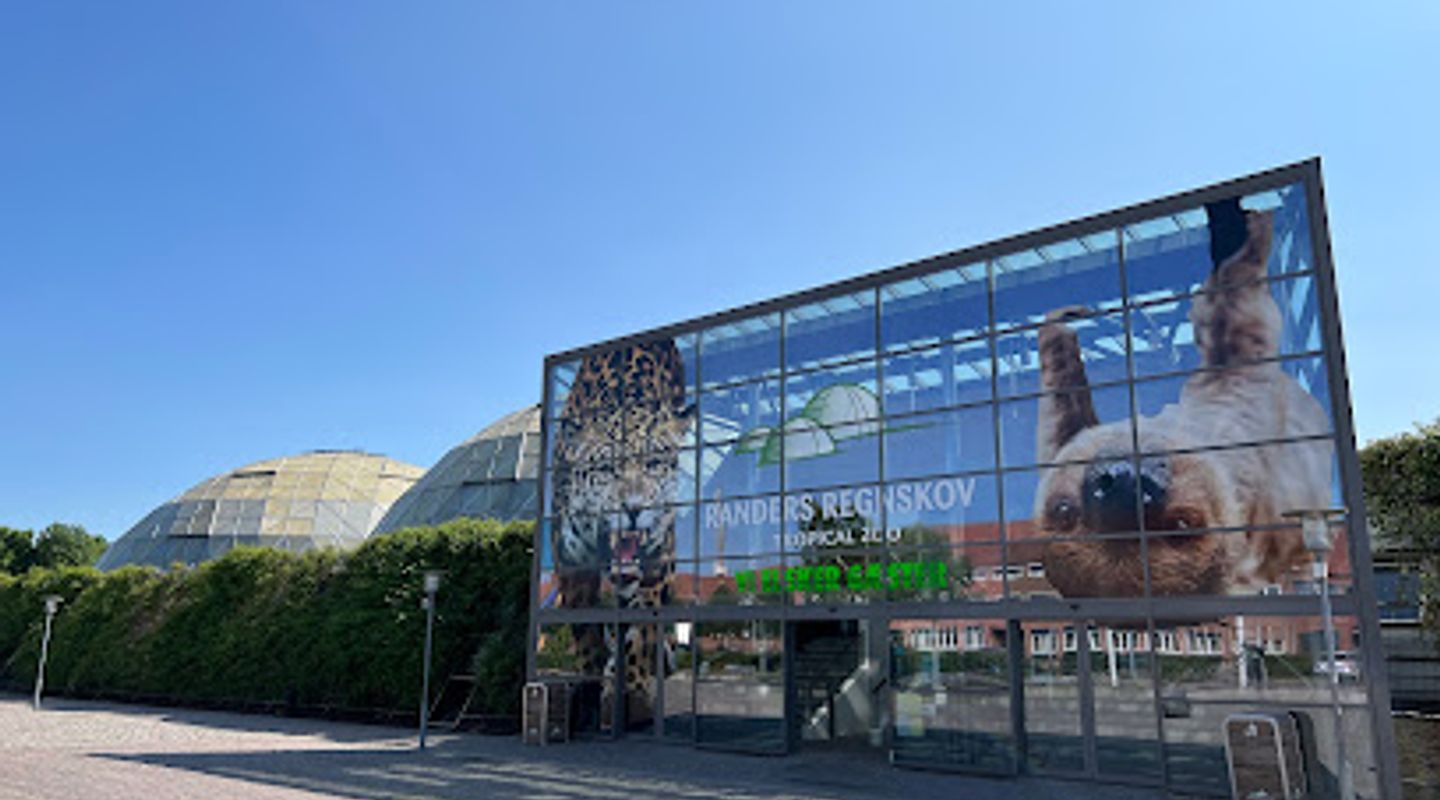
Randers Regnskov is a striking sight in the heart of Randers, where several glass domes rise beside the river and conceal a complete tropical world within. As you enter, the cool Danish air gives way to dense warmth and humidity, and your eyes need a moment to adjust from northern daylight to the filtered green glow of the rainforest. Paths weave between tree trunks and giant leaves, wooden bridges span streams, and the sound of waterfalls masks the city outside.The domes are divided into distinct rainforest regions, each capturing the atmosphere of a different continent. Subtle changes in planting, rockwork and soundscape shift you from one ecosystem to another, while temperature and humidity remain stubbornly tropical. It is deliberately disorienting in the best way, encouraging you to roam, pause and peer into the shadows where movement betrays another animal close by.
Close encounters with rainforest wildlife
One of the defining features of Randers Regnskov is how close you feel to the animals. Many species live free in the domes, moving where they choose. High above, small monkeys launch themselves between branches, sometimes pausing just a few metres away to inspect visitors. Bright birds flash through the foliage, and in some areas bats swirl overhead in dim, cave-like spaces that evoke a tropical night.More secretive inhabitants live behind glass: sleek jaguars pacing through recreations of temple ruins, Komodo dragons basking in heated rock enclosures and snakes coiled among roots. Aquariums add another layer, with manatees gliding slowly through deep pools and smaller tanks revealing colourful fish and invertebrates. Interpretive displays focus on behaviour and habitat rather than lists of facts, making it easy to connect each animal to the broader story of rainforest conservation.
From Ice Age landscapes to Nordic predators
Beyond the domes, the experience broadens into a journey through Northern nature and deep time. In the Ice Age area, you walk through a sculpted dead-ice landscape that tells the story of the last glaciation. Boulders, meltwater channels and recreated camp scenes show how ice shaped the land and how early hunters lived at the edge of retreating glaciers.Here you also meet hardy species associated with northern climates, including prairiedogs that pop in and out of their burrow systems and the wolverine, a compact yet formidable predator that embodies the toughness of Arctic and sub-Arctic ecosystems. The transition from tropical heat to cooler open air highlights the contrast between global habitats, underlining how different environments shape both animals and human cultures.
Play, learning and family-friendly spaces
Randers Regnskov is designed as much as a learning landscape as it is a zoo. Along the routes you find activity stations where children can compare their strength or speed to animals, trace the journey of a raindrop through the forest or explore model villages and camp scenes from different eras. In outdoor areas, farm animals and playgrounds offer a more relaxed break from the intensity of the domes.Cafés and picnic areas are integrated into the complex so you can pause without leaving the atmosphere of the park. Seating pockets, sheltered corners and open lawns mean families can spend an extended visit without it feeling rushed. Seasonal events and feedings add extra structure to the day, but the layout also rewards unstructured wandering, spotting animals you missed on a first circuit.
Conservation message in a Danish setting
Behind the spectacle, Randers Regnskov functions as a nature centre with a strong focus on conservation and environmental awareness. Exhibitions highlight the threats faced by rainforest ecosystems, from deforestation to climate change, and show how everyday choices in Denmark link back to distant habitats. Stories of specific species, breeding projects and partnerships with conservation initiatives illustrate how zoological collections can support wild populations.At the same time, the site celebrates the resilience and beauty of nature at home. The Time Travel trail links Ice Age, Stone Age and later landscapes, connecting the animals you see in the park to real locations in the surrounding region where traces of past climates and cultures are still visible. The result is a place where you leave not only with vivid memories of jungle heat and animal encounters, but also with a clearer sense of how Denmark fits into the wider story of the planet’s changing environments.
Evendo Review Centre
 Google
Guest reviews
Best time to go
Quietest: Jan, Feb & Nov · before 8am or from 8pm
Busy times are Evendo estimates for a typical year, to help you plan. Actual crowds vary with events, school holidays and the weather.
Explore Randers Regnskov on the map
A handpicked selection of must-see spots near Randers Regnskov, mapped for you.
Get your free copy of our complete guide to Randers Regnskov, delivered straight to you.
Everything on this page, from opening hours and how to get there to Eve’s tips and the best time to go, in one PDF you can read offline, print or share.
Already have an account? Sign in
Your Randers Regnskov guide is ready.
We'll send it to · Not you? Sign out

Getting your guide ready…
We are putting together a fresh copy of the Randers Regnskov guide. This can take up to a minute.
This can take a few moments. If your browser asks, choose Allow so the download can start. You'll find the guide in your Downloads folder.
Nothing happened? Download it again
Sorry, the guide is taking longer than usual. Please try again in a minute, or get it by email instead.
Other nearby places you may find interesting
The closest places of the same kind, if this one is not quite what you had in mind.
-
-
-
-
-


Swipe for more places
More to explore near Randers Regnskov

 Best experiences near Randers Regnskov
 Best hotels near Randers Regnskov
 Best landmarks near Randers Regnskov
 Best attractions near Randers Regnskov
 Best shops near Randers Regnskov
 Best restaurants near Randers Regnskov
 Best bars near Randers Regnskov
Do you manage this location?
Take control to get all the benefits, like improved information, better appearance, and stronger visibility across AI-powered discovery.
Explore more

Explore more of Randers
Discover Randers, Denmark's riverside jewel, where history meets nature in a city full of cultural charm and scenic beauty.
Explore Randers
Explore more of Denmark
Discover Denmark: A perfect blend of history, modern design, and the cozy concept of hygge. Explore vibrant cities, serene landscapes, and world-class cuisine.
Explore Denmark
