

Lille Blåkilde Travel Guide
Free Guide: A crystal-clear fracture spring discharging 90 liters per second, home to rare alpine species and 6,000 years of human history.


A brief summary of Lille Blåkilde
A crystal-clear fracture spring discharging 90 liters per second, home to rare alpine species and 6,000 years of human history.
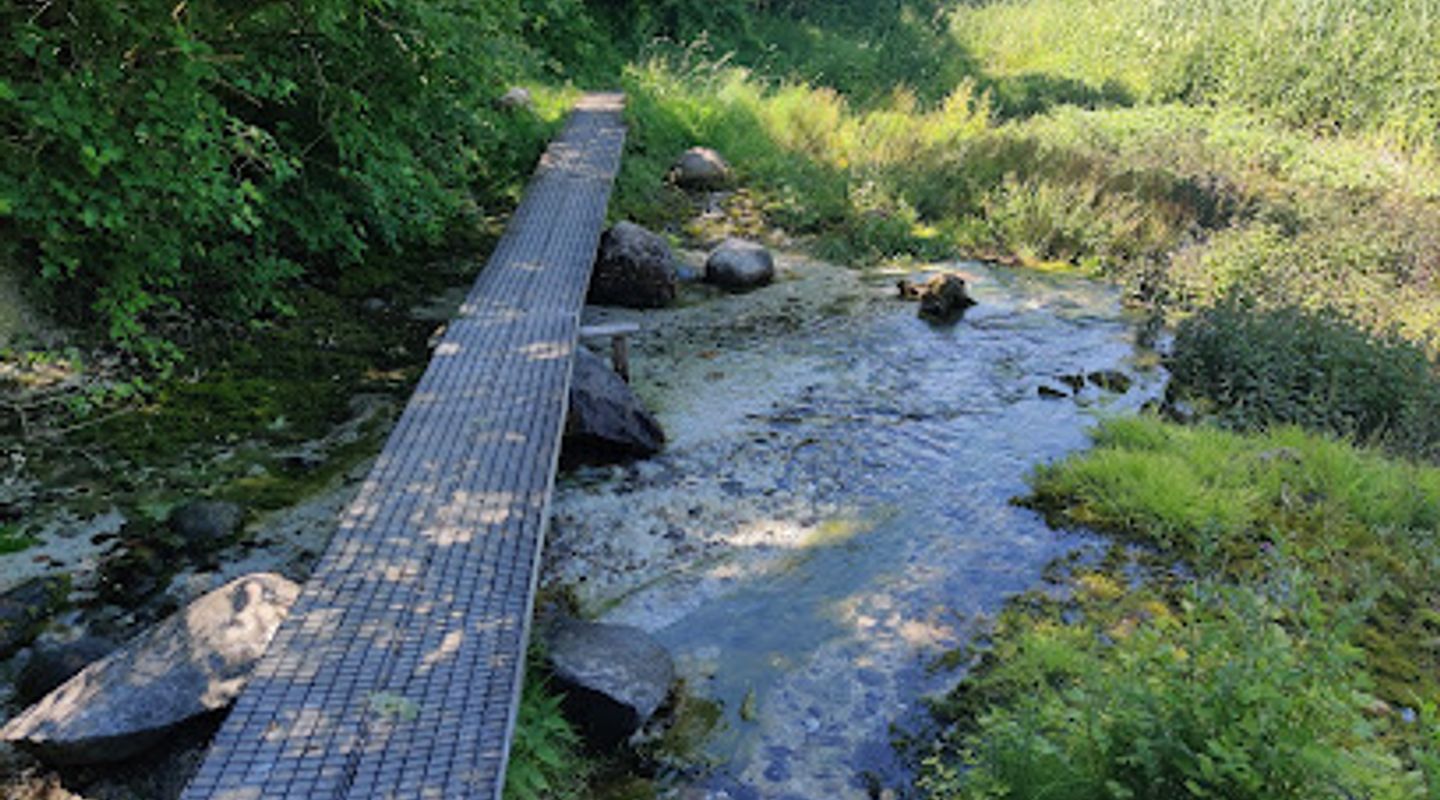
Lille Blåkilde, meaning 'Little Blue Spring,' is one of Northern Jutland's most voluminous natural springs, discharging approximately 90 liters of crystal-clear water per second from limestone fractures within the Rold Skov forest. Located near Skørping, this protected natural wonder supports rare alpine species like the caddisfly Apatania Muliebris, maintained by the spring's constant 7.5°C temperature year-round. Accessible only by foot via well-marked forest trails, the site offers an immersive experience combining pristine hydrology, unique chalk grassland habitat, and evidence of 6,000 years of human settlement.
On-site amenities
 Parking areas
 Information boards
 Seating areas
 Trash bins
Opening hours
- Every dayOpen 24 hours
Opening hours as listed on the venue’s Google Business Profile. Hours can change for services and special events, so check with the venue before you go.
- Address
- Unnamed Road 9520, 9520
- Website
Getting there
Car from Skørping
Public bus and walking from Skørping Station
Taxi from Skørping Station
Walking from alternative parking on Buderupholmvej
Discover more about Lille Blåkilde
A Geological Marvel Hidden in the Forest
Lille Blåkilde emerges from a fracture in the underlying limestone bedrock, creating one of Denmark's most remarkable natural springs. Despite its diminutive name—translating to 'Little Blue Spring'—it is paradoxically one of the region's largest springs, discharging approximately 90 liters of crystal-clear water every second. The water emerges through several small cracks in the limestone, a geological phenomenon known as a fracture spring, before flowing approximately 70 meters into Lindenborg Å. This constant, powerful discharge drains an area of 10 to 12 square kilometers, making it a significant hydrological feature of the Rold Skov landscape.
An Ecosystem of Exceptional Rarity
The spring's most distinctive characteristic is its year-round constant temperature of 7.5 degrees Celsius, a feature that creates a unique habitat found nowhere else in Denmark. This stable thermal environment supports the rare caddisfly Apatania Muliebris, a species typically found only in alpine regions of Norway and the Alps. The spring also hosts common freshwater species including stoneflies, mayflies, and other caddisflies. At the outlet into Lindenborg Å during May, brook lampreys—small eel-like fish also called nine-eyed eels—can often be observed. The surrounding waters and limestone substrate create conditions that sustain this exceptional biodiversity, making Lille Blåkilde a living laboratory of natural selection and adaptation.
Chalk Grassland and Botanical Significance
The limestone geology visible on both sides of the approach steps creates two distinct ecological zones. On the right side, bare limestone is clearly visible beneath the forest canopy. On the left, a thin layer of topsoil covers the limestone, forming a rare natural habitat called chalk grassland or calcareous grassland. This specialized environment supports lime-loving plants including primrose, cowslip, and the early-purple orchid. Evidence of recent woodland succession is visible through remnant plants such as Solomon's seal and baneberry, indicating that the slope was forested until recent decades. The area is strictly protected, and removal of plants is prohibited to preserve this delicate ecological balance.
Six Millennia of Human Presence
The landscape surrounding Lille Blåkilde bears witness to continuous human occupation spanning at least 6,000 years. A few hundred meters south of the spring, remains of ancient roads, stone rows, and stone circles testify to prehistoric activity. Above the spring lies one of Denmark's most concentrated archaeological sites, where dolmens from the Stone Age and burial mounds from the Bronze Age are located in closer proximity than anywhere else in the country. An ancient road that once traversed the forest and connected to the river valley still leaves visible traces, including a ford south of the spring's outlet. These archaeological remnants suggest that the spring's reliable freshwater supply made it a focal point for settlement and travel throughout the ages.
The Forest Setting and Sensory Experience
Lille Blåkilde is situated within the expansive Rold Skov forest, northwest of Nørreskov, surrounded by lush greenery and ancient trees. The approach via well-marked forest trails offers visitors a gradual immersion into the natural landscape, with views of open fields and meadows before reaching the wooden boardwalk that leads to the spring itself. The gentle murmur of flowing water, the cool forest air, and the sight of crystal-clear water emerging from limestone create a profoundly tranquil atmosphere. The area's protected status ensures that the forest environment remains largely undisturbed, preserving the sensory qualities that make a visit to Lille Blåkilde a contemplative experience.
Access and Visitor Considerations
The spring is accessible only on foot, with parking available halfway along Rebild Kirkevej. The walking trail from the parking area to Lille Blåkilde is approximately 1 to 2 kilometers through the forest, well-marked and relatively easy for most visitors, though the terrain can be uneven and rocky in places. The protected status of the area means that visitors must remain on designated paths, and wading in the spring or collecting plants and animals is strictly forbidden. The site's remote location within the forest and its protected designation ensure that Lille Blåkilde retains its character as a place of natural significance rather than a heavily developed tourist attraction.
Evendo Review Centre
 Google
Guest reviews
Best time to go
Quietest: Jan, Feb & Dec · before 6am or at 8pm
Busy times are Evendo estimates for a typical year, to help you plan. Actual crowds vary with events, school holidays and the weather.
Explore Lille Blåkilde on the map
A handpicked selection of must-see spots near Lille Blåkilde, mapped for you.
Get your free copy of our complete guide to Lille Blåkilde, delivered straight to you.
Everything on this page, from opening hours and how to get there to Eve’s tips and the best time to go, in one PDF you can read offline, print or share.
Already have an account? Sign in
Your Lille Blåkilde guide is ready.
We'll send it to · Not you? Sign out

Getting your guide ready…
We are putting together a fresh copy of the Lille Blåkilde guide. This can take up to a minute.
This can take a few moments. If your browser asks, choose Allow so the download can start. You'll find the guide in your Downloads folder.
Nothing happened? Download it again
Sorry, the guide is taking longer than usual. Please try again in a minute, or get it by email instead.
Other nearby places you may find interesting
The closest places of the same kind, if this one is not quite what you had in mind.
-
Museum Rebild Where Danish emigration stories meet transatlantic friendship in historic northern Jutland hills.
-
Thingbæk Chalk Mines / Rebild Center An atmospheric limestone mine turned sculpture museum, paired with geology and Cold War exhibits in the Rebild hills, where art, stone, and history meet underground.
-
Rebild National Park Denmark's historic heathland where glacial hills meet Danish-American heritage and Europe's finest certified hiking trails.
-
Skovtårnet Modest in height but rich in views, Skovtårnet lifts you above Rold Skov’s twisted pines for wide horizons over Rebild’s hills and valleys in every season.
-
Røverknolden Artistic forest playground where imagination meets adventure in Denmark's largest woodland.
Swipe for more places
More to explore near Lille Blåkilde

 Best experiences near Lille Blåkilde
 Best hotels near Lille Blåkilde
 Best landmarks near Lille Blåkilde
 Best attractions near Lille Blåkilde
 Best shops near Lille Blåkilde
 Best restaurants near Lille Blåkilde
 Best bars near Lille Blåkilde
Do you manage this location?
Take control to get all the benefits, like improved information, better appearance, and stronger visibility across AI-powered discovery.
Explore more

Explore more of Rold Skov
Explore Rold Skov, Denmark's largest forest, teeming with ancient trees, diverse wildlife, and a wealth of outdoor activities for nature lovers and history enthusiasts alike.
Explore Rold Skov
Explore more of Denmark
Discover Denmark: A perfect blend of history, modern design, and the cozy concept of hygge. Explore vibrant cities, serene landscapes, and world-class cuisine.
Explore Denmark
