

Gravlev Kilde Travel Guide
Free Guide: One of Denmark’s largest basin springs, where crystal-clear turquoise water wells up from chalk depths to feed a wildlife-rich brook and lake in Gravlev Valley.


A brief summary of Gravlev Kilde
One of Denmark’s largest basin springs, where crystal-clear turquoise water wells up from chalk depths to feed a wildlife-rich brook and lake in Gravlev Valley.
Tucked at the foot of the church hill in Gravlev, Gravlev Kilde is one of Denmark’s largest and most beautiful basin springs. Here, crystal-clear, turquoise water pulses up from the chalky underground and flows in a steady rush towards Gravlev Lake, creating a lush ribbon of life for trout, kingfishers and other wildlife. A short path leads to a higher vantage point 15–20 m above the pool, where the spring’s intense blue-green colours and swirling sand patterns form an almost otherworldly scene in the heart of Rebild’s famous landscape.
On-site amenities
 Restrooms
 Seating areas
 Trash bins
 Information boards
- Address
- 9520 Skørping
Getting there
Regional train and local walk from Aalborg
Car from Aalborg and nearby towns
Cycling from Skørping or Rebild area
Discover more about Gravlev Kilde
An emerald spring beneath the church hill
Gravlev Kilde lies quietly at the foot of the small church hill in Gravlev, yet the water that rises here is anything but modest. This is a classic basin spring: a deep, nearly circular pool where crystal-clear groundwater wells up under pressure from the chalk layers beneath Rold Forest and Gravlev Valley. From above, the basin glows in bright turquoise and emerald tones, with pale sand shimmering through the water like a natural spotlight.From a vantage point about 15–20 metres above the pool, you can see the spring as a complete, rounded eye in the landscape. The water appears almost motionless at first glance, but if you watch closely you will notice soft pulsations and small eruptions of sand on the bottom where the spring vents are working constantly. The sight is especially striking on calm, overcast days, when colours become even more saturated.
Water in constant motion
Despite its tranquil mood, Gravlev Kilde is remarkably productive. Between 100 and 150 litres of cold, clear water flow from the spring every second, feeding directly into nearby Gravlev Lake. This powerful discharge keeps parts of the lake and the connecting brook largely ice-free in winter, offering a lifeline for birds and animals during the coldest months.Downstream of the basin, a restored spring brook winds through the valley floor. The stream bed is clean and bright, with patches of gravel and sand where the current runs fastest. Along the banks grow moisture-loving grasses, mosses and sedges that thrive on the constant supply of fresh groundwater. Standing here, you hear only running water, rustling leaves and the distant sounds from the village above.
From sacred source to restored nature
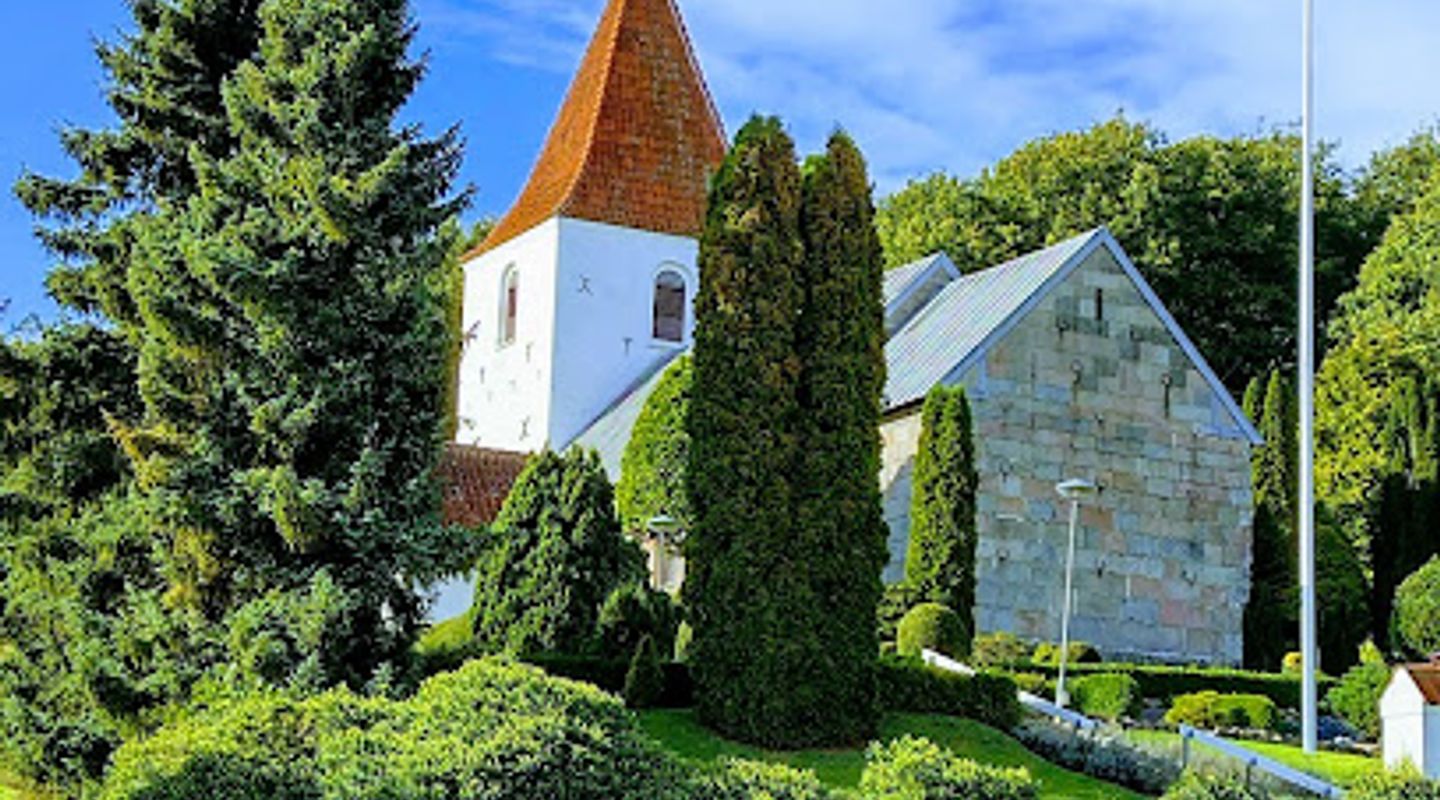
Springs have long held special meaning in this part of Denmark, and Gravlev Kilde is no exception. In ancient times, such places were often associated with worship, and it is likely that a pre-Christian holy site once stood close to the spring. In the 1100s a church was built nearby, echoing a pattern seen across the country where Christian buildings took over earlier sacred landscapes.Over the centuries, the spring’s role changed from spiritual to practical. In the Middle Ages it functioned as a holy well, and later its abundant water was tapped for use in a local fish farm. In 1938 a main road was constructed across the area, pushing the spring’s outlet eastward and altering the original forms of the basins and channels.
A landscape shaped by chalk and water
Gravlev Kilde is part of a wider system of springs and valleys in the Rold Forest area, one of the most spring-rich regions in Denmark. Here, rainwater seeps through forest soils and into the fractured chalk underneath, travelling unseen for long distances before emerging where the terrain allows. Along the slopes of Gravlev Valley, several large springs appear, each with its own colour, water chemistry and shape.In the mid-1990s a major nature restoration project reshaped the area around the spring. Artificial banks and channels were removed, allowing the spring brook to meander naturally again. The result is the seemingly untouched “natural” spring field and winding stream you see today, though it is in fact carefully planned to mimic the historical landscape.
Wildlife along the clear brook
The permanently cool, oxygen-rich water provides ideal conditions for a range of species. Brown trout patrol the deeper runs, and in winter sea trout come up to spawn in the clean gravel beds of the brook. With patience you can sometimes spot fish holding steady in the current, almost invisible against the pebbled bottom until they shift position.Birdlife is one of the quiet highlights of Gravlev Kilde. Kingfishers use the clear water to hunt, darting low and fast with flashes of electric blue. Grey wagtails and white-throated dippers favour the stony sections of the brook, bobbing and diving around submerged stones. Overhead, buzzards and other raptors circle the open valley, while the slopes behind the spring rise towards the heather-clad hills of Rebild Bakker.
Experiencing the spring today
Visiting Gravlev Kilde is a gentle, sensory experience rather than a long excursion. A short walk brings you close to the water’s edge, where you can study the colour gradients and watch the sand dance in tiny plumes from the spring vents. The atmosphere is usually calm, making it a natural pause point on longer walks through Gravlev Valley or on routes linking the various springs of Rold Forest.Simple information boards in the wider area explain the geology, hydrology and history of the valley, placing Gravlev Kilde in a broader story of water and chalk. Many visitors combine a stop at the spring with views over Gravlev Lake or with hikes into the nearby hills, but even a brief visit rewards you with a vivid impression of how groundwater shapes the Danish landscape.
Evendo Review Centre
 Google
Guest reviews
Best time to go
Quietest: Jan, Feb & Mar · before 8am or at 8pm
Busy times are Evendo estimates for a typical year, to help you plan. Actual crowds vary with events, school holidays and the weather.
Explore Gravlev Kilde on the map
A handpicked selection of must-see spots near Gravlev Kilde, mapped for you.
Get your free copy of our complete guide to Gravlev Kilde, delivered straight to you.
Everything on this page, from opening hours and how to get there to Eve’s tips and the best time to go, in one PDF you can read offline, print or share.
Already have an account? Sign in
Your Gravlev Kilde guide is ready.
We'll send it to · Not you? Sign out

Getting your guide ready…
We are putting together a fresh copy of the Gravlev Kilde guide. This can take up to a minute.
This can take a few moments. If your browser asks, choose Allow so the download can start. You'll find the guide in your Downloads folder.
Nothing happened? Download it again
Sorry, the guide is taking longer than usual. Please try again in a minute, or get it by email instead.
Other nearby places you may find interesting
The closest places of the same kind, if this one is not quite what you had in mind.
-
-
-
-
-


Swipe for more places
More to explore near Gravlev Kilde

 Best experiences near Gravlev Kilde
 Best hotels near Gravlev Kilde
 Best landmarks near Gravlev Kilde
 Best attractions near Gravlev Kilde
 Best shops near Gravlev Kilde
 Best restaurants near Gravlev Kilde
 Best bars near Gravlev Kilde
Do you manage this location?
Take control to get all the benefits, like improved information, better appearance, and stronger visibility across AI-powered discovery.
Explore more

Explore more of Rold Skov
Explore Rold Skov, Denmark's largest forest, teeming with ancient trees, diverse wildlife, and a wealth of outdoor activities for nature lovers and history enthusiasts alike.
Explore Rold Skov
Explore more of Denmark
Discover Denmark: A perfect blend of history, modern design, and the cozy concept of hygge. Explore vibrant cities, serene landscapes, and world-class cuisine.
Explore Denmark
