The Old Town, Southern Jutland Travel Guide
Step through five centuries of Danish life in this immersive open-air museum of reconstructed historic buildings.
Den Gamle By is Denmark's premier open-air town museum, featuring 75 meticulously reconstructed historic buildings spanning from the 1550s to 2014. Located within the Aarhus Botanical Gardens, this immersive attraction transports visitors through centuries of Danish urban life, from half-timbered Renaissance structures to 1970s apartments and a contemporary 2014 street. With costumed interpreters, working shops, period restaurants, and interactive experiences, it offers a living chronicle of everyday Danish culture and craftsmanship.
A brief summary to The Old Town
- Viborgvej 2, Aarhus C, Aarhus C, 8000, DK
- Click to display
- Click to display
- Duration: 2.5 to 5 hours
- Mid ranged
-
 Outdoor
- Mobile reception: 4 out of 5
- Monday 10 am-5 pm
- Tuesday 10 am-5 pm
- Wednesday 10 am-5 pm
- Thursday 10 am-5 pm
- Friday 10 am-5 pm
- Saturday 10 am-5 pm
- Sunday 10 am-5 pm

Know before you go
Hi, I'm Eve. Here are a few practical things to know before exploring The Old Town.
- Visit from April onward to experience costumed interpreters performing period-appropriate activities and engaging with visitors throughout the museum.
- Wear comfortable walking shoes; cobblestone streets in the 1864 neighborhood can be challenging for some visitors, though mobility scooters are available free of charge from the Information desk.
- Plan for at least 3–4 hours to meaningfully explore multiple eras; the museum is extensive and rewards unhurried exploration of buildings, shops, and gardens.
- Bring cash for purchases in historical shops and for dining at period restaurants; the bakery's fresh bread and traditional Danish open-faced sandwiches are worth sampling.
- Dogs are welcome in the streets but not in buildings; service dogs and guide dogs are exempt from this restriction.
Do you manage this location?
Take control to get all the benefits, like improved information, better appearance, and stronger visibility across AI-powered discovery. Learn more about listing your business on Evendo
Activate your presenceOther nearby places you may find interesting
The closest places of the same kind, if this one is not quite what you had in mind.
Explore The Old Town on the Map
A handpicked selection of must-see spots near The Old Town, mapped for you.
Unlock the Best of The Old Town
Buy tickets
-
No tickets available
Book tours with entry


Getting There
-
Public Bus
Several public bus routes serve Den Gamle By directly. Journey time from central Aarhus is approximately 10–15 minutes depending on the route and traffic conditions. Buses are frequent during daytime hours, with reduced service in early morning and evening. Single tickets cost around 24 DKK (approximately 3.20 EUR) for a standard journey within Aarhus.
-
Bicycle
Aarhus is a highly bicycle-friendly city. Den Gamle By is accessible by bike from central Aarhus via dedicated cycle paths, taking approximately 15–20 minutes depending on your starting point. The museum has bicycle parking facilities available. This is a popular and practical option for visitors staying in the city center.
-
Taxi or Rideshare
Taxis and rideshare services (such as Uber or local alternatives) operate throughout Aarhus. Journey time from the city center is approximately 10–15 minutes depending on traffic. Costs typically range from 80–150 DKK (approximately 11–20 EUR) for a standard trip from central Aarhus.
-
Personal Vehicle
Den Gamle By has on-site parking available. Free disabled parking is provided for vehicles displaying a disabled permit. Standard parking rates apply for other vehicles. The museum is located at Viborgvej 2, 8000 Aarhus, with clear signage from major roads. Journey time from central Aarhus is approximately 10 minutes by car.
For the on-the-go comforts that matter to you
-
 Restrooms
-
 Food Options
-
 Drink Options
-
 Seating Areas
-
 Information Boards
-
 Picnic Areas
Discover more about The Old Town
A Living Chronicle of Danish Urban Culture
Den Gamle By opened in 1914 as Denmark's first open-air museum dedicated to town culture rather than rural life, and it remains one of the country's most visited attractions outside Copenhagen. The museum houses 75 buildings collected from across Denmark, each carefully relocated and reconstructed to preserve authentic architectural and social history. These structures span from a storage house built around 1550 to contemporary installations, creating a unique narrative of how ordinary Danes lived, worked, and shaped their communities over five centuries.The museum's layout is organized chronologically, allowing visitors to walk backward through time. Each era is represented as a complete neighborhood with streets, residences, shops, workshops, and public spaces that reflect the material conditions and social values of their period. This approach transforms the museum from a static collection into an immersive environment where history becomes tangible and relatable.Medieval and Renaissance Foundations
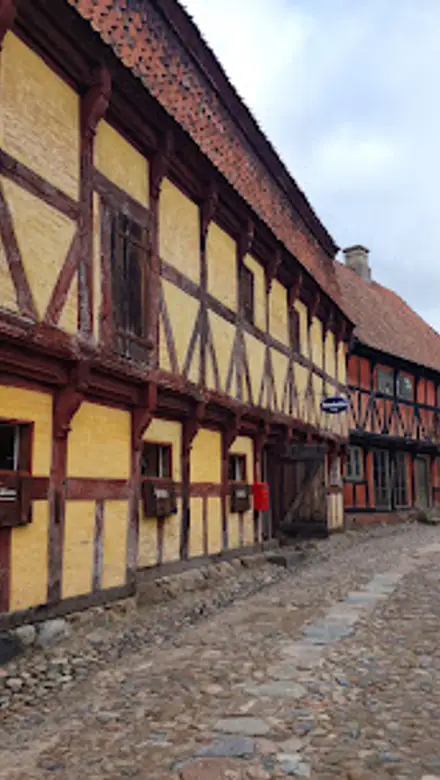
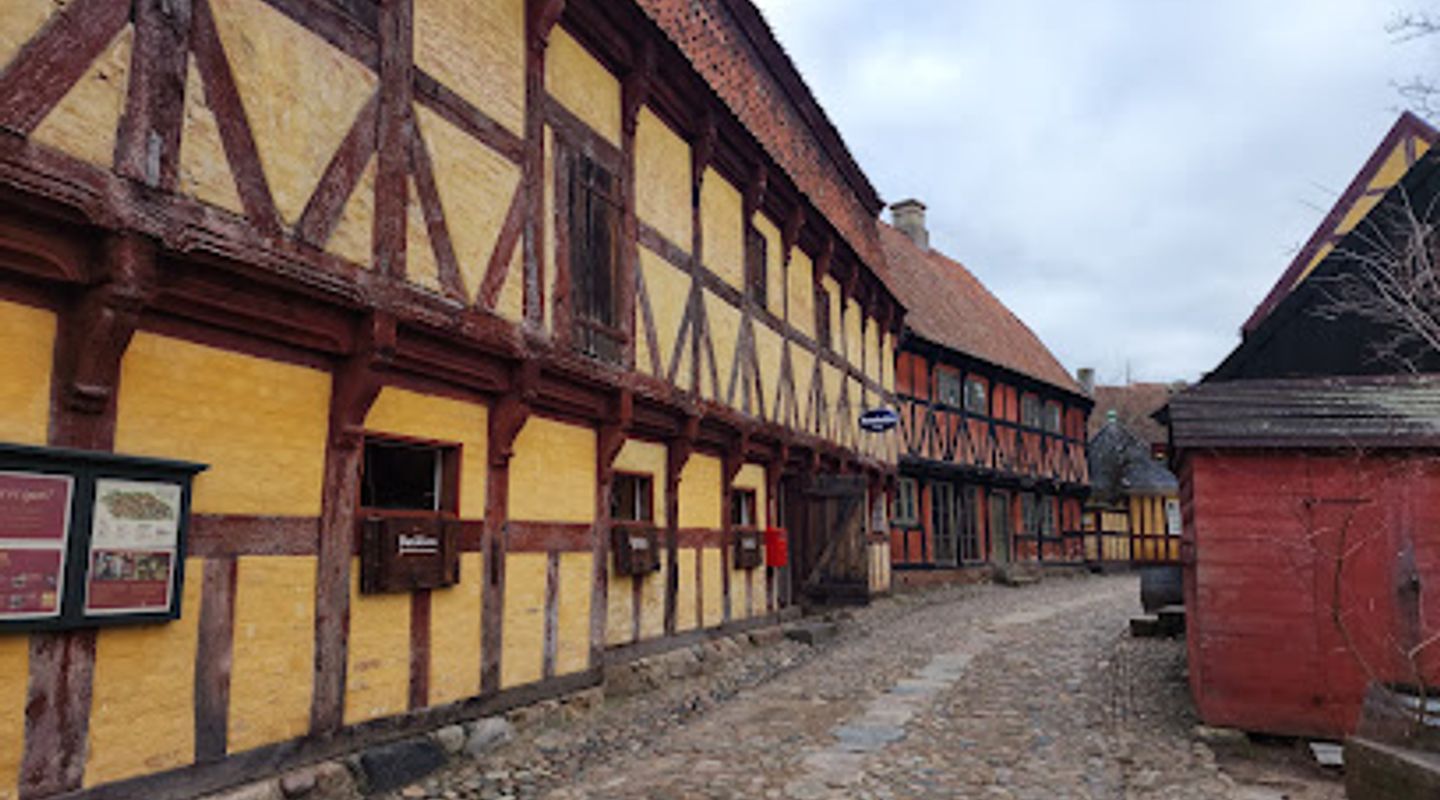
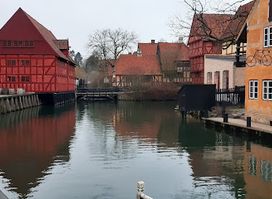
The oldest section features buildings from before 1900, including structures from the era of Hans Christian Andersen. These predominantly half-timbered Renaissance buildings showcase the craftsmanship and architectural traditions of Denmark's medieval and early modern periods. The Mayor's House from Aarhus, dating to 1597, stands as one of the most significant Danish half-timbered Renaissance buildings and serves as a centerpiece of this section. Visitors encounter a small market town atmosphere with traditional residences, workshops for various trades, a school, a customs office, and a post office, all furnished and decorated to reflect daily life from 1600 to 1850.Industrial Progress and Urban Modernization
The 1927 neighborhood captures the moment when Denmark embraced modernity. Streets feature electric streetlights, telephone wires, automobiles, and sidewalks—innovations that transformed urban life. The period includes a hardware store, bookstore, soap house, telephone exchange, and the authentic car dealership Automobilforretning Carl Christensen with its own workshop. This section illustrates how mass production and consumer goods began entering ordinary households, and how the automobile reshaped urban planning and social interaction.Welfare State and Cultural Shifts
The 1970s quarter presents a dramatically different social landscape. Visitors encounter apartments representing diverse household structures: a nuclear family, a collective living arrangement, a hippie couple, and a single mother—reflecting the era's social experimentation and changing family structures. The neighborhood includes a radio and television shop, convenience store, butcher, paint and wallpaper shop, kindergarten, hairdresser, and moped workshop. Backyards display period vehicles and feature scout meeting places and decorated outdoor toilets adorned with era-specific poetry. This section demonstrates how welfare policies, feminism, and counterculture movements reshaped Danish society.Contemporary Life and Ongoing History
The newest addition, Queen Margrethe's Street from 2014, represents a striking departure from traditional museum practice by documenting the present. The street features contemporary storefronts including a tanning salon, 7-Eleven, bank, pizzeria, and the Bent J jazz bar, where the scent of spilled beer and smoke lingers authentically. Two apartments showcase modern life: one belonging to a single woman named Rikke, and another home to a rainbow family with three children. Recorded interviews with residents discuss contemporary concerns—work, parenting, relationships—making clear that history continues to unfold. This section challenges visitors to recognize their own era as historically significant.Living History and Immersive Experience
From April onward, costumed interpreters inhabit the museum year-round, engaging in period-appropriate activities: baking bread using historical recipes, chopping wood, crafting goods, and operating shops. These living historians invite interaction, sometimes enlisting visitors to fetch water from wells or carry waste to dung heaps. Horse-drawn carriages offer rides through the streets, and working shops allow visitors to make purchases from historical merchants. The museum's own bakery produces fresh bread and cakes daily using traditional methods, while the restaurant Gæstgivergården serves dishes inspired by historical cookbooks, including open-faced sandwiches and warm lunch options. Seasonal variations mean different restaurants operate depending on the time of year, with up to three venues open during summer months.












Your all‑in‑one travel companion app
Explore expert travel guides, compare and book tours, experiences, hotels, and more—all from the palm of your hand. Download now for seamless trip planning wherever your wanderlust takes you.


Explore More of Southern Jutland
Looking beyond The Old Town? Discover Southern Jutland for broader travel guides, local hot-spots, and regional highlights.
Explore Southern Jutland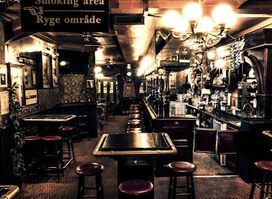
Aarhus Cathedral rises above the city as Denmark’s tallest church, blending medieval frescoes, grand Gothic arches, and seafaring history in Aarhus’ bustling heart.
A compact museum inside Den Gamle By where bold graphics, historic campaigns and global visual culture come together in hundreds of eye-catching posters.