Bruunshaab Gamle Papfabrik, Viborg Travel Guide
Free Guide: A living paper and cardboard factory in a tranquil valley near Viborg, where roaring machines and worn brick halls bring Denmark’s industrial past vividly to life.


A brief summary of Bruunshaab Gamle Papfabrik
A living paper and cardboard factory in a tranquil valley near Viborg, where roaring machines and worn brick halls bring Denmark’s industrial past vividly to life.
Bruunshaab Gamle Papfabrik, set in the village of Bruunshåb just south of Viborg, is a rare working paper and cardboard factory museum housed in an early-19th-century industrial complex. Here, heavy pulping machines, belts and rollers still spring to life, showing how rags and waste paper are transformed into thick, textured board. Surrounded by green valley scenery and old workers’ buildings, the site blends raw industrial heritage with a surprisingly tranquil, almost rural atmosphere.
On-site amenities
 Restrooms
 Seating areas
 Trash bins
 Information boards
Opening hours
- Mon10 am–3 pm
- Tue10 am–3 pm
- Wed10 am–3 pm
- ThuClosed
- FriClosed
- SatClosed
- SunClosed
Opening hours as listed on the venue’s Google Business Profile. Hours can change for services and special events, so check with the venue before you go.
- Address
- Vinkelvej 93b, 8800 Viborg
- Phone
- Website
Getting there
Local bus from Viborg centre
Taxi from Viborg
Cycling from Viborg
Discover more about Bruunshaab Gamle Papfabrik
From Cloth Mill to Working Paper Factory
Bruunshaab Gamle Papfabrik began life in 1821 as a textile factory founded by manufacturer Bertel Bruun, taking advantage of the local valley and water resources near Viborg. Over time the enterprise shifted focus from cloth to paper and cardboard production, gradually evolving into a specialised mill using water power, steam and later electricity to drive its machinery. The current buildings reflect layers of that development, with brick halls and extensions from different phases of the 19th and early 20th century.Today the complex operates as a museum, but much of the production line is still functional. The site preserves not only the structures but also the technical know-how of converting rags and waste paper into sturdy board. Walking through the factory, you move through the story of Danish industrialisation on a very tangible, mechanical scale.
Engines, Belts and the Rhythm of Production
Inside the main halls you are surrounded by long rows of heavy machines, rollers, vats and pipes that once ran almost continuously. When the museum demonstrates the line, the factory fills with the smell of damp fibres and oil, the hiss of steam and the deep rumble of pulping drums. Overhead, transmission belts and shafts hint at a time when one engine powered an entire hall.Interpretive displays explain each step: sorting and shredding, pulping the fibres, forming wet sheets on moving screens and pressing them into dense cardboard. Instead of looking at enclosed glass cases, you stand right next to equipment that still works, seeing how pressure, water and movement turn waste into a new material. It is an unusually direct encounter with industrial craftsmanship.
Architecture Shaped by Industry and Landscape
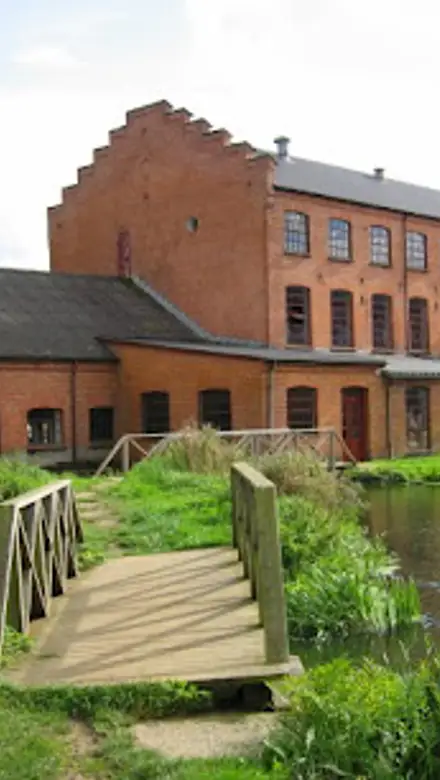
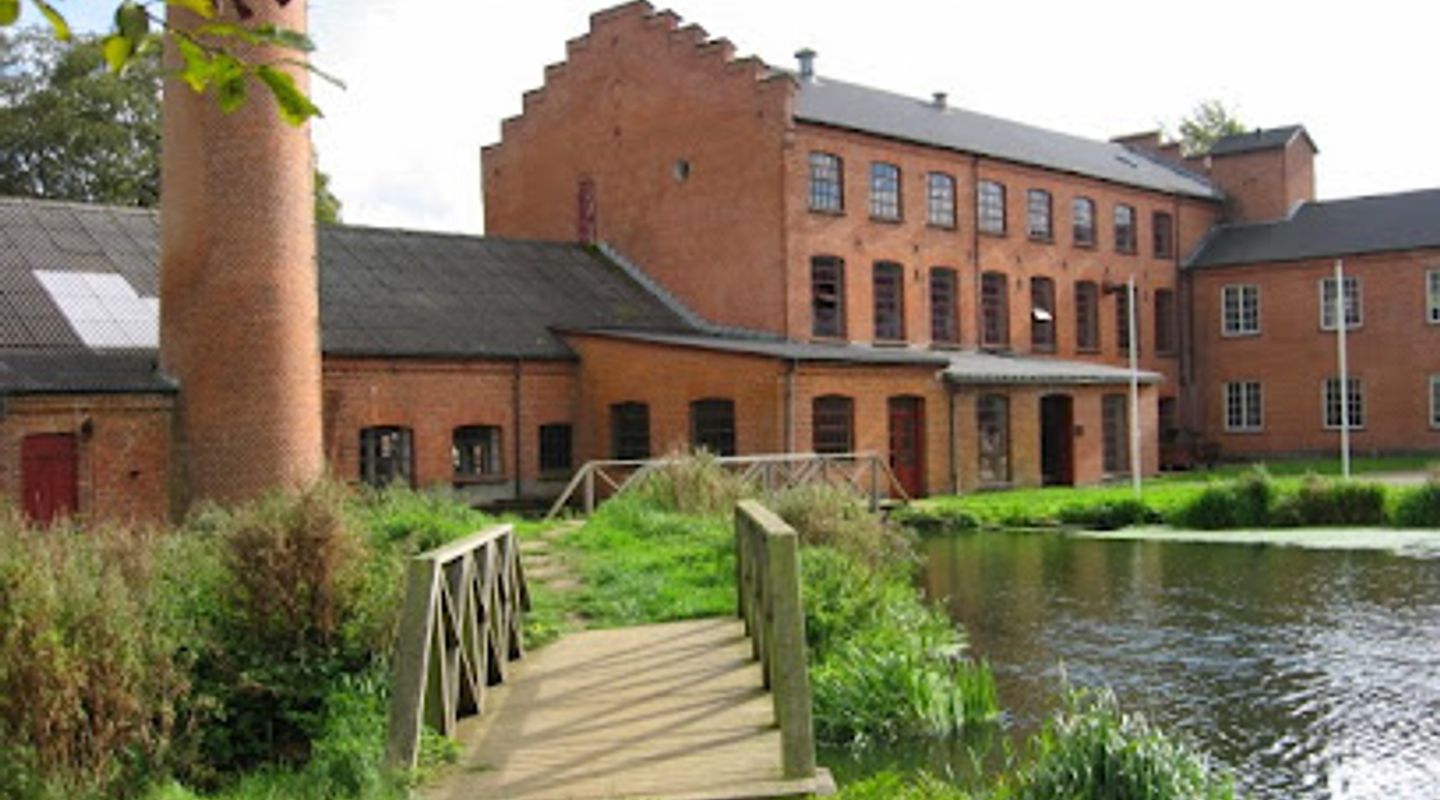
The factory buildings hug the small valley and stream, with red and yellow brick facades, tall windows and a chimney that once vented the boilers. The layout feels pragmatic rather than decorative: long sheds for machines, smaller annexes for storage and maintenance, and simple houses nearby where workers once lived.Despite the utilitarian design, there is a quiet beauty in the repetition of windows, rooflines and brickwork softened by moss, trees and flowing water. The setting just outside Viborg means that birdsong and rustling leaves mix with the occasional clang from metal stairs or the thud of presses, creating a contrast between nature and industry that defines the atmosphere of the place.
Hands-On Encounters with Paper and Cardboard
Bruunshaab Gamle Papfabrik is not only about watching machines. Many visits include chances to handle different grades of board, compare textures and see how thickness, fibre mix and drying methods affect the final product. Some programmes and special days offer simple, supervised activities where children and adults can engage with paper as a material, learning how everyday packaging starts its life.Exhibition panels and small side displays place the mill in a broader context, touching on trade routes, raw materials, working conditions and environmental considerations. This helps connect the local history of one valley factory to larger questions about consumption, recycling and resource use in modern societies.
A Calm Excursion Just Beyond Viborg
Located a few kilometres from Viborg’s historic centre, the museum feels like a small self-contained world. The approach along the valley road gradually reveals the chimney and rooftops, while the stream and greenery frame the site in a surprisingly scenic way for an industrial monument. Many visitors combine time inside the factory halls with a short stroll around the surrounding paths to see the buildings in profile and appreciate how they sit in the landscape.Benches and simple resting spots make it easy to pause and absorb the atmosphere after the sensory intensity of the working machines. With its mix of technical fascination, local history and gentle rural surroundings, Bruunshaab Gamle Papfabrik works both as an educational stop and as a low-key escape from the busier streets of Viborg.
Preserving Industrial Heritage for the Future
Keeping a 19th-century factory alive in the 21st century is complex, and part of the museum’s mission is ongoing preservation. Maintenance of machinery, careful documentation of techniques and collaboration with specialists ensure that future generations can still see and hear this kind of production in action. The site also contributes to a wider network of industrial heritage in Denmark, highlighting how small regional factories once played a crucial role in everyday life.A visit here offers more than nostalgia. It encourages reflection on how industries change, what is gained and lost in the shift to newer technologies, and how the materials that surround us are made. In the quiet of the valley, among humming motors and worn brick walls, those questions feel close and concrete.
Evendo Review Centre
 Google
Guest reviews
Best time to go
Quietest: Jan, Feb & Mar · before 8am or at 6pm or at 7pm
Busy times are Evendo estimates for a typical year, to help you plan. Actual crowds vary with events, school holidays and the weather.
Explore Bruunshaab Gamle Papfabrik on the map
A handpicked selection of must-see spots near Bruunshaab Gamle Papfabrik, mapped for you.
Get your free copy of our complete guide to Bruunshaab Gamle Papfabrik, delivered straight to you.
Everything on this page, from opening hours and how to get there to Eve’s tips and the best time to go, in one PDF you can read offline, print or share.
Already have an account? Sign in
Your Bruunshaab Gamle Papfabrik guide is ready.
We'll send it to · Not you? Sign out

Getting your guide ready…
We are putting together a fresh copy of the Bruunshaab Gamle Papfabrik guide. This can take up to a minute.
This can take a few moments. If your browser asks, choose Allow so the download can start. You'll find the guide in your Downloads folder.
Nothing happened? Download it again
Sorry, the guide is taking longer than usual. Please try again in a minute, or get it by email instead.
Other nearby places you may find interesting
The closest places of the same kind, if this one is not quite what you had in mind.
-
-
-
-
-


Swipe for more places
More to explore near Bruunshaab Gamle Papfabrik
-
 Best experiences near Bruunshaab Gamle Papfabrik
-
 Best hotels near Bruunshaab Gamle Papfabrik
-
 Best landmarks near Bruunshaab Gamle Papfabrik
-
 Best attractions near Bruunshaab Gamle Papfabrik
-
 Best shops near Bruunshaab Gamle Papfabrik
-
 Best restaurants near Bruunshaab Gamle Papfabrik
-
 Best bars near Bruunshaab Gamle Papfabrik


Do you manage this location?
Take control to get all the benefits, like improved information, better appearance, and stronger visibility across AI-powered discovery.
Explore more

Explore more of Viborg
Discover Viborg, Denmark's hidden gem where medieval history, stunning nature, and vibrant culture converge for an unforgettable travel experience.
Explore Viborg
Explore more of Denmark
Discover Denmark: A perfect blend of history, modern design, and the cozy concept of hygge. Explore vibrant cities, serene landscapes, and world-class cuisine.
Explore Denmark