E Bindstouw, Viborg Travel Guide
Free Guide: Atmospheric 18th-century village schoolhouse and Blicher haunt in Lysgård, offering an intimate glimpse into rural Jutland life, learning and storytelling.


A brief summary of E Bindstouw
Atmospheric 18th-century village schoolhouse and Blicher haunt in Lysgård, offering an intimate glimpse into rural Jutland life, learning and storytelling.
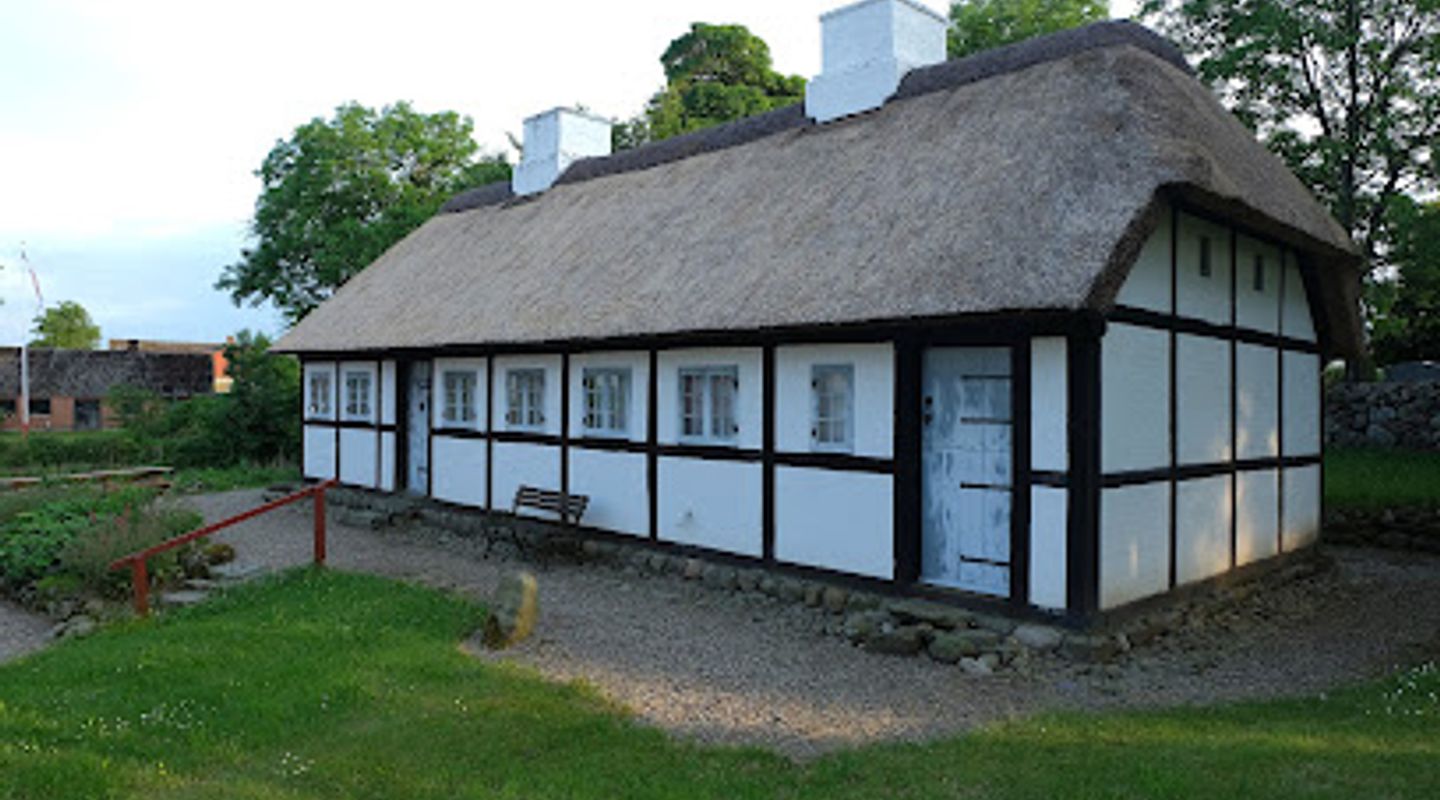
E Bindstouw is a beautifully preserved 18th-century thatched schoolhouse and writer’s retreat in Lysgård, south of Viborg. Once home to schoolmaster and author Steen Steensen Blicher’s storytelling evenings, the low-ceilinged rooms, peat stove and simple furnishings recreate rural Jutland life around 1800. Today it serves as a charming open-air museum under Viborg Museum, offering a quiet, atmospheric glimpse into village history, literature and education in the Danish countryside.
On-site amenities
 Information boards
 Restrooms
 Trash bins
 Seating areas
Opening hours
- MonClosed
- Tue10 am–5 pm
- Wed10 am–5 pm
- Thu10 am–5 pm
- Fri10 am–5 pm
- Sat10 am–5 pm
- Sun10 am–5 pm
Opening hours as listed on the venue’s Google Business Profile. Hours can change for services and special events, so check with the venue before you go.
- Address
- Blichersvej 40, 8800 Viborg
- Phone
- Website
Getting there
Car from Viborg city centre
Regional bus from Viborg
Cycling from Viborg
Discover more about E Bindstouw
A village schoolhouse frozen in time
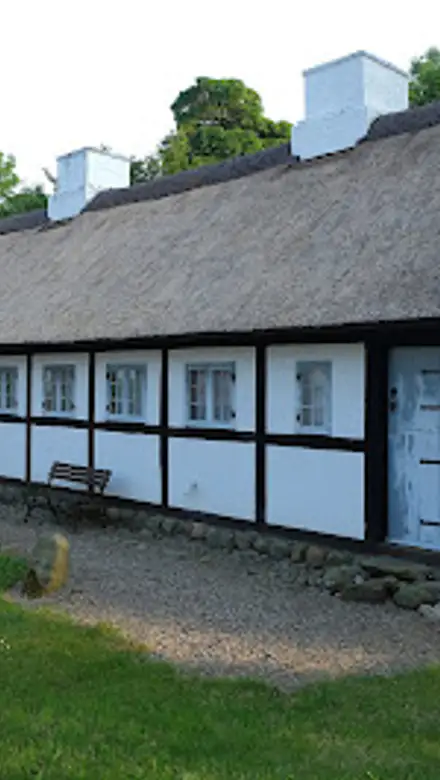
E Bindstouw sits in the little village of Lysgård, surrounded by fields and gently rolling farmland, its whitewashed walls and thick thatched roof instantly signalling a bygone era. Stepping inside, you find a compact world where almost everything happened in a single room: lessons, meals, stories and sleep. The timber beams are low, the wooden floorboards uneven, and daylight filters in through small-pane windows that once framed views of a much harder rural life.The house dates from the late 18th century and functioned as a village school and dwelling for the schoolmaster. Today, its carefully staged interior evokes the period when children learned to read by the light of tallow candles and chalk squeaked over simple slates. Rough-hewn tables, benches and a cast-iron stove give a tangible sense of how little space and comfort people lived with, and how central the schoolroom was to the community.
Blicher’s stories and the art of Jutland storytelling
E Bindstouw is closely linked to Steen Steensen Blicher, one of Denmark’s great 19th-century authors, whose tales of Jutland peasants and moorland landscapes shaped Danish literature. Blicher used the house and the surrounding area in his writings and held legendary storytelling evenings here, where neighbours gathered for songs, poems and local news. Standing in the main room, it is easy to imagine the benches packed, smoke curling from the stove and the schoolmaster’s voice carrying into the winter darkness.Interpretive displays and objects help place Blicher and his circle in context, from well-thumbed books and ink pots to period clothing and domestic tools. Rather than overwhelming you with information, the house uses modest props to suggest how stories travelled by word of mouth, how dialects coloured everyday speech, and how literature grew directly out of the landscapes and people around Lysgård.
Everyday objects and rural ingenuity
Look closely at the shelves and corners and you see the quiet ingenuity of rural life. Iron cooking pots hang ready over the old stove, while simple wooden chests double as both storage and seating. Earthenware jugs, handwoven textiles and home-made tools reveal a world where almost everything was repaired, reused or crafted in the village. The humble furnishings underline the divide between town and country, yet they also show the pride people took in keeping a neat and ordered home.The classroom elements are equally telling: slates instead of notebooks, a single teacher managing all ages, and religious texts forming the backbone of reading practice. Together they sketch a clear picture of how education, faith and work were tightly intertwined, and how schooling gradually opened wider horizons for children who might otherwise never have left their parish.
Seasonal atmosphere and living traditions
E Bindstouw is at its most evocative when seasonal activities bring the building to life. In summer, when the museum is typically open on set days, the scent of warm timber and thatch mixes with birdsong drifting in from the village. On special occasions there may be demonstrations of old crafts, traditional Christmas decorations or storytelling sessions that echo Blicher’s original gatherings.Even when no events are taking place, the house has a strong atmosphere. The creak of the floor, the cool air of the thick walls and the way sound carries between the small rooms all contribute to a sense of stepping into a self-contained world. Visitors who take time to linger, read the panels and study the details tend to find more and more clues to how people once lived, worked and dreamed here.
A quiet detour in the Viborg museum landscape
As part of Viborg Museum’s network of satellite sites, E Bindstouw complements the city’s larger exhibitions by offering a focused, immersive snapshot of rural Jutland. It is a gentle, low-key stop rather than a grand attraction, best enjoyed as a short countryside detour in combination with other historic sites in and around Viborg. The location in a small village means the surroundings are peaceful, with time and space to absorb the atmosphere without distraction.For travellers interested in literature, social history or vernacular architecture, the house provides an intimate encounter with the everyday Denmark that rarely makes headlines. It illustrates how national culture is built as much in tiny schoolrooms and village gatherings as in cathedrals and city halls, and invites you to imagine the voices that once filled these modest, beautifully preserved rooms.
Evendo Review Centre
 Google
Guest reviews
Best time to go
Quietest: Jan, Feb & Mar · before 9am or from 6pm
Busy times are Evendo estimates for a typical year, to help you plan. Actual crowds vary with events, school holidays and the weather.
Explore E Bindstouw on the map
A handpicked selection of must-see spots near E Bindstouw, mapped for you.
Get your free copy of our complete guide to E Bindstouw, delivered straight to you.
Everything on this page, from opening hours and how to get there to Eve’s tips and the best time to go, in one PDF you can read offline, print or share.
Already have an account? Sign in
Your E Bindstouw guide is ready.
We'll send it to · Not you? Sign out

Getting your guide ready…
We are putting together a fresh copy of the E Bindstouw guide. This can take up to a minute.
This can take a few moments. If your browser asks, choose Allow so the download can start. You'll find the guide in your Downloads folder.
Nothing happened? Download it again
Sorry, the guide is taking longer than usual. Please try again in a minute, or get it by email instead.
Other nearby places you may find interesting
The closest places of the same kind, if this one is not quite what you had in mind.
-
Hald Slot Evocative lakeside castle ruins where towering earthworks, a rebuilt tower and wooded shores reveal centuries of power struggles beside clear Hald Sø.
-
Viborg Cathedral Twin‑towered granite cathedral with a 900‑year‑old crypt, royal history and Joakim Skovgaard’s vivid biblical frescoes at the heart of Viborg’s old quarter.
-
Mønsted Kalkgruber Venture into the world’s largest limestone mines, where cool echoing tunnels, bat-filled caverns and a reborn lime works reveal Denmark’s underground heritage.
-
Kongenshus Mindepark Sweeping Jutland heathland and a granite‑etched tribute to Denmark’s heath farmers, where open skies, violet heather and quiet trails turn history into landscape.
-
Dollerup Bakker Ice Age-sculpted hills, purple heath and deep lake views combine at Dollerup Bakker, a remarkably rugged and atmospheric nature reserve just south of Viborg.
Swipe for more places
More to explore near E Bindstouw

 Best experiences near E Bindstouw
 Best hotels near E Bindstouw
 Best landmarks near E Bindstouw
 Best attractions near E Bindstouw
 Best shops near E Bindstouw
 Best restaurants near E Bindstouw
 Best bars near E Bindstouw
Do you manage this location?
Take control to get all the benefits, like improved information, better appearance, and stronger visibility across AI-powered discovery.
Explore more

Explore more of Viborg
Discover Viborg, Denmark's hidden gem where medieval history, stunning nature, and vibrant culture converge for an unforgettable travel experience.
Explore Viborg
Explore more of Denmark
Discover Denmark: A perfect blend of history, modern design, and the cozy concept of hygge. Explore vibrant cities, serene landscapes, and world-class cuisine.
Explore Denmark