Viborg Cathedral, Viborg Travel Guide
Free Guide: Twin‑towered granite cathedral with a 900‑year‑old crypt, royal history and Joakim Skovgaard’s vivid biblical frescoes at the heart of Viborg’s old quarter.


A brief summary of Viborg Cathedral
Twin‑towered granite cathedral with a 900‑year‑old crypt, royal history and Joakim Skovgaard’s vivid biblical frescoes at the heart of Viborg’s old quarter.
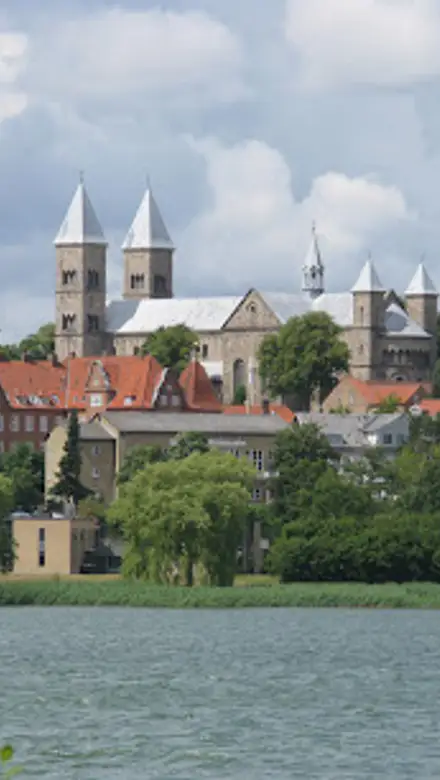
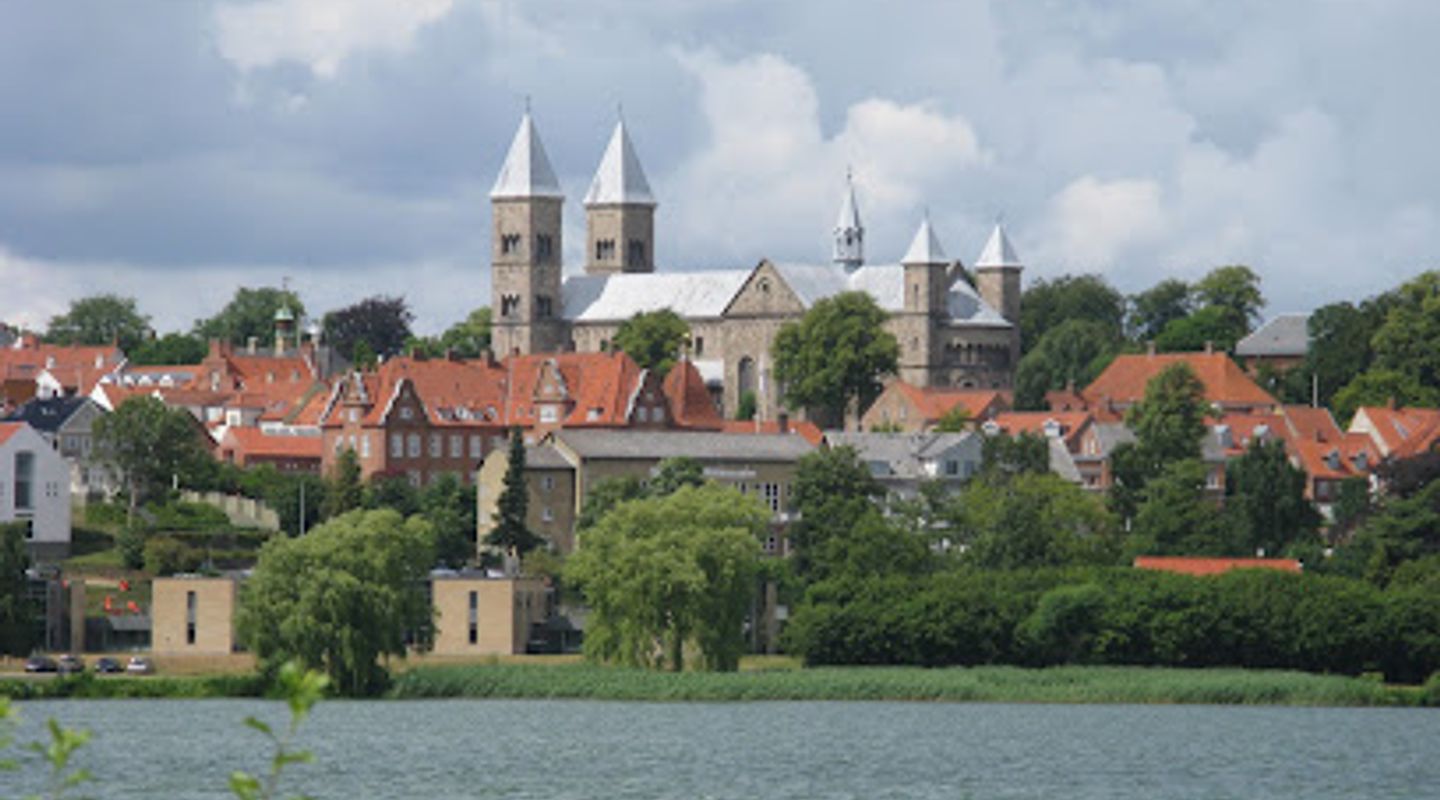
Viborg Cathedral, with its twin granite towers rising over the medieval streets of Viborg, is one of Denmark’s most significant historic churches and the symbol of the city. The present neo‑Romanesque building, completed in 1876 but rooted in a cathedral founded in the 1100s, impresses with massive granite walls, an atmospheric crypt dating back almost 900 years, and 84 vivid biblical frescoes by Joakim Skovgaard. It is both a place of worship and a richly layered journey through Danish royal, religious and artistic history.
On-site amenities
 Restrooms
 Drink options
 Drinking water
 Food options
 Seating areas
 Sheltered areas
 Trash bins
 Information boards
 Visitor centre
Opening hours
- Mon–Sat11 am–5 pm
- Sun12 pm–5 pm
Opening hours as listed on the venue’s Google Business Profile. Hours can change for services and special events, so check with the venue before you go.
- Address
- Sct. Mogens Gade 4, 8800 Viborg
- Phone
- Website
Getting there
Train and short walk from Viborg Station
Local bus within Viborg
Car or rental car from regional hubs
Bicycle from within Viborg
Discover more about Viborg Cathedral
A granite giant above Viborg’s old quarter
Viborg Cathedral dominates the city skyline with its twin towers and pale granite walls, anchoring the cobbled Cathedral Quarter at the heart of central Jutland. Although the present church was completed in 1876, it stands on a site that has been sacred since the Viking Age, when an early wooden church served the emerging Christian community. Viborg became a cathedral city in the 11th century, and by the 1100s a substantial stone church in Romanesque style rose here, reflecting the town’s growing political and spiritual importance.Repeated fires, most devastatingly in 1726, left only the sturdy outer walls and crypt of the medieval cathedral. In the 19th century, architects chose to rebuild in a powerful neo‑Romanesque style inspired by Lund Cathedral, using brick clad with granite to recreate the feel of a massive stone church. The result is widely regarded as the largest granite church in Scandinavia, a fortress‑like silhouette that still feels ancient when you approach across the sloping cathedral square.
Layers of power, kings and legends
For centuries Viborg was a key stage for Danish royal power, and the cathedral was the setting where at least dozens of monarchs were hailed and sworn in. This role as a city of royal homage gave the church a national stature far beyond its provincial location. Inside, a simple stone marks the symbolic resting place of King Erik Klipping, murdered with 56 stab wounds at nearby Finderup in 1286, an episode that has long fascinated historians and storytellers.The crypt beneath the choir is the cathedral’s oldest surviving space, dating from around the mid‑1100s. Its low vaults and thick pillars transport you almost nine centuries back, and here you find the leather‑covered coffin of nobleman Valdemar Daa, whose tragic life later inspired Hans Christian Andersen’s tale “The Wind Tells of Valdemar Daa and His Daughters.” These physical traces of individuals, both royal and local, give the building an intimate human dimension amid its monumental scale.
Skovgaard’s painted Bible in stone
Stepping into the main nave, the interior may surprise you with its colour and narrative richness. Between 1901 and 1906, artist Joakim Skovgaard and his team covered the walls and vaults with a cycle of 84 frescoes that together act as a visual Bible, following key episodes from the Old and New Testaments. Executed in lime paint on wet plaster, the works blend influences from Byzantine mosaics, early Italian Renaissance art and contemporary Danish painting.Figures stride across the walls in strong, simplified forms, framed by decorative bands and stylised landscapes. Even if you do not know the stories, the scenes are easy to follow, and details reveal themselves slowly: a gesture between characters, a pattern on a robe, the play of light around Christ’s figure. The bold colours are softened by the stone surroundings, creating an atmosphere that feels both contemplative and dramatically theatrical.
Details in stone, metal and light
Beyond the frescoes, the cathedral rewards close looking. On the exterior choir walls, weathered granite blocks carry carved lions and human faces, thought to be remnants that echo the medieval church and hint at older symbolism. Inside, heavy bronze doors, installed in the 21st century, present modern reliefs that dialogue with the older decoration and signal that this is still a living, evolving place of worship.The interior is lit by tall, round‑arched windows and elaborate lamps that cast a warm, golden light onto the stone pillars and painted ceilings. A monumental candelabrum, dark timber pews and a restrained granite altar keep the space grounded, ensuring that the art never overwhelms the sense of sacred calm. Beneath your feet, cobblestones and markers around the churchyard outline where earlier chapels and extensions once stood, sketching a ghostly floorplan of the vanished medieval complex.
A cathedral at the heart of a living quarter
Viborg Cathedral sits at the centre of the Cathedral Quarter, a compact district of narrow streets, historic houses and cultural institutions. Immediately beside the church, the Skovgaard Museum explores the work of Joakim Skovgaard and his artist family, adding context to the frescoes you have just seen. The surrounding lanes, sloping gently away from the cathedral hill, frame shifting views of the towers and façade, making the building a constant visual companion as you wander.Inside, the cathedral still functions as an active parish and diocesan church, with services, concerts and occasional guided tours that delve into its architecture and history. Visiting outside service times allows you to sit quietly and absorb the play of light, colour and stone. Whether you come for the art, the royal stories or the simple pleasure of cool granite on a hot day, Viborg Cathedral offers a deep, many‑layered encounter with Danish history in one remarkable space.
Evendo Review Centre
 Google
Guest reviews
Best time to go
Quietest: Jan, Feb & Mar · before 7am or from 8pm
Busy times are Evendo estimates for a typical year, to help you plan. Actual crowds vary with events, school holidays and the weather.
Explore Viborg Cathedral on the map
A handpicked selection of must-see spots near Viborg Cathedral, mapped for you.
Get your free copy of our complete guide to Viborg Cathedral, delivered straight to you.
Everything on this page, from opening hours and how to get there to Eve’s tips and the best time to go, in one PDF you can read offline, print or share.
Already have an account? Sign in
Your Viborg Cathedral guide is ready.
We'll send it to · Not you? Sign out

Getting your guide ready…
We are putting together a fresh copy of the Viborg Cathedral guide. This can take up to a minute.
This can take a few moments. If your browser asks, choose Allow so the download can start. You'll find the guide in your Downloads folder.
Nothing happened? Download it again
Sorry, the guide is taking longer than usual. Please try again in a minute, or get it by email instead.
Other nearby places you may find interesting
The closest places of the same kind, if this one is not quite what you had in mind.
-
-
-
-
-


Swipe for more places
More to explore near Viborg Cathedral

 Best experiences near Viborg Cathedral
 Best hotels near Viborg Cathedral
 Best landmarks near Viborg Cathedral
 Best attractions near Viborg Cathedral
 Best shops near Viborg Cathedral
 Best restaurants near Viborg Cathedral
 Best bars near Viborg Cathedral
Do you manage this location?
Take control to get all the benefits, like improved information, better appearance, and stronger visibility across AI-powered discovery.
Explore more

Explore more of Viborg
Discover Viborg, Denmark's hidden gem where medieval history, stunning nature, and vibrant culture converge for an unforgettable travel experience.
Explore Viborg
Explore more of Denmark
Discover Denmark: A perfect blend of history, modern design, and the cozy concept of hygge. Explore vibrant cities, serene landscapes, and world-class cuisine.
Explore Denmark