Viborg Cathedral, Viborg Travel Guide
Free Guide: Twin‑towered granite cathedral with vivid Skovgaard frescoes, a medieval crypt and deep royal history at the heart of old Viborg.


A brief summary of Viborg Cathedral
Twin‑towered granite cathedral with vivid Skovgaard frescoes, a medieval crypt and deep royal history at the heart of old Viborg.
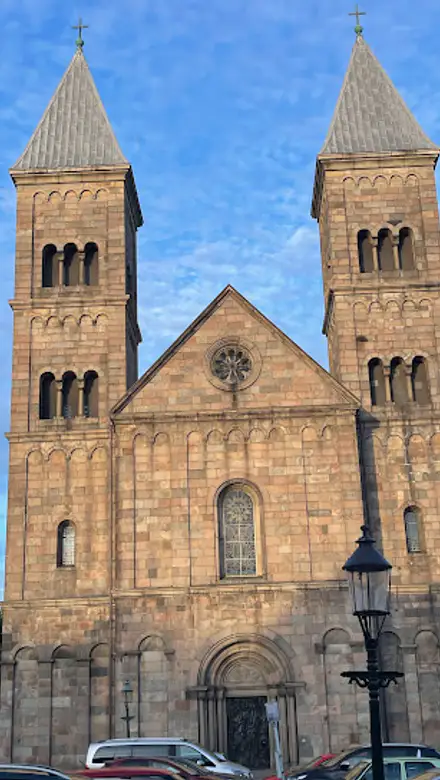
Viborg Cathedral rises above the old town with twin granite towers, a symbol of royal Denmark and one of the country’s most significant historic churches. Rebuilt in the 19th century in Romanesque style yet rooted in a 12th‑century foundation, it combines fortress‑like granite walls with a luminous interior covered in vivid biblical frescoes by Joakim Skovgaard. Beneath the nave, the atmospheric crypt preserves almost 900 years of history, linking Viking‑age Christianity, medieval monarchs and modern Danish church life in one compelling landmark.
On-site amenities
 Restrooms
 Drink options
 Drinking water
 Food options
 Seating areas
 Sheltered areas
 Trash bins
 Information boards
 Visitor centre
Opening hours
- Mon–Sat11 am–5 pm
- Sun12 pm–5 pm
Opening hours as listed on the venue’s Google Business Profile. Hours can change for services and special events, so check with the venue before you go.
- Address
- Sct. Mogens Gade 4, 8800 Viborg
- Phone
- Website
Getting there
Train and on-foot from Viborg Station
City bus within Viborg
Car or rental car within the Viborg region
Bicycle in the town and surrounding lakes area
Discover more about Viborg Cathedral
Granite towers over Denmark’s old royal city
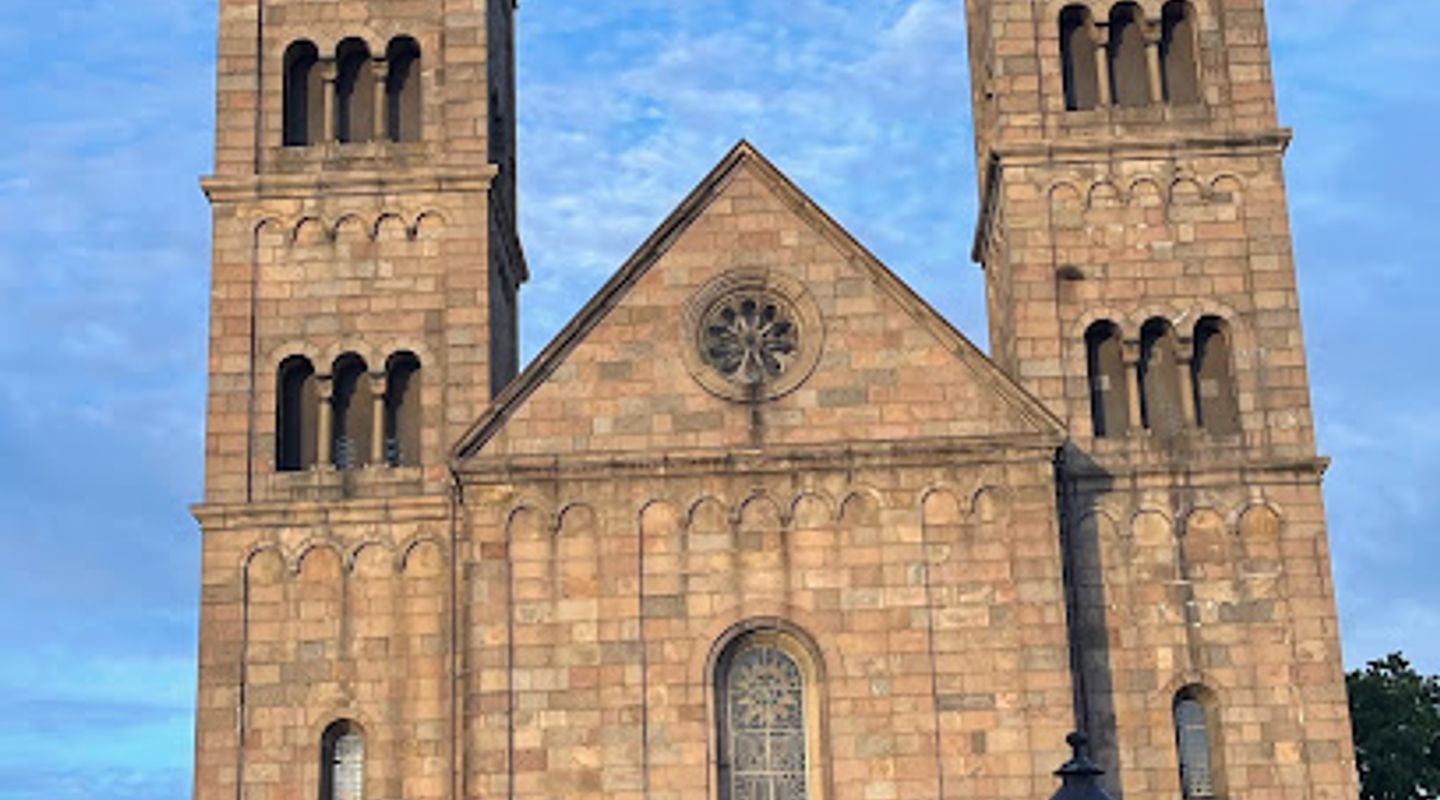
Viborg Cathedral dominates the skyline of this ancient Jutland town, its twin granite towers rising above cobbled streets and low brick houses. The present church was completed in 1876, a bold Romanesque Revival reconstruction inspired by Lund Cathedral in Sweden, yet it stands on a site that has been sacred since the Viking age. Massive granite blocks, round‑arched windows and a fortress‑like west front give the building a powerful, almost austere first impression, especially when approached from the sloping cathedral square.Step closer and the severity softens into detail: carved portals, sculpted lions and faces set into the choir walls, and subtle patterns in the stonework hint at the many phases of rebuilding after repeated fires, the last catastrophic blaze in 1726. From the outside, Viborg Cathedral feels both ancient and surprisingly cohesive, an idealised vision of what a medieval Danish cathedral might have looked like rather than a direct survival from the 1100s.
From Viking bishops to a city of coronations
Christian worship has taken place here for nearly a millennium. A wooden church is believed to have stood on this hill in Viking times, replaced in the early 12th century by a substantial stone cathedral as Viborg became one of Denmark’s most important episcopal seats. With royal assemblies and courts held nearby, the city evolved into a traditional place of homage, where at least 37 Danish monarchs were ceremonially acclaimed.Layers of drama cling to this history. In 1286 King Erik Klipping, murdered with dozens of stab wounds near Viborg, was buried in the cathedral; a stone before the altar marks his symbolic resting place. The crypt holds another story: the leather‑covered coffin of nobleman Valdemar Daa, immortalised by Hans Christian Andersen in the tale “The Wind Tells of Valdemar Daa and His Daughters.” These associations with kings, rebels and literary figures give the church a narrative richness that stretches far beyond its walls.
The surviving crypt and traces of the medieval church
Although the cathedral above ground is largely 19th century, the crypt beneath the eastern end preserves rare masonry from the original 12th‑century church. Low vaulted ceilings, heavy pillars and dim, filtered light create an intimate, almost cave‑like atmosphere. Walking here, you are as close as possible to the architectural world of early Christian Denmark.Look for subtle clues to the vanished building outside as well. Cobblestones in the churchyard trace the footprint of earlier chapels and extensions, quietly mapping how the complex has changed over 900 years. Small sculptural details in the granite façade, including the pair of lions at the choir, are reused or reimagined motifs that tie the new structure back to its medieval predecessor.
Skovgaard’s picture Bible in lime and color
Inside, the cathedral is unexpectedly bright and pictorial. Between 1901 and 1906, artist Joakim Skovgaard and his team transformed the interior into a vast “picture Bible,” covering walls, arches and vaults with frescoes painted on wet plaster in glowing lime colors. Scenes from the Old and New Testaments unfold in narrative sequence: creation, prophets, parables and the life of Christ, rendered in a style that blends Byzantine inspiration, early Italian Renaissance influences and Nordic sensibility.Rather than isolated altarpieces, the imagery wraps around you, inviting slow, contemplative viewing from nave to choir. The strong yet harmonious palette, stylised figures and symbolic motifs make the interior unlike most Danish churches, which are typically whitewashed with a few medieval paintings. Adjacent to the cathedral, the Skovgaard Museum explores the artist family behind this unique decoration, deepening the artistic context of what you see inside.
Experiencing the cathedral today
Today Viborg Cathedral serves as both an active parish and a major cultural monument. During opening hours the vast nave is usually quiet, with sunlight filtering through high windows onto the granite floor and the gentle echo of footsteps under the vaults. Occasional organ practice adds a resonant soundtrack that suits the scale of the space.Visitors can move freely between nave, choir and crypt, pausing at side chapels, memorial stones and the modest yet dignified main altar. A small entrance fee helps support maintenance, while accompanied children are typically welcomed without charge. As you step back outside, the surrounding streets, nearby museum and views across old Viborg make it easy to extend your exploration, but the twin towers and colorful interior of the cathedral tend to linger longest in the memory.
Evendo Review Centre
 Google
Guest reviews
Best time to go
Quietest: Jan, Feb & Mar · before 8am or at 9pm
Busy times are Evendo estimates for a typical year, to help you plan. Actual crowds vary with events, school holidays and the weather.
Explore Viborg Cathedral on the map
A handpicked selection of must-see spots near Viborg Cathedral, mapped for you.
Get your free copy of our complete guide to Viborg Cathedral, delivered straight to you.
Everything on this page, from opening hours and how to get there to Eve’s tips and the best time to go, in one PDF you can read offline, print or share.
Already have an account? Sign in
Your Viborg Cathedral guide is ready.
We'll send it to · Not you? Sign out

Getting your guide ready…
We are putting together a fresh copy of the Viborg Cathedral guide. This can take up to a minute.
This can take a few moments. If your browser asks, choose Allow so the download can start. You'll find the guide in your Downloads folder.
Nothing happened? Download it again
Sorry, the guide is taking longer than usual. Please try again in a minute, or get it by email instead.
Other nearby places you may find interesting
The closest places of the same kind, if this one is not quite what you had in mind.
-
-
-
-


Swipe for more places
More to explore near Viborg Cathedral

 Best experiences near Viborg Cathedral
 Best hotels near Viborg Cathedral
 Best landmarks near Viborg Cathedral
 Best attractions near Viborg Cathedral
 Best shops near Viborg Cathedral
 Best restaurants near Viborg Cathedral
 Best bars near Viborg Cathedral
Do you manage this location?
Take control to get all the benefits, like improved information, better appearance, and stronger visibility across AI-powered discovery.
Explore more

Explore more of Viborg
Discover Viborg, Denmark's hidden gem where medieval history, stunning nature, and vibrant culture converge for an unforgettable travel experience.
Explore Viborg
Explore more of Denmark
Discover Denmark: A perfect blend of history, modern design, and the cozy concept of hygge. Explore vibrant cities, serene landscapes, and world-class cuisine.
Explore Denmark