The Old Town Travel Guide
Free Guide: Step into a full‑scale Danish town of cobbled streets and time‑capsule homes, where centuries of everyday life unfold from timber‑framed markets to modern city life.


A brief summary of The Old Town
Step into a full‑scale Danish town of cobbled streets and time‑capsule homes, where centuries of everyday life unfold from timber‑framed markets to modern city life.
Den Gamle By in Aarhus is an immersive open‑air town museum where entire streets, squares and houses from across Denmark have been rebuilt to tell everyday stories from 1600 to the present. Wander cobbled lanes, step into timber‑framed merchants’ homes, peek into 1920s shops, 1970s flats and a 2014 high street, and meet costumed interpreters bringing Danish history, craft and cuisine vividly to life in one atmospheric urban village.
On-site amenities
 Restrooms
 Drink options
 Drinking water
 Food options
 Seating areas
 Sheltered areas
 Trash bins
 Information boards
 Visitor centre
Opening hours
- Every day10 am–5 pm
Opening hours as listed on the venue’s Google Business Profile. Hours can change for services and special events, so check with the venue before you go.
- Address
- Viborgvej 2, 8000 Aarhus Centrum
- Phone
- Website
Getting there
City bus from central Aarhus
Walking from Aarhus city centre
Taxi within Aarhus
Car or rental car in Aarhus
Discover more about The Old Town
A Danish town frozen in time
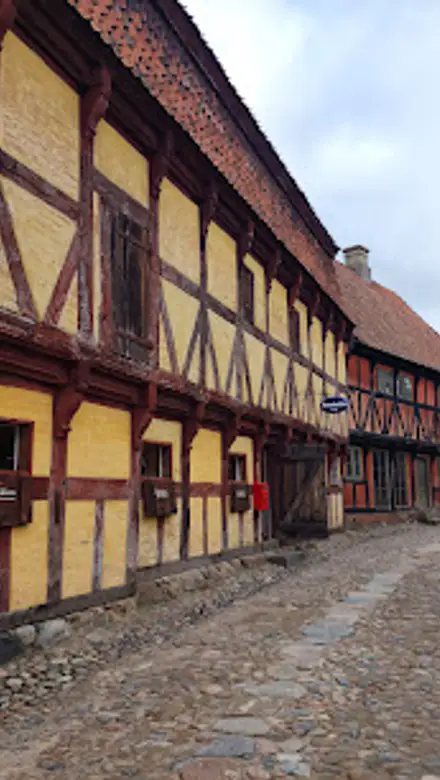
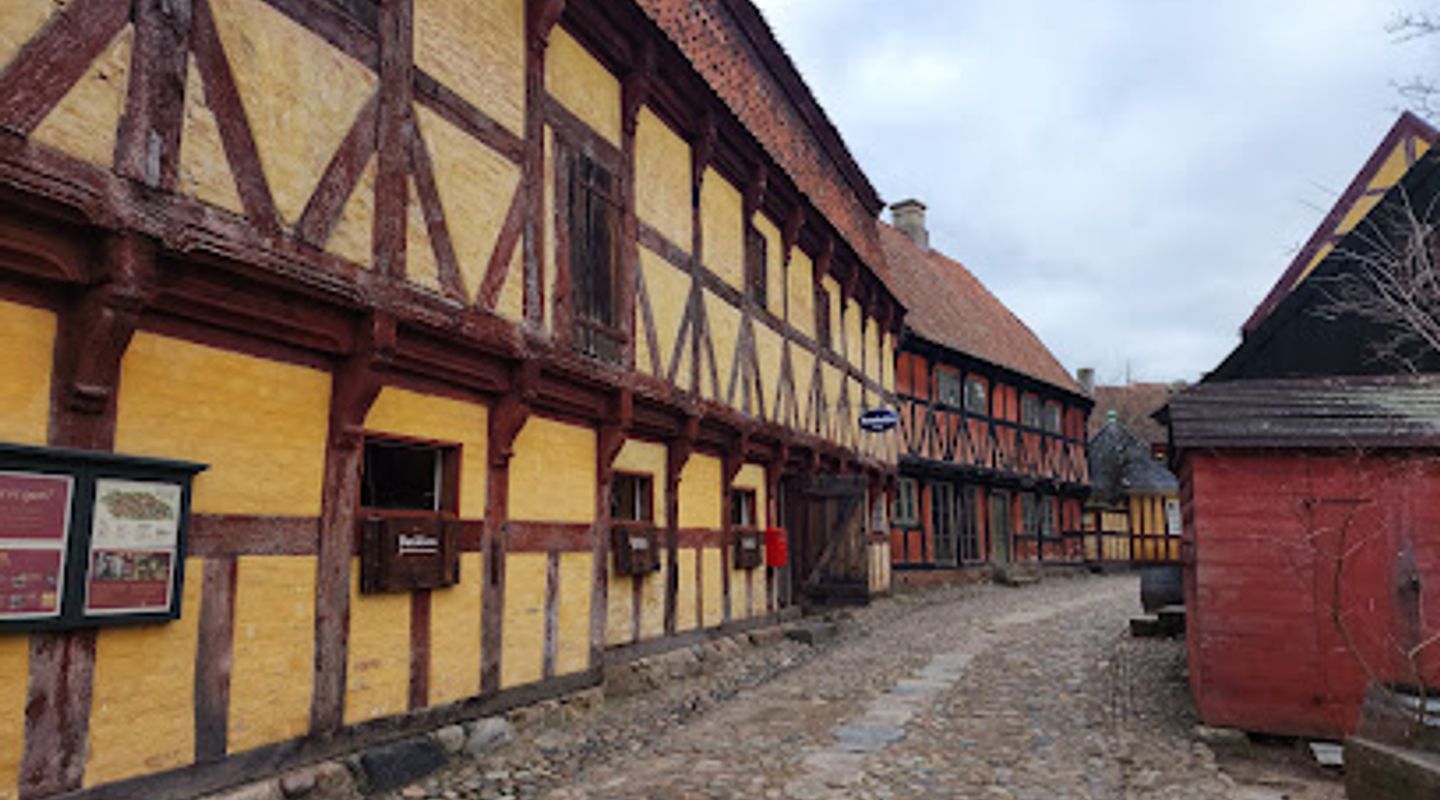
Den Gamle By sits at the edge of Aarhus’ Botanical Garden, but once you pass the gateway you are in a self‑contained townscape of historic streets, squares and backyards. Here, more than 80 original buildings from all over Denmark have been dismantled and rebuilt, forming a compact market town of crooked timber frames, sash windows and tiled roofs clustered around a central square. The sense of scale is intimate: lanes twist past gabled merchants’ houses, workshops open directly onto the street and church bells occasionally chime over the rooftops.The oldest part of the museum evokes a Danish town in the centuries before 1900. You can step into a schoolroom from Kerteminde, explore the elegant Mintmaster’s Mansion, watch the mill wheel turning by the stream and imagine travellers passing through the old customs booth at the edge of town. Gardens tucked behind fences showcase historic varieties of herbs, fruit and vegetables, echoing how families once fed themselves from small urban plots.
Everyday life from 1864 to the jazz age
Moving forward in time, you enter streets set around 1864, when trades and craft guilds still shaped daily life. Smithies smell faintly of iron and coal, and interiors are lit by polished brass lamps and tiled stoves. Costumed staff may be baking, stitching or chopping wood, continuing the rhythms of a day that could easily belong to the 19th century.Further on, the 1927 quarter has a different energy: asphalted streets, simple shopfronts and the first motor cars lend a modern, bustling feel. A hardware store, bookstore, post office and telephone exchange show how technology and consumer culture were changing Denmark between the wars. Vintage vehicles, enamel advertisements and period signage layer extra details onto the scene, inviting you to trace the shift from horse‑drawn carts to engines and electricity.
From hippies to Blockbuster: recent decades remembered
Beyond the interwar streets, the museum pivots into living memory. In the 1970s neighborhood you can look into apartments belonging to a nuclear family, a communal collective, a hippie couple and a single mother, each interior capturing different ways of living during the welfare state era. Downstairs, a corner shop, moped repair workshop and backyard toilets reveal an everyday world of vinyl records, patterned wallpaper and bold colors.In the newest area, a 2014 street presents a recognizable urban strip with a tanning salon, convenience store, bank, pizzeria and the legendary Bent J jazz bar. Here, you might walk past a Blockbuster video store and remember renting DVDs and game consoles, or spot posters and products that were current only a decade ago. It is museum as time capsule, reminding you that today’s ordinary life is tomorrow’s history.
Living history: people, food and performances
Den Gamle By is not just about static buildings. From spring onward, historical interpreters bring the town to life by inhabiting roles such as bakers, servants, shopkeepers and farmhands. They chop firewood in courtyards, serve customers behind wooden counters or push handcarts over the cobbles, and will often stay in character as you chat with them about their work. Seasonal events can add music, theater and traditional games to streets and squares.Food is part of the storytelling. Several eateries serve dishes based on historic Danish recipes, from open‑faced sandwiches to hearty hot meals and cakes. You might sit in a low‑ceilinged 18th‑century tavern, explore an arts‑and‑crafts‑era dining room or find a 1950s‑style café, each space furnished to match its time. Bakeries use old techniques and ingredients harvested from the museum’s own gardens, so even a pastry or loaf of bread becomes an edible fragment of the past.
Planning your visit inside the town walls
The site is extensive enough that you can spend hours exploring, yet compact enough to wander at a relaxed pace. Cobblestones and uneven surfaces are part of the charm, though some routes and interiors can be challenging for visitors with limited mobility. Wheelchairs and mobility scooters can be borrowed on site, and accessible restrooms are distributed across the museum’s main zones.Rest areas, indoor exhibitions and cafés provide shelter on wet or cold days, while the adjacent Botanical Garden offers green space for picnics and fresh air. Information signs in multiple languages explain the background to each building and the social history it represents, helping you piece together how Denmark changed from a small kingdom of market towns to a modern welfare society. Whether you are interested in architecture, social history, design or simply the atmosphere of old streets, Den Gamle By rewards unhurried exploration.
Evendo Review Centre
 Google
Guest reviews
Best time to go
Quietest: Jan, Feb & Mar · before 9am or from 8pm
Busy times are Evendo estimates for a typical year, to help you plan. Actual crowds vary with events, school holidays and the weather.
Explore The Old Town on the map
A handpicked selection of must-see spots near The Old Town, mapped for you.
Get your free copy of our complete guide to The Old Town, delivered straight to you.
Everything on this page, from opening hours and how to get there to Eve’s tips and the best time to go, in one PDF you can read offline, print or share.
Already have an account? Sign in
Your The Old Town guide is ready.
We'll send it to · Not you? Sign out

Getting your guide ready…
We are putting together a fresh copy of the The Old Town guide. This can take up to a minute.
This can take a few moments. If your browser asks, choose Allow so the download can start. You'll find the guide in your Downloads folder.
Nothing happened? Download it again
Sorry, the guide is taking longer than usual. Please try again in a minute, or get it by email instead.
Unlock the best of The Old Town
Skip-the-line tickets, guided tours with entry, and walking tours of the area, booked in a few clicks.
 Tour with entry
Unique Christmas Market in the Old Town Museum
from $266.48 Tour with entry
Private Shore Excursion: Highlights of Aarhus
from $646.00 Tour with entry
Aarhus Private Tour in Den Gamle By from Cruise Port
from $766.83 Tour with entry
Aarhus Highlights Private Shore Tour: A Walking Journey|
from $984.92



Other nearby places you may find interesting
The closest places of the same kind, if this one is not quite what you had in mind.
-
-
-
-
-


Swipe for more places
More to explore near The Old Town

 Best experiences near The Old Town
 Best hotels near The Old Town
 Best landmarks near The Old Town
 Best attractions near The Old Town
 Best shops near The Old Town
 Best restaurants near The Old Town
 Best bars near The Old Town
Do you manage this location?
Take control to get all the benefits, like improved information, better appearance, and stronger visibility across AI-powered discovery.
Explore more

Explore more of West Jutland
Discover West Jutland: Denmark's scenic coastal region with vast beaches, historic towns, and rich cultural heritage, perfect for nature lovers and history enthusiasts.
Explore West Jutland
Explore more of Denmark
Discover Denmark: A perfect blend of history, modern design, and the cozy concept of hygge. Explore vibrant cities, serene landscapes, and world-class cuisine.
Explore Denmark