

Danish Jewish Museum Travel Guide
Free Guide: A quietly powerful museum where Libeskind’s angular design and intimate artifacts tell 400 years of Danish‑Jewish life and a remarkable story of rescue.


A brief summary of Danish Jewish Museum
A quietly powerful museum where Libeskind’s angular design and intimate artifacts tell 400 years of Danish‑Jewish life and a remarkable story of rescue.
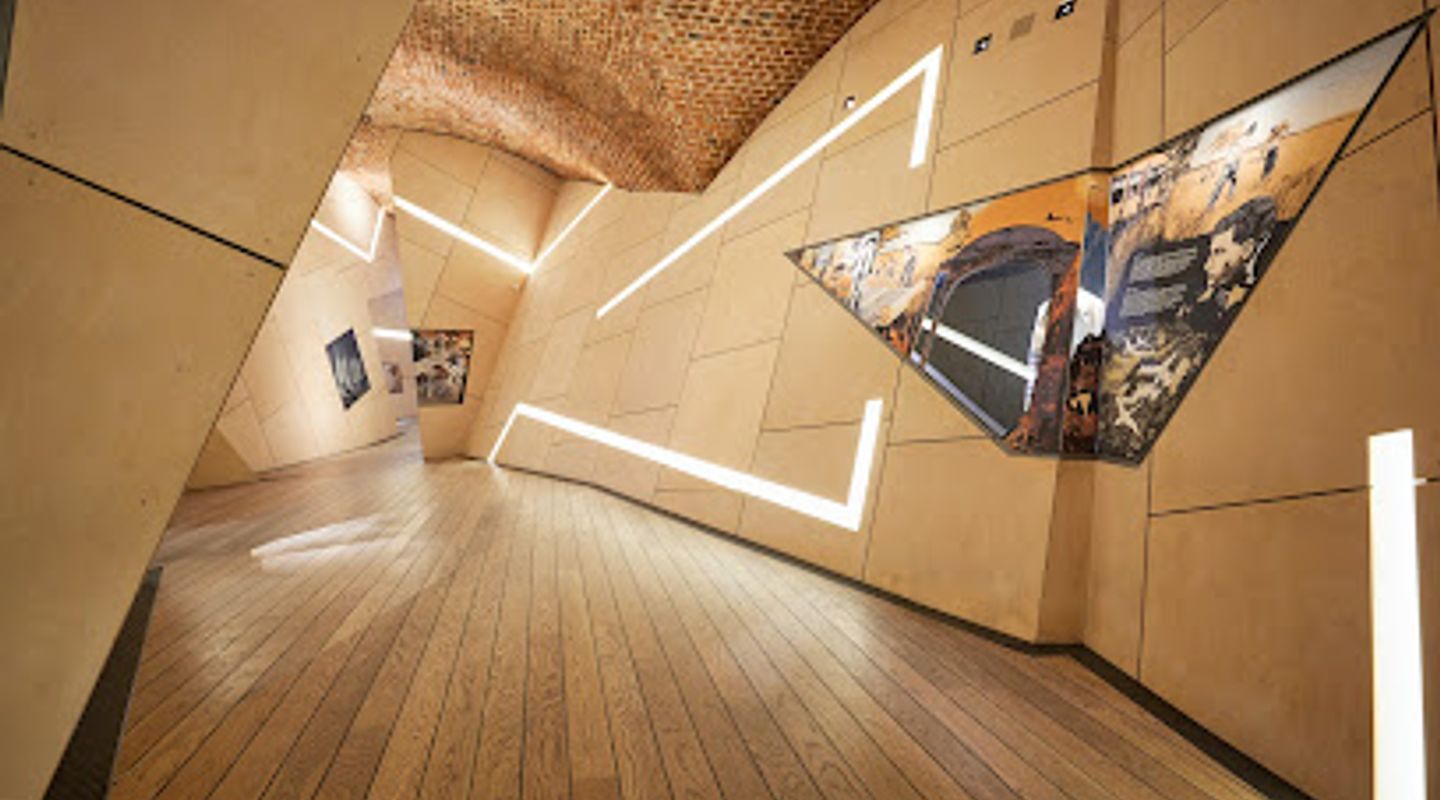
Tucked into the tranquil Royal Library Garden behind Christiansborg, the Danish Jewish Museum offers a striking fusion of 17th‑century brick vaults and Daniel Libeskind’s contemporary, labyrinthine interior. Through thoughtful exhibits and intimate objects, it explores 400 years of Jewish life in Denmark, from early merchants invited by King Christian IV to the dramatic rescue of most Danish Jews during World War II. This compact but architecturally bold museum rewards slow looking and quiet reflection.
On-site amenities
 Restrooms
 Seating areas
 Information boards
Opening hours
- MonClosed
- Tue10 am–5 pm
- Wed10 am–5 pm
- Thu10 am–5 pm
- Fri10 am–5 pm
- Sat10 am–5 pm
- Sun10 am–5 pm
Opening hours as listed on the venue’s Google Business Profile. Hours can change for services and special events, so check with the venue before you go.
- Address
- Proviantpassagen 6, 1218 København
- Phone
- Website
Getting there
Metro and walking
City bus
Bicycle
Discover more about Danish Jewish Museum
Jewish stories in the heart of Copenhagen
The Danish Jewish Museum sits discreetly in the Royal Library Garden on Slotsholmen, only steps from the Danish Parliament yet wrapped in a sense of calm. Inside, it tells the story of more than four centuries of Jewish presence in Denmark: traders invited by King Christian IV in the 17th century, families woven into the fabric of Danish society, and communities navigating questions of faith, identity and belonging.Rather than focusing solely on persecution, the museum highlights everyday life, religious practice and cultural expression. Display cases hold ceremonial objects, family heirlooms, letters and photographs that move the narrative from royal edicts and laws to kitchen tables and synagogue pews. Texts are in Danish and English, allowing you to follow the unfolding story even if you are just passing through Copenhagen.
Architecture shaped by the word “Mitzvah”
The building’s interior is as much an exhibit as the objects themselves. Renowned architect Daniel Libeskind was commissioned to transform the Royal Library’s former boathouse into an immersive space. Rather than simply adding walls and cases, he carved a series of sharply angled passages and sloping floors that guide you through the museum in an almost sculptural way.These intersecting planes trace the Hebrew word “Mitzvah” – a good deed or obligation – a reference to the extraordinary rescue of most Danish Jews in 1943, when thousands were ferried to safety in Sweden. As you move along the corridors titled Exodus, Wilderness, The Giving of the Law and The Promised Land, the changing geometry subtly shapes your pace and perspective, echoing the twists of history the museum explores.
Objects that illuminate a minority’s heritage
The collection draws on Judaica from the Royal Library and significant loans from the Jewish community in Copenhagen. You encounter Torah ornaments, prayer books, wedding contracts, business records and household items, each chosen to show how Jewish and Danish identities have intertwined over time. Modest pieces, like a worn cookbook or a child’s toy, stand alongside ornate ritual silver.Temporary exhibitions often delve into specific themes: intellectual life, migration waves, resistance during occupation, or post‑war rebuilding of community. Together, they provide a nuanced picture of a minority that has shaped and been shaped by the wider Danish society, including the tensions around integration and assimilation.
A contemplative setting in the Library Garden
Part of the museum’s charm lies in its setting. The 17th‑century brick structure, once a royal boathouse, still reads as part of the old Royal Library complex from the outside. Only when you enter from the Library Garden do you realise how thoroughly the interior has been reimagined. The garden itself, with lawns, trees and sculptures, forms a green buffer from the city beyond.Large windows and carefully placed openings frame glimpses of the garden and the surrounding historic buildings. In good weather, many visitors linger outside before or after their visit, using the garden as an informal extension of the museum’s reflective atmosphere. It is a quiet corner of central Copenhagen where history, architecture and landscape meet.
Planning a focused visit
The museum is compact, but the density of design and narrative rewards a focused visit of one to two hours. Opening hours vary by season, with generally longer daytime hours from Tuesday to Sunday and closure on most Mondays, so it is worth checking times before you go. Entry is ticketed, with standard adult prices in line with other small Copenhagen museums and concessions for children and students.Inside, the sloping floors and narrow passages are part of the architectural concept, so visitors who are unsteady on their feet may want to take their time and use handrails where available. Bags larger than a small handbag are usually stored at the entrance, keeping the exhibition spaces clear. Occasional talks, film screenings and guided tours add further depth for those wanting a deeper dive into Danish‑Jewish history.
A museum of memory and resilience
At its core, the Danish Jewish Museum is about memory and the resilience of a community. The story of the 1943 rescue, when a vast majority of Denmark’s Jews escaped deportation, is threaded throughout the displays without overshadowing other periods. The narrative acknowledges both solidarity and the complexities that followed, including experiences of exile and return.By the time you step back out into the Library Garden, the slanted walls and compressed passages have done their work: you leave with a sharpened sense of how architecture can carry meaning, and how a small museum can illuminate big questions about identity, belonging and moral courage in the face of danger.
Evendo Review Centre
 Google
Guest reviews
Best time to go
Quietest: Jan, Feb & Nov · before 8am or from 7pm
Busy times are Evendo estimates for a typical year, to help you plan. Actual crowds vary with events, school holidays and the weather.
Explore Danish Jewish Museum on the map
A handpicked selection of must-see spots near Danish Jewish Museum, mapped for you.
Get your free copy of our complete guide to Danish Jewish Museum, delivered straight to you.
Everything on this page, from opening hours and how to get there to Eve’s tips and the best time to go, in one PDF you can read offline, print or share.
Already have an account? Sign in
Your Danish Jewish Museum guide is ready.
We'll send it to · Not you? Sign out

Getting your guide ready…
We are putting together a fresh copy of the Danish Jewish Museum guide. This can take up to a minute.
This can take a few moments. If your browser asks, choose Allow so the download can start. You'll find the guide in your Downloads folder.
Nothing happened? Download it again
Sorry, the guide is taking longer than usual. Please try again in a minute, or get it by email instead.
Unlock the best of Danish Jewish Museum
Skip-the-line tickets, guided tours with entry, and walking tours of the area, booked in a few clicks.
 Tour with entry
Copenhagen Private Jewish Quarter and Danish Jewish Museum Tour
from $277.70 Tour with entry
Jewish Walking Tour of Copenhagen and Danish Jewish Museum
from $448.10 Tour with entry
Skip-the-line Danish Jewish Museum Copenhagen Private Tour
from $508.35 Tour with entry
Copenhagen Jewish Heritage
from $1,950.65
 Tour
TourCastle Island’s Royal History: A Self-Guided Audio Tour of Slotsholmen
from $8.54 Tour
TourCopenhagen History and Folklore Self Guided Audio Walking Tour
from $9.26 Tour
TourPolitically Incorrect Private Hidden Gems Walking Tour
from $326.99 Tour
TourPrivate Cultural Walking Tour in Copenhagen Jewish Heritage
from $1,576.05
Other nearby places you may find interesting
The closest places of the same kind, if this one is not quite what you had in mind.
-
-
-
-
-


Swipe for more places
More to explore near Danish Jewish Museum

 Best experiences near Danish Jewish Museum
 Best hotels near Danish Jewish Museum
 Best landmarks near Danish Jewish Museum
 Best attractions near Danish Jewish Museum
 Best shops near Danish Jewish Museum
 Best restaurants near Danish Jewish Museum
 Best bars near Danish Jewish Museum
Do you manage this location?
Take control to get all the benefits, like improved information, better appearance, and stronger visibility across AI-powered discovery.
Explore more
Explore more of Zealand
Discover the charm of Zealand, Denmark's largest island, blending vibrant city life in Copenhagen with serene coastal beauty and rich cultural heritage.
Explore Zealand
Explore more of Denmark
Discover Denmark: A perfect blend of history, modern design, and the cozy concept of hygge. Explore vibrant cities, serene landscapes, and world-class cuisine.
Explore Denmark
