
Black Diamond, Koge Travel Guide
A shimmering granite-and-glass library on Copenhagen’s harbor, where bold modern architecture, tranquil reading rooms, and lively cultural events meet by the water.
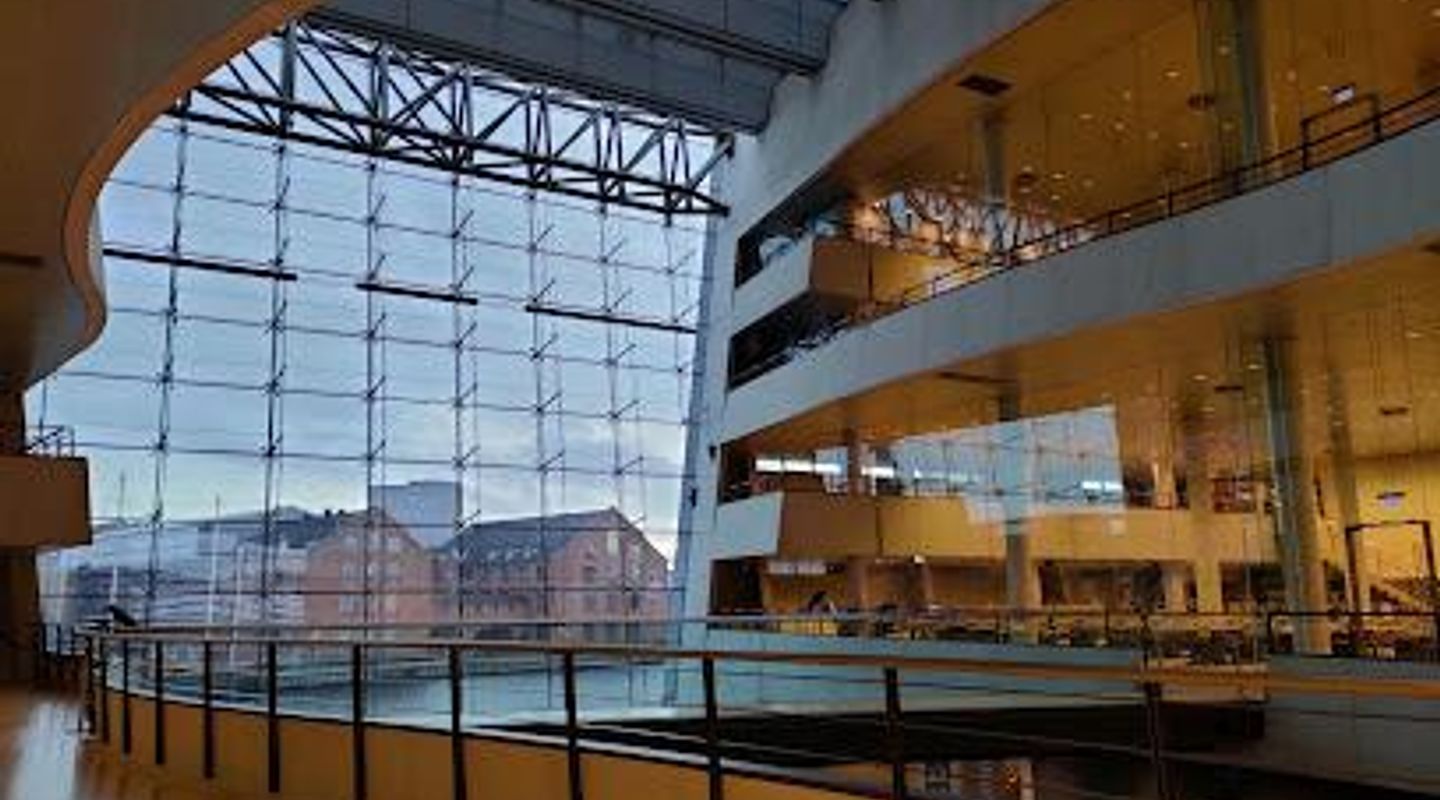
The Black Diamond is the striking waterfront extension of the Royal Danish Library on Søren Kierkegaards Plads in central Copenhagen. Completed in 1999 and clad in polished black granite, this sculptural landmark leans over the harbor, its mirrored facade reflecting sky and water. Inside, a soaring glass atrium links modern reading rooms, exhibition spaces, the National Museum of Photography, cafés, and a 600-seat concert hall, creating a vibrant cultural hub as much as a working library.
A brief summary to Black Diamond
- Søren Kierkegaards Pl. 1, Copenhagen, Indre By, 1221, DK
- Click to display
- Duration: 1 to 3 hours
- Free
-
 Mixed
Mixed
- Mobile reception: 5 out of 5

Know before you go
Hi, I'm Eve. Here are a few practical things to know before exploring Black Diamond.
- Head up to the higher floors for some of the best harbor views and a clear sense of how the modern Black Diamond connects to the older library buildings behind it.
- Plan time for an exhibition: while general access to the building is typically free, special exhibitions and the photography museum usually require a paid ticket.
- Use the café or informal seating areas as a quiet retreat between nearby city sights; it is an easy place to work, read, or recharge your devices.
- If you are sensitive to noise, choose one of the designated reading rooms rather than the open atrium, which can be lively when events or school groups are present.
Do you manage this location?
Take control to get all the benefits, like improved information, better appearance, and stronger visibility across AI-powered discovery. Learn more about listing your business on Evendo
Activate your presenceOther nearby places you may find interesting
The closest places of the same kind, if this one is not quite what you had in mind.
Explore Black Diamond on the Map
A handpicked selection of must-see spots near Black Diamond, mapped for you.
Unlock the Best of Black Diamond
Buy tickets
-
No tickets available
Book tours with entry


Getting There
-
Metro and short walk from central Copenhagen
From central Copenhagen, take the M3 or M4 metro line to Gammel Strand or København H/Cityring area and allow about 10–20 minutes in total. A single zone ticket typically costs around 20–30 DKK. Trains run frequently throughout the day. From the station, expect a level, urban walk along pavements suitable for wheelchairs and strollers. In winter, surfaces can be wet or icy, so allow a little extra time and wear stable footwear.
-
City bus to the waterfront area
Several city bus routes serve the Slotsholmen and inner harbor area, with journey times of roughly 10–25 minutes from most central districts, depending on traffic. Standard bus tickets are usually 20–30 DKK for the necessary zones. Buses are low-floor and generally accessible, but they can be crowded at peak commuting times. From the nearest stop, you will have a short, flat walk on city sidewalks to reach the Black Diamond.
-
Cycling through the inner city
Copenhagen’s extensive cycle lanes make it straightforward to reach the Black Diamond by bike in about 5–20 minutes from many central neighborhoods. You can rent a city bike or standard rental bicycle, typically from around 100–150 DKK per day. Dedicated bike lanes run close to the waterfront, but be prepared for wind and occasional rain. There is bike parking near the building; lock your bicycle and avoid leaving valuables in baskets.
-
Taxi from central hotels
A taxi ride from most central Copenhagen hotels to the Black Diamond generally takes 5–15 minutes, depending on traffic, and often costs in the range of 80–150 DKK one way. Taxis are metered, and many accept cards. This is the most convenient choice if you are carrying heavy bags or traveling with mobility challenges, though drop-off is on nearby streets and not directly at the water’s edge. At busy times, allow extra margin for congestion around the city centre.
For the on-the-go comforts that matter to you
-
 Restrooms
-
 Drink Options
-
 Drinking Water
-
 Food Options
-
 Seating Areas
-
 Sheltered Areas
-
 Trash Bins
-
 Information Boards
-
 Visitor Center
Discover more about Black Diamond
A gleaming monolith on Copenhagen’s harbor
The Black Diamond rises from the edge of Copenhagen’s inner harbor like a faceted stone, its sharp, prismatic form standing in bold contrast to the historic skyline around Slotsholmen. Designed by Danish architectural firm Schmidt Hammer Lassen and inaugurated in 1999, it serves as the contemporary extension of the Royal Danish Library, Denmark’s national library and one of the most important cultural institutions in the Nordic region.The nickname “Black Diamond” comes from its cladding: thousands of square meters of polished Absolute Black granite imported from Zimbabwe and cut in northern Italy. Each panel is carefully angled so the facade reflects the canal, boats, passing clouds, and the glow of the city. In strong sunlight the stone appears to sparkle, while on grey days it becomes a brooding, almost seamless dark volume, emphasizing its sculptural presence on the waterfront.Inside the light-filled atrium
Step through the revolving doors and the building’s dark exterior gives way to a surprising openness. A tall, glass-walled atrium cuts diagonally through the structure, acting as the building’s central spine. Concrete balconies undulate along the sides like waves, and footbridges at various levels cross the void, offering changing perspectives of the harbor and the city outside.Daylight pours in through the sloping glass facade and roof, filtered by the motion of clouds and the movement of boats outside. The ground floor houses a café and informal seating areas where students, office workers, and travelers linger with laptops and books. From here, escalators and lifts lead up to reading rooms, research spaces, and exhibition levels, all connected visually by the atrium’s dramatic vertical space.Where knowledge, art, and performance meet
More than a library extension, the Black Diamond functions as a multi-layered cultural centre. Its eight floors include reading rooms for the Royal Danish Library’s vast modern collections, quiet study zones, and spaces dedicated to special materials and archives. Exhibitions showcase everything from rare manuscripts and photography to contemporary art and cultural history, inviting visitors well beyond the academic world.Within the complex is the National Museum of Photography, drawing on the library’s extensive image collections, as well as galleries that host rotating displays. A 600-seat auditorium, often referred to as the Queen’s Hall, adds a performance dimension, with a program that can include concerts, talks, literary events, and conferences. Bookshops, a restaurant, and the older library sections connected behind the modern façade round out the sense that this is a place to spend time rather than simply pass through.A dialogue between old and new Copenhagen
Behind the Black Diamond’s dark shell, the building physically links to earlier wings of the Royal Danish Library. A slender 1960s extension and the historic 1906 library building form a chain of three distinct architectural eras. Moving from the gleaming granite and glass into the older sections, you pass through transitional corridors and bridges where materials and proportions subtly shift, underscoring how contemporary Copenhagen architecture often stages a conversation with its past.From the upper levels, windows frame views back over the city: the spires of Christiansborg, the roofs of the inner city, and the intricate pattern of bridges and canals below. The building’s location on Søren Kierkegaards Plads also places it within easy strolling distance of other major cultural sites, yet it retains a calm, contemplative core once you move away from the busy waterfront edge.Spending time by the water
For many visitors, one of the simple pleasures here is pausing at the harbor-facing side. In good weather, the plaza outside becomes an informal gathering spot where people sit on the steps watching harbor buses, kayakers, and tour boats slide past. Inside, large windows on the lower levels provide sheltered vantage points on windy or wet days, making the building appealing year-round.Whether you come to explore an exhibition, attend an evening performance in the concert hall, or just find a quiet corner with a view, the Black Diamond offers a layered experience: part architectural statement, part working library, part cultural living room for Copenhagen. Its combination of stark exterior and warm, bustling interior has made it one of the city’s most distinctive modern landmarks.












Your all‑in‑one travel companion app
Explore expert travel guides, compare and book tours, experiences, hotels, and more—all from the palm of your hand. Download now for seamless trip planning wherever your wanderlust takes you.


Explore More of Koge
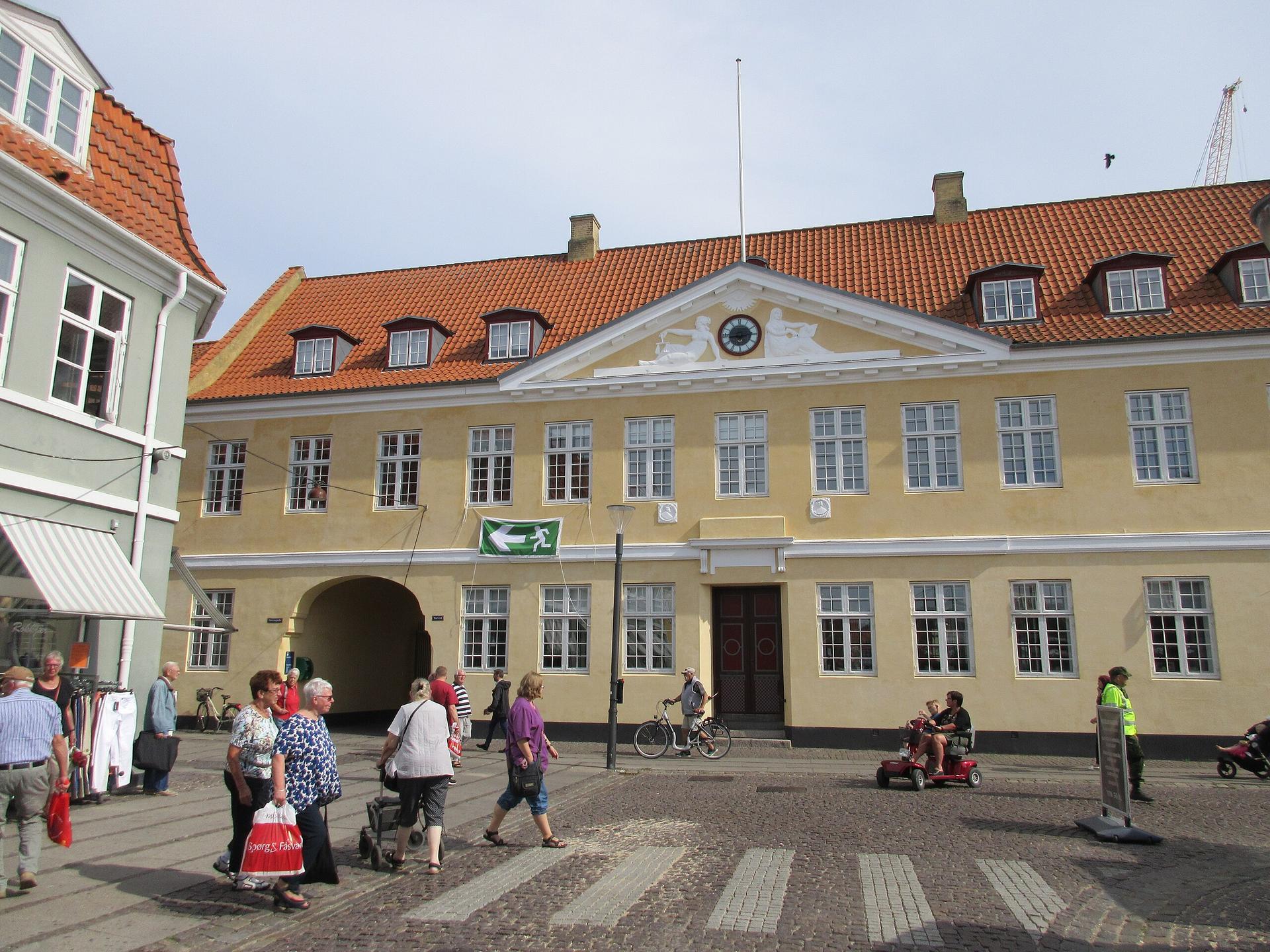
Looking beyond Black Diamond? Discover Koge for broader travel guides, local hot-spots, and regional highlights.
Explore Koge