

Calibishie Beach Travel Guide - Free Web & App
Your ultimate guide to Calibishie Beach. Discover top landmarks, proposed trips, and local tips. Free on the web or via the Evendo companion app.


Calibishie Beach, Dominica, offers Atlantic coast scenery, village hospitality, Red Rocks, rainforest access and a quieter base for island exploration.
Coastal Setting
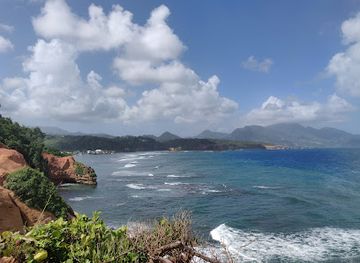
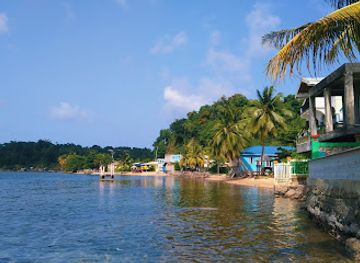
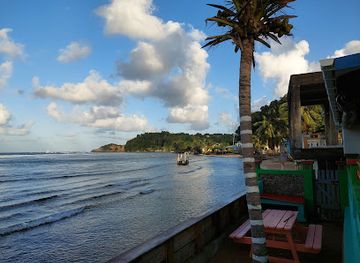
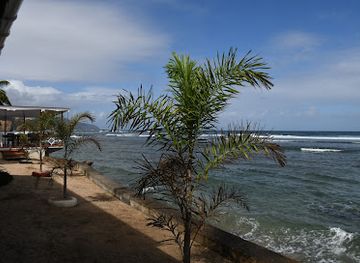
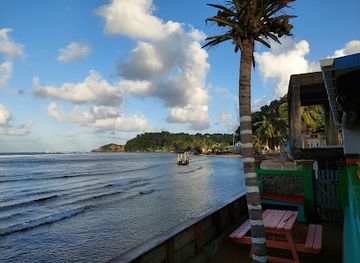
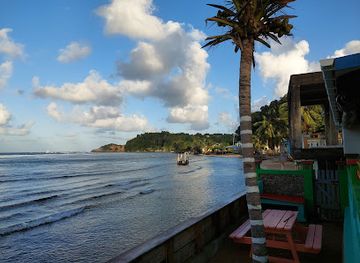
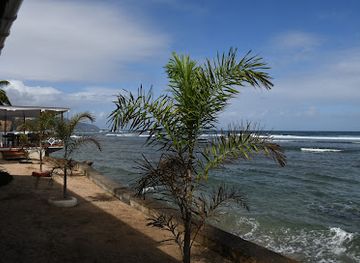
Calibishie Beach lies on Dominica’s north-eastern coast, beside the small village of Calibishie between the Atlantic Ocean and the island’s forested interior. Rather than a conventional resort, it is a modest coastal community where a broad sandy shoreline, fishing life and steep green hills create a distinctly local sense of place. The beach is exposed to the Atlantic, so conditions can change with weather and swell; its character is best understood as a scenic village shore rather than a permanently calm swimming lagoon.Read more about Calibishie Beach
Landscape and Local Character
Exploring the Area
When is the best time to visit Calibishie Beach?
Best: January–March · 29–30°C| Month | High (°C) | Rainfall (mm) |
|---|---|---|
| January (best) | 29 | 120 |
| February (best) | 29 | 110 |
| March (best) | 30 | 110 |
| April | 30 | 110 |
| May | 31 | 110 |
| June | 31 | 110 |
| July | 31 | 110 |
| August | 31 | 110 |
| September | 31 | 110 |
| October | 31 | 120 |
| November | 30 | 120 |
| December | 30 | 120 |
Getting to and around Calibishie Beach
How to get there
Transportation
Best landmarks in Calibishie Beach
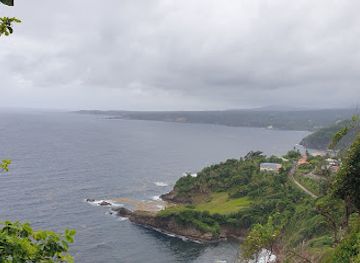
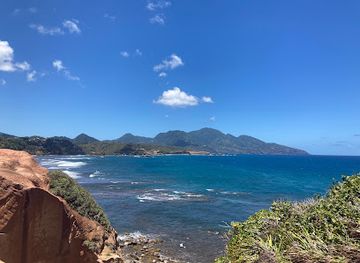
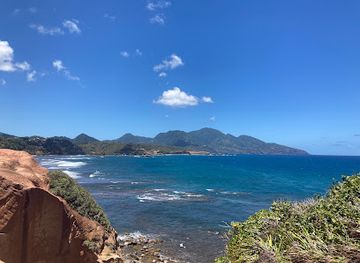
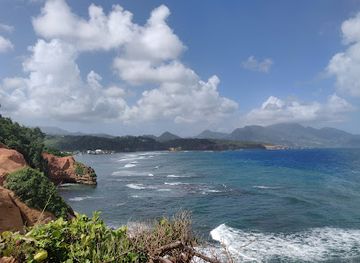
Calibishie Beach itself is the defining natural landmark, marking the meeting point of a small north-eastern settlement and Dominica’s open Atlantic coast. The nearby Red Rocks are visually distinctive volcanic coastal formations shaped by erosion and exposure, and their rust-coloured surfaces contrast with the sea and surrounding vegetation. The steep green hills behind Calibishie form part of the island’s mountainous volcanic terrain and provide the transition from beach community to rainforest country. In the wider north-east, the Kalinago Territory is a major cultural landmark rather than a single monument, representing the continuing presence and heritage of Dominica’s Indigenous Kalinago people. These features give Calibishie its identity through a combination of shoreline, geology, living community and access to the island’s forested interior.
-
Tourist attraction
Red Rocks
Discover Dominica's dramatic Red Rocks: a stunning coastal landscape of volcanic formations, hiking trails, and breathtaking Caribbean views.
-
Restaurant
Coral Reef Bar & Restaurant
Experience authentic Dominican flavors with stunning ocean views at Coral Reef Bar & Restaurant in beautiful Calibishie.
-
Chocolate artisan
Pointe Baptiste Chocolate Factory
Discover Dominica's sweet heritage at Pointe Baptiste Chocolate Factory, where organic cocoa beans transform into exquisite handcrafted chocolate bars.
-
Restaurant
Unique seaview restaurant
Dine with breathtaking Caribbean Sea views in Calibishie. Enjoy fresh, local cuisine and a relaxed atmosphere at this unique coastal gem.
Explore Calibishie Beach on the map
Plan your trip on one map. See where the top attractions, landmarks, restaurants and hotels are, and book hotels and experiences in a few clicks.
Best hotels in Calibishie Beach
Best restaurants in Calibishie Beach
Dining in Calibishie is concentrated in small local eateries, guesthouses and informal village establishments rather than a large restaurant district. Meals commonly reflect Dominica’s Creole cooking, with rice and provisions, plantain, seasonal vegetables, chicken, fish and other locally available ingredients appearing in home-style dishes. Fresh produce from the island’s agricultural communities is an important part of the regional food culture, while fresh fish may be available through local coastal businesses when conditions and supply allow. Visitors should expect a relaxed, limited-scale dining scene and may need to arrange meals through accommodation providers or travel to nearby settlements for greater choice. Marigot, the principal community near Douglas–Charles Airport, offers additional everyday food services, while larger selections are found farther afield in Portsmouth or Roseau rather than directly on Calibishie Beach.
-
Restaurant
Coral Reef Bar & Restaurant
Savor exquisite Caribbean cuisine with stunning sea views at Coral Reef Bar & Restaurant in Calibishie.
-
Restaurant
Unique seaview restaurant
Experience exquisite dining with breathtaking ocean views at the Unique Seaview Restaurant in Calibishie.
-
Restaurant
Red Rock Cuisine
Experience authentic Caribbean flavors at Red Rock Cuisine in Calibishie, where fresh ingredients meet warm hospitality.
-
 Self-catering accommodation
Calibishie Sandbar
Experience serene self-catering accommodation at Calibishie Sandbar in Dominica - where relaxation meets Caribbean adventure.
Best bars in Calibishie Beach
Calibishie does not have a concentrated nightclub scene or a late-night entertainment district. Evenings are generally quiet and centred on small village bars, restaurants and guesthouse hospitality, where conversation, local drinks and a slower coastal rhythm are more characteristic than organised nightlife. Occasional community events, music or cultural gatherings may take place, but visitors should not assume a fixed programme or regular performances. Those seeking a broader choice of bars and evening venues will find more activity in Portsmouth or Roseau, both outside Calibishie and requiring road travel. The village is better suited to low-key evenings, listening to the Atlantic and enjoying the dark rural surroundings, with respect for residents and accommodation neighbours important after nightfall.
-
Restaurant
Coral Reef Bar & Restaurant
Discover the flavors and stunning views at Coral Reef Bar & Restaurant in Calibishie, where every meal is a delightful experience.
-
Restaurant
Unique seaview restaurant
Experience the best of Caribbean cuisine with breathtaking ocean views at the Unique Seaview Restaurant in Calibishie.
-
Restaurant
Red Rock Cuisine
Experience authentic Dominican flavors in a stunning setting at Red Rock Cuisine, where every meal is a celebration of local ingredients and culinary art.
-
Bed & breakfast
Jacoway Inn
Discover the charm of Jacoway Inn, a cozy bed and breakfast in the heart of Calibishie, Dominica, your gateway to adventure and relaxation.
Best nightclubs in Calibishie Beach
Calibishie does not have a concentrated nightclub scene or a late-night entertainment district. Evenings are generally quiet and centred on small village bars, restaurants and guesthouse hospitality, where conversation, local drinks and a slower coastal rhythm are more characteristic than organised nightlife. Occasional community events, music or cultural gatherings may take place, but visitors should not assume a fixed programme or regular performances. Those seeking a broader choice of bars and evening venues will find more activity in Portsmouth or Roseau, both outside Calibishie and requiring road travel. The village is better suited to low-key evenings, listening to the Atlantic and enjoying the dark rural surroundings, with respect for residents and accommodation neighbours important after nightfall.
-
Bar
The Hot Spot
Experience the vibrant nightlife of Calibishie at The Hot Spot, where local flavors and lively ambiance blend seamlessly for an unforgettable night out.
Best shops in Calibishie Beach
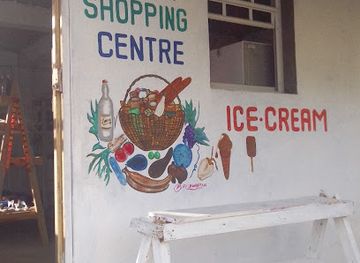
Shopping in Calibishie is modest and practical, with small village shops and local businesses serving everyday needs rather than a dedicated retail quarter. Visitors may find locally made food, drinks or crafts through accommodation providers, community businesses and informal sellers, although product selection and opening arrangements can vary. The wider north-east is particularly relevant for Indigenous craft and cultural products associated with the nearby Kalinago Territory, where locally produced items can provide a more meaningful connection with Dominica’s living heritage. Marigot offers a broader range of everyday services near the airport, while larger shops and more varied retail options are found in Portsmouth or Roseau. Allow extra time for rural shopping and carry essentials when travelling into less populated areas, since Calibishie should not be treated as a major commercial centre.
-
Tourist attraction
Red Rocks
Experience the breathtaking beauty of Red Rocks in Calibishie, a unique natural attraction showcasing Dominica's stunning landscapes.
-
Restaurant
Coral Reef Bar & Restaurant
Experience the flavors of the Caribbean at Coral Reef Bar & Restaurant, where fresh seafood meets stunning ocean views in Calibishie.
-
Chocolate artisan
Pointe Baptiste Chocolate Factory
Explore the art of chocolate making at Pointe Baptiste Chocolate Factory, where local flavors meet artisan craftsmanship in Dominica.
-
Restaurant
Unique seaview restaurant
Experience breathtaking ocean views while enjoying exquisite Caribbean cuisine at the Unique Seaview Restaurant in Calibishie.

Get your free copy of our complete guide to Calibishie Beach, delivered straight to you.
Everything on this page, from attractions and restaurants to essentials and local phrases, in one PDF you can read offline, print or share.
Already have an account? Sign in
Your Calibishie Beach guide is ready.
We'll send it to · Not you? Sign out

Getting your guide ready…
We are putting together a fresh copy of the Calibishie Beach guide. This can take up to a minute.
This can take a few moments. If your browser asks, choose Allow so the download can start. You'll find the guide in your Downloads folder.
Nothing happened? Download it again
Sorry, the guide is taking longer than usual. Please try again in a minute, or get it by email instead.
Calibishie Beach essentials
Currency and Payment
Safety
Emergency Situations
Do's and Don'ts
Local Tips
From Eve
Local phrases worth knowing
You don't need to get them perfect. A few words go a long way, and locals appreciate the effort.
Basics
| English | Local | Say it |
|---|---|---|
| Hello | Bonjou | [bon-jo] |
| Goodbye | Orevwaa | [o-rev-wa] |
| Yes | Wi | [wee] |
| No | Non | [non] |
| Please/You're welcome | Tanpri | [tan-pree] |
| Thank you | Mèsi | [meh-see] |
| Excuse me/Sorry | Eskize mwen | [es-kee-zay mwen] |
| How are you? | Kijan ou ye? | [kee-jan oo yay] |
| Fine. And you? | Byen. E ou? | [byen. ay oo] |
| Do you speak English? | Èske ou pale angle? | [es-ke oo pal an-glay] |
| I don't understand | Mwen pa konprann | [mwen pa kon-pran] |
Eating & Drinking
| English | Local | Say it |
|---|---|---|
| I'd like to see the menu, please | Mwen ta renmen wè meni an, tanpri | [mwen ta ren-men way me-nee an tan-pree] |
| I don't eat meat | Mwen pa manje vyann | [mwen pa manj vyan] |
| Cheers! | Santé! | [san-tay] |
| I would like to pay, please | Mwen ta renmen peye, tanpri | [mwen ta ren-men pay-ye tan-pree] |
Emergencies
| English | Local | Say it |
|---|---|---|
| Help! | Ed! / Sekou! | [ed / se-koo] |
| Go away! | ale! | [ah-lay] |
| Call the Police! | Rele Lapolis! | [re-lay la-poh-lee] |
| Call a doctor! | Rele yon doktè! | [re-lay yohn dok-tay] |
| I'm lost | Mwen pedi | [mwen peh-dee] |
| I'm ill | Mwen malad | [mwen ma-lad] |
Shopping
| English | Local | Say it |
|---|---|---|
| I'd like to buy... | Mwen ta renmen achte... | [mwen ta ren-men ach-tay] |
| I'm just looking | Mwen jis gade | [mwen zjee gahd] |
| How much is it? | Konbyen li ye? | [kon-byen lee yay] |
| That's too expensive | Sa twò chè | [sa twa sheh] |
| Can you lower the price? | Èske ou ka ba pri la? | [es-ke oo ka bah pree lah] |
Time & Numbers
| English | Local | Say it |
|---|---|---|
| What time is it? | Ki lè li ye? | [kee lay lee yay] |
| It's one o'clock | Se yon lè | [say yohn lay] |
| Half past (10) | Douzan | [doo-zan] |
| Morning | Maten | [ma-ten] |
| Afternoon | Apremidi | [ap-re-mi-dee] |
| Evening | Aswè | [ah-sway] |
| Yesterday | Ye | [yay] |
| Today | Jodi a | [zho-dee ah] |
| Tomorrow | Demen | [de-men] |
| 1 | Yon | [yohn] |
| 2 | De | [day] |
| 3 | Twaz | [twa] |
| 4 | Kat | [kaht] |
| 5 | Senk | [sank] |
| 6 | Sis | [sees] |
| 7 | Sèt | [sett] |
| 8 | Wit | [weet] |
| 9 | Nèf | [nef] |
| 10 | Dis | [dees] |
Transport & Directions
| English | Local | Say it |
|---|---|---|
| Where's a/the...? | Kote... ye? | [ko-tay yay] |
| What's the address? | Ki adres la ye? | [kee ah-dres lah yay] |
| Can you show me (on the map)? | Èske ou ka montre mwen (sou kat la)? | [es-ke oo ka mon-tray mwen soo kaht lah] |
| When's the next (bus)? | Ki lè pwochen la ye? | [kee lay pwo-shen lah yay] |
| A ticket (to ....) | Yon tikè (pou ....) | [yohn tee-kay poo] |
History of Calibishie Beach
Volcanic Island Formation
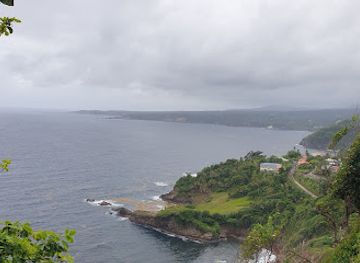
Calibishie’s setting reflects Dominica’s volcanic origins. The island was built by successive volcanic eruptions, and its north-eastern coast combines beaches, rocky headlands, steep valleys and heavily vegetated uplands. The dark and irregular coastal geology visible around the wider Calibishie area contrasts with sandy stretches formed by the movement of material along the shoreline. Rainfall, erosion and the continuing growth of tropical vegetation have shaped the landscape that surrounds the village, linking the beach directly with the mountainous interior rather than separating it from the island’s natural systems.
Kalinago Heritage and Early Settlement
Before European colonisation, Dominica was inhabited by Indigenous peoples, including the Kalinago, whose communities and cultural traditions remain especially significant in the island’s east. Calibishie lies near the north-eastern part of Dominica and within the broader cultural landscape shaped by Kalinago history. European settlement brought new patterns of land ownership, agriculture and coastal trade, while the island’s rugged terrain limited the scale of permanent development in many districts. The presence of the Kalinago Territory nearby makes the north-east an important area for understanding Indigenous continuity in the Caribbean.
Village Agriculture and Coastal Life
Calibishie developed as a small rural settlement connected to Dominica’s agricultural and maritime economy. Communities along the north and east coasts traditionally relied on cultivation, fishing and exchange between villages, with roads and coastal routes gradually connecting them to larger centres. Bananas and other tropical crops became important to Dominica’s modern economy, while household gardens and small-scale farming continued to shape local landscapes. Calibishie’s beach therefore belongs to a lived coastal environment, not simply a recreational site, and village life remains closely connected to weather, the sea and the surrounding hills.
Tourism and Conservation
Dominica’s tourism developed more slowly and on a smaller scale than that of many Caribbean neighbours, partly because the island’s appeal rests on rainforest, rivers, mountains and rural communities rather than extensive resort beaches. Calibishie has consequently retained a low-rise village character while attracting visitors interested in nature, walking and quiet coastal stays. Modern tourism in the area is closely linked to wider efforts to value forests, wildlife, Indigenous heritage and community-based hospitality. The result is a destination where accommodation and visitor services remain modest, and where the surrounding landscape is a central part of the experience.
Calibishie Beach in Photos
Browse through our photo collection highlighting the charm and character of the destination.
Neighbouring destination travel guides
The closest destinations to Calibishie Beach, if you have time for more than one.
-

-

-

-

-


Swipe for more destinations
Explore more

Explore more of Saint Andrew
Explore Saint Andrew, Dominica, for Atlantic beaches, rainforest trails, volcanic rivers, rural villages and easy access through Douglas-Charles Airport.
Explore Saint Andrew
Explore more of Dominica
Discover Dominica: The Caribbean's Nature Island, where lush rainforests, volcanic landscapes, and vibrant culture await eco-tourists and adventure seekers.
Explore Dominica