

Morne Trois Pitons National Park Travel Guide - Free Web & App
Your ultimate guide to Morne Trois Pitons National Park. Discover top landmarks, proposed trips, and local tips. Free on the web or via the Evendo companion app.


Explore Morne Trois Pitons National Park, Dominica's UNESCO World Heritage Site, teeming with rainforests, volcanic wonders, and breathtaking waterfalls.
Read more about Morne Trois Pitons National Park
When is the best time to visit Morne Trois Pitons National Park?
Best: January–March · 30°C| Month | High (°C) | Rainfall (mm) |
|---|---|---|
| January (best) | 30 | 150 |
| February (best) | 30 | 160 |
| March (best) | 30 | 170 |
| April | 30 | 180 |
| May | 30 | 190 |
| June | 30 | 201 |
| July | 30 | 211 |
| August | 30 | 221 |
| September | 30 | 231 |
| October | 30 | 241 |
| November | 31 | 250 |
| December | 31 | 260 |
Getting to and around Morne Trois Pitons National Park
How to get there
Transportation
Best landmarks in Morne Trois Pitons National Park
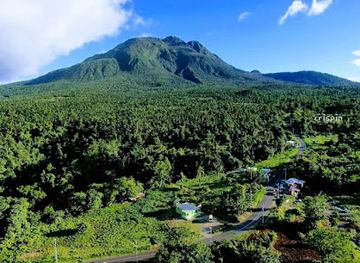
Morne Trois Pitons National Park in Dominica offers visitors a surreal experience of natural wonders, including the world's second-largest boiling lake, majestic waterfalls like Trafalgar Falls and Middleham Falls, and the mystical Emerald Pool. The park also showcases the vibrant flora and fauna of the Caribbean, with unique species such as the rare Sisserou parrot. Visitors can explore volcanic landscapes, lush rainforests, and hot springs, immersing themselves in the rich history and biodiversity of this UNESCO World Heritage site.
-
Mountain peak
Morne Trois Pitons
Discover Dominica's UNESCO-listed Morne Trois Pitons National Park: Hike volcanic peaks, swim in hidden gorges, and explore lush rainforests.
Explore Morne Trois Pitons National Park on the map
Plan your trip on one map. See where the top attractions, landmarks, restaurants and hotels are, and book hotels and experiences in a few clicks.
Best hotels in Morne Trois Pitons National Park
Best restaurants in Morne Trois Pitons National Park
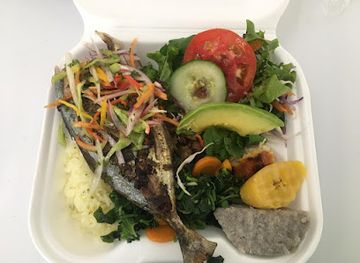
The dining scene of Morne Trois Pitons National Park offers a unique and delicious experience for visitors. From quaint local eateries serving traditional Dominican cuisine to upscale restaurants with stunning views of the surrounding natural beauty, there is something for every palate. Fresh seafood, tropical fruits, and flavorful spices are just a few highlights of the diverse culinary offerings in the area. Whether you're looking for a casual meal after a day of hiking or a romantic dinner with a view, Morne Trois Pitons National Park has dining options that will leave you satisfied and eager to explore more.
-
Restaurant
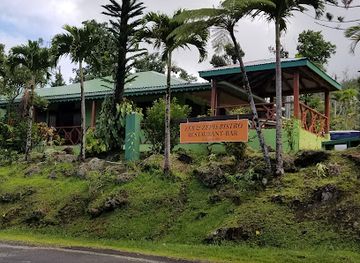
Zeb Zepis Bistro
Experience exquisite local cuisine at Zeb Zepis Bistro while surrounded by the stunning natural beauty of Pont Cassé and Emerald Pool.
-
Restaurant
Pearl's Cuisine
Experience authentic Dominican flavors at Pearl's Cuisine in Roseau - a must-visit for food lovers exploring Dominica.
-
Restaurant
Belto's Bar & Grill- Dominica
Discover authentic Caribbean cuisine at Belto's Bar & Grill in Dominica - where every meal is a flavorful journey into local traditions.
Best bars in Morne Trois Pitons National Park
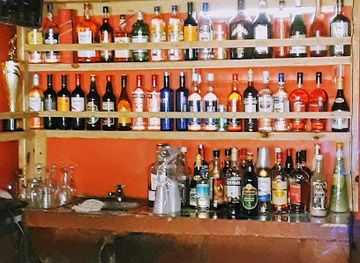
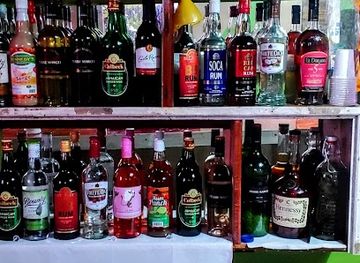
While Morne Trois Pitons National Park is known for its natural beauty and outdoor activities, visitors will be pleasantly surprised by the lively nightlife scene in the area. From cozy bars serving up local rum cocktails to vibrant nightclubs with live music and dancing, there is something for everyone looking to unwind after a day of exploring. The friendly locals will make you feel right at home as you sip on a refreshing drink and mingle with other travelers, creating unforgettable memories under the starry night sky.
-
Restaurant
All Nations Bar
Experience authentic Caribbean cuisine and vibrant nightlife at All Nations Bar, a gem in the heart of Roseau.
-
Bar
Top bar
Discover the vibrant atmosphere and local flavors at Top Bar in Roseau, a premier destination for relaxation and socializing.
-
Bar
River Rock Cafe and Bar
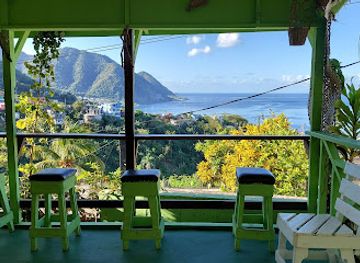
Experience the vibrant flavors and warm hospitality of River Rock Cafe and Bar in Trafalgar, where every meal is a celebration of Caribbean culture.
-
Bar
Epic Restaurant and Bar
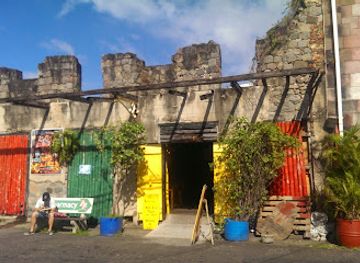
Discover the vibrant flavors of the Caribbean at Epic Restaurant and Bar in Roseau, the ultimate dining destination for tourists seeking local cuisine.
Best nightclubs in Morne Trois Pitons National Park
While Morne Trois Pitons National Park is known for its natural beauty and outdoor activities, visitors will be pleasantly surprised by the lively nightlife scene in the area. From cozy bars serving up local rum cocktails to vibrant nightclubs with live music and dancing, there is something for everyone looking to unwind after a day of exploring. The friendly locals will make you feel right at home as you sip on a refreshing drink and mingle with other travelers, creating unforgettable memories under the starry night sky.
-
Bar
River Rock Cafe and Bar
Experience the vibrant atmosphere of River Rock Cafe and Bar in Trafalgar, where refreshing drinks and stunning views come together for an unforgettable experience.
-
Bar
Bluez disco
Immerse yourself in the vibrant nightlife of Grand Fond at Bluez Disco, where music, dancing, and unforgettable memories await.
-
Bar
Lucy's Roadside bar & grill
Experience authentic Caribbean flavors in a relaxed setting at Lucy's Roadside Bar & Grill, a must-visit destination in Morne Jaune.
-
Bar
Big baller's bar
Discover the lively atmosphere of Big Baller's Bar in Grand Fond, where locals and tourists connect over drinks and good times in a vibrant Caribbean setting.

Best shops in Morne Trois Pitons National Park
In Morne Trois Pitons National Park, visitors can expect a unique shopping experience that offers a variety of local handicrafts, souvenirs, and natural products. From hand-carved wooden items to vibrant textiles and organic skincare products made from indigenous plants, the shopping scene in the park showcases the rich cultural heritage and creativity of the Dominican people. Visitors can browse through quaint shops and market stalls, interact with local artisans, and take home one-of-a-kind treasures that capture the essence of this enchanting destination.
-
Tourist attraction
Morne Trois Pitons National Park
Explore the lush landscapes and geothermal wonders of Morne Trois Pitons National Park, a UNESCO World Heritage site filled with adventure and natural beauty.
-
 Clothing store
Fetish Fashion
Explore Fetish Fashion in Roseau for unique, stylish clothing that reflects local trends and culture, all in a welcoming atmosphere.
-
Grocery store
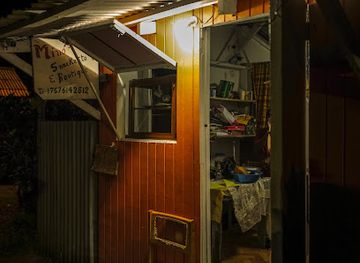
Mino's Snackette & Boutique
Discover local flavors and warm hospitality at Mino's Snackette & Boutique in Wotten Waven, the perfect grocery stop for tourists.
-
Clothing store
Novelty Inc
Explore the vibrant fashion scene at Novelty Inc in Roseau, where unique Caribbean styles meet local craftsmanship for an unforgettable shopping experience.

Get your free copy of our complete guide to Morne Trois Pitons National Park, delivered straight to you.
Everything on this page, from attractions and restaurants to essentials and local phrases, in one PDF you can read offline, print or share.
Already have an account? Sign in
Your Morne Trois Pitons National Park guide is ready.
We'll send it to · Not you? Sign out

Getting your guide ready…
We are putting together a fresh copy of the Morne Trois Pitons National Park guide. This can take up to a minute.
This can take a few moments. If your browser asks, choose Allow so the download can start. You'll find the guide in your Downloads folder.
Nothing happened? Download it again
Sorry, the guide is taking longer than usual. Please try again in a minute, or get it by email instead.
Morne Trois Pitons National Park essentials
Currency and Payment
Safety
Emergency Situations
Do's and Don'ts
Local Tips
From Eve
Local phrases worth knowing
You don't need to get them perfect. A few words go a long way, and locals appreciate the effort.
Basics
| English | Local | Say it |
|---|---|---|
| Hello | Bonjou | [bon-zhoo] |
| Goodbye | Orevwa | [oh-rev-wah] |
| Yes | Wi | [wee] |
| No | Non | [non] |
| Please/You're welcome | Tanpri | [tan-pree] |
| Thank you | Mèsi | [meh-see] |
| Excuse me/Sorry | Eskize mwen | [es-kee-zay mwenn] |
| How are you? | Kijan ou ye? | [key-jahn ooh yay] |
| Fine. And you? | Byen. E ou? | [bee-yen. ay ooh?] |
| Do you speak English? | Èske ou pale angle? | [es-kay ooh pal ayng-lay] |
| I don't understand | Mwen pa konprann | [mwenn pa kohn-prahn] |
Eating & Drinking
| English | Local | Say it |
|---|---|---|
| I'd like to see the menu, please | Mwen ta renmen we meni a, silvouple | [mwenn tah ren-men way men-ee ah, see-voo-play] |
| I don't eat meat | Mwen pa manje kò | [mwenn pa mahn-jay koh] |
| Cheers! | Santé! | [san-tay] |
| I would like to pay, please | Mwen ta renmen peye, silvouple | [mwenn tah ren-men pay-yay, see-voo-play] |
Emergencies
| English | Local | Say it |
|---|---|---|
| Help! | Ed! | [ed] |
| Go away! | Alé! | [ah-lay] |
| Call the Police! | Rele lapolis! | [rell lay-poh-lees] |
| Call a doctor! | Rele yon doktè! | [rell yohn dohk-tay] |
| I'm lost | Mwen pedi | [mwenn pay-dee] |
| I'm ill | Mwen malad | [mwenn mah-lahd] |
Shopping
| English | Local | Say it |
|---|---|---|
| I'd like to buy... | Mwen ta renmen achte... | [mwenn tah ren-men asht] |
| I'm just looking | Mwen jis gade | [mwenn zhee gah-day] |
| How much is it? | Konbyen li ye? | [kohn-byen lee yay] |
| That's too expensive | Sa twò chè | [sah twah sheh] |
| Can you lower the price? | Ou ka redwi pri a? | [oo kah red-wee pree ah] |
Time & Numbers
| English | Local | Say it |
|---|---|---|
| What time is it? | Ki lè li ye? | [key lay lee yay] |
| It's one o'clock | Li enpwen | [lee ahn-pwehn] |
| Half past (10) | Demi (10) | [deh-mee (dix)] |
| Morning | Maten | [mah-ten] |
| Afternoon | Apremidi | [ap-ray-mee-dee] |
| Evening | Swa | [swah] |
| Yesterday | Yè | [yay] |
| Today | Jodi a | [joh-dee ah] |
| Tomorrow | Demen | [deh-mayn] |
| 1 | 1 | [1] |
| 2 | 2 | [2] |
| 3 | 3 | [3] |
| 4 | 4 | [4] |
| 5 | 5 | [5] |
| 6 | 6 | [6] |
| 7 | 7 | [7] |
| 8 | 8 | [8] |
| 9 | 9 | [9] |
| 10 | 10 | [10] |
Transport & Directions
| English | Local | Say it |
|---|---|---|
| Where's a/the...? | Ki kote a/the...? | [key koh-tay ah/the] |
| What's the address? | Ki adrès la? | [key ah-dress lah] |
| Can you show me (on the map)? | Ou ka montre mwen (sou kat)? | [oo kah mon-tray mwenn (soo kaht)] |
| When's the next (bus)? | Ki lè pwochen (bis)? | [key lay pwosh-en (bees)] |
| A ticket (to ....) | Yon tikè (pou ....) | [yohn tee-kay (poo)] |
History of Morne Trois Pitons National Park
Formation and Geological Significance
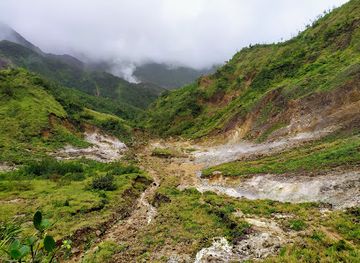
Morne Trois Pitons National Park is a UNESCO World Heritage Site located in the heart of Dominica. The park's name, which means 'Mountain of Three Peaks,' originates from the volcanic mountain Morne Trois Pitons that stands at 1,342 meters. The park is characterized by its volcanic activity, which has shaped its unique landscape over thousands of years. Geothermal features such as boiling lakes, fumaroles, hot springs, and bubbling mudpots are evidence of the island's dynamic geological processes.
Indigenous Kalinago Heritage
Before European colonization, the area now known as Morne Trois Pitons National Park was inhabited by the Kalinago people, the indigenous inhabitants of the Lesser Antilles. The Kalinago utilized the rich biodiversity of the park for hunting, fishing, and gathering plant resources. The rugged terrain provided natural fortresses against invasions. Their traditional knowledge of the land has been passed down through generations and remains an integral part of Dominica's cultural heritage.
Colonial Era and European Exploration
During the colonial era, Dominica was contested by French and British forces. The park’s dense forests and difficult terrain played a strategic role in the island's defense. European explorers documented the island's rich flora and fauna, contributing to the scientific understanding of tropical ecosystems. The French were the first to establish settlements in the area in the 17th century, but the British eventually took control in the 18th century following numerous conflicts.
Establishment as a National Park
Morne Trois Pitons was designated as a national park in 1975 to protect its unique landscapes and biodiversity. The establishment was driven by conservationists and the Dominican government to preserve the area's natural beauty and ecological importance. The park spans over 17,000 acres and includes some of the island’s most iconic natural attractions, such as the Boiling Lake, Titou Gorge, and the Valley of Desolation.
UNESCO World Heritage Designation
In 1997, Morne Trois Pitons National Park was inscribed as a UNESCO World Heritage Site due to its outstanding natural beauty and geological significance. The designation recognizes the park's diverse ecosystems, including rainforests, cloud forests, and freshwater lakes. It also highlights the ongoing volcanic activity and the park's role in scientific research. This international recognition has helped to promote conservation efforts and sustainable tourism in the area.
Cultural Significance and Modern-Day Use
Today, Morne Trois Pitons National Park is a symbol of Dominica’s natural and cultural heritage. The park is a popular destination for ecotourism, attracting visitors with its hiking trails, waterfalls, and geothermal features. Local communities benefit from the park through tourism and sustainable use of natural resources. The park also serves as an educational resource, providing opportunities for environmental education and promoting awareness of conservation issues.
Morne Trois Pitons National Park in Photos
Browse through our photo collection highlighting the charm and character of the destination.
Cities in Morne Trois Pitons National Park
The towns and cities of Morne Trois Pitons National Park, and the easiest places to base yourself.
-
-


Swipe for more cities
Neighbouring destination travel guides
The closest destinations to Morne Trois Pitons National Park, if you have time for more than one.
-

-

-

-

-


Swipe for more destinations
Explore more

Explore more of Saint George
Saint George, Dominica, combines Roseau’s history and markets with rainforest valleys, Trafalgar Falls and mountain trails into the island’s interior.
Explore Saint George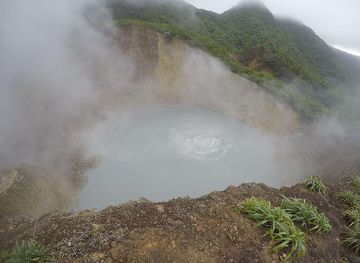
Explore more of Dominica
Discover Dominica: The Caribbean's Nature Island, where lush rainforests, volcanic landscapes, and vibrant culture await eco-tourists and adventure seekers.
Explore Dominica