

Free Sierra de Bahoruco Travel Guide & Mobile App
Explore Sierra de Bahoruco with free travel guides. Discover regional history, expert tips, proposed trips, and audio guides on web or mobile app.


Explore Sierra de Bahoruco’s cloud forests, coffee country, limestone valleys and rare Hispaniolan wildlife in the Dominican Republic.
Read more about Sierra de Bahoruco
When is the best time to visit Sierra de Bahoruco?
Best: January–March · 25–26°C| Month | High (°C) | Rainfall (mm) |
|---|---|---|
| January (best) | 25 | 50 |
| February (best) | 25 | 40 |
| March (best) | 26 | 35 |
| April | 27 | 50 |
| May | 28 | 80 |
| June | 29 | 95 |
| July | 30 | 90 |
| August | 29 | 95 |
| September | 29 | 90 |
| October | 28 | 65 |
| November | 26 | 60 |
| December | 25 | 55 |
Getting to and around Sierra de Bahoruco
How to get there
Transportation
Best attractions in Sierra de Bahoruco
The Sierra de Bahoruco’s attractions are predominantly natural and ecological rather than urban. Within the Sierra de Bahoruco National Park, the Hoyo de Pelempito is the best-known destination: a dramatic limestone depression reached by a demanding mountain route, with viewpoints over steep walls, forest and changing layers of vegetation. The highlands around Cachote offer cloud forest, cool temperatures, coffee-growing landscapes and opportunities for guided birdwatching. Routes near Polo and the Barahona-facing foothills reveal a greener, more settled side of the range, while approaches from Duvergé and Pedernales lead into drier, more open terrain. The park is important for endemic Hispaniolan wildlife, including mountain birds, reptiles and specialised plants, although sightings are never guaranteed. Outdoor experiences include scenic driving, nature observation, photography and selected walks with local guidance. There are few conventional family attractions or purpose-built visitor facilities, and the appeal depends on preparation, silence and a willingness to travel slowly through a protected landscape.
-
Beach
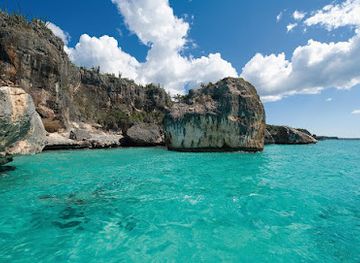
Playa Bahia de Las Aguilas
Experience the untouched beauty of Playa Bahia de Las Aguilas, a serene beach in the Dominican Republic, perfect for relaxation and exploration.
-
National park
Jaragua National Park
Discover the spectacular landscapes and diverse wildlife of Jaragua National Park, a top destination in the Dominican Republic for nature lovers.
-
Tourist attraction
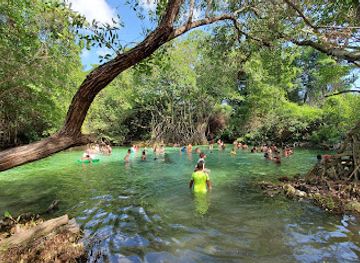
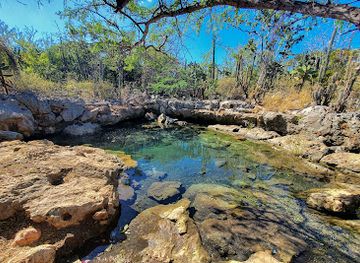
Pozos Ecológicos de Romeo Francés
Explore the enchanting Pozos Ecológicos de Romeo Francés, a stunning eco-tourist attraction in Pedernales, Dominican Republic, perfect for nature lovers and adventurers.
-
Tourist attraction
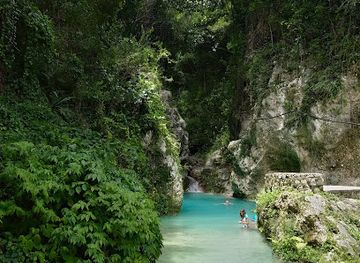
Balneario Mata de Maiz
Experience the tranquil beauty of Balneario Mata de Maiz in the Dominican Republic, where pristine beaches and crystal-clear waters await your discovery.
Best landmarks in Sierra de Bahoruco
The Hoyo de Pelempito is the Sierra’s most recognisable physical landmark, a broad enclosed depression in the limestone mountains whose steep sides and changing vegetation make it an important geological and scenic feature. The surrounding national-park viewpoints show how quickly the landscape shifts from dry southern lowlands to pine forest and humid upland vegetation. The high ridges around Loma del Toro, one of the range’s highest areas, form another defining landmark, although access is remote and conditions can be difficult. The cloud forests of Cachote are significant less for a single monument than for their concentrated habitat, misty slopes and association with mountain coffee farming. Across the range, limestone walls, caves, passes and isolated valleys express the Sierra’s karst geology and frontier character. These places are landmarks because they clarify the region’s scale and ecological contrast, not because they are heavily built or conventionally monumental.
-
Cruise terminal
Amber Cove Cruise Port
Discover the beauty of Amber Cove Cruise Port, a vibrant destination offering stunning beaches, local culture, and unforgettable adventures in the Dominican Republic.
-
 Museum
Faro a Colón, Santo Domingo Este
Explore the majestic Faro a Colón, a tribute to Columbus, where history and stunning views meet in Santo Domingo Este.
-
National park
Cotubanamá National Park
Discover the breathtaking landscapes and rich biodiversity of Cotubanamá National Park, a natural gem in the Dominican Republic perfect for adventure and exploration.
-
Tourist attraction
Dunes of Baní
Discover the stunning Dunes of Baní—where golden sand meets adventure in the heart of the Dominican Republic's breathtaking landscapes.
Explore Sierra de Bahoruco on the map
Plan your trip on one map. See where the top cities, national parks and sights are, and book hotels and experiences in a few clicks.
Best hotels in Sierra de Bahoruco
Best restaurants in Sierra de Bahoruco
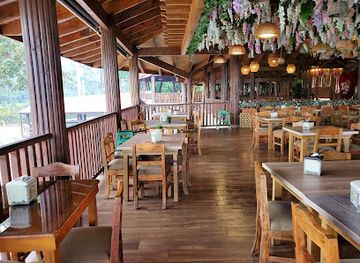
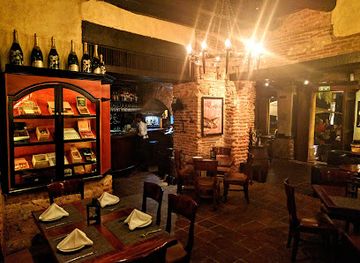
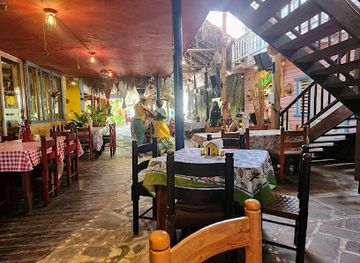
Dining in and around the Sierra de Bahoruco is closely tied to Dominican home cooking, mountain farming and the practical limitations of rural travel. In foothill towns and villages, visitors may find rice and beans, stewed meats, plantains, cassava, soups and fresh seasonal produce, usually served in modest eateries or family-run establishments rather than formal dining rooms. The cooler districts around Polo and Cachote are associated with coffee cultivation, and locally produced coffee is one of the most meaningful regional tastes to seek out. Avocado, fruit, root vegetables and other farm products are important in the wider Barahona-facing landscape, while menus vary according to season and supply. Larger settlements offer more choice, including Dominican restaurants, cafés and roadside food stops, but remote mountain routes may have no dependable food service. Carry water and provisions for excursions, and arrange meals in advance when staying in upland communities.
-
Restaurant
La Dolcerie
Discover exquisite gourmet cuisine at La Dolcerie in Santo Domingo – where local flavors meet international elegance.
-
Barbecue
Parador Corazón de Jesús
Experience authentic Dominican barbecue in a breathtaking setting at Parador Corazón de Jesús - where flavor meets nature.
-
European
Pat'e Palo European Brasserie
Experience modern French cuisine with Caribbean flair at Pat'e Palo European Brasserie in historic Santo Domingo.
-
Dominican
El Conuco
Experience authentic Dominican flavors at El Conuco in Santo Domingo – where culture meets culinary delight.
Best bars in Sierra de Bahoruco
Nightlife in the Sierra de Bahoruco is quiet and community-based rather than centred on clubs. Evenings in foothill towns such as Polo, Paraíso and Duvergé may revolve around local restaurants, colmados, informal social spaces and music, while rural accommodation tends to offer conversation, coffee and views of the dark mountain sky rather than late-night entertainment. The larger selection of bars and evening venues is in Barahona, outside the Sierra on the coast, where visitors can find more restaurants, drinks and occasional live music. Pedernales also provides basic evening options for travellers approaching the western side, but it is not a major nightlife centre. Visitors should not expect fixed entertainment programmes or late opening hours in remote communities; the mountain experience is better suited to early starts for wildlife, scenic drives and forest walks.
-
Bar
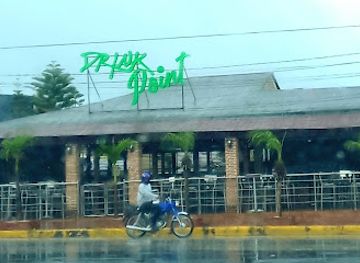
Drink Point Bavaro
Discover the vibrant nightlife at Drink Point Bavaro, a lively bar and disco in Punta Cana, perfect for unforgettable nights filled with music and fun.
-
Museum
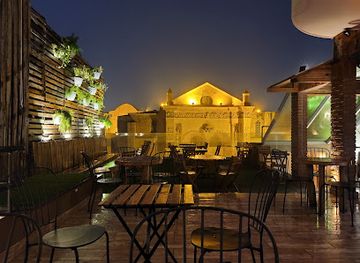
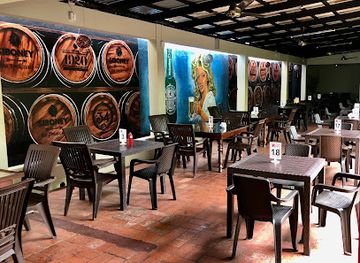
SugarCane, La Casa Del Ron - The Rum Experience - Rooftop Cocktail & Tapas
Discover the ultimate rum experience at SugarCane, La Casa Del Ron, where cocktails meet exquisite tapas amidst breathtaking views of Santo Domingo.
-
Bar
Casa Bader
Experience the vibrant atmosphere of Casa Bader, Santiago de los Caballeros' premier bar for cocktails, music, and unforgettable nightlife.
-
Bar
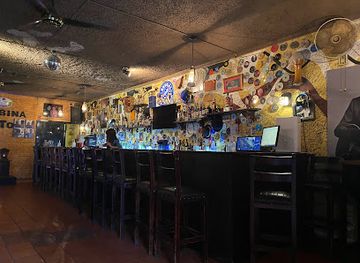
Sabina Bar Zona Colonial
Discover the vibrant nightlife at Sabina Bar Zona Colonial, where delicious drinks and live music create unforgettable experiences in Santo Domingo.
Best nightclubs in Sierra de Bahoruco
Nightlife in the Sierra de Bahoruco is quiet and community-based rather than centred on clubs. Evenings in foothill towns such as Polo, Paraíso and Duvergé may revolve around local restaurants, colmados, informal social spaces and music, while rural accommodation tends to offer conversation, coffee and views of the dark mountain sky rather than late-night entertainment. The larger selection of bars and evening venues is in Barahona, outside the Sierra on the coast, where visitors can find more restaurants, drinks and occasional live music. Pedernales also provides basic evening options for travellers approaching the western side, but it is not a major nightlife centre. Visitors should not expect fixed entertainment programmes or late opening hours in remote communities; the mountain experience is better suited to early starts for wildlife, scenic drives and forest walks.
-
Disco club
Jet Set Club
Experience the vibrant nightlife of Santo Domingo at Jet Set Club, a premier disco where music and dance unite for an unforgettable evening.
-
Disco club
Gold Fashion Dance Club
Discover the vibrant nightlife at Gold Fashion Dance Club, the ultimate destination for dance and entertainment in Santo Domingo.
-
Disco club
Kuora Club
Immerse yourself in the vibrant nightlife of Santo Domingo at Kuora Club, the ultimate destination for dancing and socializing.
-
Night club
VIP ROOM Santo Domingo
Dive into the vibrant nightlife of Santo Domingo at VIP ROOM, where electrifying music and a lively atmosphere await you.



Best shops in Sierra de Bahoruco
Shopping in the Sierra de Bahoruco is small-scale and locally focused. In foothill towns, ordinary shops and market areas provide food, household goods and practical supplies rather than a concentrated souvenir scene. The most distinctive purchases are locally produced coffee from the cooler mountain communities, along with seasonal fruit, preserves, honey or other agricultural products when available directly from growers or community initiatives. Visitors may also encounter handmade crafts and simple regional goods, but selection and availability vary considerably between villages. Barahona, outside the Sierra, offers a broader range of shops and services for travellers preparing for a mountain excursion, while Pedernales serves the western approach. Buy directly from legitimate producers where possible, ask about transport and packaging for food products, and avoid purchasing plants, wildlife products, archaeological objects or items made from protected natural materials.
-
Shopping mall
Ágora Mall
Experience the best of shopping, dining, and entertainment at Ágora Mall, the premier shopping destination in Santo Domingo.
-
Shopping mall
Centro Comercial Galería 360
Discover the ultimate shopping experience at Centro Comercial Galería 360, where style meets entertainment in Santo Domingo.
-
Shopping mall
Sambil Santo Domingo
Explore the vibrant Sambil Santo Domingo, a shopping mall that offers diverse stores, dining options, and entertainment in the heart of the capital.
-
Shopping mall
BlueMall Santo Domingo
Experience luxury shopping and fine dining at BlueMall Santo Domingo, the premier shopping destination in the heart of the city.




Get your free copy of our complete guide to Sierra de Bahoruco, delivered straight to you.
Everything on this page, from attractions and restaurants to essentials and local phrases, in one PDF you can read offline, print or share.
Already have an account? Sign in
Your Sierra de Bahoruco guide is ready.
We'll send it to · Not you? Sign out

Getting your guide ready…
We are putting together a fresh copy of the Sierra de Bahoruco guide. This can take up to a minute.
This can take a few moments. If your browser asks, choose Allow so the download can start. You'll find the guide in your Downloads folder.
Nothing happened? Download it again
Sorry, the guide is taking longer than usual. Please try again in a minute, or get it by email instead.
Sierra de Bahoruco essentials
Currency and Payment
Safety
Emergency Situations
Do's and Don'ts
Local Tips
From Eve
Local phrases worth knowing
You don't need to get them perfect. A few words go a long way, and locals appreciate the effort.
Basics
| English | Local | Say it |
|---|---|---|
| Hello | Hola | [Ola] |
| Goodbye | Adiós | [A-dyos] |
| Yes | Sí | [See] |
| No | No | [No] |
| Please/You're welcome | Por favor | [Por fah-vor] |
| Thank you | Gracias | [Gra-see-as] |
| Excuse me/Sorry | Perdón | [Per-don] |
| How are you? | ¿Cómo estás? | [Koh-mo es-tas] |
| Fine. And you? | Bien. ¿Y tú? | [Bee-en. Ee too?] |
| Do you speak English? | ¿Hablas inglés? | [A-blas in-glez] |
| I don't understand | No entiendo | [No en-tee-en-do] |
Eating & Drinking
| English | Local | Say it |
|---|---|---|
| I'd like to see the menu, please | Quisiera ver el menú, por favor | [Kee-sye-ra ver el me-nu, por fah-vor] |
| I don't eat meat | No como carne | [No ko-mo kar-ne] |
| Cheers! | ¡Salud! | [Sa-lud] |
| I would like to pay, please | Quisiera pagar, por favor | [Kee-sye-ra pa-gar, por fah-vor] |
Emergencies
| English | Local | Say it |
|---|---|---|
| Help! | ¡Ayuda! | [A-yu-da] |
| Go away! | ¡Vete! | [Ve-te] |
| Call the Police! | ¡Llama a la policía! | [Ya-ma a la po-li-sia] |
| Call a doctor! | ¡Llama a un doctor! | [Ya-ma a un dok-tor] |
| I'm lost | Estoy perdido | [Es-toy per-di-do] |
| I'm ill | Estoy enfermo | [Es-toy en-fer-mo] |
Shopping
| English | Local | Say it |
|---|---|---|
| I'd like to buy... | Quisiera comprar... | [Kee-sye-ra kom-prar] |
| I'm just looking | Solo estoy mirando | [So-lo es-toy mi-ran-do] |
| How much is it? | ¿Cuánto cuesta? | [Kwan-to kwes-ta] |
| That's too expensive | Eso es muy caro | [E-so es muy ka-ro] |
| Can you lower the price? | ¿Puedes bajar el precio? | [Pwe-des ba-har el pre-syo] |
Time & Numbers
| English | Local | Say it |
|---|---|---|
| What time is it? | ¿Qué hora es? | [Ke o-ra es] |
| It's one o'clock | Es la una | [Es la oo-na] |
| Half past (10) | Y media (10) | [Ee me-dia] |
| Morning | Mañana | [Ma-nya-na] |
| Afternoon | Tarde | [Tar-de] |
| Evening | Noche | [No-che] |
| Yesterday | Ayer | [A-yer] |
| Today | Hoy | [Oy] |
| Tomorrow | Mañana | [Ma-nya-na] |
| 1 | Uno | [Oo-no] |
| 2 | Dos | [Dos] |
| 3 | Tres | [Tres] |
| 4 | Cuatro | [Kwa-tro] |
| 5 | Cinco | [Sin-ko] |
| 6 | Seis | [Seys] |
| 7 | Siete | [Sye-te] |
| 8 | Ocho | [O-cho] |
| 9 | Nueve | [Nwe-ve] |
| 10 | Diez | [Dyes] |
Transport & Directions
| English | Local | Say it |
|---|---|---|
| Where's a/the...? | ¿Dónde hay un...? | [Don-de ai un] |
| What's the address? | ¿Cuál es la dirección? | [Kwal es la di-rec-cion] |
| Can you show me (on the map)? | ¿Puedes mostrarme (en el mapa)? | [Pwe-des mos-trar-me (en el ma-pa)] |
| When's the next (bus)? | ¿Cuándo es el próximo (bus)? | [Kwan-do es el pro-xi-mo] |
| A ticket (to ....) | Un boleto (a....) | [Un bo-le-to (a....)] |
History of Sierra de Bahoruco
Taíno settlement and the pre-Columbian landscape
Before European colonisation, the mountains and valleys of south-western Hispaniola were used by Taíno communities whose lives combined cultivation, hunting, gathering and movement between ecological zones. The Sierra’s caves, limestone formations and valleys formed part of a wider cultural landscape that linked the interior to the Caribbean coast. Much of the surviving evidence is fragmentary, and archaeological interpretation varies by site, but the region’s natural corridors clearly shaped settlement and exchange. Visitors should treat caves and rock surfaces carefully, as archaeological traces can be easily damaged or removed.
Spanish colonisation and frontier change
Spanish colonisation transformed the southern part of Hispaniola through new settlements, livestock, crops, religion and systems of forced labour. The mountainous interior was less intensively urbanised than the coastal plains, but it became part of a frontier between settled agricultural districts and harder-to-control upland terrain. Disease, violence and colonial exploitation devastated Indigenous communities, while African people and their descendants became central to the region’s later population and economy. The scattered character of settlement in the Bahoruco area reflects, in part, the difficulties of governing and exploiting its rugged geography.
Bahoruco as a refuge and borderland
Across the colonial and early modern periods, the Bahoruco mountains were associated with resistance, flight and movement beyond direct colonial control. Their forests and steep limestone country offered refuge to people escaping slavery and other forms of coercion, while the wider south-west remained tied to the shifting political boundary between the French and Spanish parts of Hispaniola. After the Haitian Revolution and the creation of Haiti and the Dominican Republic, the mountain system became part of an international borderland rather than an isolated interior. That history still shapes local geography and cross-border sensitivities.
Nineteenth-century independence and rural settlement
The nineteenth century brought repeated political changes and military pressures to the south-west, including the Dominican struggle for independence from Haitian rule and later conflicts within the new republic. Settlements at the foot of the Sierra developed through agriculture, livestock raising, forestry and regional trade, while routes across the mountains remained difficult. Communities such as those around Polo, Duvergé and the approaches to Pedernales grew in different ecological settings, linking valley farms and dry lowlands with upland resources. The area’s long-standing rural character owes much to this combination of frontier history and limited transport.
Coffee, agriculture and mountain livelihoods
Coffee became an important crop in the cooler, wetter parts of the Sierra, particularly around the Barahona-facing highlands and communities such as Polo and Cachote. Small farms also produce food crops and other agricultural products suited to local altitude and rainfall. These activities have never erased the range’s ecological variety: steep slopes, thin soils, limestone terrain and changing microclimates limit intensive cultivation in many places. Coffee culture remains both an economic activity and a practical way for visitors to understand the relationship between mountain climate, rural work and local food traditions.
Protection of the Sierra and its biodiversity
Recognition of the range’s forests, watersheds and endemic species led to the creation of the Sierra de Bahoruco National Park in the late twentieth century, with subsequent protected-area legislation shaping its administration. The park forms part of the larger Jaragua-Bahoruco-Enriquillo Biosphere Reserve, designated by UNESCO in 2002. Conservation is especially important because the mountain contains habitats found nowhere else and remains vulnerable to fire, illegal resource extraction, farming pressure and poorly managed access. Protected status has made the Sierra a destination for research, birdwatching and carefully planned nature travel.
Contemporary conservation and community tourism
Today, the Sierra sits at the meeting point of conservation, rural development and regional tourism. Local guides, small accommodation providers and community initiatives help visitors reach mountain viewpoints and understand coffee production, wildlife and forest ecology. The challenges are substantial: roads are fragile, enforcement can be difficult and remote communities need livelihoods compatible with habitat protection. The region’s contemporary identity therefore depends not only on its scenery but also on how access, agriculture and tourism are balanced within one of the Dominican Republic’s most biologically important mountain systems.
Sierra de Bahoruco in Photos
Browse through our photo collection highlighting the charm and character of the destination.
Neighbouring regions of Sierra de Bahoruco
The closest regions to Sierra de Bahoruco, if you have time for more than one.
-

-

-

-

-


Swipe for more regions
Explore more

Explore more of Dominican Republic
Explore the Dominican Republic: where pristine beaches, rich history, and vibrant culture converge in a Caribbean paradise.
Explore Dominican Republic