

Free Northeast Oriente Travel Guide & Mobile App
Explore Northeast Oriente with free travel guides. Discover regional history, expert tips, proposed trips, and audio guides on web or mobile app.


Explore Northeast Oriente for Ecuadorian Amazon wildlife, river lodges, Indigenous culture and rainforest journeys through Cuyabeno, Yasuní and Napo.
Read more about Northeast Oriente
When is the best time to visit Northeast Oriente?
Best: July–September · 26°C| Month | High (°C) | Rainfall (mm) |
|---|---|---|
| January | 26 | 91 |
| February | 26 | 86 |
| March | 26 | 81 |
| April | 26 | 76 |
| May | 26 | 71 |
| June | 26 | 66 |
| July (best) | 26 | 61 |
| August (best) | 26 | 56 |
| September (best) | 26 | 61 |
| October | 26 | 66 |
| November | 26 | 71 |
| December | 25 | 76 |
Getting to and around Northeast Oriente
How to get there
Transportation
Top city travel guides in Northeast Oriente
The cities of Northeast Oriente, and the easiest places to base yourself.
-

-

-


Swipe for more cities
Destinations in Northeast Oriente
Resorts, valleys and scenic spots worth a trip of their own.
-

-


Swipe for more destinations
Best attractions in Northeast Oriente
Northeast Oriente’s attractions are principally ecological and experiential rather than monumental. Around Tena and Archidona, visitors can combine rainforest walks, river outings, caves and waterfalls with community-led cultural programmes in the Napo foothills. The Napo River provides the main route from Coca towards deeper forest lodges, where guided canoe trips and trails reveal flooded woodland, terra firme forest and abundant birdlife. Cuyabeno Wildlife Reserve in Sucumbíos is known for blackwater lagoons, canoe excursions, forest trails and wetland wildlife, while Yasuní National Park and its surrounding tourism areas offer access to one of Ecuador’s most biologically important lowland environments. Birdwatching, photography, botany and nocturnal wildlife observation are major activities, although sightings cannot be guaranteed. Town museums and interpretation centres provide useful context on Indigenous cultures, oil development and conservation, but the strongest sense of place comes from time spent on rivers and forest paths. Visitors should distinguish between public reserve access, private lodge concessions and Indigenous territories, since each has different rules and arrangements.
-
National reserve
Limoncocha National Biological Reserve
Discover the breathtaking biodiversity of Limoncocha National Biological Reserve, a pristine sanctuary in Ecuador's Amazon rainforest, perfect for nature lovers.
-
Nature preserve
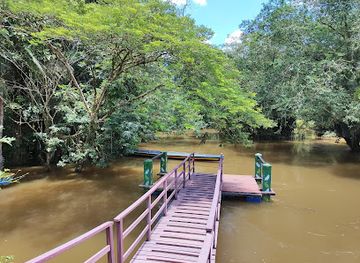
El Puente Cuyabeno
Explore the lush biodiversity of El Puente Cuyabeno, where nature's beauty and adventure await in Ecuador's Amazon rainforest.
-
Tourist attraction
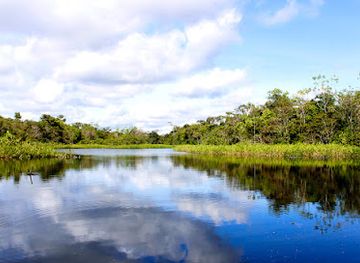
Laguna Lagartococha
Discover the breathtaking beauty and wildlife of Laguna Lagartococha, an untouched paradise in the Ecuadorian Amazon, perfect for nature lovers and adventurers.
-
River
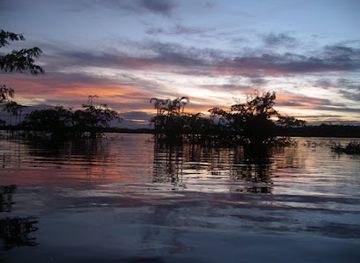
Cuyabeno River
Experience the enchanting beauty of Cuyabeno River, a serene escape into Ecuador's Amazon rainforest, rich in wildlife and natural wonders.

Best landmarks in Northeast Oriente
The Napo River is Northeast Oriente’s defining natural landmark, functioning as a transport corridor, ecological system and historical link between the Andean foothills and the wider Amazon basin. Around Coca, its broad channels mark the beginning of journeys towards lowland forest lodges and protected areas. Cuyabeno’s flooded forests and lagoon systems form another major landscape landmark, with waterways that change character according to rainfall and river levels. Yasuní National Park represents the region’s most internationally recognised conservation landscape, although its importance is ecological and cultural rather than architectural. In Napo, Archidona’s colonial-era church and town setting reflect the history of missions and frontier settlement, while nearby caves and forested foothills provide striking geological and natural reference points. Urban landmarks include the Malecón and riverfront areas of Coca and Tena, where visitors can understand how modern towns developed around Amazonian waterways. The oil infrastructure around Lago Agrio is also historically significant, though it is better understood as part of the region’s contested modern landscape than as a conventional sightseeing attraction.
-
 Monument
Middle of the World City
Experience the unique thrill of standing on the equator at the Middle of the World City in Quito, Ecuador, rich in culture and history.
-
Tourist attraction
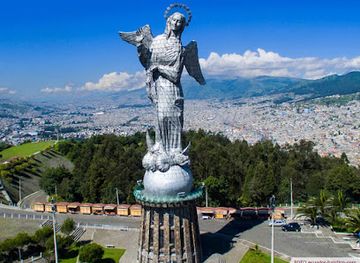
Virgin of the Panecillo
Explore the Virgin of the Panecillo in Quito, a stunning monument with breathtaking views and deep cultural significance.
-
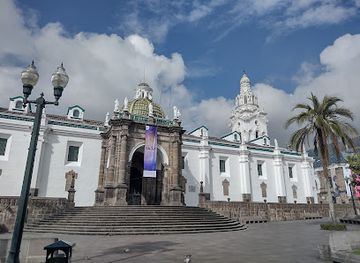
Historical landmark
Independence Square
Experience the vibrant heart of Quito at Independence Square, a historic landmark filled with culture, architecture, and local charm.
-
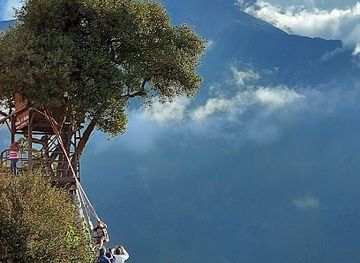
Tourist attraction
La Casa del Arbol
Experience breathtaking views and adrenaline at La Casa del Arbol, Ecuador's iconic treehouse with the thrilling swing at the edge of the world.
Explore Northeast Oriente on the map
Plan your trip on one map. See where the top cities, national parks and sights are, and book hotels and experiences in a few clicks.
Best hotels in Northeast Oriente
Best restaurants in Northeast Oriente
Food in Northeast Oriente reflects river, forest and farm landscapes rather than one uniform regional cuisine. In Tena, Coca, Nueva Loja and Archidona, restaurants and market stalls commonly serve plantain, cassava, rice, chicken, freshwater fish and soups, with preparations varying between Kichwa, mestizo and urban households. Maito, in which fish or another filling is wrapped in leaves and cooked, is strongly associated with Amazonian Ecuador and is often encountered through community meals or regional restaurants, although recipes differ from place to place. Chontacuro, an edible palm larva, is a traditional food in parts of the Ecuadorian Amazon and may appear grilled or prepared in other forms; visitors should ask what a dish contains before ordering. Lodge menus tend to be practical and varied, using local produce alongside familiar international dishes. Fresh tropical fruit, plantain-based snacks, yuca and regional juices are widely available, while food markets offer a more direct view of everyday eating than formal dining rooms.
-
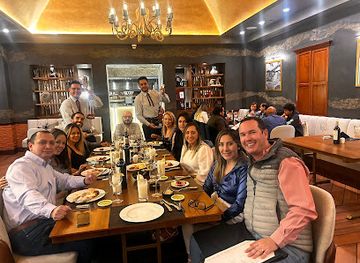
Restaurant
Fogo de Chão Ecuador
Experience authentic Brazilian churrasco at Fogo de Chão Ecuador—where every meal is a celebration of flavor and hospitality.
-
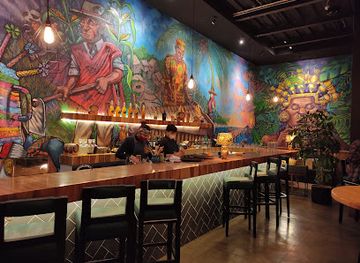
Ecuadorian
Somos Ecuador Restaurante
Experience authentic Ecuadorian cuisine with vibrant cocktails at Somos Ecuador Restaurante in Quito's charming Bellavista district.
-
Fine Dining
Zazu
Experience exquisite Ecuadorian fine dining at Zazu in Quito – where tradition meets innovation.
-
Hotel
El Cráter Hotel - Restaurante - Spa
Discover serenity at El Cráter Hotel - a luxurious haven blending nature with gourmet dining and soothing spa experiences.
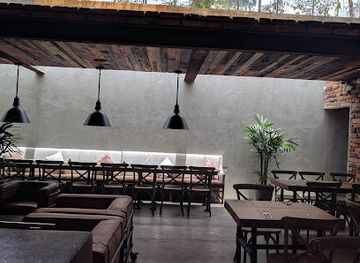
Best bars in Northeast Oriente
Evening life is concentrated in Tena, Coca, Nueva Loja and, on a smaller scale, Archidona rather than in the forest. Tena has the most recognisable social scene for travellers, with casual bars, restaurants, music venues and late-night establishments serving residents, students and visitors. Coca and Nueva Loja have more locally oriented nightlife, including neighbourhood bars, karaoke and restaurants, while smaller towns generally close earlier and rely on social gatherings rather than a dedicated club circuit. River lodges follow a different rhythm: evenings are usually devoted to guided walks, wildlife observation, conversation and quiet after-dark listening rather than drinking or dancing. Some urban venues may change ownership or opening arrangements, so current local information is more reliable than assuming a fixed nightlife district. Drink responsibly, use a trusted taxi and avoid wandering alone in unfamiliar areas late at night.
-
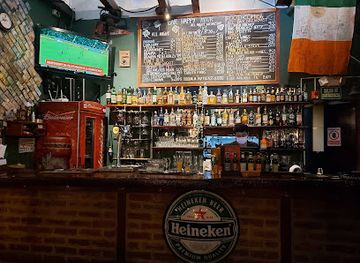
Irish pub
Finn McCool's Irish Pub
Discover the unique blend of Irish hospitality and Ecuadorian warmth at Finn McCool's Irish Pub in Quito, where every visit feels like a celebration.
-
Grill
Vento RoofTop
Experience the culinary delight of Vento RoofTop, where exquisite grilled dishes meet stunning panoramic views in Samborondón.
-
Swiss
Swiss Bistro Baños
Experience the authentic taste of Swiss cuisine in the heart of Baños, featuring fondue, pastries, and a cozy atmosphere for every occasion.
-
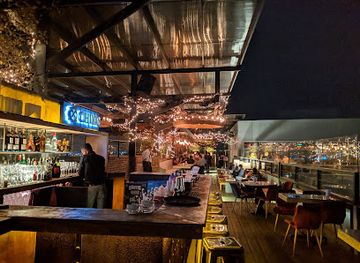
Bar
Vértigo Rooftop
Experience breathtaking views and vibrant nightlife at Vértigo Rooftop, Quito's premier rooftop bar offering an unforgettable atmosphere.
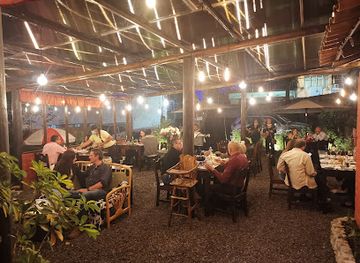

Best nightclubs in Northeast Oriente
Evening life is concentrated in Tena, Coca, Nueva Loja and, on a smaller scale, Archidona rather than in the forest. Tena has the most recognisable social scene for travellers, with casual bars, restaurants, music venues and late-night establishments serving residents, students and visitors. Coca and Nueva Loja have more locally oriented nightlife, including neighbourhood bars, karaoke and restaurants, while smaller towns generally close earlier and rely on social gatherings rather than a dedicated club circuit. River lodges follow a different rhythm: evenings are usually devoted to guided walks, wildlife observation, conversation and quiet after-dark listening rather than drinking or dancing. Some urban venues may change ownership or opening arrangements, so current local information is more reliable than assuming a fixed nightlife district. Drink responsibly, use a trusted taxi and avoid wandering alone in unfamiliar areas late at night.
-
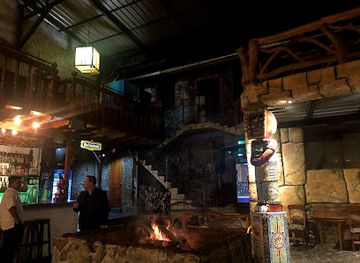
Disco club
Volcan Bar Disc
Discover the electrifying atmosphere of Volcan Bar Disc, the ultimate disco club in Baños, Ecuador, where the night comes alive with music and dance.
-
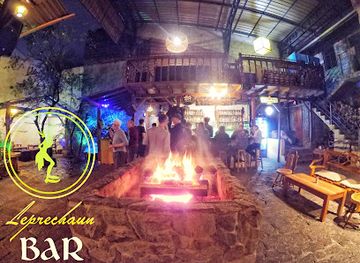
Disco club
Leprechaun Bar
Experience the vibrant nightlife of Baños at Leprechaun Bar, where great cocktails and an energetic atmosphere await.
-
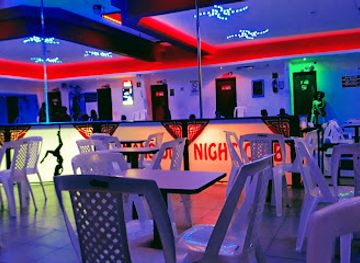
Night club
La Mansión Night Club Guayaquil
Discover the electric nightlife of Guayaquil at La Mansión Night Club, where music, dance, and vibrant culture come alive.
-
Night club
El Oasis Night Club
Discover the heart of Cuenca's nightlife at El Oasis Night Club, where music, dance, and vibrant energy come together for an unforgettable evening.

Best shops in Northeast Oriente
Shopping in Northeast Oriente is centred on markets, practical high streets and community-produced goods rather than large-scale retail. Tena, Archidona, Coca and Nueva Loja have the broadest choice of shops, supermarkets, pharmacies and everyday supplies, while smaller communities offer modest local markets and stalls. Visitors may find woven bags, bracelets, beadwork, carved objects, pottery, textiles and other crafts associated with Indigenous communities, but should ask who made an item and whether its materials are responsibly sourced. Do not buy feathers, animal parts, archaeological objects or products made from protected species. Amazonian food products such as cacao, coffee, spices, plantain preparations and fruit-based goods can make useful souvenirs when properly packaged for travel. Markets are valuable places to observe local commerce and buy snacks, though varieties and trading days change. Bargaining is not automatically expected in every setting; ask politely and pay fairly, particularly when purchasing directly from community artisans.
-
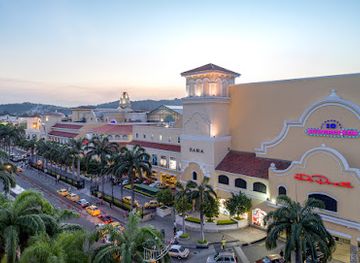
Shopping mall
Quicentro
Discover Quicentro in Quito: your ultimate shopping destination with diverse stores, dining options, and entertainment for an unforgettable experience.
-
Shopping mall
Mall del Sol
Experience the vibrant shopping scene at Mall del Sol in Guayaquil, featuring over 200 stores, diverse dining options, and entertainment for all.
-
Shopping mall
San Marino Shopping
Discover the vibrant shopping and dining experience at San Marino Shopping in Guayaquil, where local culture meets modern retail.
-
Shopping mall
Condado Shopping
Discover a world of shopping and dining experiences at Condado Shopping, the premier shopping destination in Quito, Ecuador.



Get your free copy of our complete guide to Northeast Oriente, delivered straight to you.
Everything on this page, from attractions and restaurants to essentials and local phrases, in one PDF you can read offline, print or share.
Already have an account? Sign in
Your Northeast Oriente guide is ready.
We'll send it to · Not you? Sign out

Getting your guide ready…
We are putting together a fresh copy of the Northeast Oriente guide. This can take up to a minute.
This can take a few moments. If your browser asks, choose Allow so the download can start. You'll find the guide in your Downloads folder.
Nothing happened? Download it again
Sorry, the guide is taking longer than usual. Please try again in a minute, or get it by email instead.
Northeast Oriente essentials
Currency and Payment
Safety
Emergency Situations
Do's and Don'ts
Local Tips
From Eve
Local phrases worth knowing
You don't need to get them perfect. A few words go a long way, and locals appreciate the effort.
Basics
| English | Local | Say it |
|---|---|---|
| Hello | Hola | [O-la] |
| Goodbye | Adiós | [A-dee-os] |
| Yes | Sí | [See] |
| No | No | [No] |
| Please/You're welcome | Por favor | [Por fa-vor] |
| Thank you | Gracias | [Gra-see-as] |
| Excuse me/Sorry | Disculpe | [Dis-cool-pe] |
| How are you? | ¿Cómo está? | [Ko-mo es-ta] |
| Fine. And you? | Bien. ¿Y usted? | [Bee-en. Ee us-ted] |
| Do you speak English? | ¿Habla inglés? | [A-bla in-glez] |
| I don't understand | No entiendo | [No en-tee-en-do] |
Eating & Drinking
| English | Local | Say it |
|---|---|---|
| I'd like to see the menu, please | Me gustaría ver el menú, por favor | [Me gus-ta-ree-a ver el me-nu, por fa-vor] |
| I don't eat meat | No como carne | [No co-mo car-ne] |
| Cheers! | ¡Salud! | [Sa-lud] |
| I would like to pay, please | Me gustaría pagar, por favor | [Me gus-ta-ree-a pa-gar, por fa-vor] |
Emergencies
| English | Local | Say it |
|---|---|---|
| Help! | ¡Ayuda! | [A-yu-da] |
| Go away! | ¡Vete! | [Ve-te] |
| Call the Police! | ¡Llame a la policía! | [Ya-me a la po-li-cia] |
| Call a doctor! | ¡Llame a un doctor! | [Ya-me a un doc-tor] |
| I'm lost | Estoy perdido | [Es-toy per-di-do] |
| I'm ill | Estoy enfermo | [Es-toy en-fer-mo] |
Shopping
| English | Local | Say it |
|---|---|---|
| I'd like to buy... | Me gustaría comprar... | [Me gus-ta-ree-a com-prar] |
| I'm just looking | Solo estoy mirando | [So-lo es-toy mi-ran-do] |
| How much is it? | ¿Cuánto cuesta? | [Kwan-to kwes-ta] |
| That's too expensive | Eso es muy caro | [E-so es mwee ca-ro] |
| Can you lower the price? | ¿Puede bajar el precio? | [Pwe-de ba-har el pre-cio] |
Time & Numbers
| English | Local | Say it |
|---|---|---|
| What time is it? | ¿Qué hora es? | [Ke o-ra es] |
| It's one o'clock | Es la una | [Es la u-na] |
| Half past (10) | Y media (10) | [Ee me-dia] |
| Morning | Mañana | [Ma-nyana] |
| Afternoon | Tarde | [Tar-de] |
| Evening | Noche | [No-che] |
| Yesterday | Ayer | [A-yer] |
| Today | Hoy | [Oy] |
| Tomorrow | Mañana | [Ma-nyana] |
| 1 | Uno | [U-no] |
| 2 | Dos | [Dos] |
| 3 | Tres | [Tres] |
| 4 | Cuatro | [Cua-tro] |
| 5 | Cinco | [Sin-co] |
| 6 | Seis | [Seis] |
| 7 | Siete | [Sye-te] |
| 8 | Ocho | [O-cho] |
| 9 | Nueve | [Nwe-ve] |
| 10 | Diez | [Dyez] |
Transport & Directions
| English | Local | Say it |
|---|---|---|
| Where's a/the...? | ¿Dónde está un/una...? | [Don-de es-ta un/una] |
| What's the address? | ¿Cuál es la dirección? | [Kwal es la di-rec-ción] |
| Can you show me (on the map)? | ¿Puede mostrarme (en el mapa)? | [Pwe-de mos-trar-me (en el ma-pa)] |
| When's the next (bus)? | ¿Cuándo es el próximo (bus)? | [Kwan-do es el pro-xi-mo] |
| A ticket (to ....) | Un boleto (a ....) | [Un bo-le-to (a ....)] |
History of Northeast Oriente
Indigenous Amazonian societies before European rule
Long before the arrival of Europeans, the forests and rivers of the eastern Ecuadorian lowlands supported numerous Indigenous societies with sophisticated knowledge of plants, animals, waterways and seasonal cycles. Kichwa communities became particularly numerous in parts of Napo and Orellana, while Siona, Secoya, Cofán and Waorani peoples maintained their own territories, languages and political traditions. Archaeological evidence and continuing cultural practice show that the Amazon was not an empty wilderness but a lived and managed landscape. Hunting, fishing, horticulture, trade and spiritual relationships with the forest remain important elements of regional identity, although communities have faced severe pressure from outside settlement and resource extraction.
Missionaries, colonial frontiers and epidemic disruption
Spanish colonial influence reached the Oriente through missionary activity, expeditions and attempts to control routes descending from the Andes. Settlements such as Archidona and Tena developed within this frontier environment, connecting the Napo basin with highland centres while bringing Christianity, colonial administration and new forms of labour. Colonial control remained weaker than in the Andes, partly because of the terrain, river distances and Indigenous resistance. Epidemics introduced from outside caused devastating population losses, while missions and frontier settlements repeatedly shifted or declined. The cultural landscape that emerged combined Indigenous continuity with colonial institutions rather than replacing one with the other.
Cinchona, rubber and the nineteenth-century forest economy
During the nineteenth century, commercial interest in Amazonian resources drew merchants, collectors and labour recruiters deeper into eastern Ecuador. Cinchona bark, the source of quinine, was collected in Andean-Amazonian zones, while rubber became increasingly valuable as industrial demand expanded. These economies connected river settlements to international markets but often relied on coercive or exploitative labour systems, with Indigenous people suffering violence, displacement and disease. The period helped establish patterns that would recur in the twentieth century: external companies and national governments viewed the Oriente primarily as a source of commodities, while local communities defended territorial and cultural autonomy.
Oil and the growth of Lago Agrio and Coca
Petroleum transformed the northeastern Oriente from the 1960s onwards. Commercial oil production around Lago Agrio, known locally as Nueva Loja, brought roads, air links, migrant settlement and government infrastructure into a region previously reached mainly by river. Puerto Francisco de Orellana, commonly called Coca, likewise expanded as a service and transport centre for the oil fields and the lower Napo basin. Oil revenue contributed to Ecuador’s national economy, but spills, pollution, deforestation, social conflict and legal disputes left a contested legacy. The industry remains visible in roads, pipelines and urban development alongside protected forests and Indigenous territories.
Protected areas and the conservation movement
Growing recognition of the ecological importance of the Ecuadorian Amazon led to the creation and expansion of protected areas. Cuyabeno Wildlife Reserve was established in 1979 to protect extensive wetlands and flooded forest in Sucumbíos. Yasuní National Park, created in 1979 and later recognised internationally for its biodiversity, protects a large area of lowland rainforest in Orellana and neighbouring Pastaza. Conservation has never been separate from human history: Indigenous communities live in or around many forest landscapes, and debates over oil extraction, tourism, national development and territorial rights continue to shape how protection is understood.
Indigenous rights and contemporary regional identity
Since the late twentieth century, Indigenous organisations in the Oriente have played a prominent role in Ecuadorian debates about land, consultation, bilingual education, environmental protection and the limits of extractive development. Kichwa, Siona, Secoya, Cofán and Waorani communities have pursued different strategies, including legal action, territorial organisation, community tourism and political mobilisation. The 2008 Ecuadorian Constitution recognised rights of nature and strengthened the formal visibility of Indigenous rights, although implementation remains contested. Today the region is defined by the coexistence of rainforest conservation, local economies, tourism, urban growth and continuing arguments over who should decide the future of Amazonian territory.
Northeast Oriente in Photos
Browse through our photo collection highlighting the charm and character of the destination.
Neighbouring regions of Northeast Oriente
The closest regions to Northeast Oriente, if you have time for more than one.
-

-

-

-

-


Swipe for more regions
Explore more

Explore more of Ecuador
Explore Ecuador: From the Amazon rainforest and Andean highlands to the Pacific coast and Galápagos Islands, discover diverse landscapes and vibrant cultures.
Explore Ecuador