

Free Oriente Travel Guide & Mobile App
Explore Oriente with free travel guides. Discover regional history, expert tips, proposed trips, and audio guides on web or mobile app.


Explore Ecuador's Oriente through Amazon rainforest, winding rivers, wildlife reserves, Indigenous communities and gateway towns from Napo to Zamora-Chinchipe.
Read more about Oriente
When is the best time to visit Oriente?
Best: February, July–August · 28–30°C| Month | High (°C) | Rainfall (mm) |
|---|---|---|
| January | 29 | 300 |
| February (best) | 30 | 250 |
| March | 30 | 300 |
| April | 30 | 350 |
| May | 29 | 350 |
| June | 29 | 300 |
| July (best) | 28 | 250 |
| August (best) | 29 | 250 |
| September | 29 | 300 |
| October | 29 | 350 |
| November | 29 | 350 |
| December | 29 | 300 |
Getting to and around Oriente
How to get there
Transportation
Top city travel guides in Oriente
The cities of Oriente, and the easiest places to base yourself.
-

-

-

-

-

-


Swipe for more cities
Destinations in Oriente
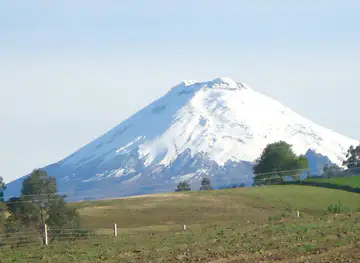
Resorts, valleys and scenic spots worth a trip of their own.
-
-

-

-

-


Swipe for more destinations
Best attractions in Oriente
The Oriente's attractions are built around forest, water and guided interpretation rather than a dense chain of conventional sights. Yasuní National Park offers access to one of Ecuador's most biologically important Amazonian landscapes, usually through river journeys and lodge-based activities on the Napo system. Cuyabeno Wildlife Reserve has a different character, with flooded forest, lagoons and canoe excursions that are especially shaped by seasonal water levels. Around Tena and Puerto Misahuallí, visitors can combine rainforest walks, rafting, tubing, waterfalls and community visits without travelling as deeply into the lowlands. Puyo provides access to the Pastaza area and its forest-edge attractions, while Macas and Zamora are useful southern bases for foothill scenery, birdwatching and routes towards protected mountain-forest landscapes. The region also supports botanical, cultural and wildlife-focused experiences led by Indigenous communities, whose knowledge gives context to plants, river use and forest management. Activities are commonly weather-dependent, and a good itinerary leaves time for observation rather than trying to cover widely separated provinces in a few days.
-
Animal shelter
Zoológico de Quito
Discover the vibrant wildlife of Ecuador at Zoológico de Quito, where conservation meets adventure in a stunning natural setting.
-
Wildlife refuge
Alado Ilaló Garden
Explore the serene Alado Ilaló Garden, a wildlife refuge in Quito, Ecuador, where nature thrives in vibrant colors and peaceful surroundings.
-
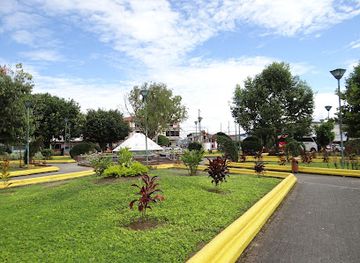
Park
Parque Central de Archidona
Explore the beauty of Parque Central de Archidona, a tranquil park where nature and culture intertwine in Ecuador's vibrant heart.
-
Tourist attraction
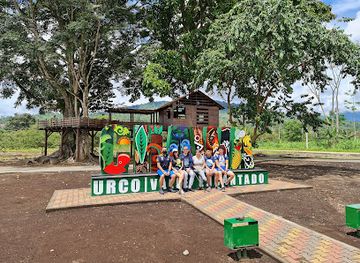
Parque Etnocultural
Experience the richness of Ecuadorian culture at Parque Etnocultural, a vibrant showcase of indigenous traditions and heritage.
Best landmarks in Oriente
The most significant landmarks of Oriente are often landscapes and river corridors rather than monumental urban structures. The Napo River is the region's defining geographical artery, linking communities, forest and transport routes across northern Ecuador. Yasuní National Park is an internationally recognised symbol of Amazonian biodiversity and of the difficult relationship between conservation and petroleum development. Cuyabeno's network of blackwater lagoons and flooded forest forms another distinctive natural landmark, shaped by seasonal inundation. Around Tena, the Napo and Misahuallí rivers frame the town's connection with rafting, trade and community life, while the Pastaza River marks a major transition through the southern foothills. In Zamora-Chinchipe, the forested mountain landscapes associated with Podocarpus National Park and the Zamora valley show how rapidly Ecuador's eastern ecosystems change with altitude. Indigenous territories and community spaces are also important cultural landmarks, although access is governed locally and should never be treated as an open-air attraction without permission.
-
Tourist attraction
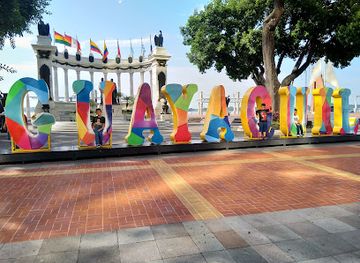
Malecon 2000
Experience the lively atmosphere and rich culture of Malecon 2000, Guayaquil's premier waterfront destination offering stunning views and diverse attractions.
-
Monument
Middle of the World City
Discover the wonders of the equator at Middle of the World City, a captivating monument and museum celebrating Ecuador's unique heritage.
-
Tourist attraction
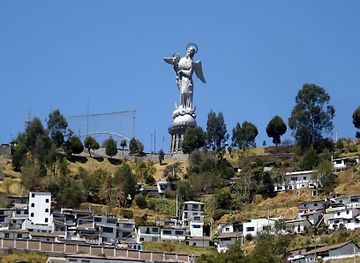
Virgin of the Panecillo
Discover the Virgin of the Panecillo, a stunning monument in Quito offering breathtaking views and rich Ecuadorian culture.
-
Historical landmark
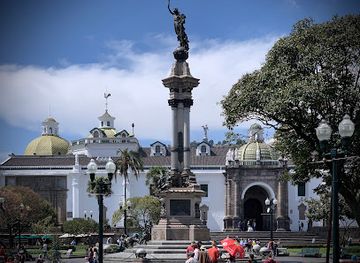
Independence Square
Explore Independence Square in Quito, Ecuador, a vibrant historical landmark filled with rich culture, stunning architecture, and local charm.

Explore Oriente on the map
Plan your trip on one map. See where the top cities, national parks and sights are, and book hotels and experiences in a few clicks.
Best hotels in Oriente
Best restaurants in Oriente
Dining in Oriente reflects both Amazonian ingredients and the wider cooking of Ecuador. In Tena, Puyo, Coca, Lago Agrio and other gateway towns, restaurants and market stalls commonly serve fish, chicken, rice, plantain, cassava and soups, with regional variations shaped by river and forest produce. Maito, in which fish or another filling is wrapped in leaves and cooked, is associated with Amazonian Ecuador and is often encountered through Kichwa culinary traditions, though preparation varies between communities. Chontacuro, or palm-worm larvae, may appear as a local speciality, while yuca, plantain and tropical fruits are everyday ingredients rather than novelties. Community visits and lodges may offer meals based on locally available produce, but menus in remote areas are usually simpler than in the towns. Markets are useful for fruit, juices and snacks, while cafés and restaurants in the larger gateways provide Ecuadorian staples alongside international dishes for travellers.
-
Ecuadorian
URKO
Experience the essence of Ecuadorian flavors at URKO in Quito, where every dish is a celebration of local ingredients and culinary artistry.
-
Swiss
Swiss Bistro Baños
Experience authentic Swiss cuisine in the heart of Ecuador at Swiss Bistro Baños – fondue, rösti, and more await you!
-
Restaurant
Leprechaun Pub Restaurante Cafetería
Discover culinary delights at Leprechaun Pub Restaurante Cafetería in Baños – where comfort food meets vibrant socializing.
-
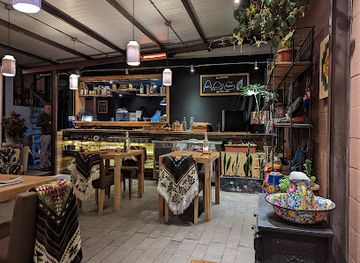
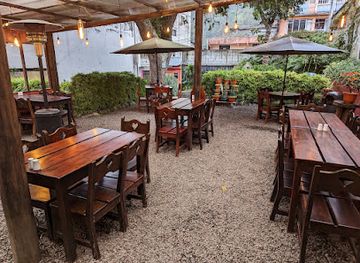
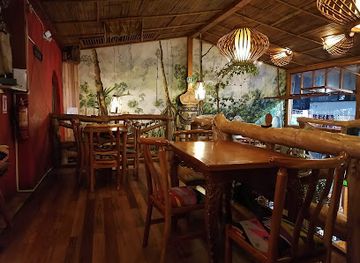
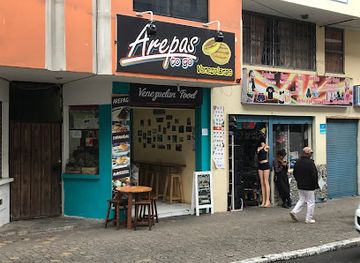
Venezuelan
Arepas To Go
Discover authentic Venezuelan flavors at Arepas To Go in Baños de Agua Santa - where every bite tells a story.
Best bars in Oriente
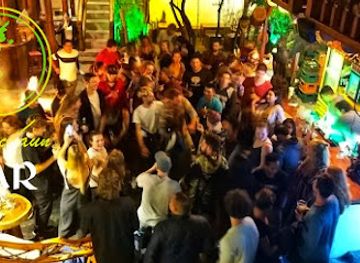
Evening life in Oriente is concentrated in the larger gateway towns rather than in the forest reserves. Tena has the broadest choice of casual bars, restaurants and occasional live-music venues, with a social scene shaped partly by students, guides and river-tourism businesses. Puyo, Coca, Lago Agrio, Macas and Zamora offer local bars, eateries and modest late-night options, though the atmosphere and opening arrangements can change. In smaller communities and at rainforest lodges, evenings are generally quiet and centred on conversation, guided night walks, wildlife observation or rest after an early start. Some towns have breweries, cocktail-oriented venues or music events, but these should not be assumed to operate year-round. Drink responsibly, use trusted transport after dark and remember that alcohol is not a necessary part of experiencing the region's cultural or natural life.
-
Hostel
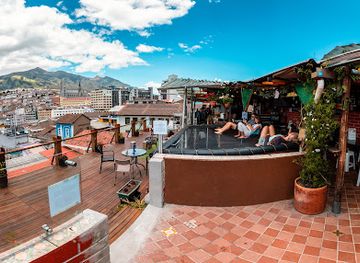
The Secret Garden Quito
Experience the vibrant atmosphere and stunning views at The Secret Garden Quito, your perfect base for exploring Ecuador's captivating capital.
-
Irish pub
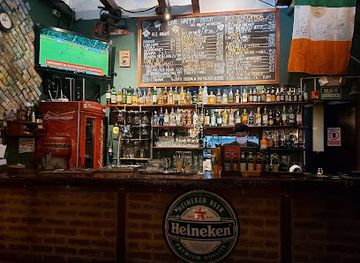
Finn McCool's Irish Pub
Experience the heart of Ireland in Quito at Finn McCool's Irish Pub, where great food, drinks, and music come together for an unforgettable night.
-
Gastropub
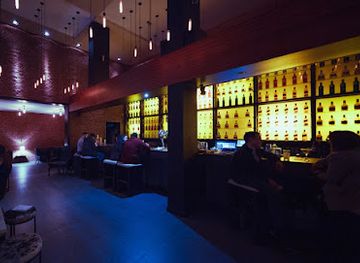
Zinc
Experience the vibrant culinary landscape at Zinc, a top gastropub in Quito, where local flavors meet modern gastronomy in an inviting atmosphere.
-
Grill
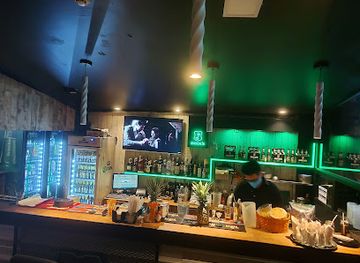
CantoBar
Experience the vibrant flavors and lively ambiance of CantoBar, Guayaquil's premier grill and bar destination for locals and tourists alike.
Best nightclubs in Oriente
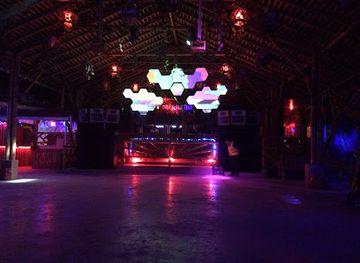
Evening life in Oriente is concentrated in the larger gateway towns rather than in the forest reserves. Tena has the broadest choice of casual bars, restaurants and occasional live-music venues, with a social scene shaped partly by students, guides and river-tourism businesses. Puyo, Coca, Lago Agrio, Macas and Zamora offer local bars, eateries and modest late-night options, though the atmosphere and opening arrangements can change. In smaller communities and at rainforest lodges, evenings are generally quiet and centred on conversation, guided night walks, wildlife observation or rest after an early start. Some towns have breweries, cocktail-oriented venues or music events, but these should not be assumed to operate year-round. Drink responsibly, use trusted transport after dark and remember that alcohol is not a necessary part of experiencing the region's cultural or natural life.
-
Disco club
Discoteca Nidia Fuzzion Party
Dance the night away at Discoteca Nidia Fuzzion Party, the heart of Cuenca's vibrant nightlife with electrifying music and an unforgettable atmosphere.
-
Disco club
Leprechaun Bar
Leprechaun Bar: Your ultimate disco destination in Baños de Agua Santa, where vibrant nightlife and unforgettable moments await.
-
Night club
Lost Beach Club
Experience the electrifying nightlife at Lost Beach Club in Montañita - Ecuador's top destination for unforgettable parties and vibrant energy.
-
Night club
Club Insomnio
Discover the electrifying nightlife of Quito at Club Insomnio, where music, dance, and unforgettable experiences await every night.


Best shops in Oriente
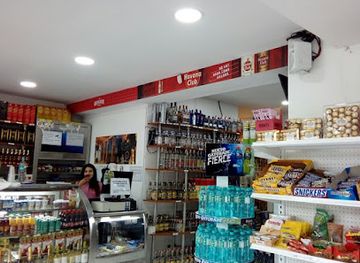
Shopping in Oriente is most useful in its gateway towns, where markets and independent shops provide food, practical supplies, clothing, medicines and equipment for river or forest travel. Tena and Puyo have the broadest range of everyday retail, while Coca, Lago Agrio, Macas and Zamora serve their surrounding districts. Look for regional fruits, cassava products, chocolate, coffee and other Ecuadorian foods, bearing in mind that origin and production methods should be checked rather than assumed. Community and fair-trade outlets may sell baskets, jewellery, textiles, seed ornaments and other crafts made by Indigenous artisans, but designs and meanings differ between Kichwa, Shuar, Waorani and other communities. Buy directly where possible, avoid products made from protected wildlife or plant material, and ask whether goods were made locally. Retail choice becomes very limited at remote lodges, so purchase essentials before travelling downriver.
-
Shopping mall
Quicentro
Discover Quicentro, Quito's vibrant shopping mall offering diverse shopping, dining, and entertainment experiences for all visitors.
-
Shopping mall
Mall del Sol
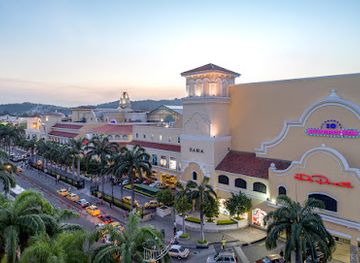
Experience the ultimate shopping and entertainment destination at Mall del Sol, Guayaquil's premier shopping mall with diverse offerings.
-
Shopping mall
San Marino Shopping
Discover a shopper's paradise at San Marino Shopping in Guayaquil, where local culture meets international brands and delicious cuisine.
-
Shopping mall
Mall Del Río
Discover Cuenca's Mall Del Río – a dynamic shopping mall filled with diverse stores, delicious dining, and exciting entertainment for every traveler.


Get your free copy of our complete guide to Oriente, delivered straight to you.
Everything on this page, from attractions and restaurants to essentials and local phrases, in one PDF you can read offline, print or share.
Already have an account? Sign in
Your Oriente guide is ready.
We'll send it to · Not you? Sign out

Getting your guide ready…
We are putting together a fresh copy of the Oriente guide. This can take up to a minute.
This can take a few moments. If your browser asks, choose Allow so the download can start. You'll find the guide in your Downloads folder.
Nothing happened? Download it again
Sorry, the guide is taking longer than usual. Please try again in a minute, or get it by email instead.
Oriente essentials
Currency and Payment
Safety
Emergency Situations
Do's and Don'ts
Local Tips
From Eve
Local phrases worth knowing
You don't need to get them perfect. A few words go a long way, and locals appreciate the effort.
Basics
| English | Local | Say it |
|---|---|---|
| Hello | Hola | [oh-lah] |
| Goodbye | Adiós | [ah-dee-ohs] |
| Yes | Sí | [see] |
| No | No | [noh] |
| Please/You're welcome | Por favor | [por fah-vor] |
| Thank you | Gracias | [grah-see-ahs] |
| Excuse me/Sorry | Disculpe | [dees-kool-peh] |
| How are you? | ¿Cómo estás? | [koh-moh es-tahs] |
| Fine. And you? | Bien. ¿Y tú? | [byen. ee too] |
| Do you speak English? | ¿Hablas inglés? | [ah-blahs een-glehs] |
| I don't understand | No entiendo | [noh en-tee-en-doh] |
Eating & Drinking
| English | Local | Say it |
|---|---|---|
| I'd like to see the menu, please | Me gustaría ver el menú, por favor | [meh goo-stah-ree-ah ver el meh-noo, por fah-vor] |
| I don't eat meat | No como carne | [noh koh-moh kahr-neh] |
| Cheers! | ¡Salud! | [sah-lood] |
| I would like to pay, please | Me gustaría pagar, por favor | [meh goo-stah-ree-ah pah-gar, por fah-vor] |
Emergencies
| English | Local | Say it |
|---|---|---|
| Help! | ¡Ayuda! | [ah-yoo-dah] |
| Go away! | ¡Vete! | [veh-teh] |
| Call the Police! | ¡Llama a la policía! | [yah-mah ah lah poh-lee-see-ah] |
| Call a doctor! | ¡Llama a un doctor! | [yah-mah ah oon dok-tor] |
| I'm lost | Estoy perdido | [es-toy pehr-dee-doh] |
| I'm ill | Estoy enfermo | [es-toy en-fehr-moh] |
Shopping
| English | Local | Say it |
|---|---|---|
| I'd like to buy... | Me gustaría comprar... | [meh goo-stah-ree-ah kom-prar] |
| I'm just looking | Solo estoy mirando | [soh-lo es-toy mee-ran-doh] |
| How much is it? | ¿Cuánto cuesta? | [kwahn-toh kwes-tah] |
| That's too expensive | Eso es muy caro | [eh-so es mwee kah-roh] |
| Can you lower the price? | ¿Puedes bajar el precio? | [pweh-des bah-har el preh-syo] |
Time & Numbers
| English | Local | Say it |
|---|---|---|
| What time is it? | ¿Qué hora es? | [keh oh-rah es] |
| It's one o'clock | Es la una | [es lah oo-nah] |
| Half past (10) | Y media (10) | [ee meh-dee-ah (diez)] |
| Morning | Mañana | [mahn-yah-nah] |
| Afternoon | Tarde | [tahr-deh] |
| Evening | Noche | [noh-cheh] |
| Yesterday | Ayer | [ah-yehr] |
| Today | Hoy | [oy] |
| Tomorrow | Mañana | [mahn-yah-nah] |
| 1 | Uno | [oo-noh] |
| 2 | Dos | [dohs] |
| 3 | Tres | [tres] |
| 4 | Cuatro | [kwah-troh] |
| 5 | Cinco | [seen-koh] |
| 6 | Seis | [says] |
| 7 | Siete | [syay-teh] |
| 8 | Ocho | [oh-choh] |
| 9 | Nueve | [nweh-beh] |
| 10 | Diez | [dyehs] |
Transport & Directions
| English | Local | Say it |
|---|---|---|
| Where's a/the...? | ¿Dónde está un/una...? | [dohn-deh es-tah oon/oo-nah] |
| What's the address? | ¿Cuál es la dirección? | [kwahl es lah dee-rehk-syon] |
| Can you show me (on the map)? | ¿Puedes mostrarme (en el mapa)? | [pweh-des mos-trar-meh (en el mah-pah)] |
| When's the next (bus)? | ¿Cuándo es el próximo (bus)? | [kwahn-doh es el prohk-see-mo (boos)] |
| A ticket (to ....) | Un boleto (a....) | [oon bo-leh-toh (ah....)] |
History of Oriente
Ancient Amazonian Settlement
The eastern Ecuadorian rainforest has been inhabited for thousands of years, with archaeological evidence showing long-standing relationships between communities, rivers and cultivated clearings. Amazonian societies developed detailed knowledge of plants, soils, fish, wildlife and seasonal waterways rather than living in an untouched wilderness. Ceramic traditions, trade networks and managed forest landscapes reveal that the region has a deep human history. Much of this past is interpreted alongside the knowledge and oral histories of Indigenous peoples whose communities continue to live across the Napo, Pastaza, Morona Santiago and Zamora-Chinchipe areas.
Spanish Incursions and Missionary Frontiers
After the Spanish conquest of the Andes, colonial authorities and religious orders attempted to extend control eastwards through river valleys and mission settlements. Their influence was uneven, constrained by distance, disease, difficult terrain and resistance from Indigenous societies. The eastern lowlands remained politically and administratively less controlled than the highlands, while rivers shaped both travel and attempts at communication. Colonial encounters brought violence, forced labour and epidemic disease, but they did not erase the autonomy or cultural continuity of peoples such as the Kichwa and Shuar.
Rubber, Trade and River Routes
During the late nineteenth and early twentieth centuries, the global demand for rubber drew traders and exploitative commercial networks deeper into Amazonia. River routes connected eastern Ecuador with frontier posts and wider regional markets, while missionary activity, small-scale commerce and state expansion altered patterns of settlement. The rubber economy left a painful legacy of coercion and abuse across the Amazon, even where its direct infrastructure was limited. Rivers nevertheless remained the essential corridors for moving people and goods through areas that had few roads.
Oil Development in the Northern Oriente
The discovery and development of petroleum in the northern Ecuadorian Amazon from the mid-twentieth century transformed the region's economy and geography. Roads, pipelines, towns and industrial facilities expanded around Sucumbíos and Orellana, particularly near Lago Agrio and Coca. Oil brought national revenue and new employment but also major conflicts over pollution, land, health and Indigenous rights. The contrast between extraction zones and protected areas such as Yasuní and Cuyabeno remains central to contemporary debates about conservation and development in Ecuador's Oriente.
Indigenous Organisation and Land Rights
From the late twentieth century, Indigenous organisations in the Ecuadorian Amazon became increasingly influential in defending territory, cultural survival and participation in decisions affecting forests and subsoil resources. Kichwa, Shuar, Waorani and other peoples have pursued different strategies through legal action, community governance, protest, alliances and engagement with conservation projects. Ecuador's constitutional recognition of rights of nature and Indigenous consultation reflects this broader political history, although implementation remains contested. Visitors encounter its legacy through community tourism, cultural education and the careful governance of access to some territories.
Protected Forests and Contemporary Conservation
The creation and expansion of protected areas reshaped the modern identity of the Oriente. Yasuní National Park, Cuyabeno Wildlife Reserve, Sangay National Park and Podocarpus National Park conserve different combinations of lowland rainforest, wetlands, foothills and mountain forest. Protection has supported scientific research and nature tourism, but it exists alongside Indigenous territories, agriculture, roads, mining and petroleum interests. The region's contemporary history is therefore not simply a story of wilderness preservation: it is an ongoing negotiation between biodiversity, local livelihoods, national development and the rights of forest communities.
Oriente in Photos
Browse through our photo collection highlighting the charm and character of the destination.
Neighbouring regions of Oriente
The closest regions to Oriente, if you have time for more than one.
-

-

-

-

-


Swipe for more regions
Explore more

Explore more of Ecuador
Explore Ecuador: From the Amazon rainforest and Andean highlands to the Pacific coast and Galápagos Islands, discover diverse landscapes and vibrant cultures.
Explore Ecuador