

Egypt's Renaissance Statue, Cairo Travel Guide
Free Guide: A Giza monument embodying Egypt's national aspirations, blending ancient heritage with a vision for a modern future.


A brief summary of Egypt's Renaissance Statue
A Giza monument embodying Egypt's national aspirations, blending ancient heritage with a vision for a modern future.
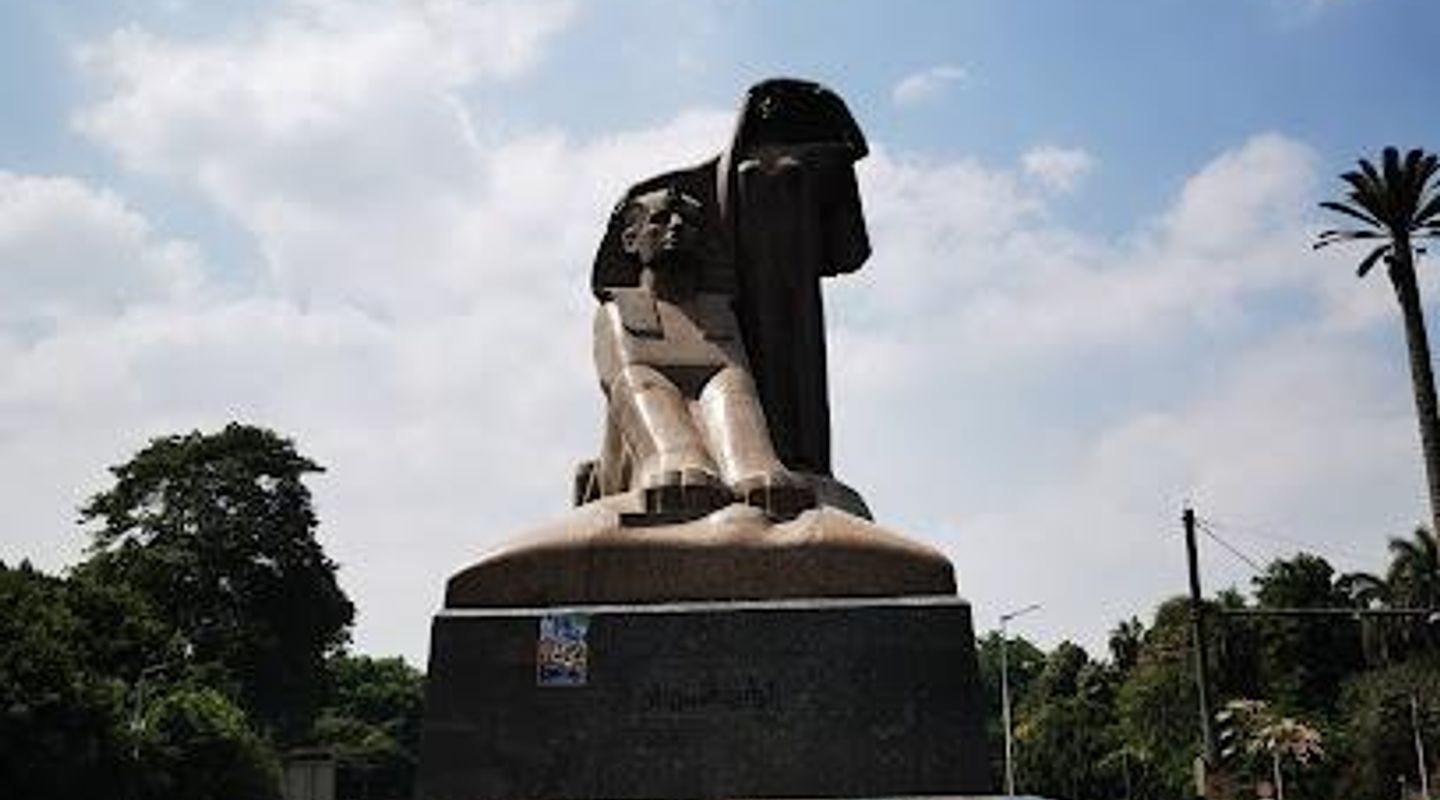
Egypt's Renaissance Statue, also known as Nahdet Misr, is a significant monument in Giza, Egypt, representing the country's awakening and national aspirations in the early 20th century. The statue, featuring a woman and a sphinx, embodies the essence of Egypt, blending its ancient history with a vision for the future.
Opening hours
- Every dayOpen 24 hours
Opening hours as listed on the venue’s Google Business Profile. Hours can change for services and special events, so check with the venue before you go.
- Address
- 26H8+89M, Oula, El Omraniya, Giza Governorate 3725120
Getting there
Walking
Public Transport
Discover more about Egypt's Renaissance Statue
Overview
Nahdet Misr, or Egypt's Renaissance, is more than just a statue; it's a powerful symbol of Egyptian identity and aspirations. Created by Mahmoud Mukhtar, the statue was initially unveiled in 1928 in Ramses Square before being moved to its current location in Giza. The monument depicts a woman removing her veil while standing next to a sphinx, representing Egypt emerging from a period of occupation and looking towards a brighter future.The statue was inspired by the Egyptian Revolution of 1919 and embodies the struggle for independence from British occupation. Mukhtar aimed to capture the spirit of a modern, nationalistic Egypt, bridging the emotional connection between national identity and the desire for progress. The woman is seen pulling aside her veil, which symbolizes a yet-unseen vision of Egypt. Her right arm drapes over the sphinx, a nod to a history spanning seven millennia. The statue has become a Giza monument, and a site that has witnessed both protest and victory over the years.Over the years, Nahdet Misr has become a gathering place for locals and tourists alike, offering a space to reflect on Egypt's rich history and artistic spirit. The surrounding area is vibrant, with local artisans displaying their crafts and traditional Egyptian cuisine available at nearby cafes.
Evendo Review Centre
 Google
Guest reviews
Explore Egypt's Renaissance Statue on the map
A handpicked selection of must-see spots near Egypt's Renaissance Statue, mapped for you.
Get your free copy of our complete guide to Egypt's Renaissance Statue, delivered straight to you.
Everything on this page, from opening hours and how to get there to Eve’s tips and the best time to go, in one PDF you can read offline, print or share.
Already have an account? Sign in
Your Egypt's Renaissance Statue guide is ready.
We'll send it to · Not you? Sign out

Getting your guide ready…
We are putting together a fresh copy of the Egypt's Renaissance Statue guide. This can take up to a minute.
This can take a few moments. If your browser asks, choose Allow so the download can start. You'll find the guide in your Downloads folder.
Nothing happened? Download it again
Sorry, the guide is taking longer than usual. Please try again in a minute, or get it by email instead.
Unlock the best of Egypt's Renaissance Statue
Skip-the-line tickets, guided tours with entry, and walking tours of the area, booked in a few clicks.


Other nearby places you may find interesting
The closest places of the same kind, if this one is not quite what you had in mind.
-

-
-
-
-


Swipe for more places
More to explore near Egypt's Renaissance Statue
-
 Best experiences near Egypt's Renaissance Statue
-
 Best hotels near Egypt's Renaissance Statue
-
 Best landmarks near Egypt's Renaissance Statue
-
 Best attractions near Egypt's Renaissance Statue
-
 Best shops near Egypt's Renaissance Statue
-
 Best restaurants near Egypt's Renaissance Statue
-
 Best bars near Egypt's Renaissance Statue


Do you manage this location?
Take control to get all the benefits, like improved information, better appearance, and stronger visibility across AI-powered discovery.
Explore more

Explore more of Cairo
Discover Cairo: The timeless city where ancient wonders meet vibrant modern life, offering a rich cultural experience and unforgettable memories.
Explore Cairo
Explore more of Egypt
Discover Egypt: From the timeless pyramids to the vibrant Red Sea, experience a land where ancient wonders meet modern adventures.
Explore Egypt
