

Quartier Saint-Acheul (Amiens) Travel Guide - Free
Explore Quartier Saint-Acheul in Amiens with Evendo's free guide. Find the best shops, historic streets, restaurants, and gems on web or mobile.


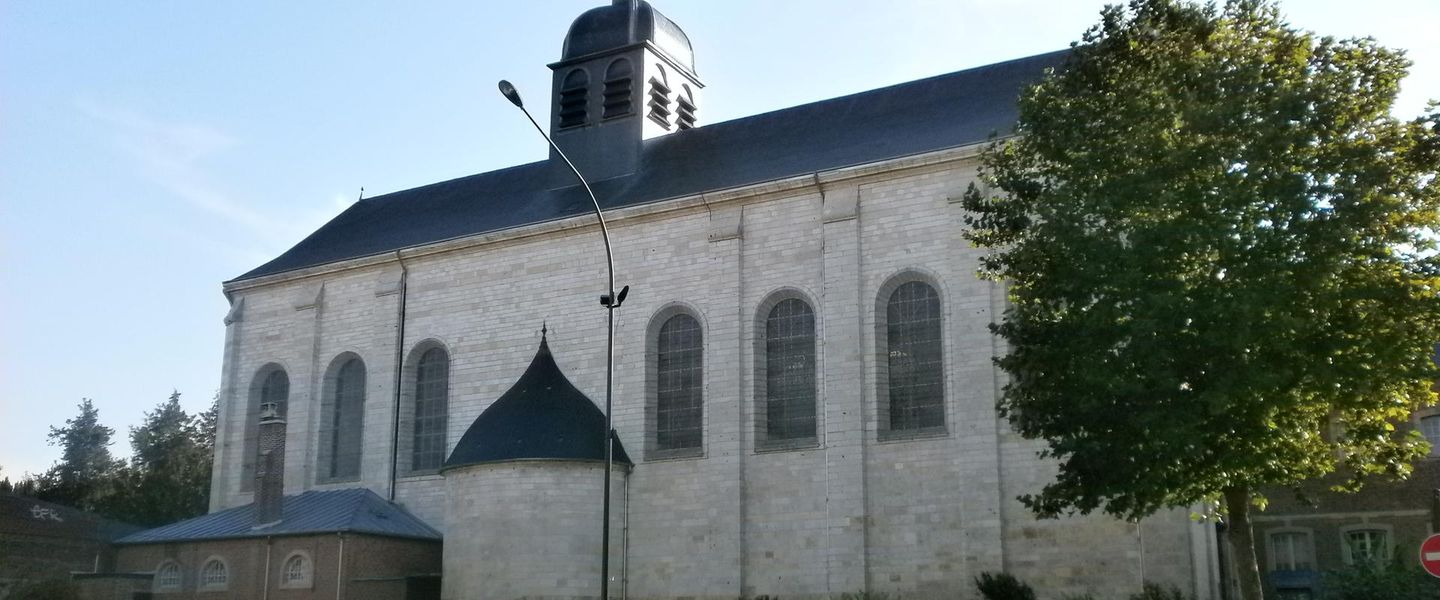


Quartier Saint-Acheul in Amiens pairs a calm residential setting with an archaeological garden, local streets and the prehistoric story behind the Acheulean.
A Residential Quarter with Deep Prehistory
Quartier Saint-Acheul lies in the eastern part of Amiens, away from the city centre’s principal monuments and commercial streets. Its identity is quieter and more local: mainly residential roads, everyday services and the long historical shadow of the Somme valley. The neighbourhood’s international significance comes from the Saint-Acheul archaeological site, whose name was given to the Acheulean tradition of stone tools used by early humans across Europe, Africa and Asia. Here, the distant human past is not an abstract museum subject but part of the local landscape.Read more about Quartier Saint-Acheul
The Archaeological Garden
Everyday Amiens Beyond the Centre
Explore Quartier Saint-Acheul on the map
A handpicked selection of must-see spots in Quartier Saint-Acheul, mapped for you.
Best hotels in Quartier Saint-Acheul
Quartier Saint-Acheul essentials
Getting There
Getting Around
Safety
Emergency Situations
Do's and Don'ts
Local Tips

From Eve
Local phrases worth knowing
You don't need to get them perfect. A few words go a long way, and locals appreciate the effort.
Basics
| English | Local | Say it |
|---|---|---|
| Hello | Bonjour | [bohn-zhoor] |
| Goodbye | Au revoir | [oh ruh-vwahr] |
| Yes | Oui | [wee] |
| No | Non | [nohn] |
| Please/You're welcome | S'il vous plaît / De rien | [seel voo pleh / duh ryen] |
| Thank you | Merci | [mehr-see] |
| Excuse me/Sorry | Excusez-moi / Désolé | [ex-kew-zay mwah / day-zo-lay] |
| How are you? | Comment ça va? | [koh-mohn sah vah] |
| Fine. And you? | Bien. Et vous? | [byen. ay voo] |
| Do you speak English? | Parlez-vous anglais? | [par-lay voo ahn-glay] |
| I don't understand | Je ne comprends pas | [zhuh nuh kohm-prahn pah] |
Eating & Drinking
| English | Local | Say it |
|---|---|---|
| I'd like to see the menu, please | Je voudrais voir la carte, s'il vous plaît | [zhuh voo-dray vwar lah kart, seel voo pleh] |
| I don't eat meat | Je ne mange pas de viande | [zhuh nuh mahnj pah duh vee-and] |
| Cheers! | Santé! | [sahn-tay] |
| I would like to pay, please | Je voudrais payer, s'il vous plaît | [zhuh voo-dray pay-ay, seel voo pleh] |
Emergencies
| English | Local | Say it |
|---|---|---|
| Help! | Au secours! | [oh suh-koor] |
| Go away! | Allez-vous en! | [al-lay voo ahn] |
| Call the Police! | Appelez la police! | [ah-peh-lay lah poh-lees] |
| Call a doctor! | Appelez un médecin! | [ah-peh-lay uh meh-deh-sahn] |
| I'm lost | Je suis perdu | [zhuh swee pair-doo] |
| I'm ill | Je suis malade | [zhuh swee mah-lahd] |
Shopping
| English | Local | Say it |
|---|---|---|
| I'd like to buy... | Je voudrais acheter... | [zhuh voo-dray ash-tay] |
| I'm just looking | Je regarde juste | [zhuh ruh-gard zhust] |
| How much is it? | Combien ça coûte? | [kohm-byen sah koot] |
| That's too expensive | C'est trop cher | [say troh shair] |
| Can you lower the price? | Pouvez-vous baisser le prix? | [poo-vay voo beh-say luh pree] |
Time & Numbers
| English | Local | Say it |
|---|---|---|
| What time is it? | Quelle heure est-il? | [kell ur ay-teel] |
| It's one o'clock | Il est une heure | [eel ay oon ur] |
| Half past (10) | Dix heures et demie | [dees ur ay duh-mee] |
| Morning | Matin | [mah-tahn] |
| Afternoon | Après-midi | [ah-pray mee-dee] |
| Evening | Soir | [swahr] |
| Yesterday | Hier | [ee-air] |
| Today | Aujourd'hui | [oh-zhoor dwee] |
| Tomorrow | Demain | [duh-mahn] |
| 1 | Un | [uh] |
| 2 | Deux | [duh] |
| 3 | Trois | [twah] |
| 4 | Quatre | [kat-ruh] |
| 5 | Cinq | [sank] |
| 6 | Six | [sees] |
| 7 | Sept | [set] |
| 8 | Huit | [weet] |
| 9 | Neuf | [nurf] |
| 10 | Dix | [dees] |
Transport & Directions
| English | Local | Say it |
|---|---|---|
| Where's a/the...? | Où est...? | [oo ay] |
| What's the address? | Quelle est l'adresse? | [kell ay lad-res] |
| Can you show me (on the map)? | Pouvez-vous me montrer (sur la carte)? | [poo-vay voo muh mohn-tray (soor lah kart)] |
| When's the next (bus)? | Quand est le prochain (bus)? | [kahn ay luh proh-shahn (bus)] |
| A ticket (to ....) | Un billet (pour ...) | [uhn bee-yay (poor)] |
History of Quartier Saint-Acheul
A Somme Valley Landscape
Saint-Acheul developed on the eastern side of Amiens within the wider landscape shaped by the Somme and its former river terraces. Before modern urban expansion, the area was associated with rural land, cultivated plots and routes leading into the city. The sediments deposited by earlier phases of the river preserved evidence of human activity, making the locality important not because of monumental ancient buildings but because its geological setting protected prehistoric material beneath later soils.
The Birth of Acheulean Archaeology
The name Saint-Acheul became internationally renowned during the nineteenth century, when worked flints were collected from gravel deposits around Amiens and interpreted as evidence of human activity far older than previously accepted. Finds from the locality helped establish the importance of bifacial handaxes and gave rise to the term Acheulean, now used by archaeologists for a widespread Lower Palaeolithic stone-tool tradition. The site therefore contributed directly to changing European understandings of human antiquity, rather than merely providing a local collection of curiosities.
From Excavated Deposits to Urban Quarter
As Amiens expanded, the countryside east of the historic core was progressively incorporated into the city’s residential fabric. Roads, housing and public services altered the appearance of the former archaeological landscape, while the surviving deposits became increasingly important as protected scientific evidence. Saint-Acheul’s later identity consequently combined ordinary urban growth with the need to preserve a site whose significance lay underground. The neighbourhood’s name continued to connect modern streets with the formative history of prehistoric research.
The Archaeological Garden
The creation of the Jardin archéologique de Saint-Acheul gave the site a public and educational role. Rather than removing the evidence entirely into museum cases, the garden presents the geological context and explains how finds were recovered and interpreted. It forms part of Amiens’s effort to make its prehistoric heritage accessible beyond specialist archaeology, while retaining the character of a neighbourhood site. Today, Saint-Acheul is therefore both a residential district and a place-name of global archaeological importance.
Quartier Saint-Acheul in Photos
Browse through our photo collection highlighting the charm and character of the destination.
Neighbourhoods near Quartier Saint-Acheul
The closest neighbourhoods to Quartier Saint-Acheul, if you have time for more than one stop.
-

-


Swipe for more neighbourhoods
Explore more
Explore more of Amiens
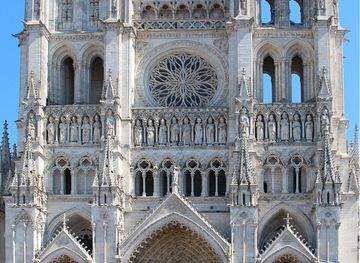
Amiens combines a magnificent Gothic cathedral, floating gardens, Jules Verne heritage and riverside culture for memorable northern France sightseeing.
Explore Amiens