Background

Arles Arena: Echoes of Roman Grandeur

Step back in time at the Arles Arena, a remarkably preserved Roman amphitheater hosting bullfights and concerts, offering a unique blend of history and entertainment in the heart of Provence.

4.4

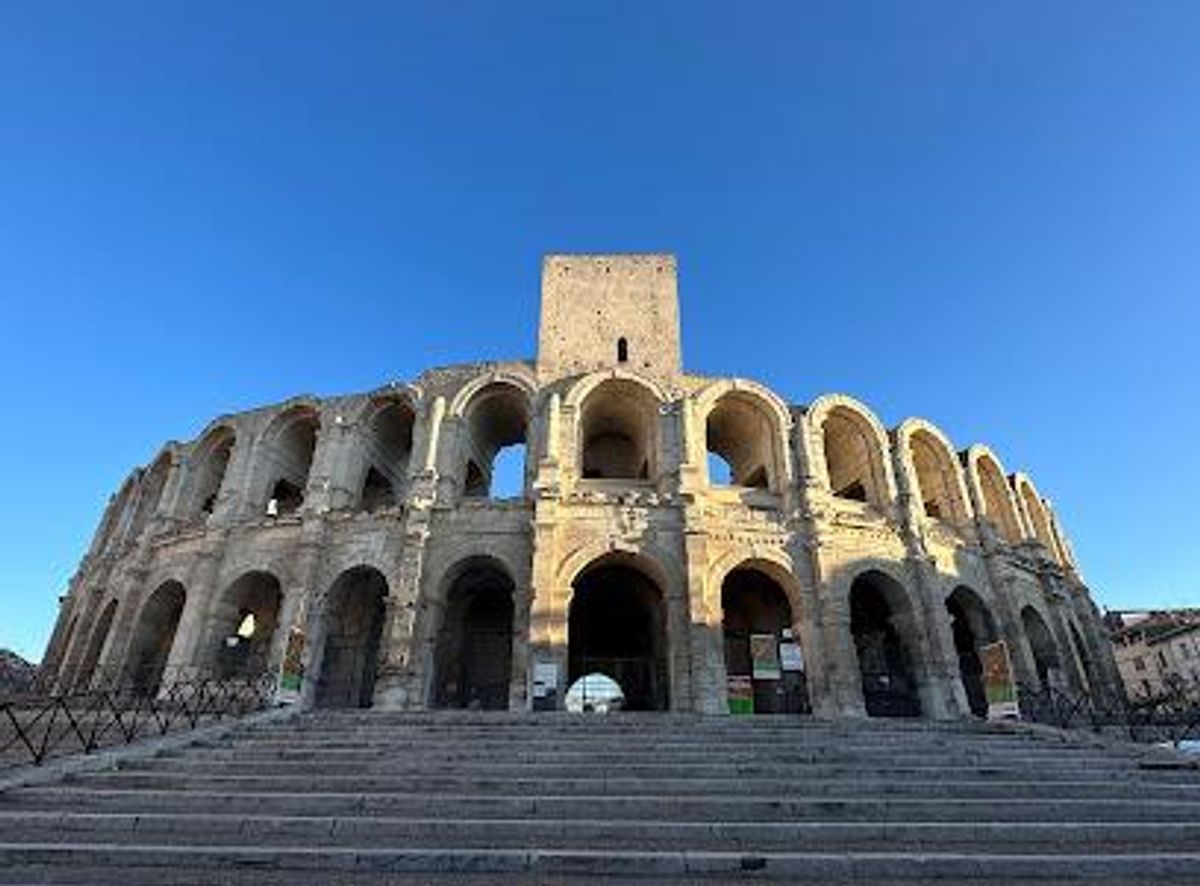
The Arles Arena, or Arènes d'Arles, is a remarkably preserved Roman amphitheater that stands as a testament to Arles' rich history. Built around 90 AD, this impressive structure once hosted over 20,000 spectators for gladiatorial contests and public spectacles. Today, it continues to host events, including bullfights and concerts, offering a unique blend of ancient history and modern entertainment. Its well-preserved architecture and historical significance make it a must-see attraction for anyone visiting Arles, providing a tangible link to the Roman Empire's influence in the region. Explore the arena's corridors and imagine the roar of the crowds, or attend a contemporary event to experience its enduring vibrancy. The Arles Arena is more than just a historical site; it's a living monument that connects the past with the present.

A brief summary to Arles Arena

  • Monday 10:30 am-4:30 pm
  • Tuesday 10:30 am-4:30 pm
  • Wednesday 10:30 am-4:30 pm
  • Thursday 10:30 am-4:30 pm
  • Friday 10:30 am-4:30 pm
  • Saturday 10:30 am-4:30 pm
  • Sunday 10:30 am-4:30 pm

Local tips

  • Check the event schedule in advance; the arena hosts bullfights, concerts, and historical reenactments throughout the year.
  • Purchase a combined ticket for access to multiple Roman monuments in Arles for cost savings.
  • Wear comfortable shoes; the arena's ancient stones and uneven surfaces can be challenging to navigate.
  • Visit during the shoulder seasons (spring or fall) for pleasant weather and fewer crowds.
  • Climb to the top of the arena for panoramic views of Arles and the surrounding landscape.
widget icon

Getting There

  • Walking

    From the Place de la République, walk southeast along Rue de la Calade. The arena will become visible on your right within a few blocks. The main entrance is located on the northern side, accessible via a staircase. Allow approximately 5-10 minutes for this walk.

  • Public Transport

    From Arles train station (Gare d'Arles), take bus line A10 and get off at the 'E. Combes' stop. The arena is a short walk from the bus stop. Alternatively, a free shuttle bus operates between the train station and the city center (Musée Antique), from which you can walk to the arena. Bus fare is approximately €1-3.

  • Taxi/Ride-Share

    Taxis and ride-sharing services are readily available in Arles. A taxi ride from the train station or any central location to the Arles Arena typically costs between €9-€12 and takes about 5-10 minutes, depending on traffic.

  • Driving

    If driving, be aware that access to the city center is restricted for non-residents. Limited parking is available near the arena, with a parking lot located a 10-minute walk away. Parking fees typically range from €1.80 per hour. Consider parking outside the city walls and walking in to avoid congestion.

Unlock the Best of Arles Arena

Buy tickets

    No tickets available

Book tours with entry

    No tours available

Book tours without entry

    No tours available

Discover more about Arles Arena

The Arles Arena, known locally as Les Arènes d'Arles, is an iconic symbol of the city's Roman heritage and one of the best-preserved Roman amphitheaters in the world. Constructed around 90 AD, during the reign of Emperor Domitian, it reflects the grandeur and engineering prowess of the Roman Empire. Inspired by the Colosseum in Rome, the Arles Arena was designed to accommodate over 20,000 spectators who gathered to witness gladiatorial combats, animal hunts, and public executions. The arena's architecture is a marvel in itself. Measuring 136 meters in length and 109 meters in width, its elliptical structure features two tiers of arcades, comprising 60 arches each. These arches, constructed from local limestone, provide both structural support and aesthetic appeal. The design incorporates a complex system of staircases, corridors, and galleries that facilitated the efficient movement of large crowds. The arena's central space, the sand-covered area where the spectacles took place, is surrounded by tiered seating, offering excellent views from every vantage point. During the 5th century, with the decline of the Roman Empire, the arena underwent a transformation. It was converted into a fortified settlement, providing refuge for the local population during turbulent times. Over 200 houses, along with two chapels, were built within its walls, turning the arena into a self-contained village. The four towers that still stand atop the structure today were added during this period, enhancing its defensive capabilities. This residential use continued for centuries, altering the arena's original purpose but preserving its structure through the ages. In the 19th century, a movement to restore the arena to its former glory began, spearheaded by the writer Prosper Mérimée. The process of expropriating the houses within the arena started in 1826 and was completed by 1830. The first event held after the restoration was a bull race, celebrating the capture of Algiers, marking the arena's return to its original function as a venue for public spectacles. In 1840, the arena was classified as a historical monument, ensuring its preservation for future generations. It was later recognized as a UNESCO World Heritage Site in 1981, as part of the Arles, Roman and Romanesque Monuments group. Today, the Arles Arena continues to be a vibrant part of the city's cultural life. It hosts a variety of events, including bullfights, theatrical performances, and concerts, drawing both locals and tourists alike. The bullfights, particularly during the Feria d'Arles, are a significant part of the region's tradition, showcasing the skills of the matadors and the bravery of the bulls. The arena also serves as a stunning backdrop for musical performances, with its ancient stones resonating with the sounds of contemporary artists. Visiting the Arles Arena offers a unique opportunity to step back in time and experience the grandeur of the Roman Empire. Walking through its corridors, one can almost hear the echoes of the past, the cheers of the crowds, and the clash of gladiators. The arena provides a tangible connection to history, allowing visitors to imagine what life was like in Roman Gaul. Climbing to the top of the arena provides panoramic views of Arles, with its terracotta rooftops and winding streets, offering a breathtaking perspective of the city. The Arles Arena is more than just a historical monument; it is a living, breathing part of Arles' identity. It stands as a symbol of the city's resilience, its ability to adapt and transform while preserving its rich heritage. Whether you are a history enthusiast, a culture seeker, or simply a traveler looking for a unique experience, the Arles Arena is a destination that will leave a lasting impression. Its enduring presence is a testament to the power of human ingenuity and the enduring appeal of the past. Accessibility to the Arles Amphitheater is somewhat challenging for individuals with reduced mobility, with only a small section being accessible and the terrain being uneven. However, efforts are continuously being made to improve accessibility and ensure that as many visitors as possible can enjoy this remarkable site. The arena is open year-round, with varying hours depending on the season, allowing visitors to experience its magic at any time of the year. A visit to the Arles Arena is an unforgettable journey through time, offering a glimpse into the heart of Roman history and the soul of Provence. The arena's location in the heart of Arles makes it easily accessible to visitors. It is surrounded by charming cafes, restaurants, and shops, allowing for a seamless integration into a day of exploration. The nearby Place de la République, with its impressive architecture and vibrant atmosphere, is a perfect complement to a visit to the arena. Together, they form the core of Arles' historical center, offering a rich and immersive experience for all who venture there. The Arles Arena is not just a monument to the past; it is a vibrant part of the present and a legacy for the future. Its enduring presence in the heart of Arles is a testament to the city's rich history and its commitment to preserving its cultural heritage. Whether you are attending a bullfight, a concert, or simply exploring its ancient stones, the Arles Arena is an experience that will stay with you long after you leave.

Popular Experiences near Arles Arena

Popular Hotels near Arles Arena

Select Currency