Kurt-Eisner-Denkmal Travel Guide
Free Guide: A poignant memorial marking the spot where Kurt Eisner, Bavaria's first Minister-President, was assassinated, a reminder of the region's turbulent past and Eisner's progressive vision.


A brief summary of Kurt-Eisner-Denkmal
A poignant memorial marking the spot where Kurt Eisner, Bavaria's first Minister-President, was assassinated, a reminder of the region's turbulent past and Eisner's progressive vision.
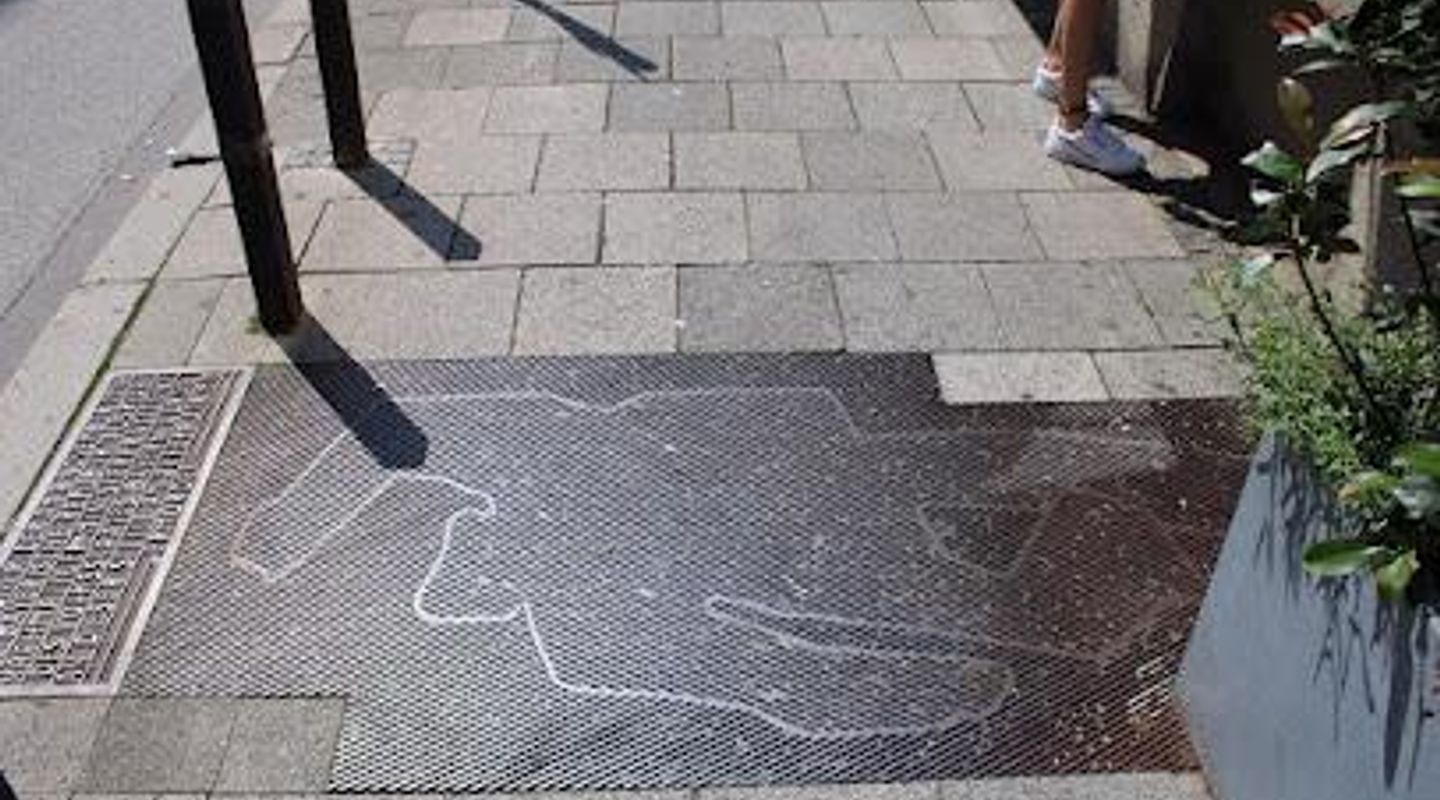
The Kurt Eisner Memorial, located on Kardinal-Faulhaber-Straße in Munich, marks the spot where Bavaria's first Minister-President, Kurt Eisner, was assassinated in 1919. This poignant memorial, designed by Erika Maria Lankes, features the outline of Eisner's body as it was found, etched into a steel plate on the pavement. The stark simplicity of the design, coupled with the powerful inscription, serves as a constant reminder of Eisner's contributions to Bavarian democracy and the tragic circumstances of his death. The memorial is a place for reflection on the turbulent period of revolution and political upheaval that shaped Munich and Bavaria in the aftermath of World War I. It stands as a testament to Eisner's legacy and the enduring pursuit of a more just and equitable society. Visiting the memorial offers a chance to connect with a pivotal moment in Bavarian history and pay respects to a figure who championed progressive ideals.
Opening hours
- Every dayOpen 24 hours
Opening hours as listed on the venue’s Google Business Profile. Hours can change for services and special events, so check with the venue before you go.
- Address
- Kardinal-Faulhaber-Straße 14, 80333 München
Getting there
Public Transport
Walking
Taxi/Ride-Share
Driving
Discover more about Kurt-Eisner-Denkmal
Overview
The Kurt Eisner Memorial is a somber yet compelling landmark in Munich, commemorating the assassination of Kurt Eisner, Bavaria's first Minister-President, on February 21, 1919. Eisner, a prominent figure in the November Revolution, proclaimed the Free State of Bavaria in 1918, ending the reign of the Wittelsbach dynasty. His progressive policies, including the introduction of women's suffrage and the eight-hour workday, made him a target for right-wing extremists. The memorial is located on Kardinal-Faulhaber-Straße, near the Palais Montgelas, the very spot where Eisner was gunned down by a nationalist lieutenant. Designed by artist Erika Maria Lankes and unveiled in 1989, the memorial consists of a steel plate embedded in the pavement, bearing the outline of Eisner's body as it was found by police, a chilling reminder of the violence that abruptly ended his life. Above the outline, an inscription reads: "Kurt Eisner, who proclaimed the Bavarian Republic on November 8, 1918, later Minister-President of the People's State of Bavaria, was murdered here on February 21, 1919." The memorial's design is intentionally understated, inviting contemplation rather than spectacle. The use of steel and the stark outline evoke a sense of loss and the fragility of life, while the inscription serves as a concise yet powerful summary of Eisner's historical significance. The location itself adds to the memorial's impact, situated on a busy street in the heart of Munich, forcing passersby to confront the city's complex past. Kurt Eisner's legacy extends beyond his brief tenure as Minister-President. He was a passionate advocate for social justice, pacifism, and democratic reform. His efforts to establish a socialist republic in Bavaria, though ultimately unsuccessful, laid the groundwork for future progressive movements in the region. Eisner's commitment to these ideals, even in the face of intense opposition, continues to inspire those who seek a more equitable and just society. Visiting the Kurt Eisner Memorial offers a unique opportunity to engage with a pivotal moment in Bavarian history. It is a place to reflect on the challenges of building a democratic society, the dangers of political extremism, and the enduring importance of standing up for one's beliefs. The memorial serves as a reminder that the pursuit of justice and equality is an ongoing process, and that the sacrifices of those who came before us should not be forgotten. The area surrounding the memorial is rich in historical and cultural significance. Kardinal-Faulhaber-Straße is located in Munich's Altstadt-Lehel district, home to numerous landmarks, museums, and cultural institutions. Nearby attractions include the Frauenkirche, Munich's iconic cathedral, the Residenz, the former royal palace of the Wittelsbach monarchs, and the Hofgarten, a beautiful Renaissance-style garden. The memorial is easily accessible by public transportation, with several U-Bahn and bus stops located within walking distance. It is a popular destination for history buffs, students, and anyone interested in learning more about Munich's past. The memorial is open to the public at all times and admission is free. The Kurt Eisner Memorial is more than just a monument; it is a symbol of hope, resilience, and the enduring power of the human spirit. It is a place to remember the past, reflect on the present, and imagine a better future. A visit to this poignant landmark is an essential experience for anyone seeking to understand the complexities of Munich's history and the legacy of Kurt Eisner.
Evendo Review Centre
 Google
Guest reviews
Explore Kurt-Eisner-Denkmal on the map
A handpicked selection of must-see spots near Kurt-Eisner-Denkmal, mapped for you.
Get your free copy of our complete guide to Kurt-Eisner-Denkmal, delivered straight to you.
Everything on this page, from opening hours and how to get there to Eve’s tips and the best time to go, in one PDF you can read offline, print or share.
Already have an account? Sign in
Your Kurt-Eisner-Denkmal guide is ready.
We'll send it to · Not you? Sign out

Getting your guide ready…
We are putting together a fresh copy of the Kurt-Eisner-Denkmal guide. This can take up to a minute.
This can take a few moments. If your browser asks, choose Allow so the download can start. You'll find the guide in your Downloads folder.
Nothing happened? Download it again
Sorry, the guide is taking longer than usual. Please try again in a minute, or get it by email instead.
Other nearby places you may find interesting
The closest places of the same kind, if this one is not quite what you had in mind.
-
-
-
-

-


Swipe for more places
More to explore near Kurt-Eisner-Denkmal

 Best experiences near Kurt-Eisner-Denkmal
 Best hotels near Kurt-Eisner-Denkmal
 Best landmarks near Kurt-Eisner-Denkmal
 Best attractions near Kurt-Eisner-Denkmal
 Best shops near Kurt-Eisner-Denkmal
 Best restaurants near Kurt-Eisner-Denkmal
 Best bars near Kurt-Eisner-Denkmal
Do you manage this location?
Take control to get all the benefits, like improved information, better appearance, and stronger visibility across AI-powered discovery.
Explore more

Explore more of Bavaria
Discover Bavaria: A magical region in Germany with fairy-tale castles, medieval towns, and breathtaking alpine landscapes.
Explore Bavaria
Explore more of Germany
Experience Germany: where history meets innovation, and urban energy blends with natural beauty. Discover diverse cultures, delicious cuisine, and stunning landscapes.
Explore Germany