

Potsdamer Platz, Berlin Travel Guide
Free Guide: Experience Berlin's vibrant heart at Potsdamer Platz: a modern hub rising from historical ruins, offering stunning architecture, diverse entertainment, and cultural landmarks.


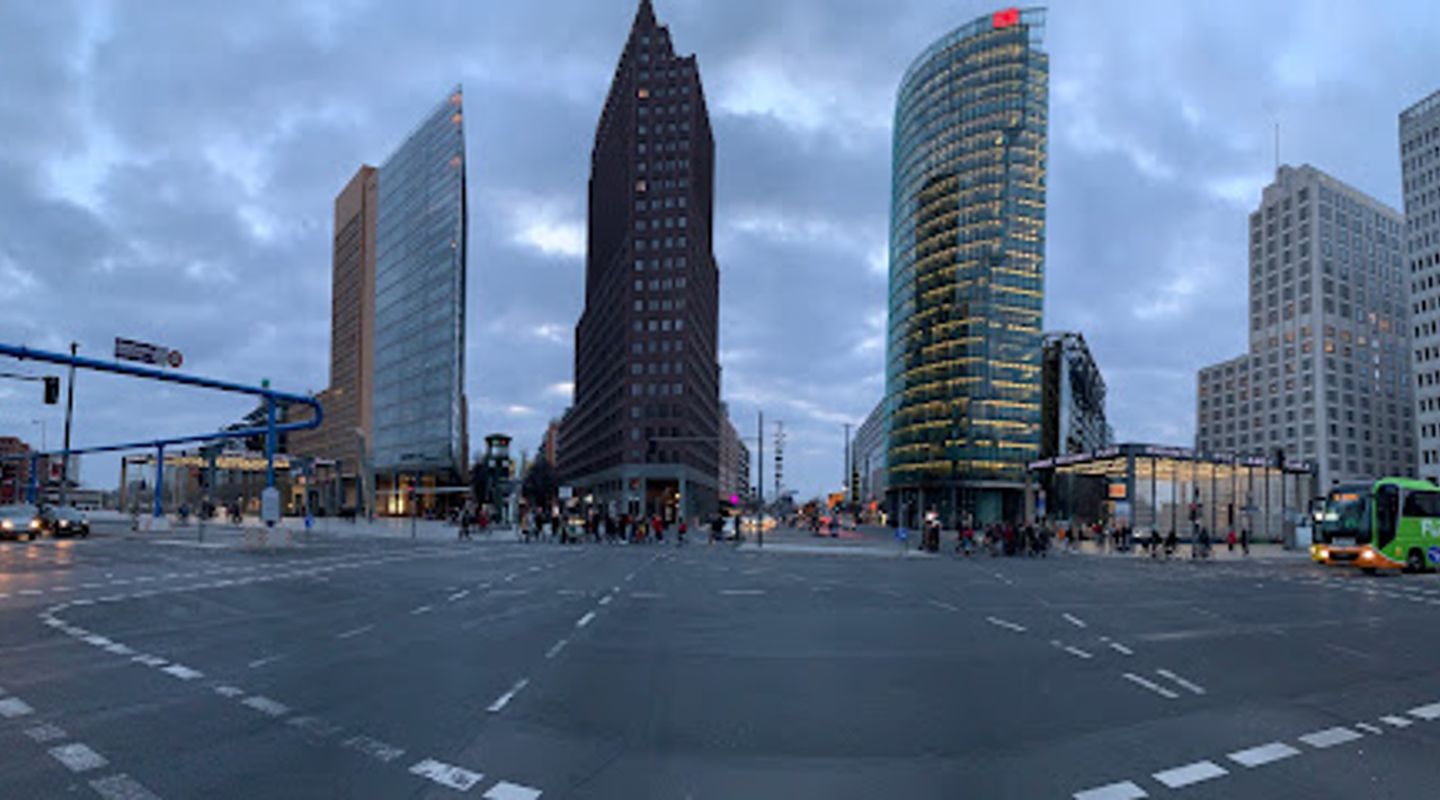
A brief summary of Potsdamer Platz
Experience Berlin's vibrant heart at Potsdamer Platz: a modern hub rising from historical ruins, offering stunning architecture, diverse entertainment, and cultural landmarks.
Potsdamer Platz, once the bustling heart of Berlin, lay in ruins after WWII and was divided by the Berlin Wall, becoming a desolate no-man's-land. Today, it has been spectacularly reborn as a modern urban center, boasting striking architecture, diverse shopping, entertainment, and historical echoes. Visitors can explore remnants of the Berlin Wall, ascend the Panoramapunkt for stunning city views, immerse themselves in film history at the Filmhaus Museum, or simply soak in the vibrant atmosphere of this iconic square. With its blend of history and modernity, Potsdamer Platz offers a compelling glimpse into Berlin's past, present, and future, making it a must-see destination for any traveler.
- Address
- Potsdamer Platz, 10785 Berlin
- Website
Getting there
Public Transport
Taxi/Ride-Share
Driving
Walking
Discover more about Potsdamer Platz
Overview
Potsdamer Platz, a name synonymous with Berlin's tumultuous 20th-century history and its remarkable post-reunification transformation, stands as a testament to the city's resilience and reinvention. Once the heart of a vibrant metropolis, reduced to rubble and then bisected by the Berlin Wall, the square has risen from the ashes to become a symbol of modern Berlin, a bustling hub of commerce, entertainment, and culture. In its pre-war heyday, Potsdamer Platz was the Times Square of Berlin, a cacophonous intersection teeming with traffic, lined with grand hotels, bustling shops, and lively cafes. It was a place where artists, writers, and celebrities mingled, where the latest fashions were flaunted, and where the pulse of the city beat strongest. The square even boasted Europe's first working traffic light, a testament to its importance as a transportation hub. World War II brought devastation, reducing the once-grand square to a wasteland of bombed-out buildings and shattered dreams. The subsequent division of Berlin by the Berlin Wall in 1961 further isolated Potsdamer Platz, turning it into a desolate no-man's-land, a stark reminder of the Cold War's division of Europe. For nearly three decades, the square remained a barren expanse, a silent witness to the ideological divide that separated East and West. The fall of the Berlin Wall in 1989 marked the beginning of a new chapter for Potsdamer Platz. With reunification, the square became the focus of intense redevelopment, attracting international architects and investors eager to transform the forgotten space into a modern urban center. The result is a striking blend of architectural styles, from the sleek, high-tech design of the Sony Center to the more traditional European urbanism of the DaimlerChrysler Quartier (now Daimler City). Today, Potsdamer Platz is a vibrant destination offering a diverse range of experiences. Visitors can explore the remnants of the Berlin Wall, a poignant reminder of the city's divided past. They can ascend the Panoramapunkt, located in the Kollhoff Tower, for breathtaking panoramic views of Berlin's skyline. Film enthusiasts can delve into the history of German cinema at the Filmhaus Museum, while shoppers can indulge in retail therapy at the numerous boutiques and department stores in the area. The Sony Center, with its iconic tent-like roof, is a major attraction, housing cinemas, restaurants, and the LEGOLAND Discovery Centre. The nearby Marlene Dietrich Platz is home to the Theater am Potsdamer Platz, a venue for musicals and other live performances. The Boulevard der Stars, a German version of the Hollywood Walk of Fame, pays tribute to notable figures in German film and television. Potsdamer Platz is also a significant cultural hub, hosting the annual Berlin International Film Festival (Berlinale), one of the world's leading film festivals. During the Berlinale, the square transforms into a glamorous red-carpet venue, attracting filmmakers, actors, and film enthusiasts from around the globe. Beyond its attractions, Potsdamer Platz is simply a great place to soak in the atmosphere of modern Berlin. The square is always bustling with activity, from locals grabbing a coffee to tourists snapping photos. The numerous restaurants and cafes offer a wide range of culinary options, from traditional German fare to international cuisine. While the rapid redevelopment of Potsdamer Platz has been praised for its economic impact and urban renewal, it has also faced criticism for its perceived lack of historical authenticity and its focus on commercial interests. Some argue that the square has lost its soul, becoming a generic urban space devoid of the unique character that defined it in its pre-war days. However, others maintain that Potsdamer Platz is a symbol of Berlin's ability to adapt and reinvent itself, a testament to the city's forward-looking spirit. Whether you view it as a triumph of urban planning or a cautionary tale of commercialization, Potsdamer Platz is undoubtedly a must-see destination for any visitor to Berlin. Its blend of history, modernity, and cultural attractions offers a compelling glimpse into the city's past, present, and future. From the remnants of the Berlin Wall to the futuristic architecture of the Sony Center, Potsdamer Platz is a place where the past and the present collide, creating a unique and unforgettable experience.
Evendo Review Centre
 Google
Guest reviews
Explore Potsdamer Platz on the map
A handpicked selection of must-see spots near Potsdamer Platz, mapped for you.
Get your free copy of our complete guide to Potsdamer Platz, delivered straight to you.
Everything on this page, from opening hours and how to get there to Eve’s tips and the best time to go, in one PDF you can read offline, print or share.
Already have an account? Sign in
Your Potsdamer Platz guide is ready.
We'll send it to · Not you? Sign out

Getting your guide ready…
We are putting together a fresh copy of the Potsdamer Platz guide. This can take up to a minute.
This can take a few moments. If your browser asks, choose Allow so the download can start. You'll find the guide in your Downloads folder.
Nothing happened? Download it again
Sorry, the guide is taking longer than usual. Please try again in a minute, or get it by email instead.
Unlock the best of Potsdamer Platz
Skip-the-line tickets, guided tours with entry, and walking tours of the area, booked in a few clicks.


Other nearby places you may find interesting
The closest places of the same kind, if this one is not quite what you had in mind.
-
-
-
-
-


Swipe for more places
More to explore near Potsdamer Platz

 Best experiences near Potsdamer Platz
 Best hotels near Potsdamer Platz
 Best landmarks near Potsdamer Platz
 Best attractions near Potsdamer Platz
 Best shops near Potsdamer Platz
 Best restaurants near Potsdamer Platz
 Best bars near Potsdamer Platz
Do you manage this location?
Take control to get all the benefits, like improved information, better appearance, and stronger visibility across AI-powered discovery.
Explore more

Explore more of Berlin
Berlin: A fascinating blend of history, culture, and modernity, offering everything from historic landmarks to vibrant nightlife and culinary delights.
Explore Berlin
Explore more of Germany
Experience Germany: where history meets innovation, and urban energy blends with natural beauty. Discover diverse cultures, delicious cuisine, and stunning landscapes.
Explore Germany
