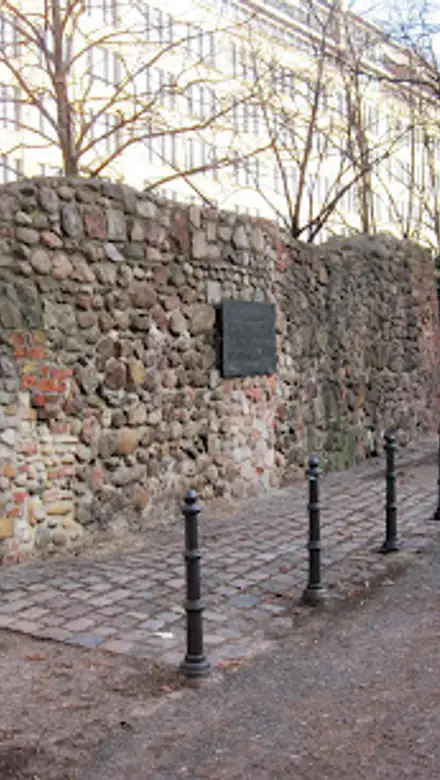
Alte Berliner Stadtmauer, Berlin Travel Guide
Free Guide: Discover Berlin's medieval origins at the Alte Berliner Stadtmauer, a preserved section of the city's original defensive wall, offering a glimpse into its rich history and evolution.


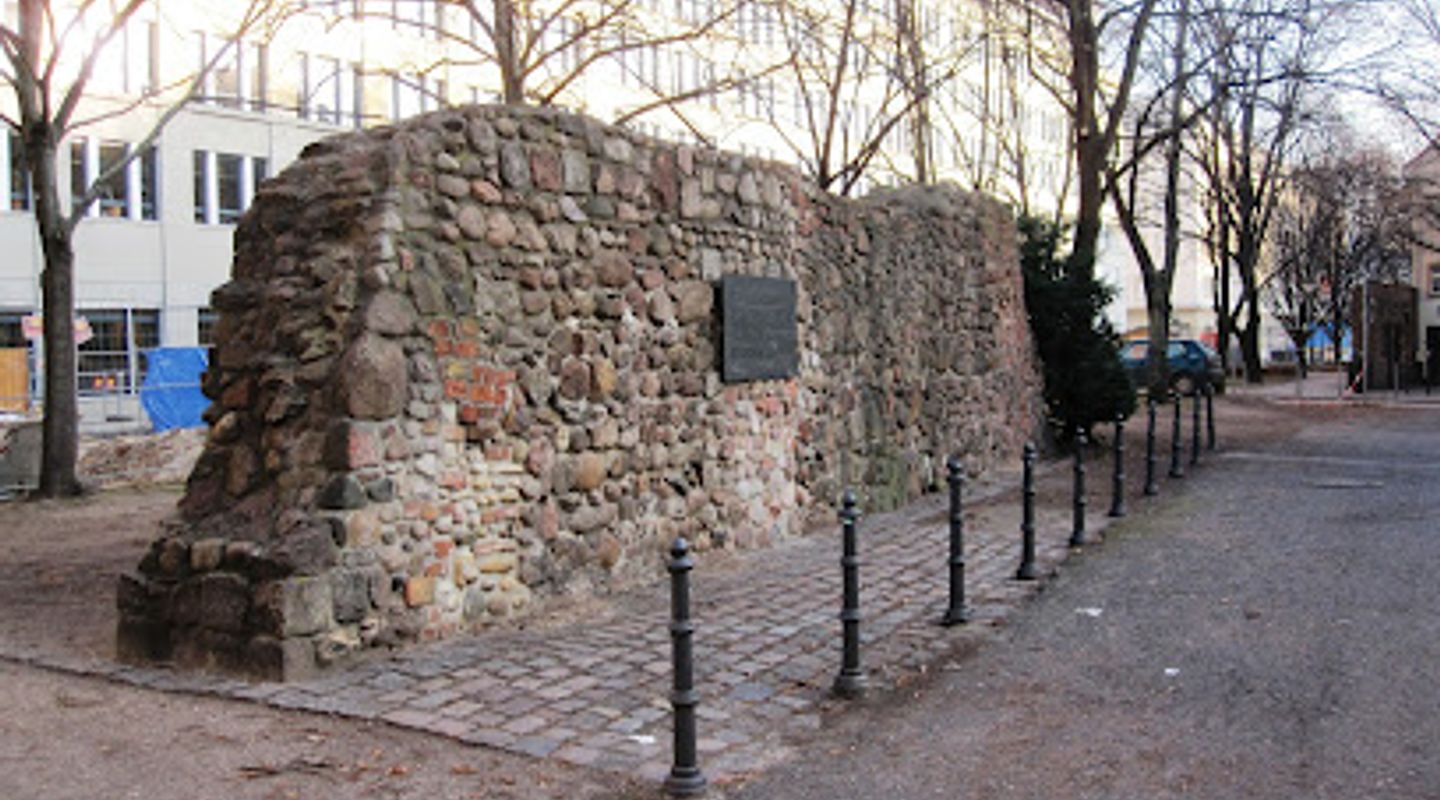
A brief summary of Alte Berliner Stadtmauer
Discover Berlin's medieval origins at the Alte Berliner Stadtmauer, a preserved section of the city's original defensive wall, offering a glimpse into its rich history and evolution.
The Alte Berliner Stadtmauer, or Old Berlin City Wall, offers a fascinating glimpse into the city's medieval origins. Built around 1250, this wall once protected the twin cities of Berlin and Cölln. Today, a preserved section in the Mitte district stands as a testament to Berlin's rich history. Visitors can explore the remaining ramparts, constructed from fieldstones and bricks, and imagine life within the walled city centuries ago. Located near notable landmarks like the Parochialkirche and the restaurant 'Zur letzten Instanz,' the Alte Berliner Stadtmauer provides a tangible connection to Berlin's past, contrasting sharply with the more recent and well-known Berlin Wall. It's a reminder that Berlin's story extends far beyond the Cold War era, offering a unique perspective on the city's evolution.
Opening hours
- Every dayOpen 24 hours
Opening hours as listed on the venue’s Google Business Profile. Hours can change for services and special events, so check with the venue before you go.
- Address
- Waisenstraße 2, 10179 Berlin
Getting there
Public Transport
Walking
Taxi/Ride-Share
Discover more about Alte Berliner Stadtmauer
Overview
The Alte Berliner Stadtmauer, or Old Berlin City Wall, is a significant historical landmark that offers a tangible connection to Berlin's medieval past. Constructed around 1250, the wall originally served as a defensive structure for the twin cities of Berlin and Cölln, which later merged to form the city we know today. While much of the original wall has disappeared over the centuries, a notable section has been preserved in the Mitte district, providing visitors with a unique opportunity to step back in time and explore this important piece of Berlin's heritage. The wall's construction began in the 13th century, utilizing fieldstones and bricks to create a protective barrier around the burgeoning settlements. As Berlin grew in importance, the wall was expanded and reinforced, incorporating new architectural techniques and materials. The wall featured several gates, including the Spandauer Tor, Stralauer Tor and Oderberger Tor, which controlled access to the city and facilitated trade and commerce. Over the centuries, the Alte Berliner Stadtmauer witnessed numerous historical events, from medieval conflicts to periods of economic prosperity. It served not only as a defensive structure but also as a symbol of the city's identity and independence. However, as Berlin continued to expand, the wall gradually lost its strategic importance. In the 18th century, the construction of the Berlin Customs Wall (Berliner Zollmauer) marked the beginning of the end for the medieval city wall. The Customs Wall, built to control trade and collect taxes, encompassed a much larger area than the old city wall, rendering the latter obsolete. By the 19th century, large portions of the Alte Berliner Stadtmauer were dismantled to make way for new construction projects and urban development. However, a section of the wall, approximately 120 meters long, was spared from demolition and has been preserved to this day. This remaining section is located in the Mitte district, near the Littenstrasse, between the Amtsgericht Mitte, the Parochialkirche, and the historic restaurant 'Zur letzten Instanz'. Today, visitors to the Alte Berliner Stadtmauer can explore the preserved ramparts and imagine what life was like within the walled city centuries ago. The wall's reddish-brown hue, a result of the materials used in its construction, adds to its historical charm. The wall is made of lime mortar, field stones and bricks, added to and restored over the centuries. The surrounding area has been carefully landscaped, providing a pleasant environment for visitors to stroll and reflect on the city's past. The Alte Berliner Stadtmauer is located close to several other notable landmarks, including the Parochialkirche, a beautiful baroque church, and 'Zur letzten Instanz,' Berlin's oldest restaurant. This proximity allows visitors to combine a visit to the wall with other cultural and historical attractions in the area. 'Zur letzten Instanz,' dating back to 1621, offers a unique dining experience in a historic setting. The restaurant has hosted many famous guests over the centuries, including Napoleon Bonaparte and Ludwig van Beethoven. Diners can enjoy traditional Berlin cuisine while surrounded by the restaurant's charming, old-world atmosphere. The Alte Berliner Stadtmauer serves as a reminder that Berlin's history extends far beyond the 20th century and the Cold War era. While the Berlin Wall, which divided the city during the Cold War, is perhaps the most famous wall in Berlin's history, the Alte Berliner Stadtmauer offers a glimpse into the city's medieval origins and its development over the centuries. It provides a unique perspective on Berlin's evolution from a small settlement into a major European capital. Visiting the Alte Berliner Stadtmauer is a worthwhile experience for anyone interested in history, architecture, or urban development. It offers a chance to connect with Berlin's past and appreciate the city's rich cultural heritage. The wall is easily accessible by public transportation, and admission is free, making it an affordable and convenient attraction for tourists and locals alike. While exploring the Alte Berliner Stadtmauer, visitors can also learn about the city's other historical walls, including the Berlin Customs Wall. Although little remains of the Customs Wall today, its legacy can still be seen in the names of some of Berlin's U-Bahn and S-Bahn stations, such as Hallesches Tor and Schlesisches Tor, which were originally located near the gates in the Customs Wall. The Alte Berliner Stadtmauer is a valuable historical resource that helps to preserve and promote Berlin's cultural heritage. It is a testament to the city's resilience and its ability to adapt and evolve over time. By visiting this landmark, people can gain a deeper understanding of Berlin's past and its place in the world.
Evendo Review Centre
 Google
Guest reviews
Explore Alte Berliner Stadtmauer on the map
A handpicked selection of must-see spots near Alte Berliner Stadtmauer, mapped for you.
Get your free copy of our complete guide to Alte Berliner Stadtmauer, delivered straight to you.
Everything on this page, from opening hours and how to get there to Eve’s tips and the best time to go, in one PDF you can read offline, print or share.
Already have an account? Sign in
Your Alte Berliner Stadtmauer guide is ready.
We'll send it to · Not you? Sign out

Getting your guide ready…
We are putting together a fresh copy of the Alte Berliner Stadtmauer guide. This can take up to a minute.
This can take a few moments. If your browser asks, choose Allow so the download can start. You'll find the guide in your Downloads folder.
Nothing happened? Download it again
Sorry, the guide is taking longer than usual. Please try again in a minute, or get it by email instead.
Unlock the best of Alte Berliner Stadtmauer
Skip-the-line tickets, guided tours with entry, and walking tours of the area, booked in a few clicks.

Other nearby places you may find interesting
The closest places of the same kind, if this one is not quite what you had in mind.
-
-
-
-
-


Swipe for more places
More to explore near Alte Berliner Stadtmauer
-
 Best experiences near Alte Berliner Stadtmauer
-
 Best hotels near Alte Berliner Stadtmauer
-
 Best landmarks near Alte Berliner Stadtmauer
-
 Best attractions near Alte Berliner Stadtmauer
-
 Best shops near Alte Berliner Stadtmauer
-
 Best restaurants near Alte Berliner Stadtmauer
-
 Best bars near Alte Berliner Stadtmauer


Do you manage this location?
Take control to get all the benefits, like improved information, better appearance, and stronger visibility across AI-powered discovery.
Explore more
Explore more of Mitte
Discover Mitte: Berlin's vibrant core, where history, culture, and modernity converge to create an unforgettable destination for every traveler.
Explore Mitte
Explore more of Berlin
Berlin: A fascinating blend of history, culture, and modernity, offering everything from historic landmarks to vibrant nightlife and culinary delights.
Explore Berlin