

Reichstag Building Travel Guide
Free Guide: Explore the Reichstag Building in Berlin: A historic landmark blending stunning architecture with Germany's journey to democracy, offering panoramic city views and insightful tours.


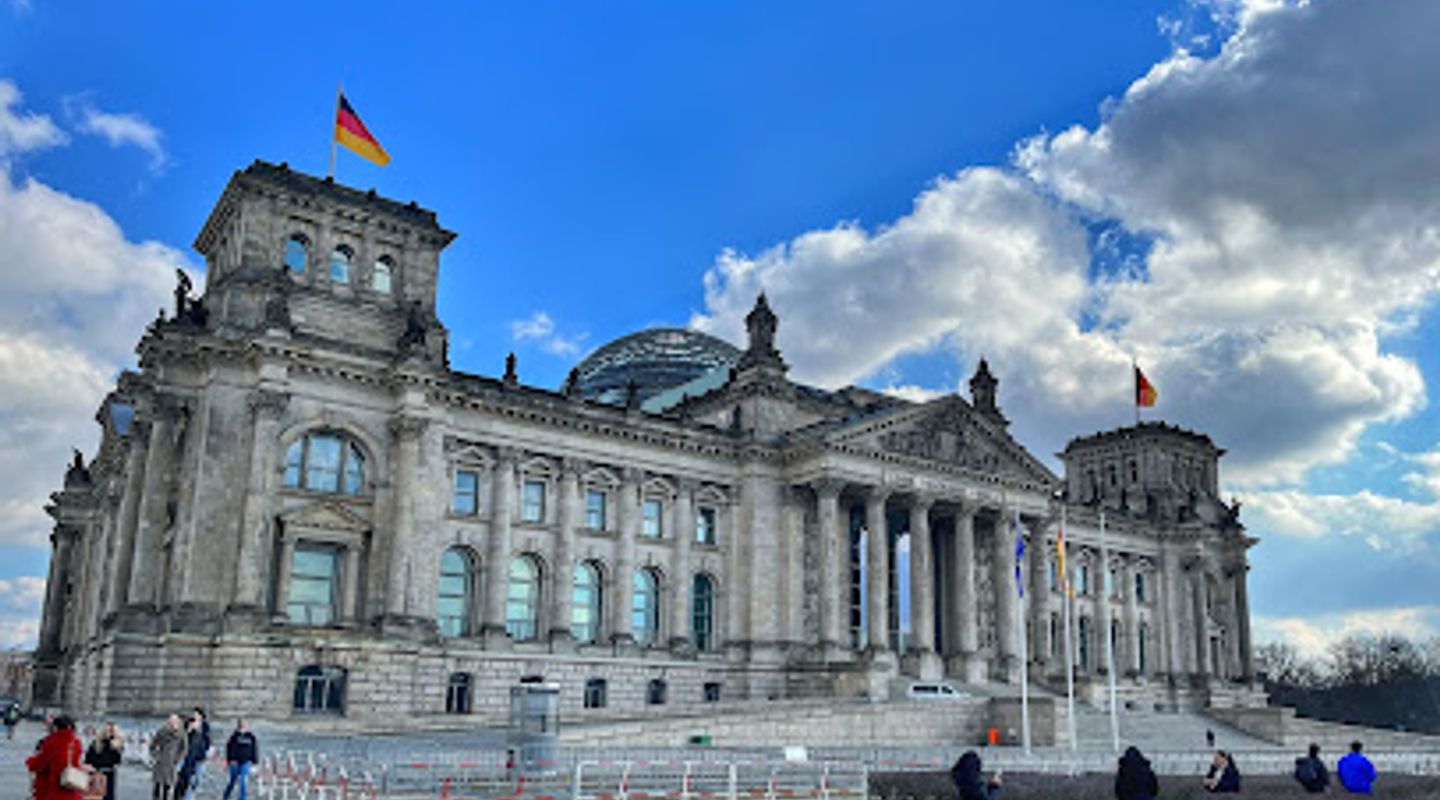
A brief summary of Reichstag Building
Explore the Reichstag Building in Berlin: A historic landmark blending stunning architecture with Germany's journey to democracy, offering panoramic city views and insightful tours.
The Reichstag Building, a monumental structure in Berlin, stands as a powerful symbol of German history, democracy, and reunification. Originally completed in 1894, it housed the Imperial Diet and later the Weimar Republic's Reichstag. Severely damaged by fire in 1933, an event exploited by the Nazis, and further ruined during World War II, the Reichstag remained largely unused during the Cold War era. Following German reunification in 1990, the building underwent extensive restoration led by architect Sir Norman Foster, including the addition of a striking glass dome. Today, visitors can explore its historical exhibits, ascend to the dome for panoramic city views, and witness the workings of the German Parliament, the Bundestag. A visit offers a compelling blend of historical insight and contemporary German governance.
- Address
- Platz der Republik 1, 11011 Berlin
- Website
Getting there
Public Transport
Taxi/Ride-Share
Walking
Driving
Discover more about Reichstag Building
Overview
The Reichstag Building, located in Berlin's Tiergarten district, is more than just a government building; it's a living testament to Germany's complex and often turbulent history. From its construction in the late 19th century to its pivotal role in the reunification of Germany, the Reichstag has witnessed some of the most significant events in the nation's story. Designed by Paul Wallot, the Reichstag was completed in 1894 in a Neo-Renaissance style, intended to house the Reichstag of the German Empire. The building's architecture reflected the aspirations of a newly unified Germany, seeking to establish itself as a major European power. However, the building's early years were marked by conflict between the architect, the Kaiser, and parliamentarians, resulting in a design that was a compromise of various visions. The iconic inscription "Dem Deutschen Volke" (To the German People) was not added until 1916, a testament to the growing democratic sentiments of the time. The Reichstag's history took a dark turn on February 27, 1933, when a fire engulfed the building. The Nazis, eager to consolidate their power, blamed the communists and used the fire as a pretext to suppress political opposition and establish a dictatorship. The Reichstag fire remains a controversial event, with lingering questions about its true origins. During World War II, the Reichstag suffered extensive damage from Allied bombing. In 1945, it became a key target in the Battle of Berlin, with Soviet soldiers eventually raising the Red Army flag atop the building, symbolizing the defeat of Nazi Germany. The iconic photograph of this event became a defining image of the war's end. After the war, the Reichstag found itself in a divided Berlin, standing just steps from the border with East Berlin. The building remained largely unused for decades, a stark reminder of Germany's fractured state. It wasn't until the fall of the Berlin Wall in 1989 and the subsequent reunification of Germany in 1990 that the Reichstag was given new life. Following reunification, the German government decided to restore the Reichstag and make it the seat of the German Parliament once again. The restoration project, led by British architect Sir Norman Foster, was a monumental undertaking. Foster sought to preserve the building's historical fabric while incorporating modern elements that reflected Germany's commitment to democracy and transparency. One of the most striking features of the restored Reichstag is the glass dome that sits atop the building. Designed by Foster, the dome provides a 360-degree view of Berlin and allows natural light to flood the parliamentary chamber below. The dome is open to the public, symbolizing the accessibility and transparency of the German government. Visitors can walk along a spiral ramp inside the dome, learning about the building's history and the workings of the German Parliament. The restoration of the Reichstag also involved preserving traces of the building's past. Russian graffiti left by Soviet soldiers during the Battle of Berlin has been carefully preserved, serving as a reminder of the building's wartime history. Bullet holes and other damage from the war have also been left visible, adding to the building's historical character. The Reichstag is also a symbol of Germany's commitment to sustainability. The building incorporates a number of energy-efficient features, including solar panels and a natural ventilation system. The Reichstag is powered by renewable energy sources, reflecting Germany's leadership in environmental protection. Today, the Reichstag is one of Berlin's most popular tourist attractions, drawing millions of visitors each year. Visitors can take guided tours of the building, explore its historical exhibits, and ascend to the dome for panoramic views of the city. The Reichstag is not just a historical landmark; it's a working parliament, where important decisions about the future of Germany are made. A visit to the Reichstag offers a unique opportunity to delve into Germany's complex history, witness its modern democratic processes, and appreciate its commitment to sustainability. It's a must-see destination for anyone interested in German history, politics, and architecture. The Reichstag's location is also ideal for exploring other nearby attractions. The Brandenburg Gate, one of Berlin's most iconic landmarks, is just a short walk away. The Memorial to the Murdered Jews of Europe, a poignant tribute to the victims of the Holocaust, is also nearby. Visitors can easily combine a visit to the Reichstag with a tour of these other important sites. In addition to its historical and political significance, the Reichstag is also a cultural hub. The building hosts a variety of events throughout the year, including concerts, exhibitions, and lectures. The Reichstag's rooftop restaurant, Käfer, offers stunning views of the city and is a popular spot for both locals and tourists. The Reichstag Building stands as a powerful symbol of Germany's journey from a divided past to a unified and democratic future. Its blend of historical significance, architectural innovation, and commitment to sustainability make it a truly unique and inspiring destination.
Evendo Review Centre
 Google
Guest reviews
Explore Reichstag Building on the map
A handpicked selection of must-see spots near Reichstag Building, mapped for you.
Get your free copy of our complete guide to Reichstag Building, delivered straight to you.
Everything on this page, from opening hours and how to get there to Eve’s tips and the best time to go, in one PDF you can read offline, print or share.
Already have an account? Sign in
Your Reichstag Building guide is ready.
We'll send it to · Not you? Sign out

Getting your guide ready…
We are putting together a fresh copy of the Reichstag Building guide. This can take up to a minute.
This can take a few moments. If your browser asks, choose Allow so the download can start. You'll find the guide in your Downloads folder.
Nothing happened? Download it again
Sorry, the guide is taking longer than usual. Please try again in a minute, or get it by email instead.
Unlock the best of Reichstag Building
Skip-the-line tickets, guided tours with entry, and walking tours of the area, booked in a few clicks.


Other nearby places you may find interesting
The closest places of the same kind, if this one is not quite what you had in mind.
-
-
-
-
-


Swipe for more places
More to explore near Reichstag Building

 Best experiences near Reichstag Building
 Best hotels near Reichstag Building
 Best landmarks near Reichstag Building
 Best attractions near Reichstag Building
 Best shops near Reichstag Building
 Best restaurants near Reichstag Building
 Best bars near Reichstag Building
Do you manage this location?
Take control to get all the benefits, like improved information, better appearance, and stronger visibility across AI-powered discovery.
Explore more

Explore more of Brandenburg
Discover Brandenburg: Explore a region rich in history, culture, and natural beauty, featuring stunning landscapes, historic sites, and vibrant cultural experiences.
Explore Brandenburg
Explore more of Germany
Experience Germany: where history meets innovation, and urban energy blends with natural beauty. Discover diverse cultures, delicious cuisine, and stunning landscapes.
Explore Germany
