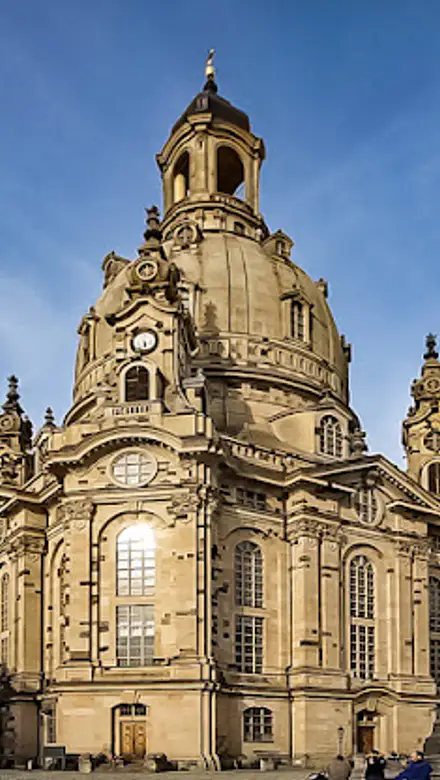
Frauenkirche Dresden, Dresden Travel Guide
Free Guide: Experience the awe-inspiring beauty and profound history of Dresden's Frauenkirche, a symbol of resilience and reconciliation reborn from the ashes of World War II, offering panoramic city views.


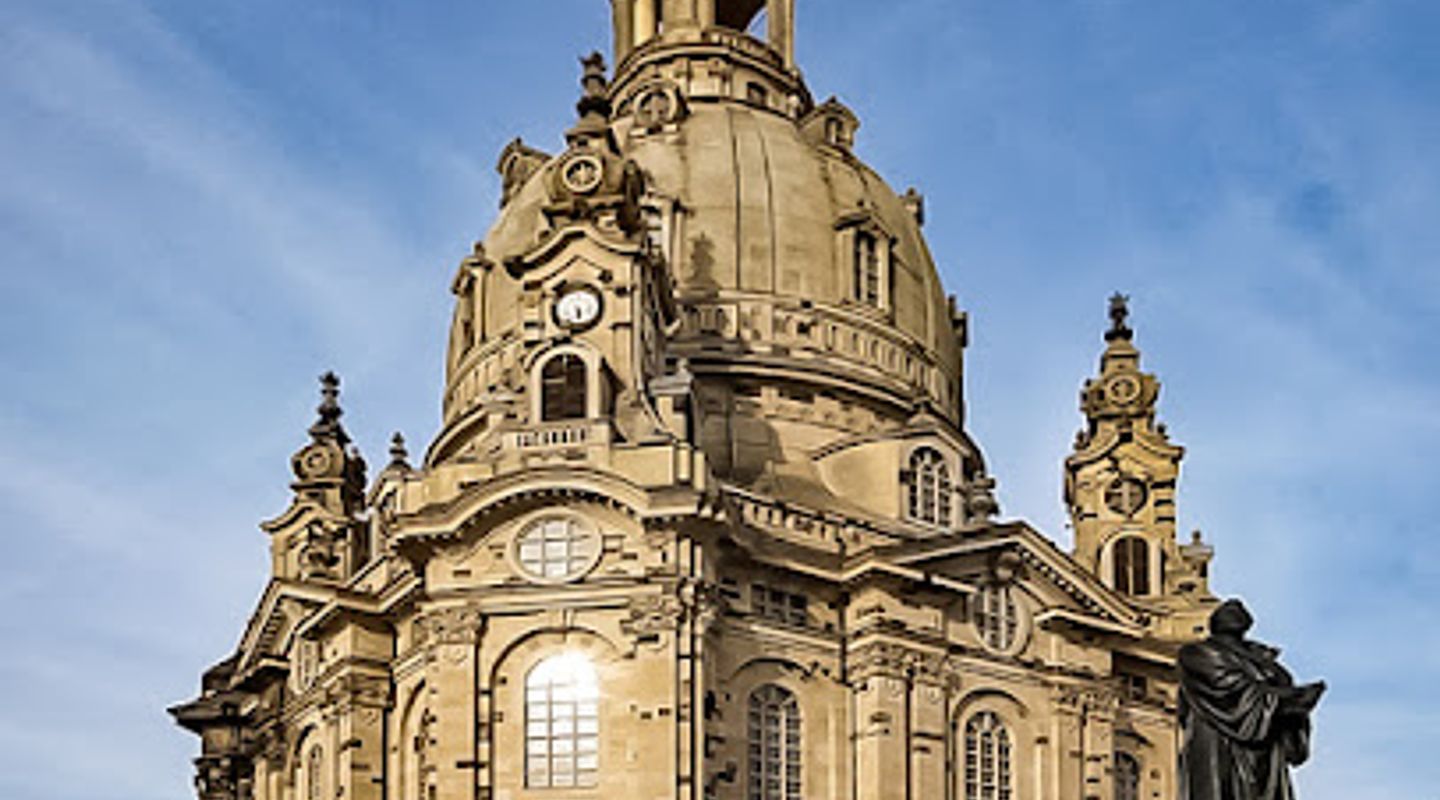
A brief summary of Frauenkirche Dresden
Experience the awe-inspiring beauty and profound history of Dresden's Frauenkirche, a symbol of resilience and reconciliation reborn from the ashes of World War II, offering panoramic city views.
The Frauenkirche Dresden, or Church of Our Lady, is a magnificent Baroque Lutheran church that stands as a powerful symbol of resilience and reconciliation. Originally built in the 18th century, it was tragically destroyed during World War II. For nearly half a century, its ruins served as a poignant war memorial. Following German reunification, a meticulous reconstruction, largely funded by global donations, restored the church to its former glory. Today, visitors can marvel at its stunning architecture, ascend to the dome for panoramic city views, and reflect on its profound history, making it a must-see landmark in Dresden.
- Address
- Neumarkt, 01067 Dresden
- Phone
- Website
Getting there
Walking
Public Transport
Taxi/Ride-Share
Driving
Discover more about Frauenkirche Dresden
Overview
The Frauenkirche Dresden, a towering testament to human spirit and architectural brilliance, dominates the Dresden skyline. More than just a church, it represents centuries of history, destruction, and ultimately, rebirth. Its story is woven into the very fabric of Dresden, making it an essential destination for any visitor seeking to understand the city's soul. Originally constructed between 1726 and 1743, the Frauenkirche was the vision of George Bähr, Dresden's city architect. Bähr sought to create not only a place of worship but also a community space, a sentiment reflected in the church's design. This magnificent Baroque structure, dedicated to Our Lady, quickly became a symbol of Dresden's Protestant identity, rivaling the Catholic Hofkirche. Its most distinctive feature was its colossal dome, an engineering marvel known as the 'Stone Bell' (Steinerne Glocke). This sandstone dome, weighing over 12,000 tons, was an audacious feat, comparable to Michelangelo's work on St. Peter's Basilica in Rome. The church's interior was equally breathtaking. Light flooded through the windows, illuminating the grand altar adorned with biblical scenes sculpted in sandstone. The exquisite organ, crafted by Gottfried Silbermann and later replaced by Daniel Kern, filled the space with music, echoing the voices of countless worshippers and the performances of renowned musicians like Johann Sebastian Bach. For two centuries, the Frauenkirche stood as a jewel in Dresden's crown, witnessing baptisms, weddings, and countless moments of both personal and civic significance. However, this era of peace and prominence was shattered during the Allied bombing raids of February 1945. The intense heat, reaching up to 1,200 degrees Celsius, caused the sandstone pillars to explode, and on February 15th, the dome collapsed, reducing the Frauenkirche to a pile of rubble. In the aftermath of World War II, the ruins of the Frauenkirche were deliberately left untouched for nearly half a century, serving as a somber reminder of the horrors of war. Under East German rule, the site became a focal point for the peace movement, with citizens gathering amidst the rubble to protest against violence and oppression. The blackened stones became a symbol of resilience and a silent call for reconciliation. Following German reunification in 1990, a remarkable effort began to rebuild the Frauenkirche. Fueled by donations from around the world, the reconstruction project meticulously pieced together the shattered remains, using original plans and salvaged stones wherever possible. This painstaking process not only restored the church's physical structure but also its symbolic significance. The project cost around 180 million Euros, with 110 million coming from donations. In 2005, after 11 years of painstaking work, the Frauenkirche was reconsecrated, marking a new chapter in its history. The rebuilt church stands as a testament to the power of forgiveness, reconciliation, and international cooperation. The darker, original stones are interspersed within the lighter, newly quarried sandstone, creating a visible reminder of the church's journey from destruction to restoration. Today, the Frauenkirche is once again a vibrant center of religious and cultural life. Visitors can attend services, concerts, and guided tours, exploring its history, architecture, and message of hope. Ascending to the dome offers breathtaking panoramic views of Dresden, a reminder of the city's beauty and resilience. The Frauenkirche is not just a building; it is a living symbol of Dresden's past, present, and future, a place where history, art, music, and faith converge to inspire and uplift all who enter. Visiting the Frauenkirche offers a multifaceted experience. One can admire the Baroque architecture, characterized by its impressive dome and sandstone columns. Inside, the grand altar, the exquisite organ, and the light-filled sanctuary create a sense of awe and reverence. Exploring the church's history through informative displays and guided tours provides a deeper understanding of its significance. Attending a service or concert allows visitors to experience the Frauenkirche as a living place of worship and artistic expression. Climbing to the dome's viewing platform offers breathtaking views of Dresden's skyline, a panorama that encapsulates the city's beauty and resilience. The Frauenkirche is more than just a tourist attraction; it is a place of reflection, inspiration, and connection. It is a reminder of the destructive power of war and the transformative power of peace. It is a symbol of Dresden's enduring spirit and a testament to the human capacity for hope and renewal. A visit to the Frauenkirche is an unforgettable experience, one that will leave a lasting impression on all who make the journey.
Evendo Review Centre
 Google
Guest reviews
Explore Frauenkirche Dresden on the map
A handpicked selection of must-see spots near Frauenkirche Dresden, mapped for you.
Get your free copy of our complete guide to Frauenkirche Dresden, delivered straight to you.
Everything on this page, from opening hours and how to get there to Eve’s tips and the best time to go, in one PDF you can read offline, print or share.
Already have an account? Sign in
Your Frauenkirche Dresden guide is ready.
We'll send it to · Not you? Sign out

Getting your guide ready…
We are putting together a fresh copy of the Frauenkirche Dresden guide. This can take up to a minute.
This can take a few moments. If your browser asks, choose Allow so the download can start. You'll find the guide in your Downloads folder.
Nothing happened? Download it again
Sorry, the guide is taking longer than usual. Please try again in a minute, or get it by email instead.
Unlock the best of Frauenkirche Dresden
Skip-the-line tickets, guided tours with entry, and walking tours of the area, booked in a few clicks.
 Tour with entry
Dresden walking tour with Treasury visit in the New Green Vault
from $3.20 Tour with entry
Hitler Walking Tour Dresden Audio Guide and Self Guided Tour
from $6.39 Tour with entry
Dresden walking tour with mobile app
from $7.47 Tour with entry
Dresden walking tour with visit of Frauenkirche and Semper Opera
from $12.80


Other nearby places you may find interesting
The closest places of the same kind, if this one is not quite what you had in mind.
-
-

-
-
-


Swipe for more places
More to explore near Frauenkirche Dresden

 Best experiences near Frauenkirche Dresden
 Best hotels near Frauenkirche Dresden
 Best landmarks near Frauenkirche Dresden
 Best attractions near Frauenkirche Dresden
 Best shops near Frauenkirche Dresden
 Best restaurants near Frauenkirche Dresden
 Best bars near Frauenkirche Dresden
Do you manage this location?
Take control to get all the benefits, like improved information, better appearance, and stronger visibility across AI-powered discovery.
Explore more

Explore more of Dresden
Discover Dresden: A city of resilience and beauty, where Baroque architecture meets vibrant arts and lush green spaces.
Explore Dresden
Explore more of Germany
Experience Germany: where history meets innovation, and urban energy blends with natural beauty. Discover diverse cultures, delicious cuisine, and stunning landscapes.
Explore Germany