Fürstenzug Travel Guide
Free Guide: Witness the grandeur of Saxony's rulers immortalized in porcelain at the Fürstenzug, the world's largest artwork of its kind, a landmark of Dresden's resilience and artistic heritage.


A brief summary of Fürstenzug
Witness the grandeur of Saxony's rulers immortalized in porcelain at the Fürstenzug, the world's largest artwork of its kind, a landmark of Dresden's resilience and artistic heritage.
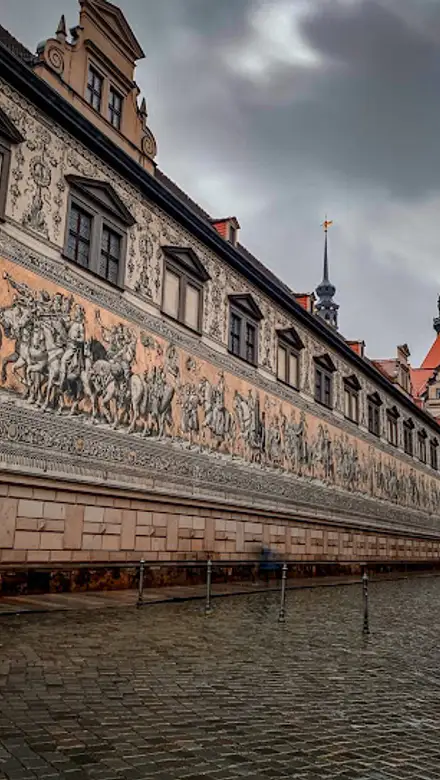
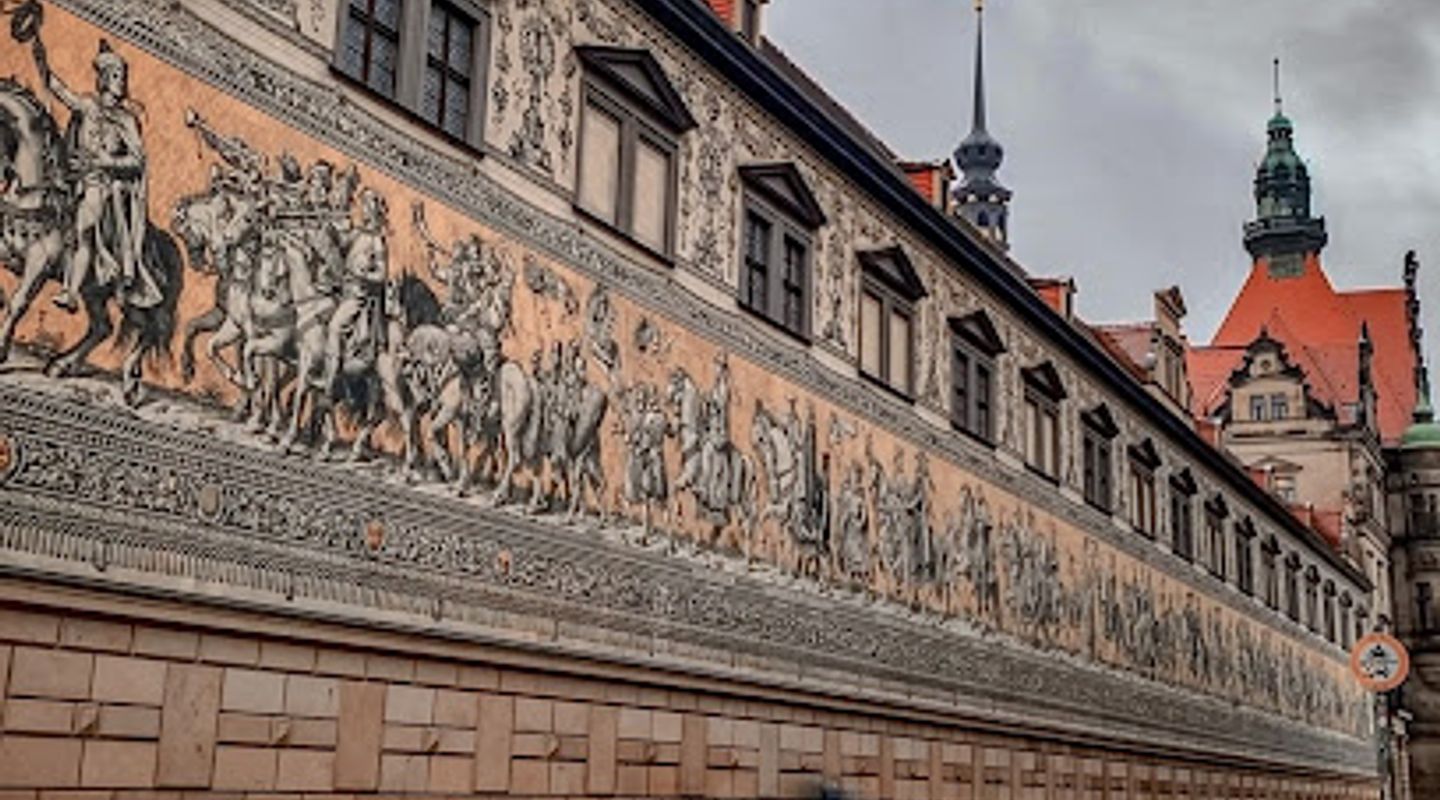
The Fürstenzug, or Procession of Princes, is a monumental mural in Dresden, Germany, that vividly depicts the lineage of Saxony's rulers. Stretching over 100 meters along Augustusstraße, this artwork is not merely a decoration but a historical narrative rendered in exquisite detail. Originally created in the late 19th century to celebrate the Wettin Dynasty's 800th anniversary, the initial sgraffito work was soon replaced by over 23,000 Meissen porcelain tiles to withstand the elements. Today, it stands as the world's largest porcelain artwork, showcasing 35 margraves, electors, dukes, and kings who shaped Saxony from the 12th to the early 20th century. Its survival through the bombings of World War II has further cemented its status as a symbol of Dresden's resilience and artistic heritage, drawing visitors to marvel at its grandeur and historical significance.
Opening hours
- Every dayOpen 24 hours
Opening hours as listed on the venue’s Google Business Profile. Hours can change for services and special events, so check with the venue before you go.
- Address
- Augustusstraße 1, 01067 Dresden
- Phone
- Website
Getting there
Walking
Public Transport
Taxi/Ride-Share
Driving
Discover more about Fürstenzug
Overview
The Fürstenzug, meaning "Procession of Princes," is an iconic and breathtaking mural located in the heart of Dresden's historic city center. Adorning the outer wall of the Stallhof, a courtyard within the Dresden Castle complex, this remarkable work of art offers a compelling visual journey through the history of Saxony and its ruling Wettin dynasty. Originally conceived to commemorate the 800th anniversary of the House of Wettin in the late 19th century, the Fürstenzug was initially rendered as a sgraffito artwork between 1871 and 1876 by the artist Wilhelm Walther. However, the exposed location soon took its toll, and the mural began to deteriorate due to the elements. To preserve this important historical depiction for future generations, a decision was made to recreate the mural using a more durable material. Between 1904 and 1907, the original sgraffito was painstakingly replaced with approximately 23,000 Meissen porcelain tiles. This ambitious undertaking transformed the Fürstenzug into the world's largest porcelain artwork, a testament to both artistic vision and engineering prowess. The Meissen porcelain manufactory, renowned for its exquisite craftsmanship, meticulously produced each tile, ensuring the preservation of Walther's original design while enhancing its longevity. The mural stretches an impressive 102 meters (335 feet) in length and depicts a grand procession of 35 Saxon rulers, spanning from Conrad, Margrave of Meissen, who ruled in the 12th century, to King George of Saxony, who reigned until 1904. Each ruler is portrayed on horseback or foot, clad in historically accurate attire and accompanied by symbolic items representing their era and accomplishments. The procession also includes 59 scientists, artisans, craftsmen, children, and farmers, symbolizing the diverse facets of Saxon society throughout the centuries. A closer examination of the Fürstenzug reveals a wealth of historical detail. The figures are depicted with remarkable precision, showcasing the evolution of fashion, weaponry, and cultural trends over time. Each character's attire, posture, and accompanying symbols offer insights into their reign and contributions to Saxony's history. Art enthusiasts may also note some anachronisms in the clothing styles, reflecting artistic license common in 19th-century art. The Fürstenzug's survival through the devastating bombings of Dresden during World War II adds another layer of significance to its story. Despite the widespread destruction that engulfed the city, the mural sustained only minimal damage, a testament to the durability of the porcelain tiles and a symbol of Dresden's resilience. Following the war, the Fürstenzug was carefully cleaned and restored, ensuring its continued preservation for future generations. Today, the Fürstenzug stands as one of Dresden's most iconic landmarks, attracting visitors from around the globe. Its central location on Augustusstraße, near other prominent attractions such as the Frauenkirche, Zwinger Palace, and Dresden Castle, makes it easily accessible to tourists exploring the city's historic center. The mural is freely accessible to the public, allowing visitors to admire its grandeur and intricate details at any time of day or night. Beyond its artistic and historical value, the Fürstenzug serves as a powerful reminder of Saxony's rich cultural heritage and the enduring spirit of its people. It is a must-see attraction for anyone visiting Dresden, offering a unique and immersive glimpse into the region's past.
Evendo Review Centre
 Google
Guest reviews
Explore Fürstenzug on the map
A handpicked selection of must-see spots near Fürstenzug, mapped for you.
Get your free copy of our complete guide to Fürstenzug, delivered straight to you.
Everything on this page, from opening hours and how to get there to Eve’s tips and the best time to go, in one PDF you can read offline, print or share.
Already have an account? Sign in
Your Fürstenzug guide is ready.
We'll send it to · Not you? Sign out

Getting your guide ready…
We are putting together a fresh copy of the Fürstenzug guide. This can take up to a minute.
This can take a few moments. If your browser asks, choose Allow so the download can start. You'll find the guide in your Downloads folder.
Nothing happened? Download it again
Sorry, the guide is taking longer than usual. Please try again in a minute, or get it by email instead.
Unlock the best of Fürstenzug
Skip-the-line tickets, guided tours with entry, and walking tours of the area, booked in a few clicks.
 Tour with entry
Dresden Highlights Audio Guide and Self Guided Tour
from $5.33 Tour with entry
Dresden Exploration Game and City Tour on your Phone
from $8.53 Tour with entry
Self-guided scavenger hunt in Dresden with your smartphone
from $12.28 Tour with entry
Altstadtrundgang: Faszination Dresden
from $13.88


Other nearby places you may find interesting
The closest places of the same kind, if this one is not quite what you had in mind.
-
-
-
-
-


Swipe for more places
More to explore near Fürstenzug

 Best experiences near Fürstenzug
 Best hotels near Fürstenzug
 Best landmarks near Fürstenzug
 Best attractions near Fürstenzug
 Best shops near Fürstenzug
 Best restaurants near Fürstenzug
 Best bars near Fürstenzug
Do you manage this location?
Take control to get all the benefits, like improved information, better appearance, and stronger visibility across AI-powered discovery.
Explore more

Explore more of Saxony
Discover Saxony: A blend of baroque beauty, musical heritage, and natural splendor in Germany's historic heartland.
Explore Saxony
Explore more of Germany
Experience Germany: where history meets innovation, and urban energy blends with natural beauty. Discover diverse cultures, delicious cuisine, and stunning landscapes.
Explore Germany